Wastewater Treatment Plant Cost in Egypt 2025: CAPEX, OPEX & Tech-Specific Breakdown for Industrial Buyers
Egypt's wastewater treatment plant costs vary dramatically by scale and technology. A 1,000 m³/day MBR system for an industrial facility costs US$1.2M–US$2.5M in CAPEX, with OPEX of US$0.30–US$0.50/m³, while a 250,000 m³/day municipal plant like New Cairo WWTP required US$482M in PPP financing. Key cost drivers include effluent quality standards (BOD5 < 20 mg/L), sludge disposal regulations, and energy-intensive processes like aeration. This guide breaks down CAPEX, OPEX, and financing models for industrial buyers in 2025.
Consider a textile factory in Sadat City. Facing aggressive regulatory inspections and potential fines for discharging high-COD effluent into the municipal grid, the facility must transition from basic primary treatment to a system capable of meeting Law 92/2013 standards. The financial decision is no longer just about the sticker price of a machine; it is about balancing land footprint, energy consumption under shifting subsidies, and the rising cost of sludge management. For industrial operators in the Nile Delta and Suez Canal Economic Zone, understanding these variables is essential for protecting the bottom line.
Why Wastewater Treatment Costs in Egypt Are Rising in 2025
Egypt's population growth and rapid industrial expansion are driving up wastewater treatment costs.Egypt’s population growth, now exceeding 111 million, coupled with rapid industrial expansion in sectors like food processing and textiles, has placed unprecedented pressure on water infrastructure. This demand has driven wastewater treatment plant cost in Egypt upward by approximately 8–12% annually, according to 2024 Ministry of Finance data. Procurement managers must account for these inflationary pressures alongside increasingly stringent environmental mandates.
The primary driver for increased CAPEX is the requirement for tertiary treatment. New effluent standards, specifically targeting BOD5 < 20 mg/L and TSS < 20 mg/L, necessitate advanced filtration and disinfection stages. As seen in the Abu Rawash WWTP upgrade specifications, moving from primary to secondary and tertiary treatment can add 20–30% to the initial investment. For industrial facilities, this often means integrating DAF systems for pre-treatment in food processing and textiles to remove fats, oils, and greases (FOG) before biological processing.
Sludge management has emerged as a significant secondary cost driver. Modern regulations require stabilization—often through anaerobic digestion or advanced dewatering—before land application or landfilling. Sludge management now accounts for 15–25% of total OPEX. For example, the Abu Rawash sludge project, designed to handle 714 tonnes per day, required a budget of US$50M–US$70M just for the treatment of solids. For smaller industrial players, this necessitates high-efficiency dewatering equipment to minimize transport volumes.
Energy consumption remains the most volatile component of the Egypt wastewater treatment cost per m³. Aeration processes typically account for 40–60% of OPEX in conventional activated sludge (CAS) systems. While Membrane Bioreactor (MBR) systems can reduce the physical footprint by up to 50%, they often require 0.8–1.2 kWh/m³, compared to 0.5–0.8 kWh/m³ for CAS. However, as the Egyptian government continues to rationalize industrial electricity subsidies (currently US$0.05–US$0.08/kWh), the long-term ROI of energy-efficient blowers and automated optimizing chemical dosing for Egypt’s industrial effluents becomes more pronounced.
Wastewater Treatment Plant Cost Breakdown: CAPEX vs. OPEX by Technology
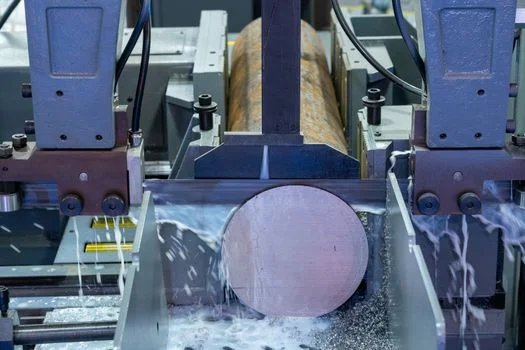
Selecting the right technology requires a trade-off between upfront Capital Expenditure (CAPEX) and long-term Operational Expenditure (OPEX). In the Egyptian market, three technologies dominate the industrial landscape: Conventional Activated Sludge (CAS), Membrane Bioreactor (MBR), and Dissolved Air Flotation (DAF) for high-solids streams.
CAPEX for industrial plants in Egypt generally ranges from US$1,500 to US$4,000 per m³/day of capacity. MBR systems sit at the higher end of this range due to the cost of membrane modules and sophisticated control systems. However, they are often the only viable choice for factories in Cairo or Alexandria where land costs (US$50–US$150/m²) make the large footprint of CAS tanks prohibitive. Conversely, compact MBR systems for industrial wastewater in Egypt offer a modular approach that can be scaled as production increases.
The following table provides a technical cost comparison for a mid-scale industrial facility (approx. 5,000 m³/day):
| Technology Type | CAPEX (US$ / m³ capacity) | OPEX (US$ / m³ treated) | Footprint Requirement | Effluent Quality (BOD5) |
|---|---|---|---|---|
| Conventional Activated Sludge | $1,500 – $2,200 | $0.20 – $0.35 | High (100%) | < 30 mg/L |
| Membrane Bioreactor (MBR) | $2,500 – $4,000 | $0.40 – $0.65 | Low (40-50%) | < 5 mg/L |
| Moving Bed Biofilm (MBBR) | $2,000 – $3,000 | $0.30 – $0.50 | Medium (70%) | < 20 mg/L |
| DAF (Pre-treatment only) | $800 – $1,200 | $0.15 – $0.25 | Very Low | N/A (Solids removal) |
OPEX is heavily influenced by membrane replacement cycles in MBR systems, which typically occur every 5–7 years and add approximately US$0.05–US$0.15/m³ to the lifecycle cost. For large-scale projects, the New Cairo WWTP serves as a benchmark for PPP wastewater projects Egypt case studies. Its US$482M contract utilized a volume-based payment structure where the private operator is compensated based on the cubic meters treated, effectively transferring the operational risk away from the government authority. This model is increasingly being adapted for private industrial parks.
Egypt-Specific Cost Drivers: Compliance, Sludge, and Energy
Beyond the primary technology, several Egypt-specific factors can lead to "budget creep" if not identified during the feasibility stage.Beyond the primary technology, several Egypt-specific factors can lead to "budget creep" if not identified during the feasibility stage. The most critical is the 2023 update to sludge management regulations. Industrial facilities can no longer simply dewater and dump sludge; it must meet stabilization criteria before disposal. Implementing sludge dewatering solutions for Egypt’s regulatory requirements is now a mandatory CAPEX item, often involving plate and frame presses to achieve cake dryness above 30%.
Effluent compliance for reuse is another major driver. With Egypt facing a water deficit, many industrial zones encourage the reuse of treated water for landscape irrigation or cooling towers. To meet the national standards for "Class A" treated water (BOD5 < 20 mg/L), plants must include tertiary disinfection. Utilizing on-site ClO₂ generators for effluent disinfection is a common strategy to ensure microbial compliance without the safety risks associated with bulk chlorine gas storage.
Energy remains a double-edged sword. While Egypt’s industrial electricity rates are lower than in Europe, the wastewater treatment energy consumption Egypt profiles show that aeration still dominates the bill. In a standard CAS plant, aeration blowers consume 0.4–0.6 kWh per m³ of treated water. Transitioning to fine-bubble diffusers and VFD-controlled motors can reduce this by 15%, but adds 5–10% to the initial CAPEX. For a facility treating 10,000 m³/day, a 0.1 kWh/m³ saving translates to thousands of dollars in annual OPEX reductions.
Finally, land acquisition costs in industrial cities like 6th of October or Tenth of Ramadan can fluctuate. When land is expensive, the high CAPEX of an MBR system is often offset within 3–5 years by the savings in land purchase and civil works. This is a critical consideration for industrial WWTP financing Egypt, as lenders often look more favorably on compact, high-asset-value technologies that occupy less real estate.
Financing Models for Industrial WWTPs in Egypt: PPP vs. EPC vs. Leasing
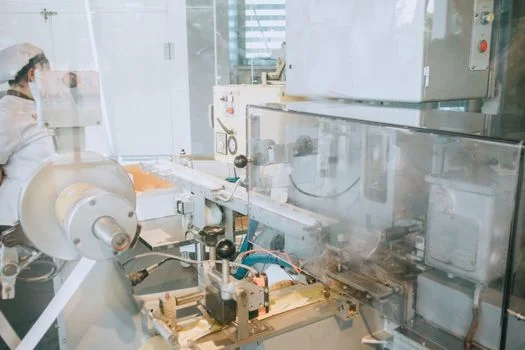
Financial decision-makers in Egypt have transitioned from simple cash-purchase models to more sophisticated structures that preserve working capital. Choosing between an Engineering, Procurement, and Construction (EPC) contract, a Public-Private Partnership (PPP), or equipment leasing depends largely on the plant capacity and the parent company’s balance sheet.
For large-scale industrial zones or municipal-scale projects (over 50,000 m³/day), the PPP model is the standard. This involves a Design-Build-Finance-Operate-Transfer (DBFOT) structure. The New Cairo WWTP model, which mobilized US$140M in private investment, allowed the government to avoid massive upfront CAPEX in exchange for a 20-year service agreement. For private industrial buyers, however, EPC remains the most common route for plants under 20,000 m³/day, offering full ownership and faster deployment (typically 6–12 months).
| Financing Model | Upfront CAPEX | Ownership | Typical Capacity | Ideal For |
|---|---|---|---|---|
| EPC (Turnkey) | 100% | Immediate | 1,000 – 20,000 m³/day | Established factories with available CAPEX |
| PPP / BOT | 20 – 40% | Transfers after 15-20 years | > 50,000 m³/day | Industrial parks and municipal zones |
| Equipment Leasing | 5 – 10% | Option to buy at end | 250 – 5,000 m³/day | SMEs and rapid expansion projects |
| Govt. Grants/Subsidies | 50 – 70% | Immediate | Any (must meet reuse specs) | Projects focused on water circularity |
Leasing is an emerging trend in the Egyptian market, particularly for modular MBR units. This allows firms to treat wastewater as an operating expense (US$0.10–US$0.30/m³ in lease payments) rather than a capital investment. Additionally, the Ministry of Environment, through various international green funds, offers subsidies of up to 30% for projects that demonstrate significant water savings or meet strict "Zero Liquid Discharge" (ZLD) benchmarks. Comparing compliance-driven WWTP costs in emerging markets shows that Egypt’s subsidy landscape is currently among the most active for industrial greening.
Step-by-Step Procurement Checklist for Industrial Buyers
To avoid common pitfalls, procurement managers should follow a structured technical evaluation.To avoid the common pitfalls of industrial wastewater procurement