Bergen’s sewage treatment projects face unique challenges: cold-weather performance, strict Norwegian Water Regulations (e.g., <30 mg/L BOD discharge limits), and rising energy costs. Top suppliers like HUBER and local integrators offer solutions ranging from compact MBR systems (99% TSS removal) to energy-positive cogeneration plants (e.g., Bergen County’s 4,220 kW Jenbacher units). This guide provides 2025 engineering specs, cost benchmarks (e.g., NOK 5–20M for municipal plants), and a zero-risk selection framework to match equipment to your project’s scale, climate, and compliance needs.
Bergen’s Sewage Treatment Challenges: Climate, Compliance, and Cost Pressures
Norwegian Water Regulations (§12-3) mandate that municipal sewage discharges in Bergen meet strict thresholds, including BOD limits of less than 30 mg/L, TSS below 25 mg/L, and COD under 125 mg/L. These standards are increasingly difficult to maintain as Bergen’s aging infrastructure faces higher hydraulic loads from increased rainfall. For municipal engineers, the primary hurdle is ensuring that treatment kinetics remain stable during the winter months when influent temperatures often drop below 5°C.
Cold-weather impacts significantly degrade biological treatment efficiency. Research from regional case studies, including the Øygarden STP, indicates that aeration efficiency can drop by 15–20% when temperatures fall below 5°C. This phenomenon requires either a 20% increase in aeration tank volume or the integration of high-efficiency heat exchangers and insulated tankage to maintain the metabolic rate of nitrifying bacteria. Without these process adjustments, plants risk non-compliance fines and ecological damage to local fjords.
Energy costs represent the largest variable in OPEX for Bergen’s industrial and municipal facilities. With industrial electricity rates fluctuating between NOK 0.85 and 1.10/kWh, energy-intensive processes like aerobic digestion are becoming budget-prohibitive. This has led to a surge in biogas cogeneration. For instance, the Bergen County Utilities Authority (BCUA) achieved approximately $11 million in fuel cost savings by utilizing Jenbacher units to convert 1 million standard cubic feet of biogas per day into 4,220 kW of electrical power. This "energy-positive" model is now the benchmark for 2025 project justifications.
The technical requirements also diverge sharply between industrial and municipal sectors. Bergen’s robust food processing and fish farming industries require specialized pretreatment to manage Fats, Oils, and Grease (FOG). These facilities prioritize how DAF systems achieve 95%+ FOG removal in industrial wastewater before discharging to the municipal grid. Conversely, municipal projects focus on Membrane Bioreactors (MBR) to achieve reuse-quality effluent within the compact footprints necessitated by Bergen’s mountainous topography.
2025 Engineering Specs for Bergen’s Top Sewage Treatment Technologies
Standard engineering specifications for Bergen's wastewater infrastructure require equipment to maintain biological activity and physical separation efficiency at temperatures as low as 2°C. Selecting a sewage treatment equipment supplier in bergen requires a granular analysis of how different technologies handle these thermal and chemical loads. The following specifications represent the current 2025 benchmarks for high-performance systems.
Dissolved Air Flotation (DAF) systems are the preferred choice for industrial pretreatment, particularly in fish processing. Modern DAF systems for Bergen’s industrial pretreatment needs utilize microbubble physics (20–50 µm diameter) to achieve 95–99% TSS removal. These systems are designed to handle influent turbidity up to 5,000 NTU and flow rates ranging from 4 to 300 m³/h. The DAF line is specifically engineered with stainless steel 316 components to resist the corrosive nature of saline-heavy industrial wastewater common in coastal Norway.
For municipal upgrades where space is limited, Membrane Bioreactor (MBR) systems provide the highest effluent quality. Utilizing PVDF membranes with a 0.1 µm pore size, compact MBR systems for Norway’s strict discharge limits consistently deliver effluent with BOD levels below 10 mg/L. However, engineers must account for the fact that MBR systems require 10–15% more aeration energy when operating in temperatures below 5°C to maintain membrane scouring and prevent fouling. HydropureWater’s DF series cold-weather data confirms that automated air-scour adjustments are critical for maintaining a stable flux rate of 15–25 LMH (Liters per Square Meter per Hour) in Nordic climates.
Chemical management is another critical spec. Modern PLC-controlled dosing for pH adjustment and coagulant injection ensures compliance with Norway’s stringent metal discharge limits. These systems typically dose ferric chloride (FeCl₃) at rates of 5–50 mg/L, controlled by real-time phosphate sensors. This automation prevents the over-dosing that often occurs in manual systems during fluctuating flow events, reducing chemical waste by up to 30%.
| Technology Type | Primary Spec / Parameter | Bergen-Specific Performance Goal | Typical Application |
|---|---|---|---|
| DAF | 20–50 µm Microbubbles | 99% FOG / 95% TSS Removal | Fish Processing & Industrial |
| DF Series MBR | 0.1 µm PVDF Membrane | <5 mg/L BOD Effluent | Municipal & Water Reuse |
| Auto Dosing System | PLC-Controlled (FeCl₃/NaOH) | pH 6.5–8.5 / <0.3 mg/L P-tot | Regulatory Compliance |
| Jenbacher J420 Cogen | 4,220 kW Output | 85% Total System Efficiency | Large Municipal (>100k PE) |
Cost Breakdown: CAPEX, OPEX, and ROI for Bergen-Scale Projects
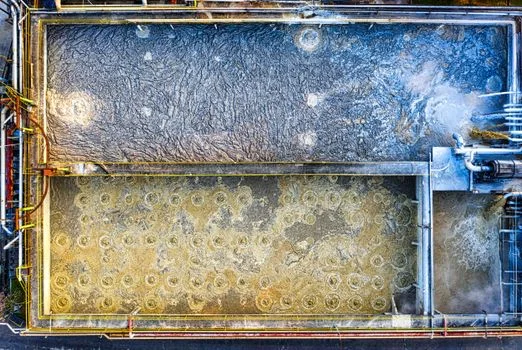
Capital expenditure (CAPEX) for sewage treatment in Bergen is primarily driven by the high cost of specialized cold-weather insulation and the integration of energy-recovery systems. When evaluating cost benchmarks for Norway’s wastewater projects, procurement officers must look beyond the initial sticker price to the 20-year Total Cost of Ownership (TCO).
For 2025, CAPEX ranges for standard Bergen-scale projects are as follows:
- DAF Systems: NOK 1.2M to 5M. This includes the skid-mounted unit, saturation pumps, automated sludge scrapers, and local control panels for capacities of 50–300 m³/h.
- MBR Systems: NOK 3M to 12M. This range covers systems treating 10–200 m³/day, inclusive of high-flux PVDF membranes, fine bubble diffusers, and sophisticated automation suites.
- Cogeneration Units: NOK 8M to 20M. These are high-capacity systems (1–5 MW) suited for large municipal plants, including anaerobic digesters and gas cleaning equipment.
Operating expenditure (OPEX) is dominated by energy and chemical consumption. In Bergen, MBR systems typically consume 0.3–0.6 kWh/m³, a figure that can spike by 20% during peak winter months due to increased fluid viscosity and aeration requirements. In contrast, DAF systems are significantly leaner, consuming only 0.1–0.2 kWh/m³. Chemical costs for coagulants and flocculants generally range from NOK 0.5 to 2 per m³ of treated water, depending on the complexity of the influent. Labor requirements also vary; MBR systems often require 0.5 to 1.0 Full-Time Equivalent (FTE) for membrane maintenance and cleaning, whereas automated DAF systems can be managed with 0.2 to 0.5 FTE.
Return on Investment (ROI) is most rapid in energy-recovery and water-reuse scenarios. Cogeneration projects for plants exceeding 10,000 Population Equivalent (PE) typically see a payback period of 4–7 years, primarily through avoided grid electricity costs and heating savings. For industrial MBR projects, the ROI is often realized in 3–5 years by avoiding municipal "heavy loader" discharge fees and enabling the reuse of process water for non-potable applications like cooling or equipment wash-down.
| Cost Driver | DAF (Industrial) | MBR (Municipal) | Cogeneration (Large Scale) |
|---|---|---|---|
| CAPEX (Avg) | NOK 2.5M | NOK 7.5M | NOK 15M |
| Energy (kWh/m³) | 0.15 | 0.45 | Net Positive (Energy Producer) |
| Maintenance | Low (Mechanical) | High (Membrane Cleaning) | Moderate (Engine Service) |
| Payback Period | 2–4 Years | 3–5 Years | 4–7 Years |
Supplier Comparison: Top 5 Sewage Treatment Equipment Providers in Bergen
The market for sewage treatment equipment in Bergen is divided between large-scale municipal infrastructure providers and modular industrial pretreatment specialists. Choosing the right partner depends on whether the project requires a custom civil engineering approach or a turnkey, skid-mounted solution. Decisions are often guided by how UK municipalities evaluate sewage treatment equipment, focusing on long-term reliability and service availability.
Leading European manufacturers, such as those responsible for the Øygarden STP, excel in large-scale municipal applications. Their strengths lie in high-volume screening and grit removal, supported by local Norwegian distributors who provide essential on-site maintenance. However, these Tier-1 providers often have longer lead times and higher CAPEX for smaller industrial projects, where modularity is more valued than massive scale.
Specialized modular suppliers like HydropureWater fill the gap for industrial and small-to-mid-sized municipal projects. By focusing on factory-tested, CE-certified skids, these suppliers reduce on-site installation time by up to 50%. Their technical focus is on high-efficiency DAF and MBR units that are pre-configured for cold-weather performance, including optional heat tracing and insulated enclosures. This approach is particularly effective for Bergen’s fish processing sector, which requires rapid deployment to meet seasonal production peaks.
For energy-intensive plants, US and European cogeneration specialists provide the engine technology required for biogas-to-power conversion. While these providers offer the highest electrical efficiency (up to 43% electrical, 85% total), they often lack a direct local presence in Bergen, requiring coordination with local engineering firms like Norconsult or Bergen Vann for integration and permitting. The key differentiator for any supplier in this market is their ability to provide "Arctic-ready" equipment that has been validated at temperatures below -10°C, ensuring that biological processes do not fail during a Norwegian winter freeze.
| Supplier Category | Technical Strength | Best For... | Local Support |
|---|---|---|---|
| Infrastructure Leaders | Large-scale screening/filtration | Major city municipal plants | Strong (via distributors) |
| Modular Specialists | Compact DAF & MBR skids | Industrial & decentralised muni | Direct sales & remote support |
| Cogen Integrators | Dual-fuel biogas engines | Energy-positive STP projects | Limited (requires integrator) |
| Local Engineering Firms | Regulatory knowledge & civil works | Permitting & custom design | Excellent (Bergen-based) |
Zero-Risk Selection Checklist: 7 Steps to Choose the Right Supplier
A zero-risk procurement strategy for sewage equipment requires a multi-stage validation process that prioritizes pilot-scale testing under actual winter conditions. Use the following steps to ensure your supplier can meet the rigorous demands of the Bergen environment.
- Define Influent and Discharge Limits: Document your peak TSS, BOD, and FOG levels. Cross-reference these with Norwegian Water Regulations §12-3 to ensure the proposed equipment has a safety margin of at least 20% for peak flow events.
- Request Cold-Weather Performance Data: Demand specific case studies or lab results showing aeration efficiency and membrane flux at 0°C to 5°C. Suppliers should provide data on heat loss per hour for outdoor-mounted tanks.
- Verify CAPEX/OPEX Benchmarks: Use the cost tables provided in this guide to evaluate quotes. Ask for a breakdown of "hidden" costs, such as import tariffs, specialized crane hire for Bergen’s terrain, and local labor for commissioning.
- Audit Compliance Certifications: Ensure all equipment is CE-marked and meets EU Urban Waste Water Directive 91/271/EEC. For chemical systems, verify that dosing accuracy meets Norwegian environmental monitoring standards.
- Check Regional References: Contact facility managers at existing installations in Norway. Focus on their experience with after-sales support and the durability of mechanical parts in high-humidity, coastal environments.
- Evaluate Support Infrastructure: Determine the response time for emergency repairs. Does the supplier maintain a spare parts inventory within Scandinavia, or are critical components shipped from overseas?
- Negotiate Performance Guarantees: Link final payments to the achievement of effluent quality and energy consumption targets over a 90-day commissioning period. Include penalties for excessive downtime or failure to meet BOD limits.
Frequently Asked Questions
What are the specific discharge limits for Bergen County?
Under Norwegian Water Regulations §12-3, most municipal discharges must stay below 30 mg/L for BOD, 25 mg/L for TSS, and 125 mg/L for COD. However, specific sensitive fjord areas may have even stricter phosphorus limits, often requiring tertiary chemical precipitation.
How does Bergen’s cold weather affect MBR membrane performance?
Low temperatures increase water viscosity, which reduces membrane flux. To maintain the same permeate flow, MBR systems in Bergen require either more membrane surface area or higher transmembrane pressure (TMP), typically resulting in a 10–15% increase in aeration energy for scouring.
Is cogeneration viable for small-scale plants in Norway?
Cogeneration is generally most cost-effective for plants serving over 10,000 PE. For smaller plants, the capital cost of anaerobic digesters and gas treatment often outweighs the energy savings, making high-efficiency aerobic systems or MBR a better investment.
What is the typical lead time for sewage treatment equipment in Bergen?
For standard modular DAF or MBR units, lead times range from 12 to 16 weeks. Large-scale custom municipal equipment or cogeneration engines can take 6 to 10 months from order to delivery, primarily due to specialized manufacturing and international shipping logistics.