Why Nickel in Third-Gen Semiconductor Wastewater Is Harder to Treat Than Silicon
Third-generation semiconductor fabs, specifically those producing Gallium Nitride (GaN) and Silicon Carbide (SiC) devices, present a unique and formidable challenge in industrial wastewater treatment. Unlike established silicon-based fabrication processes, GaN/SiC production generates nickel-laden wastewater at concentrations significantly higher—often 10 to 100 times greater—than their silicon counterparts. Influent nickel levels in these advanced fabs can range from 10 to 50 mg/L, a stark contrast to the typical 0.1 to 1 mg/L found in silicon fab effluents. This elevated concentration, coupled with the presence of complexing agents, necessitates a departure from conventional treatment methodologies.
The primary culprit behind the increased difficulty in treating nickel wastewater from GaN/SiC fabs is the prevalent use of tetramethylammonium hydroxide (TMAH) and urea. These compounds readily form stable, soluble nickel-TMAH complexes and other organometallic structures. These complexes are resistant to conventional aerobic biological treatment processes and can significantly increase the Chemical Oxygen Demand (COD) of the wastewater, making compliance with stringent discharge limits exceptionally challenging. Research, such as that conducted by Dr. Westerhoff, has highlighted how these low molecular weight organics bypass standard ultrapure water (UPW) reclamation loops, demanding targeted mineralization.
the solubility of nickel hydroxide, the typical target precipitate, is highly pH-dependent, generally requiring a pH range of 9.5 to 10.5 for effective precipitation. However, the high concentration of TMAH in GaN/SiC wastewater can buffer the solution and interfere with traditional pH adjustment strategies, complicating the precipitation process. To overcome this, specialized coagulants such as sodium sulfide or dithiocarbamate (DTC) are often required to ensure efficient nickel precipitation. The presence of co-contaminants like arsenic and chromium, also common in GaN etching processes, can further inhibit nickel precipitation. For example, arsenic can form soluble arsenates, and chromium can exist in various oxidation states, both of which can complex with nickel ions or interfere with the physical separation of precipitates, leading to reduced removal efficiencies. Real-world GaN etching processes frequently demonstrate these complex interactions, demanding highly tailored treatment protocols.
Nickel Removal Technologies: Head-to-Head Comparison for GaN/SiC Fabs
Selecting the optimal nickel removal technology for GaN/SiC semiconductor wastewater requires a detailed understanding of each method's capabilities, limitations, and cost implications. While no single technology is universally superior, a comparative analysis reveals distinct advantages for different operational scenarios and compliance requirements.
Chemical Precipitation remains a foundational technology for nickel removal. By carefully adjusting the wastewater pH to 9.5–10.5 and introducing a precipitating agent like sodium sulfide or DTC, nickel can be converted into an insoluble form, typically Ni(OH)₂ or NiS. This method can achieve 90–98% nickel removal, reducing effluent concentrations to approximately ≤0.5 mg/L, which aligns with many EPA discharge benchmarks for general industrial wastewater. The operational cost for chemical precipitation typically ranges from $0.15 to $0.30 per cubic meter treated, primarily driven by chemical consumption and sludge disposal. However, its effectiveness can be compromised by complexing agents like TMAH, requiring careful optimization of dosing and retention times. The sludge generated can also present disposal challenges.
Ion Exchange (IX) offers a more advanced polishing capability. Utilizing chelating resins specifically designed to capture nickel ions, IX systems can achieve exceptionally high removal efficiencies, often exceeding 99.9%. This allows for effluent nickel concentrations as low as ≤0.1 mg/L, meeting the most stringent regulatory demands. The primary advantage of IX is its precision in achieving ultra-low discharge limits. However, the operational costs are higher, ranging from $0.40 to $0.70 per cubic meter, largely due to the expense of resin regeneration chemicals and the disposal of spent regenerant solutions, which themselves require further treatment. Resin lifespan and capacity also factor into long-term operational economics.
Electrochemical methods, particularly electrocoagulation (EC), present an attractive alternative, especially for space-constrained fabs. EC utilizes sacrificial electrodes (typically iron or aluminum) that dissolve to form coagulating species in situ. This process can achieve approximately 98% nickel removal without the generation of chemical sludge, simplifying downstream solids handling. The operational cost for EC is competitive, ranging from $0.25 to $0.50 per cubic meter, with energy consumption being a key variable, typically between 0.5–1.5 kWh/m³. While effective, EC may require pre-treatment to remove complexing agents that can interfere with electrode efficiency.
Membrane filtration technologies, such as nanofiltration (NF) and reverse osmosis (RO), are often employed as polishing steps or for water recovery. NF can remove 95–99% of nickel, while RO is highly effective, achieving >99% removal. However, these technologies are susceptible to fouling from dissolved organics and suspended solids, necessitating robust upstream pre-treatment. Their cost can range from $0.30 to $0.60 per cubic meter, with membrane replacement every 3–5 years being a significant CAPEX component. They are most effective when integrated into a multi-stage ZLD system.
| Technology | Typical Nickel Removal (%) | Effluent Nickel (mg/L) | Approx. OPEX ($/m³) | Key Advantages | Key Disadvantages |
|---|---|---|---|---|---|
| Chemical Precipitation | 90–98 | ≤0.5 | 0.15–0.30 | Cost-effective for bulk removal, mature technology | Sludge generation, sensitive to complexing agents, lower removal efficiency |
| Ion Exchange | 99.9+ | ≤0.1 | 0.40–0.70 | Ultra-low effluent, high selectivity | High OPEX (regeneration), resin disposal, limited capacity |
| Electrocoagulation | 98 | ≤0.2 | 0.25–0.50 | No chemical sludge, compact footprint | Energy consumption, electrode replacement, potential for passivation |
| Nanofiltration/RO | 95–99.9+ | ≤0.01 (RO) | 0.30–0.60 | High water recovery, excellent polishing | Fouling potential, requires extensive pre-treatment, membrane replacement |
For GaN/SiC fabs aiming for Zero Liquid Discharge (ZLD), a hybrid approach integrating several of these technologies is often the most robust and cost-effective solution. For precise and automated chemical dosing, PLC-controlled chemical dosing systems are essential to maintain optimal conditions for precipitation.
Hybrid ZLD Systems for Nickel Wastewater: Process Flow and Engineering Specs
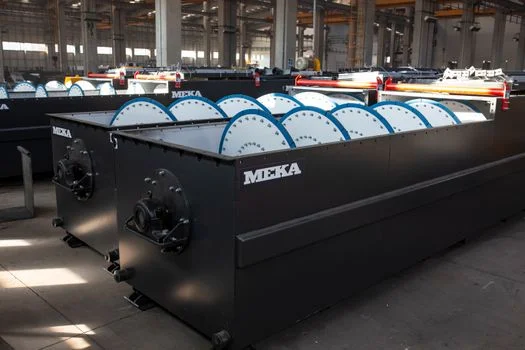
Achieving Zero Liquid Discharge (ZLD) for nickel-laden wastewater from GaN/SiC semiconductor fabrication requires a sophisticated, multi-stage hybrid system. This integrated approach leverages the strengths of various treatment technologies to ensure complete contaminant removal and maximum water recovery. A typical ZLD process flow for this application involves the following key stages:
Step 1: Equalization and pH Adjustment. Wastewater from the fab is first collected in an equalization tank to buffer flow and concentration variations. Following equalization, the pH is carefully adjusted to the optimal range for nickel precipitation, typically between 9.5 and 10.5. This is achieved using alkaline agents such as lime (Ca(OH)₂) or sodium hydroxide (NaOH). Precise pH control is critical, and the retention time in this stage is usually between 2 to 4 hours to ensure thorough mixing and reaction. Accurate pH monitoring and automated dosing are paramount here.
Step 2: Chemical Precipitation and Solids Separation. In this stage, a precipitating agent, such as sodium sulfide (Na₂S) or dithiocarbamate (DTC), is added to convert dissolved nickel into insoluble nickel hydroxide or sulfide. This is followed by a period of flocculation to promote the aggregation of precipitated particles. The resulting slurry is then sent to a lamella clarifier or dissolved air flotation (DAF) unit for efficient separation of the solid sludge from the treated water. The surface loading rate for lamella clarifiers is typically maintained between 20–40 m/h to ensure effective settling. The sludge, containing concentrated nickel and other precipitated heavy metals, is dewatered and managed as hazardous waste.
Step 3: Membrane Bioreactor (MBR) for Polishing. The clarified effluent from the precipitation stage, still containing residual nickel and dissolved organics, is directed to an MBR. Integrated MBR systems for nickel polishing and water reuse employ submerged membranes, typically made of polyvinylidene fluoride (PVDF) with a pore size of 0.1 μm. The MBR provides both biological treatment for organic contaminants and a physical barrier for suspended solids and remaining nickel particles. Key operating parameters include a Mixed Liquor Suspended Solids (MLSS) concentration of 8,000–12,000 mg/L and a Solids Retention Time (SRT) of 20–30 days, ensuring robust microbial activity and efficient contaminant removal.
Step 4: Advanced Oxidation Process (AOP). For the final removal of recalcitrant organic compounds, including residual TMAH and any remaining trace nickel complexes, an AOP is implemented. Common AOPs include UV irradiation with hydrogen peroxide (UV/H₂O₂) or ozonation. The UV dose is typically maintained between 500–1,000 mJ/cm², with H₂O₂ dosing ranging from 10–50 mg/L, depending on the organic load. This step ensures complete mineralization of organic contaminants and oxidation of any residual metallic species.
Step 5: Reverse Osmosis (RO) for Water Recovery. The final stage of the ZLD system is high-recovery reverse osmosis. High-recovery RO systems for nickel-free permeate in ZLD applications are designed to produce a high-purity water stream suitable for reuse in the fab's processes. The RO permeate can achieve nickel concentrations as low as ≤0.01 mg/L. The system's recovery rate typically ranges from 75–90%, depending on the influent water quality and membrane configuration, maximizing water reuse and minimizing the final reject stream, which is then managed through evaporation or other specialized disposal methods.
Cost Breakdown: CAPEX, OPEX, and ROI for Nickel Wastewater Treatment Systems
Investing in a robust nickel wastewater treatment system for GaN/SiC semiconductor fabrication is a significant capital expenditure, but one that offers substantial long-term financial benefits through water savings and compliance assurance. The total cost of ownership is best understood by examining Capital Expenditure (CAPEX), Operational Expenditure (OPEX), and the resulting Return on Investment (ROI).
CAPEX for comprehensive hybrid ZLD systems designed for GaN/SiC fabs can range broadly from $5 million to $20 million. This range is highly dependent on the fab's wastewater flow rate, typically from 1,000 to 10,000 m³/day, and the targeted water recovery rate, which might be between 75% and 95%. This CAPEX includes the cost of all equipment (precipitation tanks, clarifiers, MBR units, AOP reactors, RO skids), piping, instrumentation, installation, engineering, and commissioning. For smaller operations or fabs with less stringent recovery targets, standalone ion exchange systems might have a lower CAPEX, potentially in the $2 million to $8 million range, but at the expense of higher OPEX.
OPEX for these advanced hybrid ZLD systems typically falls between $0.85 and $1.20 per cubic meter of wastewater treated. Chemical costs are a significant component, often accounting for 40–50% of the total OPEX, driven by precipitating agents, pH adjustment chemicals, and AOP reagents. Energy consumption for pumps, blowers (for MBR aeration), UV lamps, and RO operation contributes another substantial portion, typically 25–35%. Membrane replacement, labor, maintenance, and sludge disposal fees make up the remainder. Electrochemical methods offer a competitive OPEX range of $0.25–$0.50/m³ due to reduced chemical usage and sludge, while ion exchange systems can have higher OPEX due to frequent resin regeneration and chemical costs, ranging from $0.40 to $0.70/m³.
The ROI for these investments is compelling, often realized within 3 to 5 years. This payback period is primarily driven by two factors: significant water savings and the avoidance of substantial fines associated with nickel discharge violations. By achieving a 95% reduction in freshwater consumption through water reuse, fabs can realize annual savings on water procurement and wastewater discharge fees. non-compliance with EPA nickel discharge limits, which can be as low as ≤0.1 mg/L, can result in daily fines that quickly escalate, potentially reaching $50,000 per day per violation. These avoided costs, combined with the operational efficiencies gained from water recycling, make the CAPEX justifiable. For example, a fab treating 5,000 m³/day could save over $1.2 million annually in water costs alone, significantly accelerating the ROI.
| System Type | Typical CAPEX ($M) | Typical OPEX ($/m³) | Primary Cost Drivers | Payback Period (Years) |
|---|---|---|---|---|
| Hybrid ZLD (MBR+AOP+RO) | 5–20 (1k-10k m³/day) | 0.85–1.20 | Chemicals, Energy, Membranes, Sludge Disposal | 3–5 |
| Ion Exchange (Polishing) | 2–8 (Smaller scale) | 0.40–0.70 | Resin Regeneration, Disposal, Labor | 4–6 (as polishing stage) |
| Electrocoagulation | 3–12 (Mid-size) | 0.25–0.50 | Energy, Electrode Replacement, Pre-treatment | 3–5 (as primary treatment) |
Case Study: 99.9% Nickel Removal in a GaN Fab Using Hybrid ZLD

A leading GaN semiconductor fabrication facility located in Taiwan faced significant challenges with its nickel wastewater discharge, exceeding regulatory limits and incurring substantial operational costs for freshwater intake. The fab was processing approximately 5,000 m³/day of wastewater with influent nickel concentrations ranging from 30 to 45 mg/L. To address these issues and achieve ZLD, a comprehensive hybrid treatment system was designed and implemented.
The chosen treatment train comprised several key stages: chemical precipitation utilizing dithiocarbamate (DTC), followed by an MBR system, an advanced oxidation process (AOP) using UV/H₂O₂, and finally, reverse osmosis (RO) for water recovery. The precipitation stage required precise pH adjustment to 10.2 and a DTC dosage of 50 mg/L to effectively precipitate the nickel from the complexed wastewater. The MBR served as a robust biological and physical polishing step, removing residual solids and trace contaminants.
The results achieved by this hybrid ZLD system were exceptional. The effluent nickel concentration consistently measured below 0.05 mg/L, demonstrating a removal efficiency of over 99.9%. The system achieved a remarkable water recovery rate of 92%, significantly reducing the fab's reliance on freshwater. The overall operational cost for the treated water settled at $0.95/m³, which was a substantial improvement over previous costs associated with both discharge and freshwater intake.
During operation, specific challenges were encountered. The high TMAH concentration necessitated careful control of pH and coagulant dosing in the precipitation stage. Membrane fouling in the MBR was mitigated through a proactive weekly clean-in-place (CIP) protocol using citric acid. The payback period for the system was calculated at 4.2 years, driven by annual savings of approximately $1.2 million derived from water reuse and the complete avoidance of nickel discharge penalties. This case study validates the efficacy and economic viability of advanced hybrid ZLD systems for nickel wastewater treatment in third-generation semiconductor manufacturing.
How to Select the Right Nickel Wastewater Treatment System for Your Fab
Selecting the optimal nickel wastewater treatment system for a GaN/SiC fab is a critical decision that impacts compliance, operational costs, and long-term sustainability. A structured, data-driven approach is essential to navigate the complexities of these advanced semiconductor effluents. Follow these steps to make an informed choice:
Step 1: Comprehensive Influent Characterization. The first and most crucial step is to thoroughly analyze the wastewater. For GaN/SiC fabs, this means quantifying influent nickel concentrations, which typically range from 10–50 mg/L. Equally important is identifying and quantifying co-contaminants such as TMAH, urea, arsenic, chromium, and any other heavy metals or complexing agents present. Understanding these parameters will dictate the suitability and effectiveness of various treatment technologies.
Step 2: Define Compliance Targets and Recovery Goals. Clearly establish the regulatory discharge limits for nickel in your jurisdiction. For example, the EPA often sets limits around ≤0.1 mg/L for certain industrial discharges, while other regions may have limits around ≤0.5 mg/L. Simultaneously, define your water recovery objectives. Are you aiming for significant water reuse (e.g., 75–95%) to reduce freshwater dependency, or is the primary goal simply to meet discharge standards? These targets will significantly influence the system design and technology selection.
Step 3: Technology Comparison and Evaluation. Utilize the comparative data on nickel removal technologies (as presented earlier in this article) to evaluate options against your specific influent characteristics and compliance targets. Consider the removal efficiency, operational complexity, CAPEX, and OPEX of each technology. For example, if ultra-low effluent nickel is paramount, ion exchange or RO might be necessary polishing steps. If sludge management is a major concern, electrocoagulation could be advantageous. A decision matrix can be invaluable here, weighing factors like removal efficiency, cost per cubic meter, footprint, and operational expertise required.
Step 4: Pilot Testing. Before committing to a full-scale system, it is highly recommended to conduct pilot testing. This involves running a scaled-down version of the proposed treatment system with your actual wastewater. Pilot testing validates the performance of selected technologies, confirms removal efficiencies, helps refine operational parameters, and provides more accurate cost estimates for CAPEX and OPEX. It also helps identify potential operational challenges specific to your wastewater matrix.
Step 5: Vendor Assessment and Support. Evaluate potential equipment vendors based on their experience with semiconductor wastewater, particularly GaN/SiC applications. Consider their ability to provide comprehensive engineering support, spare parts availability, training programs for your operational staff, and remote monitoring capabilities. Long-term vendor support is critical for ensuring the sustained performance and reliability of your wastewater treatment system.
| Decision Factor | GaN/SiC Wastewater Considerations | Technology Suitability |
|---|---|---|
| Influent Nickel Concentration | 10–50 mg/L (High) | Precipitation + Polishing (IX/RO) generally required. EC effective for bulk. |
| TMAH/Organic Load | High (Forms stable complexes) | Requires robust pre-treatment for IX/RO; AOP essential for mineralization. |
| Co-contaminants (As, Cr) | Present, can inhibit precipitation | Requires careful chemical dosing and potentially multi-stage treatment. |
| Effluent Compliance Target | ≤0.1 mg/L (Strict) | IX, RO, or highly optimized precipitation + MBR/AOP often necessary. |
| Water Recovery Target | 75–95% (High) | RO is critical. MBR aids in producing RO-feed quality water. |
| Footprint/Space Constraints | Can be limited in fabs | MBR, EC, and compact RO skids offer space advantages. |
| Operational Complexity | High due to complex chemistry | Automated dosing and control systems (e.g., from our range of PLC-controlled chemical dosing systems) are vital. |
Frequently Asked Questions
Q1: What are the typical nickel concentrations in GaN/SiC semiconductor wastewater compared to silicon fabs?
A1: GaN/SiC fabs generate nickel wastewater at concentrations 10–100x higher, typically 10–50 mg/L, whereas silicon fabs usually have influent levels between 0.1–1 mg/L.
Q2: How does TMAH interfere with nickel removal in GaN/SiC wastewater?
A2: TMAH forms stable, soluble nickel-TMAH complexes that resist conventional precipitation and biological treatment, increasing COD and requiring specialized coagulants or advanced oxidation for removal.
Q3: What are the primary technologies for achieving ultra-low nickel discharge limits (≤0.1 mg/L)?
A3: Ion exchange with chelating resins and reverse osmosis (RO) are the most effective technologies for achieving ultra-low nickel concentrations, often employed as polishing steps in a hybrid ZLD system.
Q4: Can chemical precipitation alone meet stringent nickel discharge limits for GaN/SiC fabs?
A4: Typically, chemical precipitation alone achieves 90–98% removal, resulting in effluent nickel of ≤0.5 mg/L. It is usually insufficient on its own for the strictest limits and often requires post-treatment like ion exchange or RO for compliance.
Q5: What is the expected water recovery rate from a ZLD system for GaN/SiC wastewater?
A5: Advanced ZLD systems, incorporating technologies like RO, can achieve water recovery rates of 75–95%, significantly reducing freshwater intake and wastewater discharge volumes.
Q6: What are the main cost components for a hybrid ZLD system?
A6: The main cost components are CAPEX (equipment, installation) and OPEX, which includes chemicals, energy, membrane replacement, labor, and sludge disposal. Chemical costs often represent the largest portion of OPEX.
Q7: How do hybrid ZLD systems contribute to sustainability in semiconductor manufacturing?
A7: Hybrid ZLD systems promote sustainability by maximizing water reuse, minimizing hazardous waste discharge, reducing the environmental footprint, and conserving precious freshwater resources, aligning with circular economy principles. They also help semiconductor manufacturers comply with increasingly stringent environmental regulations, similar to the heavy metal wastewater treatment strategies for semiconductor fabs.
Related Equipment
- PLC-controlled chemical dosing systems for precise nickel precipitation — view specifications, capacity range, and technical data
- Integrated MBR systems for nickel polishing and water reuse — view specifications, capacity range, and technical data
- High-recovery RO systems for nickel-free permeate in ZLD applications — view specifications, capacity range, and technical data
Need a customized solution? Request a free quote with your specific flow rate and pollutant parameters.