The wet scrubber working principle for industrial compliance is contact between polluted gas and a scrubbing liquid, usually water or alkali, so SO₂, HCl, and dust enter the liquid. Typical industrial units remove 95–99% of those pollutants when L/G, residence time, and scrubbing-liquid pH stay inside design limits. Plant tables still list high-energy venturi scrubbers at >99% removal of sub-micrometer particles at 25–100 inches water column. Low-energy spray towers handle coarser dust at 0.5–3.0 in. w.c.
Plants that miss EPA NSPS or EU Industrial Emissions Directive 2010/75/EU SO₂ tests often replace dry collectors before fines escalate. Earlier plant notes cited EPA 2024 benchmarks for that >99% sub-micron figure. The US EPA cost manual and fact sheets that describe these devices are older, and they publish a wider venturi band than one 2024 figure.
Wet Scrubber Working Principle for Industrial Compliance
A wet scrubber captures soluble acid gas by absorption and particles by impaction, interception, and diffusion. According to US EPA Cost Manual EPA/452/B-02-001, venturi efficiency is 70% to 99% above 1 µm and greater than 50% on submicron PM. Pressure loss is usually 10 to 80 in. w.c., with little gain above 45 in. w.c. on a conventional throat.
Gas enters the vessel, meets atomized or film-forming liquid, and leaves through a mist eliminator. Acid gases dissolve into the liquid. Solids collide with droplets and leave with the blowdown. Capture is usually above 95% removal when contact area and reagent strength match the load.
Scrubbing-liquid chemistry decides gas removal. Plain water works for large dust and highly soluble gases such as ammonia. Acidic flue gas needs sodium hydroxide (NaOH) or calcium hydroxide (Ca(OH)₂) so the acids become stable salts. Many plants hold that balance with PLC-controlled chemical dosing for scrubbing liquid pH adjustment, and reagent strength tracks load swings (HydropureWater field data, 2025).
On boiler and incinerator duty, the liquid is what operators lose first, not the fan curve. Process flow still follows a fixed engineering sequence.
- Gas Inlet: Raw exhaust enters the chamber, sometimes as hot as 1,000°F in metallurgical duty.
- Contact Zone: Gas meets liquid in a venturi throat or across packed-bed media.
- Mist Eliminator: Chevron or mesh pads strip entrained droplets before the stack.
- Clean Gas Outlet: Treated gas exits after about 1–5 seconds of residence time for mass transfer.
US EPA fact sheet EPA-452/F-03-017 lists usual venturi inlets at 4 to 400°C (40 to 750°F), below that 1,000°F metallurgical case. A single-throat unit in the same sheet handles 0.2 to 478 sm³/s (500 to 100,000 scfm). Inlet dust loading on those examples runs from 1 to 115 g/sm³ (0.1 to 50 gr/scf). Quench is added when wall material cannot take the raw gas temperature.
For a broader equipment overview beside this mechanism page, see the companion article on a wet scrubber system layout and selection ranges.
Removal Efficiency by Pollutant Type and Scrubber Geometry
Removal efficiency scales with liquid surface area and reagent reactivity. SO₂ is less soluble than HCl, so it needs longer contact and a controlled alkaline pH. That duty is covered when learning how SO₂ scrubbers achieve 98%+ removal efficiency. Venturi geometry leads on fine particulate, and a packed bed leads on gas absorption because of its large internal area.
Source specs that cite EPA 2024 data still rank a venturi first on fine particulate. US EPA fact sheet EPA-452/F-03-034 states that SO₂ scrubbers as a class remove 50% to 98%. Wet scrubbers in that sheet sit above 90%, and dry scrubbers are typically under 80%. Newer dry designs in the same sheet reach on the order of 90%.
Limestone systems in that FGD sheet are limited to approximately 90%. Lime reaches up to 95%, and wet limestone on coal utility gas runs from 90% up to 98%. The sheet also caps this chemistry at dilute SO₂ near 2000 ppm. About 85% of US FGD systems in the sheet are wet, 12% are spray dry, and 3% are dry.
EPA fact sheet EPA-452/F-03-017 puts venturi PM collection from 70 to greater than 99 percent, generally higher for particles about 0.5 to 5 µm. EPA/452/B-02-001 adds that overall venturi collection can exceed 99%, while simple spray towers can fall to 40–60% or lower. Read both figures beside the design table rather than in place of it.
| Scrubber Type | Target Pollutant | Removal Efficiency (%) | Pressure Drop (in. w.c.) | L/G Ratio (L/m³) |
|---|---|---|---|---|
| Spray Tower | Particulates >10 μm | 90% – 95% | 0.5 – 3.0 | 1.0 – 3.0 |
| Venturi Scrubber | Sub-micron PM (<1 μm) | 98% – 99.9% | 25 – 100 | 0.7 – 2.5 |
| Packed Bed | SO₂, HCl, Cl₂ | 95% – 99% | 2.0 – 10.0 | 5.0 – 20.0 |
| Impinjet Scrubber | Fine Dust & Fumes | 96% – 98% | 4.0 – 12.0 | 2.0 – 5.0 |
Scrubbing-liquid pH is the main lever for gas removal. SO₂ duty usually targets pH 8–9. Higher values raise scaling risk, and lower values cut efficiency. HCl trains often hold pH 10–12 for full neutralization.
Particulate-only service commonly uses neutral water near pH 7, because capture is mechanical, not chemical. On SO₂ duty, crews we size hold the 8–9 band and do not chase a higher setpoint. The design table lists spray towers at 90% – 95% on particulates >10 μm. EPA/452/B-02-001 reports spray-tower removal as great as 90% above 5 µm, 60% to 80% from 3 to 5 µm, and less than 50% below 3 µm.
What Pressure Drop and L/G Ratio Does Compliance Need?
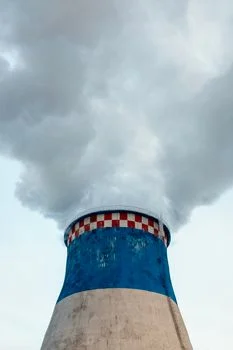
Pressure drop across the vessel is the main energy signal for particulate collection. The span runs from about 0.5 to over 100 inches of water column as the target particle size shrinks. Capturing 0.5 μm ash, common on coal boilers and chemical incinerators, needs high turbulence and therefore high fan power. That power supports tight EPA PM2.5 limits and raises operating cost.
| Pressure Drop (in. w.c.) | Scrubber Category | Min. Particle Size (μm) | Energy (kW per 1,000 m³/h) |
|---|---|---|---|
| 5 – 10 | Low Energy | 3.0 – 5.0 | 0.5 – 1.2 |
| 10 – 25 | Medium Energy | 1.0 – 2.0 | 1.2 – 3.0 |
| 25 – 50 | High Energy | 0.5 – 1.0 | 3.0 – 6.5 |
| 50 – 100 | Ultra-High Energy | <0.5 | 6.5 – 14.0 |
EPA/452/B-02-001 defines high-energy venturi service as 30 inches of water column or greater. A jet venturi in that chapter stays at a few inches of water column and collects less fine PM. Throat gas speed is generally 45 to 150 m/s (150 to 500 ft/s). Raising pressure drop above 45 in. w.c. does not significantly raise removal on a conventional venturi throat.
The liquid-to-gas (L/G) ratio is liquid volume injected per unit of gas treated. Simple dust scrubbing with water often runs at 5–10 L/m³. Acid-gas duty on a Flue Gas Desulfurization (FGD) Scrubber System commonly needs 15–30 L/m³ so reagent supply keeps up with SO₂. The EPA cost manual finds venturi PM collection levels off once liquid rate exceeds about 10 gal/1000 ft³, with 7 to 10 gal/1000 ft³ called the practical band.
Venturi contact finishes in milliseconds, while packed beds typically need 3–5 seconds for gas to diffuse into the liquid film on the packing. A coal-fired boiler at 10,000 m³/h with fine ash will not meet EPA PM2.5 limits on a spray tower alone. Most plants we size for that duty specify a venturi at about 30 in. w.c. and L/G near 2.0 L/m³ to reach ~99% capture of sub-micrometer ash.
Can One Scrubber Treat Dust and Acid Gas Together?
Combined dust-and-gas loads are normally handled with a multi-stage train. A venturi takes sub-micron particulate, and a packed bed follows for SO₂ or HCl. A spray tower alone fails when PM2.5 dominates. A packed bed alone underperforms when the aerosol is mostly sub-micron.
Gas hotter than 500°F needs a quench section first so vessel linings and packing stay inside material limits. EPA-452/F-03-017 often places the venturi first so packing downstream does not plug. The cost manual says packed towers are built for gas absorption, and high solids will clog the media. A single-stage scrubbing system is the wrong tool when both cuts are in the permit.
Selection Decision Tree:
- Mainly acid gas (SO₂, HCl)? Use a packed bed scrubber (high area, low energy).
- Sub-micron particulate (PM2.5)? Use a venturi scrubber (high shear, high fan power).
- Both present? Use multi-stage: venturi then packed bed.
- Gas temperature >500°F? Add a quench section before the contact zone.
Venturi packages keep the smallest footprint but burn the most electricity against pressure drop. Packed beds cost less to run, yet they need packing cleaned or replaced when solids foul the media. Blowdown becomes scrubber sludge. Plants that discover how to handle scrubber sludge with 95%+ volume reduction cut hauling cost and landfill volume.
Choose the sibling note on dry scrubber vs wet scrubber when the permit is SO₂ only and a dry sorbent might clear it. Wet units in the EPA FGD sheet still post the higher SO₂ removal, above 90% versus typically under 80% for older dry designs. Coal and chemical vents we size usually stay wet once HCl or fine fume shows up on the test sheet.
What Makes a High-Efficiency Industrial Scrubber for Chemical Processes?
High-efficiency chemical-process scrubbers use a packed bed at L/G 5.0–20.0 L/m³ for soluble acid gas, or a venturi when sub-micron fume is also present. Procurement should weigh fan power and reagent use against capital cost. An undersized spray tower can create a larger non-compliance cost than the price gap to a venturi or a multi-stage set. Chemical-vent jobs we size freeze the pollutant list before the vessel price.
US EPA fact sheet EPA-452/F-03-017 puts example venturi capital cost at $5,300 to $45,000 per sm³/s in 2002 dollars. That case assumed 99% PM control at about 7 g/sm³ (3 gr/scf) inlet. Cost effectiveness was $77 to $2,600 per metric ton, and the sheet excludes fans, pumps, and waste disposal. Treat those 2002 dollars as history, not as a 2026 price.
Selection checklist most EPC and plant teams freeze before purchase:
- Pollutant list and inlet concentrations (SO₂, HCl, Cl₂, PM size cut).
- Required outlet limits (EPA NSPS / local permit, or IED 2010/75/EU).
- Design gas flow (m³/h) and temperature, including quench need above 500°F.
- Target pressure drop band and available fan margin (in. w.c.).
- L/G ratio, reagent type, and continuous pH setpoints (SO₂ ≈ 8–9; HCl ≈ 10–12).
- Materials (FRP, alloy) for chloride-bearing liquors, including duplex 2206 when it is on the bid sheet.
- Mist-eliminator type and maximum face velocity (typically keep <10–12 ft/s).
Before duplex 2206 is locked, read what is the chloride limit for a 2206 wet scrubber absorber vessel? EPA/452/B-02-001 states that a mist eliminator removes 90% to 99% of entrained droplets at about 0.5 to 1.0 in. w.c. Chevron blades are preferred there when dust would clog a mesh pad. Alloy choice on chloride liquor follows the liquor analysis, not the vessel price list.
wet scrubber troubleshooting scaling and corrosion
Wet scrubber troubleshooting scaling and corrosion starts with pressure drop and pH, checked every shift. Ignored mineral scale or acid attack can cut removal efficiency by up to 30%. EPA-452/F-03-034 notes that oxidation of limestone slurry lays gypsum scale inside the absorber. Limestone forced oxidation blows air in the reaction tank, pulls gypsum out before recycle, and cuts that deposit.
The same FGD sheet says chlorine can raise SO₂ removal and still plate salt on the absorber and on downstream metal. Many wet systems reheat stack gas so condensate does not eat the duct. EPA-452/F-03-017 lists corrosion, freezing, and expensive sludge disposal as standard venturi drawbacks. The cost manual bleeds recycle liquid so solids stay at 20% to 30% by weight.
- Problem: Scaling in packed bed scrubbers.
Cause: High pH or hard makeup water forms carbonate or sulfate deposits on packing.
Fix: Soften makeup water or dose scale inhibitor; acid-wash media on a quarterly cycle. - Problem: Corrosion in the vessel.
Cause: Liquid pH falling below 5.0 with chlorides or sulfates present.
Fix: Specify FRP or Hastelloy where needed; restore dosing so pH holds 8–9 on SO₂ duty. - Problem: Mist carryover from the stack.
Cause: Weak mist eliminator or gas velocity above design (typically >10–12 ft/s).
Fix: Fit high-efficiency chevron pads or lower fan speed into the design velocity band. - Problem: Low SO₂ removal efficiency.
Cause: Low L/G ratio or reagent depletion.
Fix: Verify pump flow and raise chemical dosing to the design stoichiometric ratio.
Hard makeup water shows the first scale on the mist pad, not in the throat, on the plants we size. Restore dosing before the metal is already thin. A pH hold of 8–9 on SO₂ duty is the fix in the corrosion item above, and face velocity still has to stay inside the design band.
Who This Is For / Next Step
Plant engineers, EPC contractors, and procurement teams use this page to size acid-gas or fine-particulate control on boilers, incinerators, and chemical vents. Look elsewhere if the duty is dry dust only, with no condensable acid gas. Look elsewhere again if the duty is odor-only at ambient temperature with no PM permit limit. The working numbers on this page are L/G, pressure drop, pH, and particle cut, not a generic equipment tour.
Send inlet flow, temperature, pollutant list, and particle size through the request-quote form. The return is a duty sketch for vessel type, L/G, and reagent. Do not use this page to set a chloride limit or to pick dry versus wet as a stand-alone study.
Frequently Asked Questions
How does a wet scrubber remove SO₂ and dust?
A wet scrubber dissolves SO₂ into an alkaline liquid and traps dust in droplets by impaction and diffusion. Packed beds favor gas absorption at L/G about 5–20 L/m³, while venturis favor sub-micron dust at 25–100 in. w.c. Combined loads usually need a venturi plus a packed bed in series. According to EPA/452/B-02-001, particles above 10 µm are taken mainly by impaction, while diffusion matters most below 0.5 µm.
What removal efficiency should I expect on sub-micron PM?
Venturi scrubbers in the design table deliver 98–99.9% removal on sub-micron particulate when pressure drop sits in the 25–100 in. w.c. band and L/G is about 0.7–2.5 L/m³. Spray towers at 0.5–3.0 in. w.c. are sized for particles larger than about 10 μm, not PM2.5 compliance alone. According to EPA/452/B-02-001, the published venturi band is 70% to 99% above 1 µm and greater than 50% on submicron particles.
Which pH should scrubbing liquid hold?
SO₂ absorption is usually controlled near pH 8–9 to balance removal against scaling. HCl neutralization often runs at pH 10–12. Particulate-only water scrubbing can stay near pH 7 because the capture step is mechanical. Liquid that falls below 5.0, with chlorides or sulfates in the liquor, is the corrosion point crews treat as an upset, not as a normal setpoint.
When is a multi-stage scrubber required?
Use multi-stage hardware when the same exhaust carries both sub-micron dust and acid gas. The venturi stage takes the fine PM, and the packed bed finishes SO₂ or HCl. A single-stage scrubbing system rarely meets both duties at once on chemical or boiler flue gas. Gas hotter than 500°F still needs a quench before either stage so linings stay inside material limits.
What drives operating cost the most?
Fan power against pressure drop, reagent use at the design L/G, and sludge disposal dominate operating cost. High-energy venturis trade electricity for fine-PM capture. Packed beds trade lower fan power for packing maintenance and higher liquid rates on acid gas. EPA fact sheet EPA-452/F-03-017 priced a 99% PM case, at about 7 g/sm³ inlet, from $77 to $2,600 per metric ton in 2002 dollars, excluding fans, pumps, and waste treatment.