Why Irbid Factories Need On-Site Sewage Treatment Equipment in 2025
Irbid’s EUR 56.1M West Irbid WWTP expansion (2025) enforces strict discharge limits for industrial facilities—COD ≤ 250 mg/L, TSS ≤ 30 mg/L, and heavy metals below EU Directive 2010/75/EU thresholds. Factories in Irbid’s industrial zones (e.g., Al-Hassan Industrial Estate) must install on-site pre-treatment equipment like DAF systems (92–97% TSS removal) or MBR units (effluent COD ≤ 50 mg/L) to avoid municipal surcharges or shutdowns. This guide provides Irbid-specific engineering specs, cost benchmarks, and supplier selection criteria for compliance-ready systems.
The West Irbid Wastewater Project, funded by a EUR 25 million EBRD loan and a EUR 19.6 million EU MADAD grant, is designed specifically for municipal biological waste. Because the facility utilizes an Anoxic/Oxic (A/O) process, it lacks the chemical buffering capacity to handle industrial shocks. High-strength effluent from the Al-Hassan Industrial Estate or the Al-Tajamouat Zone that exceeds 250 mg/L COD can inhibit the municipal plant's nitrifying bacteria, leading to immediate discharge rejection. A textile factory in Al-Hassan Industrial Estate was fined JOD 120,000 in 2023 for discharging untreated dye wastewater with a COD of 1,200 mg/L, illustrating the financial risk of non-compliance (source: Jordan Ministry of Environment).
Industrial facilities in Irbid typically generate effluent profiles that far exceed the receiving capacity of municipal infrastructure. Food processing units often report Chemical Oxygen Demand (COD) levels between 1,500 and 4,000 mg/L, while metal finishing plants discharge heavy metals like Copper (Cu) and Zinc (Zn) at concentrations 10 times the legal limit. Without dedicated on-site sewage treatment equipment, these facilities face Yarmouk Water Company surcharges ranging from JOD 0.50 to JOD 2.00 per cubic meter.
| Industrial Sector (Irbid) | Avg. Influent COD (mg/L) | Avg. Influent TSS (mg/L) | Municipal Limit (2025) | Required Pre-treatment |
|---|---|---|---|---|
| Textile & Dyeing | 800–1,500 | 300–600 | 250 mg/L COD | DAF + Chemical Coagulation |
| Food & Beverage | 2,000–4,500 | 800–1,200 | 30 mg/L TSS | Anaerobic + MBR |
| Metal Finishing | 200–500 | 500–2,000 | Cu < 0.5 mg/L | Chemical Precipitation |
| Pharmaceuticals | 1,200–3,000 | 100–400 | BOD < 125 mg/L | Advanced Oxidation + MBR |
Irbid’s 2025 Wastewater Regulations: Limits, Penalties, and Compliance Pathways
Jordan’s 2025 wastewater standards, aligned with EU Directive 91/271/EEC, enforce a Chemical Oxygen Demand (COD) limit of ≤ 250 mg/L for industrial discharge into municipal networks. These regulations are monitored by the Ministry of Environment and the Yarmouk Water Company, which conducts unannounced sampling at industrial manholes. Beyond COD, the standards mandate Biological Oxygen Demand (BOD) ≤ 125 mg/L, Total Suspended Solids (TSS) ≤ 30 mg/L, and Ammonium Nitrogen (NH₄-N) ≤ 10 mg/L. Heavy metal thresholds are particularly stringent, with Copper (Cu) capped at 0.5 mg/L and Zinc (Zn) at 2.0 mg/L.
The legal consequences for exceeding these limits are governed by the Jordan Environmental Protection Law No. 6/2017. Penalties range from JOD 5,000 to JOD 50,000 per violation, depending on the severity of the environmental impact. the Yarmouk Water Company 2024 tariff structure includes a "Polluter Pays" surcharge; facilities exceeding limits are billed an additional JOD 0.50–2.00/m³ on top of standard water rates. For a factory discharging 200 m³ per day, these surcharges can exceed JOD 10,000 monthly, making the ROI on pre-treatment equipment highly favorable.
To achieve compliance, Irbid factories must follow a formal permitting process. This includes submitting detailed engineering drawings signed by a Jordanian-licensed engineer and providing technical specifications for the proposed treatment process. For instance, facilities utilizing a PAC dosing system for coagulation must demonstrate how the chemical dosage correlates with the removal of specific pollutants like synthetic polymers or heavy metals. Once the system is operational, facilities must submit quarterly lab reports from ISO 17025 certified laboratories to prove ongoing removal efficiencies.
| Parameter | Jordan Standard (JS 893/2021) | EU Directive 91/271/EEC | Compliance Penalty (Irbid) |
|---|---|---|---|
| COD | ≤ 250 mg/L | ≤ 125 mg/L | JOD 5,000 - 50,000 |
| BOD₅ | ≤ 125 mg/L | ≤ 25 mg/L | Surcharge: JOD 0.50/m³ |
| TSS | ≤ 30 mg/L | ≤ 35 mg/L | Mandatory Shutdown Risk |
| Heavy Metals | Cu < 0.5, Zn < 2.0 | Strict (Sector Specific) | Criminal Prosecution |
Sewage Treatment Equipment for Irbid Factories: Engineering Specs by Process
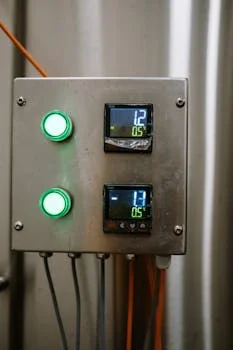
Dissolved Air Flotation (DAF) systems utilize 20–40 micron microbubbles to achieve 92–97% Total Suspended Solids (TSS) removal in industrial pre-treatment applications. For Irbid’s textile and food processing sectors, Irbid-ready DAF systems for 92–97% TSS removal are the primary defense against municipal surcharges. These units operate by injecting air into a recycle stream at high pressure (4–6 bar), which then releases microbubbles in the flotation tank, lifting fats, oils, and grease (FOG) to the surface for mechanical skimming. Energy consumption for these systems remains low, typically between 0.3 and 0.5 kWh/m³ (HydropureWater 2024 data).
For facilities requiring higher effluent quality—such as those aiming for ZLD or discharging into sensitive environments—Membrane Bioreactor (MBR) systems offer a superior alternative. Using submerged PVDF membranes with a 0.1 μm pore size, MBR units for Irbid factories needing COD ≤ 50 mg/L effluent replace traditional secondary clarifiers. This technology reduces the physical footprint by 60% and ensures that TSS levels remain below 5 mg/L. Understanding the MBR process flow and membrane selection for Irbid’s high-COD effluent is critical for pharmaceutical and dairy plants where organic loads are exceptionally high.
Effective treatment also requires precise chemical management. PLC-controlled chemical dosing for Irbid’s variable effluent streams ensures that Polyaluminum Chloride (PAC) and polymers are added in exact proportions to the influent flow. This automation can reduce chemical waste by 20–30% compared to manual dosing. To handle the resulting solids, plate-and-frame filter presses are used to dewater sludge, reducing its volume by 70–80%. This is particularly important in Irbid, where sludge disposal costs can range from JOD 150 to JOD 300 per ton. Detailed analysis shows how DAF systems achieve 95%+ TSS removal for Irbid factories when paired with optimized chemical flocculation.
| Equipment Type | Key Specification | Removal Efficiency | Best Use Case |
|---|---|---|---|
| DAF | 4–300 m³/h capacity | 95% TSS, 80% FOG | Textiles, Food Processing |
| MBR (WSZ Series) | 0.1 μm PVDF Membrane | 99% BOD, 98% COD | Dairy, Pharma, ZLD |
| Dosing Skid | PLC/SCADA Control | 90% Turbidity reduction | Variable Influent Loads |
| Filter Press | Hydraulic 15–20 Bar | 80% Sludge reduction | Solid Waste Management |
Cost Breakdown: CAPEX, OPEX, and ROI for Irbid Sewage Treatment Equipment
The average CAPEX for a compliance-ready DAF system in Irbid ranges from USD 80,000 to USD 250,000, depending on flow rates and material specifications. For smaller facilities processing 10 m³/h, a stainless steel DAF unit typically costs approximately USD 85,000. In contrast, MBR systems require a higher initial investment, ranging from USD 120,000 to USD 400,000 for capacities between 10 and 2,000 m³/day. These costs include the core equipment, PLC control panels, and initial membrane sets but exclude local civil works like concrete equalization tanks.
Operating expenses (OPEX) in Irbid are heavily influenced by Jordan’s industrial energy tariff of approximately 0.12 USD/kWh. A standard DAF system will incur energy costs of USD 0.15–0.30 per m³ of treated water. Chemical costs for PAC and polymers add another USD 0.05–0.20/m³. Labor is relatively affordable, with a single operator shift costing roughly JOD 600/month. When comparing technology types, global CAPEX/OPEX benchmarks for industrial wastewater treatment suggest that while MBR has higher membrane replacement costs, the avoidance of municipal surcharges often results in a faster ROI.
For a textile factory in Irbid discharging 1,000 m³/day, the ROI calculation is compelling. By installing a USD 150,000 DAF system, the factory avoids a JOD 2.00/m³ surcharge. This results in daily savings of JOD 2,000 (approx. USD 2,820). Even after accounting for USD 250 in daily OPEX, the system pays for itself in less than 2.5 years. the EBRD Green Cities Program offers 5–7 year loans at competitive 4–6% interest rates for Jordanian SMEs that install equipment reducing COD/TSS by at least 80%.
| Cost Component | DAF System (50 m³/h) | MBR System (500 m³/d) | Irbid Specific Rate |
|---|---|---|---|
| CAPEX (USD) | $120,000 - $180,000 | $150,000 - $250,000 | Excludes 16% VAT |
| Energy (USD/m³) | $0.08 - $0.12 | $0.15 - $0.25 | $0.12 per kWh |
| Chemicals (USD/m³) | $0.10 - $0.20 | $0.02 - $0.05 | PAC/Polymer market rate |
| Maintenance (USD/m³) | $0.02 - $0.04 | $0.08 - $0.15 | Membrane life: 8-10 yrs |
Irbid Sewage Treatment Suppliers: Local vs. International Comparison
Local Irbid suppliers typically offer lead times of 4–8 weeks for civil-heavy projects, while international equipment manufacturers provide process warranties of up to 10 years for core membrane components. Local firms like TECO Group or Jundi Contracting are excellent for SCADA integration and civil engineering. They provide on-site support with Jordanian-licensed engineers who understand the specific permitting nuances of the Ministry of Environment. However, local suppliers often lack the proprietary membrane technology or advanced DAF designs found in international portfolios, which can lead to higher chemical consumption over time.
International suppliers, such as HydropureWater, bridge this gap by providing high-efficiency core equipment with global performance guarantees. While lead times are longer (12–16 weeks due to shipping and customs at Aqaba), the equipment often features superior materials like SS316L or PVDF membranes that withstand Irbid’s high-salinity industrial effluent. Many Irbid buyers now adopt a hybrid approach: contracting local firms for the civil works and installation, while sourcing the core DAF or MBR technology from international specialists to ensure 2025 compliance standards are met.
When selecting a supplier, procurement teams should prioritize ISO 9001/14001 certification and a proven track record within Al-Hassan or Al-Tajamouat industrial zones. A critical selection criterion is the availability of remote monitoring; international systems equipped with IoT gateways allow for 24/7 troubleshooting from the manufacturer’s headquarters, reducing the risk of downtime that could lead to municipal fines.
| Selection Factor | Local Irbid Suppliers | International Manufacturers | Hybrid Strategy (Recommended) |
|---|---|---|---|
| Lead Time | 4–8 Weeks | 12–16 Weeks | Phased Delivery |
| Warranty | 1–2 Years (Standard) | 5–10 Years (Process) | Extended core warranty |
| Compliance Support | Excellent (Local Laws) | Technical (EU Standards) | Comprehensive Coverage |
| Upfront Cost | Lower (No Import Duty) | 10–20% Premium | Optimized CAPEX |
Frequently Asked Questions
What are the discharge limits for industrial wastewater in Irbid in 2025?
The limits are COD ≤ 250 mg/L, BOD ≤ 125 mg/L, TSS ≤ 30 mg/L, and heavy metals such as Copper (Cu) ≤ 0.5 mg/L and Zinc (Zn) ≤ 2.0 mg/L. These are aligned with Jordan’s JS 893/2021 and EU Directive 91/271/EEC.
How much does a DAF system cost for a 100 m³/h textile factory in Irbid?
CAPEX typically ranges from USD 180,000 to USD 220,000. The OPEX is approximately USD 0.20–0.30/m³, covering energy and chemical flocculants. Most factories achieve a payback period of 2–3 years by avoiding municipal surcharges.
Can I use a municipal WWTP for industrial wastewater in Irbid?
No, municipal plants like the West Irbid WWTP are designed for biological sewage. They will reject or surcharge industrial effluent that exceeds 250 mg/L COD or contains heavy metals that could damage their biological treatment process.
What’s the lead time for MBR systems in Irbid?
Local suppliers can often deliver within 4–8 weeks for standard units, while international suppliers require 12–16 weeks to account for manufacturing and customs clearance at the Port of Aqaba.
Are there government incentives for installing sewage treatment equipment in Irbid?
Yes, the EBRD Green Cities Program provides 5–7 year loans at 4–6% interest for SMEs in Jordan. Eligibility requires the project to demonstrate a significant reduction in pollutant loads, typically ≥80% for COD or TSS.