Hospital Wastewater Treatment in Cartagena: 2025 Engineering Specs, Compliance & Zero-Risk Equipment Guide
Hospital wastewater treatment systems in Cartagena must achieve greater than 99% pathogen removal and 95% chemical oxygen demand (COD) reduction to comply with Colombian Resolution 0631/2015 discharge limits. For instance, advanced MBR systems, such as HydropureWater’s DF Series, consistently deliver 98% COD removal and 99.9% fecal coliform inactivation, while electrocoagulation offers effective pharmaceutical residual removal without additional chemical dosing. With Cartagena hospitals generating 400–1,200 L/bed/day of effluent, compact and automated solutions like HydropureWater’s underground WSZ Series plants (1–80 m³/h) are crucial for avoiding municipal sewer surcharges. This guide provides actionable engineering specifications, compliance requirements, and equipment selection guidance for treating hospital wastewater in Cartagena, Colombia. Achieving a "zero-risk" discharge in this context means not only meeting regulatory parameters but also proactively mitigating emerging contaminants like antibiotic-resistant bacteria and pharmaceutical active compounds (PhACs) that pose long-term public health and environmental threats. A robust treatment strategy for Cartagena hospitals must therefore incorporate a multi-barrier approach, combining physical, chemical, and biological processes to ensure comprehensive contaminant removal and disinfection. The unique challenges of a tropical coastal city, including high ambient temperatures and humidity, further necessitate resilient and adaptable system designs capable of sustained performance under demanding conditions, while also considering footprint limitations typical of urban healthcare facilities.
Why Cartagena Hospitals Need Specialized Wastewater Treatment
Colombian Resolution 0631/2015 sets strict hospital effluent limits that significantly exceed those for domestic wastewater, driving the need for specialized treatment in Cartagena. For example, hospital discharge limits specify COD ≤100 mg/L, BOD ≤50 mg/L, and fecal coliform ≤1,000 MPN/100 mL, which are 10 times more stringent than the 10,000 MPN/100 mL allowed for general domestic wastewater (Resolution 0631/2015). Failure to meet these standards results in substantial financial penalties and operational disruptions for healthcare facilities in Cartagena. Regulatory enforcement in Colombia is becoming increasingly rigorous, with fines for non-compliance potentially reaching hundreds of millions of COP, alongside mandates for immediate corrective actions or even temporary facility closures. These penalties are designed to deter environmental pollution and protect public health, making proactive investment in advanced treatment systems an economic imperative.
Cartagena’s municipal wastewater treatment plants (WWTPs) are not equipped to handle the complex composition of hospital effluent. Municipal WWTPs typically reject hospital wastewater with COD concentrations exceeding 500 mg/L, leading to significant surcharges—up to 45% of the standard tariff—as outlined in the Cartagena Public Utilities 2024 tariff schedule. This financial burden underscores the economic necessity of on-site pre-treatment or full treatment. Beyond regulatory and financial pressures, hospital wastewater poses distinct public health risks, containing 2–10 times higher concentrations of antimicrobial-resistant (AMR) bacteria than domestic sewage (PAHO Tool 16) and 10–100 times more pharmaceutical residuals, including antibiotics and analgesics (PMC review). Untreated discharge contributes directly to the spread of AMR wastewater in Cartagena and environmental contamination. The presence of these emerging contaminants, such as endocrine-disrupting compounds (EDCs) and various drug metabolites, can lead to long-term ecological damage, affecting marine life in Cartagena's coastal ecosystems and potentially impacting human health through the food chain. Furthermore, hospital wastewater can contain heavy metals from dental procedures, laboratory reagents, and radioisotopes from nuclear medicine departments, which are particularly challenging for conventional municipal treatment processes and require specialized removal techniques to prevent accumulation in the environment.
Cartagena’s climate, characterized by high humidity (often exceeding 80%) and temperatures ranging from 28–32°C, also impacts treatment system performance. These conditions can accelerate biological activity but also lead to challenges such as increased MBR membrane fouling rates, potentially 15% faster than in temperate climates, demanding robust cleaning protocols and resilient system design. High temperatures can also reduce oxygen solubility, impacting aerobic biological processes, and necessitate efficient aeration systems. Moreover, the warm, humid environment can foster the rapid proliferation of pathogens if disinfection is inadequate, making robust and reliable disinfection steps, such as advanced oxidation processes or chlorine dioxide generation, absolutely critical. The corrosive coastal atmosphere also requires careful selection of materials for treatment plant construction and equipment, favoring corrosion-resistant stainless steel or specialized plastics to ensure system longevity and minimize maintenance costs. Implementing effective hospital effluent treatment in Colombia is therefore not just a compliance issue, but a critical measure for public health, environmental protection, and financial sustainability.
| Parameter | Resolution 0631/2015 Hospital Effluent Limit | Resolution 0631/2015 Domestic Wastewater Limit (for comparison) |
|---|---|---|
| Chemical Oxygen Demand (COD) | ≤100 mg/L | ≤250 mg/L |
| Biochemical Oxygen Demand (BOD₅) | ≤50 mg/L | ≤120 mg/L |
| Total Suspended Solids (TSS) | ≤50 mg/L | ≤90 mg/L |
| Fecal Coliforms | ≤1,000 MPN/100 mL | ≤10,000 MPN/100 mL |
| Ammonia Nitrogen (NH₃-N) | ≤10 mg/L | ≤30 mg/L |
Hospital Wastewater Characteristics: Cartagena vs. Global Benchmarks
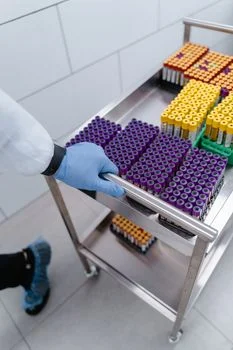
Hospital wastewater in Cartagena exhibits specific characteristics that influence treatment system design, often differing from global averages due to local practices and climate. Cartagena hospitals typically generate 600–900 L of wastewater per bed per day, a volume within the upper range of global benchmarks (400–1,200 L/bed/day, per Custodio et al.), reflecting high water usage rates in tropical climates. The influent chemical oxygen demand (COD) for Cartagena hospitals ranges from 800–1,500 mg/L, which is notably higher than the 500–1,000 mg/L often observed in temperate climates, indicating a more concentrated organic load. Similarly, biochemical oxygen demand (BOD) levels are elevated, typically between 400–800 mg/L. This higher organic concentration demands more robust biological treatment stages and potentially longer hydraulic retention times (HRT) or higher biomass concentrations to achieve the desired effluent quality.
A critical concern for hospital wastewater treatment in Cartagena is the prevalence of AMR bacteria. Influent concentrations of coliforms and other indicator pathogens can routinely exceed 106 MPN/100 mL, necessitating advanced disinfection beyond basic chlorination. The warm, humid climate of Cartagena provides an ideal environment for microbial growth and horizontal gene transfer, potentially exacerbating the spread of resistance genes. Studies have identified a range of resistant bacteria in Colombian hospital effluents, including methicillin-resistant Staphylococcus aureus (MRSA), vancomycin-resistant enterococci (VRE), and extended-spectrum beta-lactamase (ESBL)-producing Enterobacteriaceae, often at concentrations significantly higher than in general urban sewage. Effective treatment systems must demonstrate high removal efficiencies for these resistant strains and their associated resistance genes (ARGs) to prevent their dissemination into the aquatic environment.
Furthermore, the pharmaceutical profile of Cartagena's hospital wastewater is complex. Common pharmaceuticals detected include a broad spectrum of antibiotics (e.g., ciprofloxacin, azithromycin), analgesics (e.g., ibuprofen, paracetamol), anti-inflammatories, beta-blockers, and contrast media from diagnostic imaging. Concentrations of these PhACs can range from nanograms to micrograms per liter, requiring treatment technologies capable of degrading recalcitrant organic compounds. Electrocoagulation, for example, has shown promise in removing certain PhACs by generating strong oxidants and facilitating coagulation, while advanced oxidation processes (AOPs) like UV/H2O2 or ozonation are highly effective at breaking down complex organic molecules. Heavy metals such as mercury, silver, and lead, originating from dental departments, laboratories, and older medical equipment, also require specific removal strategies, often involving precipitation or ion exchange. The presence of radioactive isotopes, though typically in very low concentrations from nuclear medicine, necessitates careful handling and decay storage prior to discharge, adhering to specific radiological safety guidelines to prevent environmental contamination and protect public health. The composite nature of hospital wastewater in Cartagena, therefore, demands a sophisticated, multi-stage treatment approach tailored to its specific high organic load, pathogenic burden, and diverse chemical contaminants.
Related Equipment
- MBR systems for hospital wastewater in Cartagena — view specifications, capacity range, and technical data. MBR systems are particularly well-suited for Cartagena's stringent discharge limits due to their ability to produce high-quality effluent consistently. Their compact footprint is ideal for urban hospital settings where space is limited, and the membrane barrier provides superior pathogen removal and TSS reduction compared to conventional activated sludge systems. The robust biological degradation within the MBR effectively reduces high COD and BOD levels, while also offering significant removal of some emerging contaminants.
- chlorine dioxide generators for hospital effluent disinfection — view specifications, capacity range, and technical data. Chlorine dioxide (ClO₂) is a powerful disinfectant that is highly effective against a wide range of pathogens, including bacteria, viruses, and protozoa, and has proven efficacy against antibiotic-resistant strains. Unlike chlorine, ClO₂ does not form harmful disinfection byproducts (DBPs) like trihalomethanes (THMs), making it a safer and more environmentally friendly option for discharge into Cartagena's sensitive coastal waters. Its consistent performance in warm climates ensures reliable pathogen inactivation.
- compact underground treatment plants for Cartagena hospitals — view specifications, capacity range, and technical data. These integrated plants offer a discreet, space-saving solution, ideal for hospitals with limited land availability. By being installed underground, they minimize aesthetic impact, reduce noise, and protect equipment from the harsh tropical climate, including intense UV radiation and corrosive salt air. Their modular design allows for scalability and easy expansion, adapting to the fluctuating demands of a growing healthcare facility while maintaining compliance with Resolution 0631/2015.
Need a customized solution? Request a free quote with your specific flow rate and pollutant parameters.
Further Reading
To further deepen your understanding of advanced wastewater treatment challenges and solutions, explore these in-depth articles on related topics: