The best belt filter press for industrial use in 2025 combines a fully welded mainframe, oversized bearings, and corrosion-resistant materials to handle high-solids sludge (5-30% dry solids) with 98% capture efficiency. Leading models like PHOENIX’s WX, Alfa Laval’s AS-H, and Komline-Sanderson’s Kompress Series III dominate petrochemical, mining, and food processing applications, but differ in belt configuration (2-belt vs. 3-belt), pressure zone design, and throughput capacity (50–1,200 kg/hr dry solids). Selecting the right press requires matching sludge characteristics, such as particle size and viscosity, to machine specs—this guide provides the 2025 engineering data and selection framework to minimize operational risk.
Why Industrial Plants Struggle with Sludge Dewatering: A Cost and Compliance Nightmare
Industrial facilities face sludge disposal costs ranging from $80 to $200 per ton, a figure that can increase by 50% if dewatering equipment fails to meet a 20% dry solids threshold.For a typical mining operation producing 50 tons of sludge daily, even a 5% drop in dewatering efficiency results in thousands of dollars in additional hauling fees per month. Beyond the financial burden, regulatory frameworks like the EPA 40 CFR Part 503 for biosolids mandate strict moisture and pathogen limits, making inefficient dewatering a liability for legal compliance.
Sludge variability across sectors creates a significant engineering challenge. Mining tailings are often abrasive with 5–15% dry solids, requiring heavy-duty components to prevent premature wear. In contrast, petrochemical sludge is frequently oily and viscous (10–25% dry solids), which can blind standard filter belts. Food processing residuals (3–8% dry solids) are often fibrous or biological, necessitating high-porosity belts and frequent wash cycles. Without a precise match between the equipment and the waste stream, plants often experience 2–5 hours of unplanned downtime weekly for belt adjustments and cleaning.
A 2024 study by the Water Environment Federation highlighted that poor equipment selection leads to 30–50% higher OPEX due to excessive polymer consumption and energy waste. Many operators attempt to use a one-size-fits-all approach, ignoring that a press designed for municipal waste will likely fail under the chemical and physical stresses of an industrial environment. Implementing a lamella clarifier for pre-thickening sludge before belt press dewatering can mitigate some of these issues, but the belt press remains the critical final stage for volume reduction.
How Belt Filter Presses Work: Engineering Specs for the 3 Critical Zones
A standard industrial belt filter press achieves 98% solids capture by transitioning slurry through gravity drainage, wedge pre-compression, and high-pressure shear zones.Each zone must be engineered to specific parameters to ensure the sludge reaches the required cake dryness without "bleeding" through the belt edges or blinding the mesh.
Gravity Zone: This initial stage removes 60–70% of the free-draining water. The slurry is distributed across a porous belt with pore sizes typically ranging from 0.1 to 0.5 mm. Retention time is critical here; 1–3 minutes is the industrial standard to allow for effective flocculation. Some high-performance models, such as the PHOENIX WX, utilize a more open belt weave in this zone to accelerate drainage, which is particularly effective for high-volume mining applications. Proper pre-treatment with a PLC-controlled chemical dosing system for optimal sludge conditioning ensures that the gravity zone operates at peak efficiency by forming stable flocs.
Wedge Zone: In this transition area, the top and bottom belts converge to "sandwich" the thickened sludge. This zone is responsible for a 30–40% volume reduction by applying gentle, increasing pressure. Engineering data from Komline-Sanderson suggests that the wedge zone should reduce moisture by 15–20% before the sludge enters the high-pressure rollers. Roller geometry, such as a serpentine design, is vital for preventing the sludge from being squeezed out of the sides, a common failure point in lower-tier machines.
Pressure Zone: This is where the final dewatering occurs through medium and high-pressure application (2–10 bar). Belt tension, measured between 50 and 200 kN/m, dictates the final cake dryness. Industrial buyers must choose between 2-belt and 3-belt designs. A 3-belt configuration, like the Kompress G-GRSL, includes an independent gravity zone that can increase pressure application by up to 20%, though it increases the machine's overall footprint and energy consumption.
| Engineering Parameter | Standard Industrial Spec | High-Performance Spec |
|---|---|---|
| Belt Tension Capacity | 30–60 kN/m | 100–200 kN/m |
| Gravity Retention Time | <60 seconds | 120–180 seconds |
| Solids Capture Rate | 90–94% | 97–99% |
| Mainframe Material | Painted Carbon Steel | 316L Stainless or Epoxy-Coated Steel |
Belt Filter Press Comparison: PHOENIX WX vs. Alfa Laval AS-H vs. Kompress Series III
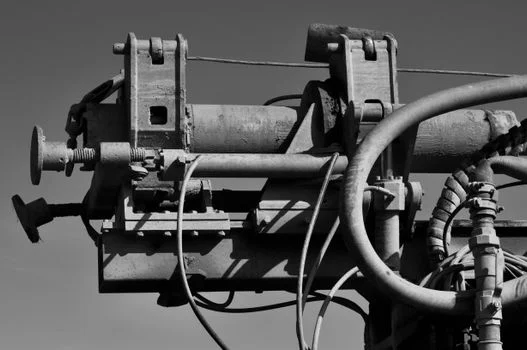
Performance data for 2025 indicates that these models, along with the Alfa Laval AS-H, lead in various applications. Choosing between these models requires a trade-off analysis between throughput, material durability, and operational costs.
The PHOENIX WX is engineered for the most rugged environments, featuring a fully welded carbon steel mainframe protected by a proprietary epoxy coating. It handles up to 1,200 kg/hr of dry solids, making it the preferred choice for large-scale mining and petrochemical sites. Its oversized bearings are a specific advantage when dealing with the high torque requirements of dense, abrasive sludge. For facilities that require even higher solids concentrations, a plate and frame filter press for high-solids sludge might be considered, though it lacks the continuous operation benefits of the belt press.
Alfa Laval’s AS-H series prioritizes hygiene and corrosion resistance. Constructed from 316L stainless steel and compliant with FDA/EU 1935/2004 standards, it is the benchmark for food processing. While its throughput is lower (800 kg/hr), its energy efficiency is superior, consuming only 10 kWh/ton. The Kompress G-GRSL (3-belt) occupies the middle ground, offering high throughput (1,000 kg/hr) and excellent capture rates (97%). However, the 3-belt design requires 15% more floor space and higher energy inputs (15 kWh/ton) to maintain the independent gravity zone.
| Feature | PHOENIX WX | Alfa Laval AS-H | Kompress G-GRSL |
|---|---|---|---|
| Belt Config | 2-Belt | 2-Belt | 3-Belt |
| Max Throughput | 1,200 kg/hr | 800 kg/hr | 1,000 kg/hr |
| Solids Capture | 98% | 95% | 97% |
| Energy Use | 12 kWh/ton | 10 kWh/ton | 15 kWh/ton |
| Best For | Mining / Petrochem | Food Processing | Pulp & Paper |
| CapEx Range | $250K – $450K | $180K – $380K | $220K – $420K |
Selecting the Right Belt Filter Press: A Zero-Risk Decision Framework for Industrial Buyers
Selecting a belt filter press based on a 20-year lifecycle analysis reduces total cost of ownership by up to 35% compared to selecting based on initial CapEx alone.Procurement teams should follow a structured framework to ensure the selected equipment handles the specific rheology of their waste stream while meeting ROI targets.
Step 1: Characterize the Sludge. Perform a laboratory analysis to determine dry solids percentage, particle size distribution, and viscosity. For example, if you are managing PCB electroplating wastewater treatment with 99.9% metal recovery, the resulting sludge may be high in heavy metal hydroxides, requiring specialized belt materials to prevent chemical degradation.
Step 2: Match Sludge to Press Type. Use the following decision logic: If dry solids content is consistently above 15%, a 3-belt design (like Kompress) is recommended to handle the higher hydraulic load in the gravity zone. If dry solids are below 10% and the application is food-grade, a 2-belt stainless steel model (Alfa Laval) is sufficient.
Step 3: Calculate Required Capacity. Use the formula: (Daily Sludge Volume × Dry Solids %) / (Operating Hours × Press Capacity). If a plant produces 100 m³/day at 10% solids, it generates 10,000 kg of dry solids daily. To process this in an 8-hour shift, a capacity of 1,250 kg/hr is needed, pointing toward a high-capacity unit like the PHOENIX WX.
Step 4: ROI and Payback Analysis. Calculate the payback period using: CapEx / (Annual Disposal Savings + Labor Savings). A $300,000 press that reduces disposal fees by $150,000 annually through better cake dryness achieves a 2-year payback. Automated features, such as remote monitoring and self-adjusting belt tracking, can further reduce labor costs by 30%.
| Selection Factor | Low Risk Choice | High Risk Choice |
|---|---|---|
| Corrosion | 316L Stainless or Epoxy | Standard Enamel Paint |
| Bearings | L-10 Life > 100,000 hrs | Standard Industrial Bearings |
| Automation | PLC-Integrated Tracking | Manual Tensioning |
| Support | On-site commissioning | Remote-only support |
Common Belt Press Problems in Industrial Applications (and How to Fix Them)
This issue is typically caused by uneven sludge distribution or improper tensioning. Automated tracking systems, which use pneumatic or hydraulic sensors to continuously realign the belt, are essential for 24/7 industrial operations. If a belt drifts, operators should first check for debris in the sensing paddles before adjusting the tension rollers.
Poor cake release is another frequent pain point, often resulting in "carry-over" where sludge remains stuck to the belt and re-enters the gravity zone. This is usually caused by insufficient belt tension or the wrong belt weave for the sludge's stickiness. Solutions include increasing the discharge blade pressure or switching to a Teflon-coated belt. For particularly sticky biological sludges, models with integrated brush discharge mechanisms, like those found on the Kompress series, significantly improve cleaning efficiency.
High energy consumption and premature corrosion can also derail a project. If energy use exceeds 15 kWh/ton, it often indicates that the