Halifax industrial facilities must pretreat wastewater to meet Halifax Water’s Section 66 limits—typically <300 mg/L TSS, <100 mg/L FOG, and <5 mg/L heavy metals—before discharge into the municipal system. Advanced-primary treatment plants in Halifax achieve 70% suspended solids removal using flocculants and UV disinfection, but industrial operators often need additional systems (DAF, MBR, or chemical dosing) to comply with quarterly sampling requirements. CAPEX for compliant equipment ranges from $120K–$450K depending on flow rate (50–300 m³/h) and pollutant load.
Halifax Water’s Industrial Pretreatment Regulations: What You Must Meet in 2025
Halifax Water’s Section 66 of the Halifax Water Regulations mandates strict effluent limits and quarterly sample submissions for industrial discharges into the municipal wastewater system. These regulations require industrial operators to provide accredited laboratory results for key parameters including pH, Total Suspended Solids (TSS), Biochemical Oxygen Demand (BOD), Fats, Oils, and Grease (FOG), and specific heavy metals like Copper (Cu <1.0 mg/L) and Zinc (Zn <2.0 mg/L). While Halifax’s municipal wastewater treatment plants utilize an advanced-primary treatment process, achieving approximately 70% TSS removal, industrial facilities often generate effluent with pollutant concentrations far exceeding these baseline capabilities. Consequently, on-site pretreatment is essential for industrial operators to consistently meet the mandated discharge limits, particularly <300 mg/L TSS and <100 mg/L FOG, which are typical thresholds for compliant industrial effluent.
Non-compliance with these stringent standards carries significant financial repercussions, with penalties ranging from $10,000 to $100,000 under the Nova Scotia Environment Act (2023 update), and escalating fines for repeat violations. To ensure continuous compliance and avoid these substantial penalties, industrial operators must adhere to a precise submission process. Accredited laboratory results, such as those from AGAT Labs or Bureau Veritas, must be submitted through Halifax Water’s online portal by the 15th of the month following each quarter (e.g., April 15th for Q1 results). Maintaining a detailed record of these submissions and compliance activities for a minimum of five years is also a requirement under provincial environmental legislation.
| Parameter | Halifax Water Section 66 Limit (Typical) | Sampling Frequency |
|---|---|---|
| pH | 6.0 – 9.5 | Quarterly |
| Total Suspended Solids (TSS) | <300 mg/L | Quarterly |
| Biochemical Oxygen Demand (BOD) | <300 mg/L | Quarterly |
| Fats, Oils, and Grease (FOG) | <100 mg/L | Quarterly |
| Copper (Cu) | <1.0 mg/L | Quarterly |
| Zinc (Zn) | <2.0 mg/L | Quarterly |
| Nickel (Ni) | <1.0 mg/L | Quarterly |
| Lead (Pb) | <0.5 mg/L | Quarterly |
Advanced-Primary Treatment vs. Industrial Pretreatment: When Halifax’s Baseline Isn’t Enough
Halifax’s municipal wastewater treatment plants employ an advanced-primary treatment process designed to remove approximately 70% of Total Suspended Solids (TSS) from general wastewater using chemical flocculants, such as polyaluminum chloride, followed by UV disinfection. While effective for typical municipal sewage, this baseline treatment is often insufficient for the highly concentrated and diverse pollutant loads discharged by industrial facilities in Halifax. For instance, effluent from food processing plants can contain 500–2,000 mg/L TSS and high levels of FOG, significantly exceeding the <300 mg/L TSS and <100 mg/L FOG limits set by Halifax Water. Similarly, metalworking operations may discharge 10–50 mg/L of heavy metals, which advanced-primary treatment is not designed to address comprehensively.
Several industrial sectors consistently require additional on-site pretreatment to comply with Halifax Water’s Section 66 regulations. Food and beverage manufacturers, with their high FOG and organic loads, necessitate robust grease and solids removal. Metal finishing and electroplating facilities require specialized heavy metal removal systems. Pulp and paper mills often produce effluent with high Biochemical Oxygen Demand (BOD) and suspended solids, while pharmaceutical companies may discharge complex toxic organics that demand advanced oxidation processes. Therefore, achieving compliant industrial wastewater treatment in Halifax often involves a hybrid system: the facility's on-site pretreatment (e.g., Dissolved Air Flotation, Membrane Bioreactors, or chemical dosing) followed by discharge into the municipal advanced-primary system.
To determine if a facility's effluent requires additional pretreatment beyond Halifax’s advanced-primary capabilities, industrial operators can follow a decision framework: First, characterize your raw effluent via accredited lab testing for TSS, FOG, BOD, pH, and heavy metals. If your effluent parameters consistently exceed Halifax Water’s Section 66 limits, then on-site industrial pretreatment is required. Next, evaluate suitable technologies like DAF, MBR, or chemical dosing based on your specific pollutant profile and flow rate. For example, DAF systems are highly effective for Halifax food processing effluent, targeting fats, oils, grease, and suspended solids.
Equipment Comparison: DAF vs. MBR vs. Chemical Dosing for Halifax Industrial Effluent
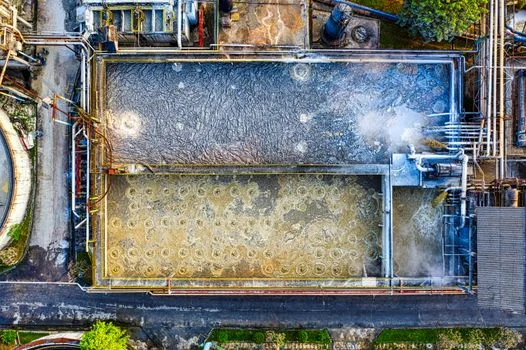
Selecting the optimal industrial wastewater pretreatment technology for Halifax-based facilities depends critically on the specific pollutant profile, required effluent quality, and operational considerations. Dissolved Air Flotation (DAF) systems are highly effective for removing Fats, Oils, and Grease (FOG) with 95%+ efficiency and achieving 92–97% Total Suspended Solids (TSS) reduction. They are particularly well-suited for industries like food processing, meatpacking, and metalworking, handling flow rates typically ranging from 4–300 m³/h. The Capital Expenditure (CAPEX) for a DAF system generally falls between $80,000 and $250,000, with Operating Expenditure (OPEX) averaging $0.15–$0.30/m³, primarily driven by flocculant costs (HydropureWater field data, 2025).
Membrane Bioreactor (MBR) systems offer superior effluent quality, consistently achieving <10 mg/L TSS and over 99% BOD removal. This makes them ideal for treating high-strength organic waste, such as from pharmaceuticals, breweries, or complex chemical manufacturing, with typical capacities ranging from 10–2,000 m³/day. MBR systems represent a higher initial investment, with CAPEX between $150,000 and $450,000, and OPEX of $0.40–$0.60/m³ due to energy consumption for aeration and membrane replacement cycles (HydropureWater field data, 2025). For detailed specifications, consider a MBR system for Halifax high-strength effluent.
Chemical dosing systems are primarily employed for targeted pollutant removal, achieving over 90% heavy metal removal, pH neutralization, and phosphorus precipitation. These systems are critical for industries like electroplating, metal finishing, and certain pharmaceutical operations where specific contaminants must be precisely managed. CAPEX for chemical dosing systems ranges from $50,000 to $120,000, with OPEX between $0.20–$0.50/m³, largely dependent on the type and quantity of chemicals consumed. For precise heavy metal removal, explore a chemical dosing for Halifax heavy metal compliance.
When selecting a system for industrial wastewater treatment in Halifax, specific local considerations are paramount. Halifax Water’s municipal treatment includes UV disinfection, so any on-site pretreatment should be compatible. DAF systems generally require a smaller footprint compared to MBRs for similar capacities, which can be a critical factor for facilities with limited space. Additionally, MBR systems demand more skilled operators for membrane maintenance and cleaning, whereas DAF and chemical dosing systems are typically less labor-intensive in their daily operations. A DAF system for Halifax industrial wastewater offers robust performance with a manageable operational profile.
| Technology | Key Pollutants Removed | Removal Efficiency (Typical) | Ideal Flow Rate Range | CAPEX (Approx.) | OPEX/m³ (Approx.) | Halifax-Specific Notes |
|---|---|---|---|---|---|---|
| Dissolved Air Flotation (DAF) | FOG, TSS, some BOD | 95%+ FOG, 92–97% TSS | 4–300 m³/h | $80K–$250K | $0.15–$0.30 | Excellent for food processing, smaller footprint, lower operator skill. |
| Membrane Bioreactor (MBR) | TSS, BOD, COD, pathogens | <10 mg/L TSS, 99% BOD | 10–2,000 m³/day | $150K–$450K | $0.40–$0.60 | Superior effluent quality for high-strength organic waste, higher operator skill. |
| Chemical Dosing | Heavy metals, pH, phosphorus | 90%+ heavy metals | Variable (batch/continuous) | $50K–$120K | $0.20–$0.50 | Targeted removal, essential for metal finishing, requires chemical handling. |
Cost Breakdown: CAPEX, OPEX, and ROI for Halifax-Compliant Industrial Systems
The total cost of implementing an effective industrial wastewater treatment in Halifax system comprises both Capital Expenditure (CAPEX) and Operating Expenditure (OPEX), with significant variations based on technology, flow rate, and pollutant load. For systems handling 50–300 m³/h, CAPEX ranges from $80,000 to $250,000 for DAF units, $150,000 to $450,000 for MBR systems, and $50,000 to $120,000 for chemical dosing setups (HydropureWater field data, 2025). These figures include equipment purchase, installation, and initial commissioning. Understanding these benchmarks is crucial for Halifax procurement managers evaluating compliant solutions.
Operating expenses are primarily driven by consumables, energy, and maintenance. For DAF systems, flocculant costs typically range from $0.05–$0.15/m³, while MBR systems face higher OPEX due to membrane replacement, averaging $0.20–$0.30/m³ over their lifespan, in addition to significant energy costs for aeration. Chemical dosing systems incur OPEX of $0.10–$0.40/m³ depending on the specific chemicals and pollutant concentrations. Other OPEX drivers include power consumption, labor for operation and maintenance, and sludge disposal costs, which can vary significantly based on sludge volume and hazardous waste classifications (per Nova Scotia Environment regulations).
Calculating the Return on Investment (ROI) for compliant industrial wastewater treatment in Halifax often involves comparing the cost of investment against the avoidance of significant penalties and operational disruptions. With non-compliance fines ranging from $10,000 to $100,000 per year under the Nova Scotia Environment Act, a well-selected pretreatment system can quickly justify its cost. For example, a 100 m³/h DAF system, with an average CAPEX of $150,000, could pay for itself in 2–3 years by preventing just a few moderate fines. Beyond penalty avoidance, benefits include enhanced corporate reputation, reduced environmental liability, and potential for water reuse in some applications, though direct discharge into Halifax Water’s system is the primary goal for most industrial operators.
| System Type | Flow Rate (m³/h) | CAPEX (Approx.) | OPEX/m³ (Approx.) | Compliance Risk Mitigation |
|---|---|---|---|---|
| DAF System | 50–100 | $80K–$150K | $0.15–$0.25 | High (FOG, TSS) |
| DAF System | 101–300 | $151K–$250K | $0.20–$0.30 | High (FOG, TSS) |
| MBR System | 50–100 | $150K–$250K | $0.40–$0.50 | Very High (BOD, TSS, organics) |
| MBR System | 101–300 | $251K–$450K | $0.50–$0.60 | Very High (BOD, TSS, organics) |
| Chemical Dosing | 50–100 | $50K–$90K | $0.20–$0.40 | High (Heavy Metals, pH, P) |
| Chemical Dosing | 101–300 | $91K–$120K | $0.30–$0.50 | High (Heavy Metals, pH, P) |
Compliance Checklist: 5 Steps to Zero-Risk Halifax Water Pretreatment
Achieving and maintaining compliance with Halifax Water’s Section 66 requirements for industrial wastewater discharge necessitates a proactive, systematic approach. This 5-step checklist provides an actionable framework for industrial operators to ensure zero-risk Halifax Water pretreatment regulations compliance and avoid penalties.
- Step 1: Characterize Effluent via Accredited Lab Testing. Conduct comprehensive analysis of your raw industrial effluent for all parameters mandated by Section 66, including TSS, FOG, BOD, pH, and specific heavy metals (e.g., Cu, Zn). Utilize accredited laboratories such as AGAT Labs or Bureau Veritas to ensure results are legally defensible and accepted by Halifax Water. This baseline data is essential for identifying compliance gaps and selecting appropriate treatment technologies.
- Step 2: Select Pretreatment System Based on Pollutant Profile. Based on the effluent characterization, choose the most effective and cost-efficient pretreatment technology (DAF, MBR, or chemical dosing) that specifically targets your facility's dominant pollutants. Refer to the equipment comparison table provided earlier in this guide to match technology capabilities with your effluent's unique composition and flow rate.
- Step 3: Install and Calibrate Monitoring Equipment. Implement continuous monitoring equipment, such as pH meters, flow totalizers, and potentially ORP sensors, at strategic points within your pretreatment system. Ensure all monitoring devices are regularly calibrated (e.g., quarterly) according to manufacturer specifications and industry best practices to guarantee accurate data collection for compliance reporting.
- Step 4: Submit Quarterly Sample Results to Halifax Water. Collect effluent samples on a quarterly basis, ensuring they are representative of your discharge. Have these samples analyzed by an accredited laboratory and submit the results to Halifax Water by the 15th of the month following each quarter via their designated online portal (e.g., Halifax Water Industrial Pretreatment portal). Timely and accurate submission is critical to avoid penalties.
- Step 5: Maintain Comprehensive Records for 5 Years. Keep meticulous records of all effluent characterization reports, treatment system maintenance logs, monitoring equipment calibration certificates, and official compliance submissions to Halifax Water. The Nova Scotia Environment Act requires these records to be maintained for a minimum of five years, providing an audit trail for regulatory inspections.
Frequently Asked Questions
What are the primary penalties for non-compliance with Halifax Water’s Section 66 regulations?
Non-compliance can result in fines ranging from $10,000 to $100,000 under the Nova Scotia Environment Act (2023 update), with repeat violations leading to escalating penalties. Beyond financial repercussions, facilities may face operational restrictions or mandatory upgrades, highlighting the importance of robust industrial wastewater treatment in Halifax.
Does Halifax Water’s advanced-primary treatment eliminate the need for industrial pretreatment?
No, Halifax’s advanced-primary treatment removes approximately 70% of TSS from general wastewater, which is often insufficient for industrial effluent. Facilities with high concentrations of FOG, heavy metals, or BOD typically require on-site pretreatment like DAF, MBR, or chemical dosing to meet specific industrial effluent limits Nova Scotia.
How often do I need to submit sample results to Halifax Water?
Industrial facilities are typically required to submit quarterly sample results to Halifax Water. These results, obtained from an accredited laboratory, must be uploaded to Halifax Water’s online portal by the 15th of the month following the end of each quarter.
What is the typical lifespan and maintenance for an MBR system in Halifax?
MBR membranes typically have a lifespan of 5–10 years, depending on the wastewater characteristics and operational practices. Maintenance involves regular cleaning (chemical and physical) to prevent fouling and ensure optimal performance. This contributes to the higher OPEX for MBR wastewater treatment cost, but provides superior effluent quality.
Further Reading
Explore these in-depth articles on related wastewater treatment topics: