Why Semiconductor Fabs Are Racing to Reclaim High-Purity Water
Semiconductor fabs consume 2–4 million gallons of ultrapure water (UPW) daily, with associated costs exceeding $5/m³ in water-stressed regions like Arizona and Taiwan. This escalating demand, coupled with increasing regulatory scrutiny, is forcing the industry towards aggressive water reclamation. For instance, the U.S. Environmental Protection Agency's (EPA) 2025 Effluent Limitation Guidelines (ELGs) mandate up to 90% water reuse for new fabs situated in high-risk watersheds, as detailed in EPA document 821-R-24-001. Progressive companies are already demonstrating the viability of these strategies; TSMC's Arizona fab, for example, achieved a 65% reduction in municipal water usage through advanced reclaim systems, projecting annual savings of $12 million based on 2024 data. The financial implications of water scarcity extend beyond direct utility costs, encompassing potential production delays and higher operational expenditures that impact a fab's profitability and competitive edge.
Engineering the High-Purity Water Reclaim Train: Stage-by-Stage Specs
Designing a high-purity water reclaim system requires a meticulous, multi-stage approach to ensure UPW quality meets stringent SEMI F47-0600 standards. The process begins with robust pre-treatment to safeguard downstream components. Multi-media filters, typically with pore sizes ranging from 10–50 μm, remove larger suspended solids, followed by Dissolved Air Flotation (DAF) units capable of achieving 95% Total Suspended Solids (TSS) removal. This prepares the water for primary treatment via semiconductor-grade RO systems for high-purity water reclaim. These systems utilize membranes with pore sizes as small as 0.0001 μm, delivering 90–95% Total Dissolved Solids (TDS) removal and a 99% particle rejection rate. Following RO, polishing loops are critical. Electrodeionization (EDI) technology further reduces ionic contaminants, bringing conductivity below 0.1 μS/cm. For volatile organic compounds (VOCs) and residual organics, activated carbon filters with a surface area of 1,000–1,200 m²/g are integrated to reduce Total Organic Carbon (TOC) to below 1 ppb. UV oxidation, utilizing wavelengths of 185/254 nm, breaks down recalcitrant organic molecules post-RO.
| Treatment Stage | Key Technology | Typical Specification | Contaminant Removal Target | Relevant Standard/Source |
|---|---|---|---|---|
| Pre-treatment | Multi-Media Filter | 10–50 μm | Suspended Solids | Industry Best Practice |
| Pre-treatment | DAF | - | 95% TSS | Industry Best Practice |
| Primary Treatment | Reverse Osmosis (RO) | 0.0001 μm membrane | 90–95% TDS, 99% Particles | Dow Filmtec Specs |
| Polishing | Electrodeionization (EDI) | - | <0.1 μS/cm conductivity | SEMI F47-0600 |
| Organic Removal | Activated Carbon Filter | 1,000–1,200 m²/g surface area | <1 ppb TOC | EPA 815-R-23-002 |
| Organic Degradation | UV Oxidation (185/254 nm) | - | Breakdown of residual organics | Industry Best Practice |
For robust pre-treatment, consider our multi-media filters. Our semiconductor-grade RO systems for high-purity water reclaim are engineered for maximum efficiency.
Reclaim vs. ZLD: Head-to-Head Comparison for Semiconductor Fabs
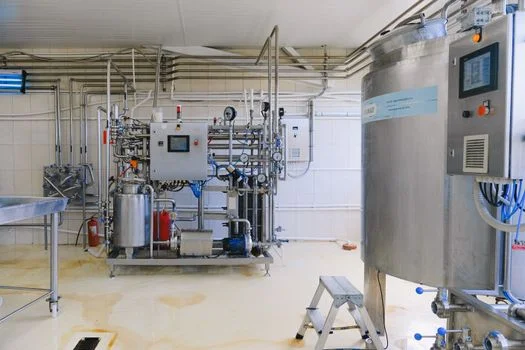
Semiconductor fabs evaluating wastewater management strategies must consider high-purity water reclaim systems and Zero Liquid Discharge (ZLD) solutions. Reclaim systems achieve recovery rates between 90% and 99%, effectively recycling rinse water and other less contaminated streams back into the UPW loop. ZLD systems, however, aim for 99.9%+ recovery, treating even the most challenging wastewater streams like those from Chemical Mechanical Planarization (CMP) and slurry processes, thereby eliminating all liquid discharge. This comprehensive approach necessitates additional, energy-intensive units such as crystallizers or evaporators. Consequently, the capital expenditure (CapEx) for ZLD systems is significantly higher, often adding 30–40% to the cost of a standard reclaim system. For a throughput of 1,000–5,000 m³/day, reclaim systems range from $2.5M–$8M, while ZLD can push this to $3.25M–$11.2M, based on 2025 data. Operational expenditure (OpEx) also reflects this difference; reclaim systems typically cost $0.80–$1.50/m³ reclaimed, whereas ZLD’s energy demands drive its OpEx to $1.80–$3.00/m³.
| Feature | High-Purity Water Reclaim | Zero Liquid Discharge (ZLD) |
|---|---|---|
| Recovery Rate | 90% – 99% | 99.9%+ |
| Primary Application | Rinse water, less contaminated process water | CMP wastewater, slurry waste, heavy metal streams |
| Key Additional Units | RO, EDI, polishing loops | Evaporators, crystallizers, thermal distillation |
| Estimated CapEx (1,000–5,000 m³/day) | $2.5M – $8M (2025 data) | $3.25M – $11.2M (30-40% higher than reclaim) |
| Estimated OpEx (/m³ reclaimed) | $0.80 – $1.50 | $1.80 – $3.00 (energy-intensive) |
| Compliance | Requires discharge permits for residual effluent | Meets EPA 2025 ELGs for zero discharge |
For comprehensive CMP wastewater treatment for semiconductor fabs, ZLD integration is paramount.
Contamination Control: Preventing Particle, Organic, and Ionic Breakthrough
SEMI F47-0600 purity levels require vigilance in contamination control, focusing on particles, organics, and ions. Particle control requires filtration down to sub-0.1 μm levels, often employing advanced membrane materials like PVDF to meet the <10 particles/L limit. Organic contaminants are addressed through UV oxidation and activated carbon. UV treatment at 185 nm breaks down organic molecules, while activated carbon filters with a high surface area ensure TOC levels remain below 1 ppb. Ionic purity is primarily managed by EDI systems, which reduce conductivity to <0.1 μS/cm. For final polishing or specific ion removal, ion exchange resins are indispensable.
To manage organic contaminants, consider our activated carbon filter industrial engineering guide.
Cost Breakdown: CapEx, OpEx, and ROI for High-Purity Water Reclaim
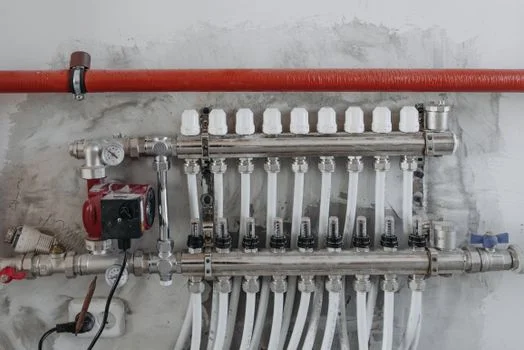
The financial justification for high-purity water reclaim systems hinges on understanding their capital expenditure (CapEx), operational expenditure (OpEx), and return on investment (ROI). For systems handling 1,000–5,000 m³/day, the estimated CapEx in 2025 ranges from $2.5 million to $8 million. This cost encompasses the entire purification train, from pre-treatment and RO to EDI and final polishing loops. OpEx for these systems falls between $0.80 and $1.50 per cubic meter of reclaimed water. In water-stressed regions like Arizona or Taiwan, the ROI for reclaim systems can be as short as 2–4 years, driven by the high cost of municipal water and the avoidance of stringent discharge penalties.
| Cost Component | High-Purity Water Reclaim (1,000–5,000 m³/day) | Zero Liquid Discharge (ZLD) (1,000–5,000 m³/day) |
|---|---|---|
| Estimated CapEx (2025 Data) | $2.5M – $8M | $3.25M – $11.2M (approx. 30-40% higher) |
| Estimated OpEx (/m³ reclaimed) | $0.80 – $1.50 | $1.80 – $3.00 (dominated by energy) |
| Typical ROI | 2–4 years (water-stressed regions) | 5–7 years |
| Regional CapEx Variation (US vs. China) | +20% in US | +20% in US |
| Regional OpEx Variation (Europe vs. Avg.) | +30% in Europe | +30% in Europe |
Frequently Asked Questions
What are the primary drivers for implementing high-purity water reclaim systems in semiconductor fabs?
The primary drivers are substantial reduction in municipal water demand and associated costs, compliance with environmental regulations (like EPA's 2025 ELGs), and mitigating risks associated with water scarcity. See also: RO water purification engineering guide.
How do MBR systems contribute to semiconductor water reclaim?
MBR systems, such as our MBR systems for semiconductor rinse water reclaim, offer a compact and efficient solution for treating rinse water.
What are the critical contaminant limits to meet SEMI F47-0600 standards?
SEMI F47-0600 standards for UPW require conductivity below 0.1 μS/cm, TOC below 1 ppb, and particle counts below 10 particles/L for sizes ≥ 0.1 μm.
Can ZLD systems handle complex wastewater from CMP processes?
Yes, ZLD systems treat challenging wastewater streams, including those from CMP processes containing high concentrations of abrasives, dissolved solids, and heavy metals. See also: microelectronics heavy metal wastewater treatment.
What is the typical energy consumption for RO and EDI in a reclaim system?
RO energy consumption typically ranges from 1.5 to 4 kWh/m³, while EDI is often in the range of 0.1 to 0.5 kWh/m³.