Wastewater Treatment Plant Cost in Ethiopia: 2025 CAPEX, OPEX, and Technology Comparison
Wastewater treatment plant cost in Ethiopia in 2025 ranges from $0.045 to $0.546 per m³ for OPEX and $1.2M to $15M for total CAPEX, depending on the technology selected. A 5,000 m³/day MBR system costs roughly $8M upfront with $0.45/m³ OPEX. A waste stabilization pond (WSP) of the same capacity costs about $1.5M upfront with $0.05/m³ OPEX. Compliance with Ethiopia's MoWIE 2024 discharge limits (COD < 125 mg/L, TSS < 30 mg/L) typically requires secondary or tertiary treatment. That step raises CAPEX by 40-60% versus 2020 baselines but eliminates most regulatory fines.
Ethiopia's industrial output grew by 10.8% year-on-year according to 2023 World Bank data. That trend has correlated with a 15-20% increase in wastewater volumes across Addis Ababa and the major industrial corridors. Existing infrastructure, much of it designed for lower hydraulic loads and simpler chemistries, is struggling to keep up. In our sizing work for mid-sized food and beverage plants, we routinely see "off-the-shelf" designs fail within 24 months due to organic overloading. Buyers then restart a more expensive, more robust engineering cycle.
The regulatory shift since the Ministry of Water and Energy (MoWIE) 2024 guidelines is the largest single cost driver for new projects. COD limits tightened from 250 mg/L to 125 mg/L, and TSS limits tightened from 50 mg/L to 30 mg/L. Primary treatment alone can no longer meet these benchmarks. The Hawassa Industrial Park's ZLD system (8,000 m³/day) illustrates the trade-off: $14M CAPEX and $0.42/m³ OPEX cut environmental fines by 90% and secured the green certification international textile buyers require. Land scarcity compounds the issue. The Kality WWTP expansion required 12 hectares. That footprint is no longer reproducible in dense urban zones, where land runs $50 to $150 per m².
CAPEX and OPEX for Ethiopian Wastewater Plants by Technology (2025 Data)
Capital expenditure for industrial-scale wastewater treatment plants in Ethiopia is driven mainly by influent complexity and the land footprint required. The table below summarizes 2025 market data across five common technology trains.
| Technology Type | CAPEX ($/m³ Capacity) | OPEX ($/m³ Treated) | Land Req. (m²/m³/day) | Primary Application in Ethiopia |
|---|---|---|---|---|
| Waste Stabilization Pond (WSP) | $150 – $300 | $0.045 – $0.08 | 15.0 – 25.0 | Rural municipalities, low-strength domestic sewage |
| Anaerobic Baffled Reactor (ABR) | $400 – $600 | $0.10 – $0.15 | 2.0 – 4.0 | Small-scale housing developments, pre-treatment |
| UASB-TF (Hybrid) | $600 – $900 | $0.12 – $0.20 | 1.5 – 3.0 | Food & Beverage, medium-scale industrial parks |
| Membrane Bioreactor (MBR) | $1,200 – $1,800 | $0.45 – $0.55 | 0.2 – 0.5 | Hospitals, textile parks, urban Addis Ababa |
| Zero Liquid Discharge (ZLD) | $2,000 – $3,000 | $0.60 – $1.20 | 0.8 – 1.2 | High-salinity industrial (Leather, Pharma) |
Waste Stabilization Ponds remain the baseline for low-budget rural projects. Their $0.05/m³ OPEX is misleading when the plant sits near an expanding urban area where land appreciation outpaces operational savings. By contrast, MBR systems for high-compliance wastewater treatment in Ethiopia deliver the smallest footprint (0.2-0.5 m² per m³/day). They are the preferred choice for the Kilinto and Bole Lemi industrial zones. MBR CAPEX runs 6-10 times higher than WSP. Effluent reuse for irrigation or cooling typically offsets the $0.50/m³ average OPEX within 7-8 years on most plants we model.
For mid-sized industrial projects, the Up-flow Anaerobic Sludge Blanket with Trickling Filter (UASB-TF) is the practical middle ground in Ethiopia. At $600-$900 per m³ CAPEX, it handles higher organic loads than MBR with lower energy demand. Most UASB-TF plants still require additional chemical dosing systems for compliance with Ethiopia's TSS limits. That step adds roughly $0.10/m³ to baseline OPEX for coagulants and flocculants. This is the standard configuration for the "Advanced Conventional" plants listed by the Industrial Parks Development Corporation (IPDC).
How Ethiopia's MoWIE 2024 Discharge Standards Drive Treatment Costs
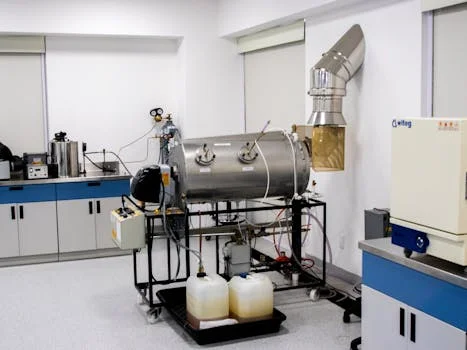
Compliance with the MoWIE 2024 discharge standards is the single most significant factor in technology selection for Ethiopian projects in 2025. The new limits are increasingly aligned with international benchmarks. Older, simpler treatment trains are obsolete for most industrial applications. While the European Union's 91/271/EEC remains stricter on nutrient removal (Nitrogen and Phosphorus), Ethiopia's new COD and TSS limits are now comparable to US EPA NPDES baseline limits for many industrial categories.
| Parameter (mg/L) | Ethiopia (MoWIE 2024) | EU (91/271/EEC) | US EPA (NPDES Baseline) | Required Tech Level |
|---|---|---|---|---|
| COD | < 125 | < 125 | < 250 (Industry specific) | Secondary + Tertiary |
| BOD5 | < 30 | < 25 | < 30 | Biological (Aerobic) |
| TSS | < 30 | < 35 | < 30 | Filtration or MBR |
| Total Nitrogen | < 40 | < 15 | Varies | Anoxic/Oxic zones |
To reach COD < 125 mg/L, biological systems must sustain high Mean Cell Residence Times (MCRT). MBR systems achieve this naturally, typically delivering 95-98% COD removal. A standard WSP, by contrast, removes only 70-80%. For a factory in Kombolcha Industrial Park, that 15-percentage-point gap is the line between legal operation and daily fines. Many facilities that originally installed UASB-TF have since invested an additional $200,000-$500,000 in tertiary polishing (sand filters or carbon adsorption) to meet the 30 mg/L TSS ceiling.
Chemical dosing is a hidden compliance cost. Meeting heavy-metal and TSS limits typically requires $0.08-$0.15/m³ in chemical spend. That burden is highest for textile and tanning operations in Modjo and Hawassa, where pH adjustment and specialty coagulants are mandatory. Compared with industrial wastewater treatment costs in Iraq, Ethiopia's stricter enforcement of the Polluter Pays principle is pushing faster adoption of high-spec equipment than in neighboring markets with looser compliance cycles.
Technology Selection Framework for Ethiopian Wastewater Projects
Selecting the right technology in Ethiopia requires balancing upfront CAPEX against a 20-year lifecycle cost. For 2025 projects, land availability and effluent reuse potential usually decide long-term financial viability. Most municipal buyers we work with follow this four-step logic:
- Step 1: Land availability. If land is abundant (>20 m² per m³/day of flow), WSP or ABR is the most cost-effective. If land is tight (<1 m² per m³/day), MBR is the only viable option.
- Step 2: Compliance requirements. Direct discharge into sensitive water bodies like Lake Hawassa forces MBR or ZLD. Discharge into a municipal sewer may allow UASB-TF.
- Step 3: Effluent reuse. Plants reusing water for cooling or irrigation need MBR-grade ultrafiltration. This cuts fresh-water procurement costs, which keep climbing in Addis Ababa.
- Step 4: Budget vs. risk. High CAPEX (MBR) lowers regulatory and land risk. Low CAPEX (WSP) raises both.
A simple payback estimate is useful at the proposal stage: Payback Period = CAPEX / [Annual OPEX Savings + Avoided Fines + Value of Reused Water]. An urban MBR with $2M CAPEX might save $150,000 per year in avoided fines and $100,000 in water bills. Compared with a WSP that demands $500,000 in land lease and risks $50,000 per year in fines, the MBR typically pays back in 7-8 years. The "cheaper" pond system stretches past 12 years once land and penalty exposure are included.
For rapid deployment, many developers are choosing modular WWTP systems for rapid deployment in Ethiopia. Pre-engineered units such as the compact underground sewage treatment plant can be commissioned in 4-6 months, versus 18-24 months for civil-works-heavy plants. That speed matters for new industrial park tenants who cannot start production without a working wastewater train.
Who This Guide Is For and Next Step
This breakdown fits procurement managers, EPC contractors, and plant engineers sizing a 1,000-20,000 m³/day municipal or industrial facility in Ethiopia. It is less relevant for small-scale domestic septic systems or for buyers in jurisdictions that still accept primary-only discharge. The seven cost drivers that move a budget the most are influent load, land cost, discharge limits, effluent reuse potential, energy cost, chemical regime, and sludge handling.
Send us your influent data, target flow, and discharge destination and we will return a sized CAPEX/OPEX range plus a recommended technology train. Request a treatment plant quotation for Ethiopia and our engineers will respond within two business days.
Frequently Asked Questions
What is the typical CAPEX for a wastewater treatment plant in Ethiopia?
A municipal or industrial wastewater treatment plant in Ethiopia costs $1.2M to $15M in total CAPEX, which works out to $150-$3,000 per m³ of daily capacity depending on technology. A WSP sits at $150-$300 per m³, while a ZLD system reaches $2,000-$3,000 per m³. For a 5,000 m³/day plant, expect about $1.5M for WSP and around $8M for MBR.
How does OPEX compare to CAPEX for a wastewater treatment plant?
OPEX in Ethiopia runs $0.045-$1.20 per m³ treated, while CAPEX is amortized across 20 years of plant life. Annual OPEX for a 5,000 m³/day plant ranges from $80,000 (WSP) to $2M (ZLD). Over a 20-year horizon, OPEX typically totals 2-4 times the initial CAPEX for aerobic systems, which is why energy and chemical choices matter as much as the technology itself.
Which wastewater technology is cheapest for Ethiopian municipal projects?
Waste Stabilization Ponds are the cheapest at $150-$300 per m³ CAPEX and $0.045-$0.08 per m³ OPEX, but only when land is abundant (>20 m² per m³/day). In urban centers like Addis Ababa, where land runs $50-$150 per m², MBR often wins on total project cost despite 6-10 times higher upfront CAPEX.
Do Ethiopian discharge standards require advanced treatment?
Yes. MoWIE 2024 guidelines require COD < 125 mg/L and TSS < 30 mg/L, which forces secondary and tertiary treatment for most industrial flows. Primary clarification alone cannot meet these limits. MBR delivers 95-98% COD removal and is the standard choice for textile, pharmaceutical, and urban industrial park applications.
How long does it take to build a wastewater treatment plant in Ethiopia?
Civil-works-heavy plants take 18-24 months from ground-breaking to commissioning. Modular and packaged systems such as the WSZ underground integrated plant can be installed in 4-6 months, which is why most new industrial park tenants are now choosing pre-engineered units to avoid production delays.