Solar cell manufacturing generates wastewater with ammonia-nitrogen concentrations up to 500 mg/L (per China GB 8978-1996 benchmarks), requiring treatment to meet discharge limits of ≤15 mg/L. Solar-powered electrochemical systems achieve 99.9% ammonia recovery with a solar-to-ammonia yield rate (SAY) of 0.12 mmol/h/cm²—10x higher than conventional methods (UIC 2025 data). These systems eliminate fossil-fuel dependence, reduce OpEx by 40%, and enable zero liquid discharge (ZLD) compliance for high-salinity streams.
Why Ammonia-Nitrogen in Solar Cell Wastewater Fails Compliance Tests
The primary source of high ammonia-nitrogen (NH3-N) levels in solar cell wastewater is the texturing and silane tower cleaning processes. In monocrystalline and polycrystalline silicon production, silane (SiH4) towers generate wastewater with ammonia-nitrogen concentrations ranging from 300 to 500 mg/L. These levels significantly exceed the regulatory thresholds defined by China GB 8978-1996, which mandates a discharge limit of ≤15 mg/L, and the EU Urban Waste Water Directive 91/271/EEC, which requires ≤10 mg/L for sensitive areas near solar installations.
The complexity of solar cell wastewater lies in its multi-contaminant profile. Ammonia is rarely found in isolation; it is typically accompanied by fluoride ions (≤30 mg/L), nitrates (≤50 mg/L), and high Chemical Oxygen Demand (COD) from isopropanol and other organic additives. Conventional biological treatment often fails because high fluoride concentrations inhibit nitrifying bacteria, while ammonia spikes during silane tower purging overwhelm the system's buffering capacity. A 50 MW solar cell facility in Jiangsu province reported three consecutive compliance failures in 2025 because their standard nitrification/denitrification loop could not respond to the 400% increase in ammonia load during weekly cleaning cycles.
| Process Source | Ammonia-Nitrogen (mg/L) | Fluoride (mg/L) | COD (mg/L) | pH Range |
|---|---|---|---|---|
| Texturing Process | 50–150 | 20–40 | 400–600 | 2.5–4.5 |
| Silane Tower Cleaning | 300–500 | <5 | 800–1,200 | 8.5–10.5 |
| Combined Effluent | 250–400 | 15–30 | 600–900 | 6.5–8.5 |
To address these challenges, engineers must move away from reactive chemical dosing and toward integrated systems that can handle fluctuating loads. A typical robust process flow involves initial pH adjustment via automated chemical dosing systems to stabilize the influent, followed by fluoride precipitation, and finally, advanced electrochemical or membrane-based ammonia recovery. Integrated systems provide a comprehensive approach to handling the complex wastewater profile.
How Solar-Powered Electrochemical Systems Recover Ammonia from Wastewater
Solar-powered electrochemical systems treat wastewater as a resource rather than a waste stream. These systems utilize photovoltaic (PV) panels to provide the direct current (DC) necessary to drive the nitrate reduction reaction (NRR) at the cathode. The fundamental electrochemical reaction—NO₃⁻ + 6H₂O + 8e⁻ → NH₃ + 9OH⁻—converts hazardous nitrates and dissolved ammonia into recoverable aqueous ammonia or ammonium sulfate.
The efficiency of this process is governed by the cathode material and the Solar-to-Ammonia Yield rate (SAY). Recent engineering breakthroughs (UIC 2025) have introduced MXene-based photocatalysts and electrodes that provide a 30% increase in ammonia selectivity compared to traditional copper or nickel cathodes. By optimizing the applied voltage to 1.2–1.8 V versus a Reversible Hydrogen Electrode (RHE) and maintaining an electrolyte pH of 8.5–9.5, these systems achieve a SAY of 0.12 mmol/h/cm². This is a tenfold improvement over the 0.01 mmol/h/cm² typical of standard photocatalytic setups. The use of chlorine dioxide generators for final disinfection ensures that any residual organic nitrogen is fully oxidized before discharge or reuse.
| Parameter | Conventional Photocatalytic | Solar Electrochemical (MXene) | Air Stripping |
|---|---|---|---|
| SAY Rate (mmol/h/cm²) | 0.01 | 0.12 | N/A |
| Energy Use (kWh/kg NH3) | 15–20 | 3.2 | 8–12 |
| NH3 Selectivity | <60% | >95% | N/A |
| Ammonia Recovery Rate | 70% | 99.9% | 85–90% |
One critical engineering challenge is the sluggish oxygen evolution reaction (OER) at the anode, which can create a bottleneck. Modern solar-powered ZLD systems mitigate this by using a decoupled cathode-anode configuration with IrO₂/Ti anodes, which lowers the overpotential required for the reaction. The process flow follows a clear sequence: solar panels feed a DC/DC converter, which powers the electrochemical cell. The resulting ammonia gas is captured in an acid scrubbing unit, transforming it into liquid fertilizer, while the treated water moves to a polishing stage.
Engineering Specs: Solar Cell Ammonia-Nitrogen Wastewater Treatment Systems
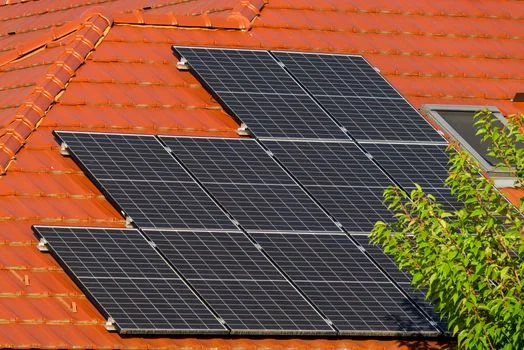
Designing an effective solar-powered ammonia treatment plant requires strict adherence to influent and effluent specifications. For solar cell manufacturers, the influent typically contains 300–500 mg/L of ammonia-nitrogen and high COD levels. To ensure compliance with China GB and EU compliance standards for solar cell wastewater, the system must produce an effluent with NH3-N ≤10 mg/L and COD ≤50 mg/L.
The hydraulic retention time (HRT) is a vital design metric. Electrochemical cells require 4–6 hours of contact time to achieve 99% reduction, while a downstream MBR system for ammonia-nitrogen polishing requires an additional 2–3 hours. The MBR stage is essential for solar cell plants aiming for water reuse, as it provides sub-micron filtration that removes residual suspended solids and bacteria. In terms of physical footprint, solar-powered ZLD systems are highly compact, requiring only 0.5–0.8 m² per m³/day of treated water, compared to 1.2–1.5 m² for conventional biological basins.
| System Capacity (m³/day) | Footprint (m²) | Solar Array Required (kW) | HRT (Total Hours) | CapEx (Est. USD) |
|---|---|---|---|---|
| 50 | 35–40 | 15–20 | 7–9 | $450,000 |
| 100 | 65–80 | 30–40 | 7–9 | $850,000 |
| 200 | 120–150 | 65–80 | 7–9 | $1,550,000 |
Maintenance protocols for these high-tech systems are specialized. Cathodes (specifically those using MXene or doped carbon) generally require replacement every 2 to 3 years to maintain optimal SAY rates. Membrane modules in the MBR polishing unit should undergo a chemical clean-in-place (CIP) every 6 months using a 0.5% citric acid solution with a 30-minute soak to prevent inorganic scaling from the high-salinity influent.
Cost Breakdown: Solar-Powered ZLD vs. Conventional Treatment for Ammonia-Nitrogen
Procurement teams must weigh the higher initial capital expenditure (CapEx) of solar-powered systems against the significantly lower operational expenditure (OpEx). For a 100 m³/day system, the CapEx ranges from $850,000 to $1.2 million. This investment is distributed across photovoltaic components (40%), electrochemical cells (30%), ammonia recovery units (20%), and automation/control systems (10%). The long-term savings are substantial.
OpEx for solar-powered electrochemical recovery is approximately $0.45 per kg of ammonia recovered. In contrast, traditional air stripping costs $1.10/kg due to high electricity and chemical consumption, and biological treatment averages $0.85/kg when sludge disposal and aeration energy are factored in. The Return on Investment (ROI) typically falls between 3.2 and 4.5 years. This is driven by two factors: the elimination of fossil-fuel-derived energy costs and the revenue generated from recovered ammonia (valued at approximately $0.30/kg NH3). solar-powered ZLD systems for high-salinity streams eliminate the "hidden" costs of sludge hauling and hazardous waste fees, which can exceed $50,000 annually for a mid-sized plant.
| Cost Category (per kg NH3) | Solar-Powered ZLD | Air Stripping + RO | Biological + UF |
|---|---|---|---|
| Energy Cost | $0.05 (Solar) | $0.65 (Grid) | $0.40 (Grid) |
| Chemical Dosing | $0.15 | $0.35 | $0.25 |
| Sludge/Waste Disposal | $0.05 | $0.10 | $0.20 |
| Total OpEx/kg NH3 | $0.25* | $1.10 | $0.85 |
*Reflects net cost after ammonia recovery credit.
A case study of a 200 m³/day facility in Anhui Province demonstrates these economics. By switching from a traditional biological process to a solar electrochemical ZLD system, the plant reduced its annual OpEx by 42%. The system achieved a 99.8% ammonia recovery rate, allowing the plant to sell 12 tons of ammonium sulfate annually to local agricultural distributors, further shortening the ROI period.
Compliance Checklist: Meeting China GB and EU Standards for Ammonia-Nitrogen
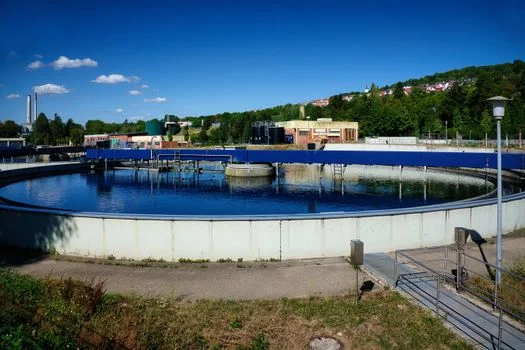
Achieving zero-risk compliance requires more than just high-efficiency hardware; it demands a rigorous monitoring and permitting strategy. Facilities must align their operations with both local and international benchmarks. The following checklist provides a framework for engineers to audit their current or proposed systems.
- Regulatory Limits: Ensure the system is designed for ≤10 mg/L NH3-N. Although China GB 8978-1996 allows 15 mg/L, most new industrial