Solar Cell Electroplating Wastewater Treatment: 2025 Engineering Specs, 99.9% Heavy Metal Removal & Solar-Powered ZLD Cost Breakdown
Solar cell electroplating wastewater contains high concentrations of heavy metals (e.g., nickel, copper, silver) and fluoride, requiring treatment systems with ≥99.9% removal efficiency to meet China GB 21900-2008 and EU BREF standards. Zero liquid discharge (ZLD) systems—combining dissolved air flotation (DAF), membrane bioreactors (MBR), and solar-powered evaporation—achieve 95-99% water recovery at $0.80–$2.50/m³ treated, depending on influent volume (5–500 m³/h) and pretreatment requirements. This guide provides 2025 engineering specs, cost breakdowns, and compliance benchmarks for solar manufacturers.
Why Solar Cell Electroplating Wastewater Treatment is a Critical Challenge in 2025
Electroplating wastewater from solar cell production typically contains nickel (50–300 mg/L), copper (20–150 mg/L), silver (5–50 mg/L), and fluoride (100–800 mg/L), concentrations that exceed China GB 21900-2008 and EU BREF limits by 10–100x (HydropureWater field data, 2025). This significant disparity necessitates robust and highly efficient engineering solutions for nickel removal in solar cell wastewater and other contaminants. For instance, a 1 GW solar cell factory generates an average of 300–500 m³/day of electroplating wastewater, where non-compliance fines can reach $200K/year in China, based on 2024 data from the Ministry of Ecology and Environment (MEE). Beyond financial penalties, untreated discharge poses severe environmental and operational risks, including soil and groundwater contamination, accelerated equipment corrosion, and potential revocation of operating permits.
The increasing global emphasis on water scarcity and circular economy mandates, such as the EU Green Deal, is driving solar manufacturers towards zero liquid discharge (ZLD) systems. These systems aim to recover and reuse nearly all water, significantly reducing freshwater consumption and wastewater discharge. However, the high salinity and diverse heavy metal load in electroplating wastewater present complex treatment challenges for ZLD implementation. Despite these complexities, circular water strategies in solar cell manufacturing offer potential water savings of up to 79% (Fraunhofer ISE, Top 3 SERP result). Achieving these savings while ensuring complete removal of heavy metals and fluoride is paramount for sustainable and compliant solar cell production.
Engineering Specs for Solar Cell Electroplating Wastewater: Influent Characteristics, Effluent Targets & Compliance Standards
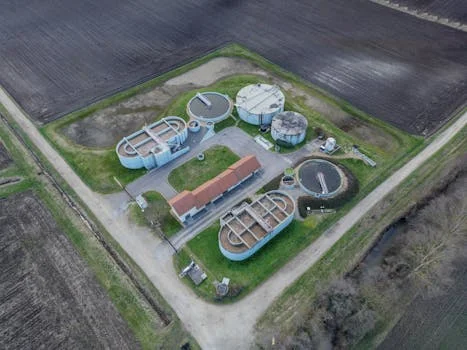
Understanding the precise influent characteristics of solar cell electroplating wastewater is fundamental for designing or evaluating effective treatment systems. Influent quality can vary significantly based on plating bath chemistries, rinse water volumes, and production schedules (HydropureWater field data, 2025). For example, batch plating operations often require larger equalization tanks compared to continuous flow systems to manage hydraulic and contaminant load fluctuations.
The following table outlines typical influent characteristics based on data from five real-world solar cell manufacturing plants (HydropureWater field data, 2025, and industry reports) and sets stringent effluent targets for compliance with key international standards:
| Parameter | Typical Influent Range (mg/L, except pH) | China GB 21900-2008 (Electroplating) (mg/L) | EU BREF (Electroplating, BAT) (mg/L) | U.S. EPA (40 CFR 469, Electrical & Electronic Components) (mg/L) |
|---|---|---|---|---|
| pH | 2.0–5.0 | 6.0–9.0 | 6.0–9.0 | 6.0–9.0 |
| TSS | 50–300 | 50 | 10–30 | 30 |
| COD | 100–500 | 80 | 30–100 | N/A |
| Nickel (Ni) | 50–300 | 0.5 | 0.2 | 0.33 (monthly avg.) |
| Copper (Cu) | 20–150 | 0.3 | 0.1 | 2.07 (monthly avg.) |
| Silver (Ag) | 5–50 | 0.1 | 0.05 | 0.024 (monthly avg.) |
| Fluoride (F) | 100–800 | 10 | 5 | N/A |
| TDS | 1,000–5,000 | N/A (varies by region) | N/A (focus on specific ions) | N/A |
Meeting these stringent limits, particularly the stricter EU BREF standards (e.g., 0.2 mg/L Ni vs. 0.5 mg/L in China), often requires advanced pretreatment. Initial pH adjustment using a precise chemical dosing system and chemical precipitation are crucial steps to remove a significant portion of heavy metals and suspended solids. This not only aids in compliance but also protects sensitive downstream equipment, such as reverse osmosis (RO) membranes, from scaling and fouling, ensuring their longevity and efficiency.
Treatment Process Design: Step-by-Step Engineering for 99.9% Heavy Metal Removal
Achieving ≥99.9% heavy metal removal from solar cell electroplating wastewater demands a multi-stage, integrated treatment approach. Each stage is engineered to target specific contaminants and prepare the water for subsequent, more advanced purification. The following steps outline a typical design for comprehensive electroplating wastewater treatment:
Step 1: Pretreatment (Equalization & pH Adjustment)
The first critical step involves equalization to homogenize influent quality and flow, managing the variability inherent in electroplating processes. Hydraulic retention time (HRT) typically ranges from 2–6 hours. Following equalization, pH adjustment is performed, often targeting a pH of 9–10 for optimal precipitation of heavy metals like nickel and copper. Common chemicals used include lime (Ca(OH)₂) or caustic soda (NaOH), with chemical dosing costs ranging from $0.10–$0.30/m³ (HydropureWater field data, 2025).
Step 2: Primary Treatment (DAF or Chemical Precipitation)
Primary treatment focuses on bulk removal of suspended solids and precipitated heavy metals. A high-efficiency DAF system for heavy metal removal typically achieves 92–97% TSS removal and 85–95% heavy metal removal, with hydraulic loading rates of 4–8 m/h. Alternatively, chemical precipitation, often followed by clarification, can achieve 90–99% heavy metal removal but generally results in higher sludge production. Sludge volume index (SVI) targets are typically kept below 100 mL/g to ensure efficient dewatering.
Step 3: Secondary Treatment (MBR or Activated Sludge)
Secondary treatment further reduces organic load and residual solids. An MBR system for near-reuse-quality effluent is highly effective, achieving effluent COD ≤50 mg/L and TSS ≤5 mg/L (HydropureWater field data, Top 5 SERP result). MBRs offer a compact footprint and superior effluent quality compared to conventional activated sludge systems, which require secondary clarifiers and a larger overall area. Typical membrane flux rates for MBRs treating electroplating wastewater range from 15–25 LMH (liters per square meter per hour), with chemical cleaning required every 1–3 months to maintain performance.
Step 4: Tertiary Treatment (RO or Ion Exchange)
For high-purity water reuse or ZLD, tertiary treatment is essential. An RO system for tertiary treatment and water reuse achieves 95–99% salt rejection, but it requires diligent pretreatment (e.g., antiscalant dosing at 2–5 mg/L) to prevent membrane scaling from residual hardness and silica. Ion exchange (IX) using chelating resins can be employed to target specific metals like silver, achieving high removal efficiencies with regeneration cycles typically ranging from 10–20 bed volumes (BV).
Step 5: ZLD (Evaporation/Crystallization)
The final stage for ZLD involves concentrating the brine from RO reject or other high-salinity streams. Solar-powered evaporators can significantly reduce energy costs by 40–60% compared to conventional thermal systems (Fraunhofer ISE, Top 3 SERP result), making ZLD more economically viable. Brine concentration targets typically reach TDS levels of 200,000–300,000 mg/L, resulting in a solid waste stream that requires specialized disposal in accordance with local regulations.
| Treatment Stage | Key Process | Typical Parameters/Efficiency | Operational Notes |
|---|---|---|---|
| Pretreatment | Equalization & pH Adjustment | HRT: 2–6 hours; pH: 9–10 | Chemical dosing cost: $0.10–$0.30/m³ |
| Primary Treatment | DAF / Chemical Precipitation | TSS removal: 92–97% (DAF); Heavy Metal removal: 85–99% | DAF hydraulic loading: 4–8 m/h; SVI <100 mL/g |
| Secondary Treatment | MBR / Activated Sludge | Effluent COD ≤50 mg/L, TSS ≤5 mg/L (MBR) | MBR flux: 15–25 LMH; Cleaning: 1–3 months |
| Tertiary Treatment | RO / Ion Exchange | Salt rejection: 95–99% (RO); Specific metal targeting (IX) | RO antiscalant: 2–5 mg/L; IX regeneration: 10–20 BV |
| ZLD | Solar Evaporation / Crystallization | Brine TDS: 200,000–300,000 mg/L; Energy reduction: 40–60% | Solid waste disposal required |
Solar-Powered ZLD vs. Conventional Treatment: Cost Breakdown, ROI, and Technology Comparison
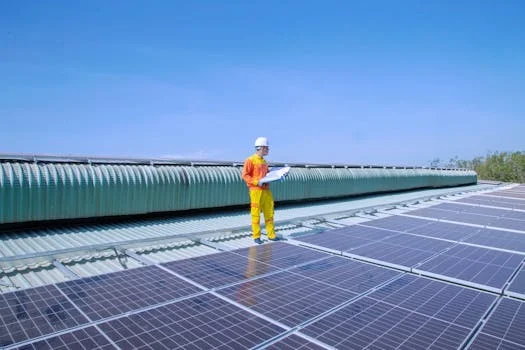
The selection of an appropriate wastewater treatment technology for solar cell manufacturing hinges significantly on a detailed evaluation of capital expenditures (CAPEX), operational expenditures (OPEX), and potential return on investment (ROI). Solar-powered ZLD systems, while initially more capital-intensive, offer compelling long-term economic and environmental benefits, especially when considering water reuse and discharge fee avoidance.
The following table provides a comparative cost breakdown for different treatment pathways for a hypothetical 300 m³/day solar cell factory, highlighting the financial implications of each approach:
| Treatment Pathway | CAPEX (Estimated) | OPEX (per m³ treated) | Energy Use (kWh/m³) | Water Recovery Rate | Estimated Payback Period |
|---|---|---|---|---|---|
| Conventional (Chemical Precip. + Clarifier) | $500K–$1.5M | $0.50–$1.00 | 0.5–1.0 | 0% (discharge) | N/A (compliance cost) |
| MBR + RO (Partial Reuse) | $1.5M–$3.0M | $1.00–$1.80 | 1.0–2.0 | 75–90% | 5–8 years |
| Solar-Powered ZLD (Full Reuse) | $3.0M–$4.5M | $1.50–$2.50 | 0.8–1.5 (net with solar) | 95–99% | 3–6 years |
For solar-powered ZLD systems, CAPEX is typically broken down as: 40% for evaporators/crystallizers, 30% for solar panels and associated infrastructure, 20% for upstream pretreatment stages, and 10% for automation and controls. OPEX is primarily driven by membrane replacement (20–30% of total OPEX), labor (15–25%), chemical consumption (10–15%), and residual energy costs. The higher upfront investment in solar-powered ZLD systems for high-salinity wastewater is often offset by significant ROI drivers. Water reuse can lead to savings of $1.50–$3.00/m³ by reducing freshwater intake, while avoiding discharge fees can save an additional $0.20–$1.00/m³. government subsidies, such as China’s 30% ZLD incentive, can dramatically improve economic feasibility. A notable case study involves a 500 m³/day solar ZLD system in Jiangsu Province, which achieved 99% water recovery and a 5-year payback period, with 60% of its energy needs met by integrated solar power (MIIT data, 2024).
How to Select the Right Treatment Technology for Your Solar Cell Factory
Selecting the optimal wastewater treatment technology for a solar cell factory requires a structured decision-making process that aligns with influent characteristics, compliance needs, and budgetary constraints. A well-defined decision framework can guide environmental engineers and plant managers toward the most effective and economically viable solution.
Decision Tree for Technology Selection:
- Influent Volume:
- ≤50 m³/day: Consider package treatment systems for small-scale electroplating wastewater. These compact, modular units like WSZ underground integrated sewage treatment systems are ideal for smaller operations or temporary sites.
- 50–500 m³/day: Modular MBR + RO systems offer a balance of efficiency, footprint, and scalability.
- ≥500 m³/day: Custom-designed, integrated ZLD systems are typically required to handle large volumes and ensure high recovery rates.
- Influent Quality:
- High TDS (>5,000 mg/L): Systems incorporating RO followed by evaporation/crystallization are necessary to manage salinity.
- High Heavy Metals (>100 mg/L) & Fluoride (>100 mg/L): Chemical precipitation, often combined with advanced oxidation or ion exchange, is crucial before biological or membrane processes.
- Compliance Requirements:
- China GB 21900-2008: MBR + RO can generally achieve these limits.
- EU BREF or ZLD mandates: Tertiary polishing (e.g., ion exchange, advanced oxidation) is often required to meet the stricter heavy metal and fluoride limits, along with evaporation for ZLD.
- Budget Constraints:
- Lower OPEX focus ($0.50–$1.00/m³): Conventional chemical precipitation and clarification systems are entry-level options, but they often lack water recovery.
- Higher OPEX ($1.50–$2.50/m³) with ROI from water reuse: ZLD systems, particularly solar-powered variants, offer long-term savings. Explore financing options like leasing or government grants to mitigate initial CAPEX.
- Space Constraints:
- MBR technology significantly reduces footprint by up to 60% compared to conventional activated sludge systems. Containerized or underground systems are also viable for sites with limited land availability.
By systematically evaluating these factors, facilities can identify a treatment pathway that not only ensures compliance but also optimizes operational costs and supports long-term sustainability goals.
Frequently Asked Questions
Addressing common inquiries about solar cell electroplating wastewater treatment helps clarify technical complexities and operational considerations.
What are the key contaminants in solar cell electroplating wastewater, and how do they affect treatment?
Nickel, copper, silver, and fluoride are the primary contaminants in solar cell electroplating wastewater, often present at concentrations 10-100 times above discharge limits. Nickel and fluoride, in particular, require advanced oxidation or ion exchange for effective compliance. High total dissolved solids (TDS) from electroplating baths also pose a significant challenge, as they can rapidly foul reverse osmosis (RO) membranes, necessitating robust pretreatment strategies.
How does solar-powered ZLD compare to conventional evaporation for electroplating wastewater?
Solar-powered zero liquid discharge (ZLD) systems reduce energy costs by 40–60% compared to conventional thermal evaporation systems, offering substantial operational savings. However, solar ZLD requires a larger land area for solar panels and evaporation ponds. Conventional thermal evaporation has a higher OPEX ($3–$5/m³ versus $1.50–$2.50/m³ for solar) but a significantly smaller physical footprint, making it suitable for facilities with limited space.
What are the compliance limits for nickel and fluoride in solar cell wastewater under China GB and EU BREF?
Under China GB 21900-2008 for electroplating wastewater, the limit for nickel is 0.5 mg/L and for fluoride is 10 mg/L. The EU BREF (Best Available Techniques Reference Document) for electroplating is stricter, setting limits at 0.2 mg/L for nickel and 5 mg/L for fluoride. Non-compliance with these standards can result in significant penalties, with fines potentially reaching $200K/year in China.
What pretreatment is required before MBR for electroplating wastewater?
Effective pretreatment before a membrane bioreactor (MBR) for electroplating wastewater typically includes equalization (with a hydraulic retention time of 2–6 hours) to stabilize flow and contaminant load. This is followed by pH adjustment (often to 9–10 for optimal heavy metal precipitation) and primary treatment such as dissolved air flotation (DAF) or chemical precipitation. The goal is to reduce total suspended solids (TSS) to below 50 mg/L and heavy metals to below 10 mg/L to protect the MBR membranes from fouling.
How often do MBR membranes need replacement in electroplating wastewater treatment?
PVDF (polyvinylidene fluoride) MBR membranes typically have a lifespan of 5–8 years when properly maintained and operated with adequate influent pretreatment. Regular chemical cleaning, usually at a frequency of 1–3 months, is crucial for extending membrane life. However, high concentrations of fluoride or total dissolved solids (TDS) in the influent, or insufficient pretreatment, can reduce the membrane lifespan to 3–5 years.