Why Nuevo León’s Industrial Boom Demands Smarter Sewage Treatment Equipment
Monterrey’s population of over 5.3 million and its status as a primary hub for automotive, electronics, and food processing sectors drive a 30% year-over-year increase in wastewater treatment demand according to 2023 INEGI data. For industrial facility managers in Santa Catarina or Apodaca, this growth is a double-edged sword: production is scaling, but so is the regulatory pressure to manage complex effluent streams. Nuevo León’s industrial growth demands sewage treatment equipment that meets Mexico’s strict LGEEPA and NOM-001-SEMARNAT-1996 discharge limits while minimizing CAPEX and OPEX. Top suppliers like Memco (Monterrey-based) and EcoMex offer tailored solutions—e.g., MBR systems with <1 μm filtration for water reuse or DAF systems removing 95%+ TSS. This guide provides 2025 engineering specs, cost breakdowns ($/m³ treated), and a zero-risk selection framework to compare suppliers on compliance, footprint, and lifecycle costs.
The regulatory environment in Mexico has shifted from passive oversight to active enforcement. Standards such as NOM-001-SEMARNAT-1996 establish rigorous limits for industrial discharge: Biological Oxygen Demand (BOD) must remain ≤30 mg/L, Total Suspended Solids (TSS) ≤40 mg/L, and Chemical Oxygen Demand (COD) ≤125 mg/L. Failure to meet these parameters exposes companies to fines reaching 1.5 million MXN or, in severe cases, total plant shutdowns. Despite these high stakes, many procurement teams struggle with unclear supplier differentiation and hidden operational costs, such as secondary sludge disposal and high energy consumption. For example, the Dulces Nombres plant in Monterrey recently addressed these frustrations by upgrading to Duperon FlexRake® GTS screens, which reduced system downtime by 40% and successfully mitigated $200,000 USD per year in non-compliance fines. Navigating these technical requirements requires a move away from "off-the-shelf" components toward engineered systems that prioritize long-term ROI over low initial bid prices.
2025 Regulatory Compliance Framework for Sewage Treatment in Nuevo León
The General Law of Ecological Balance and Environmental Protection (LGEEPA) mandates that all industrial wastewater projects in Nuevo León undergo an environmental impact assessment (MIA) that typically requires 6 to 12 months for approval. Compliance is not a one-time event but a continuous operational requirement governed by federal and state statutes. In addition to federal NOMs, the Nuevo León State Water Law (Ley Estatal de Aguas) increasingly requires industrial facilities to achieve 20% water reuse to alleviate the region's chronic water scarcity. This makes advanced filtration technologies like Membrane Bioreactors (MBR) and Reverse Osmosis (RO) essential for new installations.
To ensure zero-risk selection, buyers must evaluate equipment against the specific discharge limits outlined in NOM-001-SEMARNAT-1996. These limits vary depending on the receiving body of water (e.g., rivers vs. municipal sewers) and the specific industrial sector. For instance, food processing plants face much stricter Fats, Oils, and Grease (FOG) limits than electronics assembly plants. The permitting process involves applications to CONAGUA and municipal water authorities, with costs ranging from $5,000 to $50,000 USD depending on flow volume and contaminant complexity. Utilizing engineering specs for municipal sewage treatment plants in Nuevo León can help procurement teams align their internal standards with local government expectations.
| Parameter | NOM-001-SEMARNAT-1996 Limit | Typical Industrial Target | Required Technology |
|---|---|---|---|
| BOD5 | ≤ 30 mg/L | < 10 mg/L | MBR / Activated Sludge |
| COD | ≤ 125 mg/L | < 50 mg/L | Advanced Oxidation / MBR |
| TSS | ≤ 40 mg/L | < 5 mg/L | DAF / Ultrafiltration |
| FOG | ≤ 15 mg/L | < 2 mg/L | DAF System |
| Lead (Pb) | ≤ 0.5 mg/L | < 0.1 mg/L | Chemical Precipitation / RO |
Top Sewage Treatment Equipment Suppliers in Nuevo León: 2025 Comparison Matrix
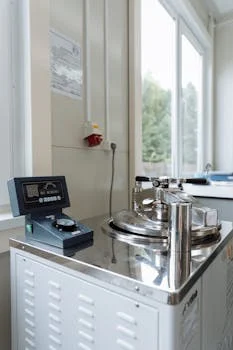
A 2025 analysis of the Monterrey market shows that only 40% of local equipment suppliers provide integrated AI-driven monitoring systems capable of reducing operational energy consumption by up to 25%. When selecting a supplier, facility managers must look beyond geographical proximity and evaluate the technical depth of the provider's portfolio. Local leaders like Memco offer nearly two decades of experience in the Monterrey basin, while international manufacturers like HydropureWater provide specialized high-efficiency components that meet or exceed Mexican standards at competitive price points. The table below compares the leading suppliers currently serving the Nuevo León industrial corridor.
| Supplier | HQ / Service Basis | Key Technology | CAPEX ($/m³) | OPEX ($/m³) | Compliance Record |
|---|---|---|---|---|---|
| Memco | Monterrey, NL | MBR, RO, Pre-treatment | $1,500 – $2,800 | $1.40 – $2.60 | High (18+ yrs local) |
| EcoMex | CDMX (Monterrey Office) | AI-Driven MBR, DAF | $1,800 – $3,000 | $1.10 – $2.20 | High (NOM/LGEEPA) |
| Aquaser | Garza Garcia, NL | Service & Integration | $1,200 – $2,500 | $1.50 – $3.00 | Medium (Service focus) |
| HydropureWater | Global (NL Distribution) | MBR, DAF, RO | $1,200 – $2,500 | $0.80 – $1.80 | High (Global Specs) |
| Grupo Akvotek | Monterrey, NL | RO, Industrial Effluent | $1,600 – $3,000 | $1.60 – $2.80 | High (Specific sectors) |
While Memco and Akvotek excel in local engineering and site-specific civil works, manufacturers like HydropureWater and EcoMex are leading the push into digital water management. Data from 2024 installations suggests that plants utilizing AI-optimized aeration in MBR systems save an average of $45,000 USD annually in electricity. footprint is a critical differentiator for Monterrey’s densely packed industrial parks; MBR systems typically require 0.1–0.3 m² per cubic meter of capacity, whereas traditional activated sludge systems require nearly triple that space (0.5–1.0 m²/m³).
Engineering Specs for Key Sewage Treatment Technologies in Nuevo León
MBR systems utilized in Nuevo León’s industrial sector typically achieve chemical oxygen demand (COD) removal rates exceeding 90%, meeting the strict NOM-001-SEMARNAT-1996 discharge threshold of 125 mg/L. Technical evaluation of this equipment requires a deep dive into hydraulic loading, energy consumption, and membrane flux. For high-density industrial applications, the detailed engineering guide to MBR systems highlights that a membrane pore size of 0.1 μm is necessary to ensure effluent TSS remains below 1 mg/L, making the water suitable for cooling tower reuse.
For sectors such as food processing or automotive painting, Dissolved Air Flotation (DAF) is the standard for pre-treatment. A high-efficiency DAF system for food processing and industrial wastewater can remove 92% to 97% of TSS and up to 99% of FOG. These systems operate at hydraulic loading rates of 4–8 m/h, utilizing micro-bubbles (30–50 μm) to float contaminants to the surface for mechanical skimming. In contrast, for facilities requiring ultra-pure process water or zero liquid discharge (ZLD), industrial RO systems for high-recovery water reuse are employed. These systems operate at recovery rates of 75% to 95%, though they require significant pre-treatment to maintain a Silt Density Index (SDI) of less than 3.
| Technology Type | Best For... | Removal Efficiency | Energy Use (kWh/m³) |
|---|---|---|---|
| MBR System | Electronics, High-Reuse | COD: 95%+, TSS: 99% | 0.6 – 1.2 |
| DAF | Food Processing, Meat | FOG: 95%+, TSS: 92% | 0.1 – 0.3 |
| Industrial RO | ZLD, Boiler Feed | TDS: 98%+, Metals: 99% | 2.0 – 4.0 |
| Activated Sludge | Municipal, Large Flow | BOD: 85%, COD: 80% | 0.3 – 0.5 |
Cost Breakdown: CAPEX, OPEX, and ROI for Sewage Treatment Equipment in Nuevo León
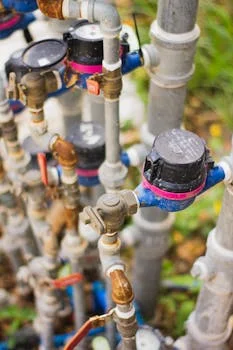
Capital expenditure (CAPEX) for sewage treatment equipment in Nuevo León ranges from $800 to $3,000 per cubic meter of daily capacity, depending on the required effluent quality and filtration technology. While traditional activated sludge systems have lower CAPEX, their large footprint and high sludge disposal costs often result in a higher Total Cost of Ownership (TCO) over a 10-year period. In Monterrey, where land prices in industrial zones are rising, the 60% footprint reduction offered by guide to containerized and package sewage treatment plants can save a facility upwards of $250,000 USD in land and civil construction costs.
Operational expenditure (OPEX) is primarily driven by energy, chemicals, and membrane replacement. MBR systems carry an OPEX of $1.20 to $2.50 per treated cubic meter, with energy accounting for nearly 50% of that cost. However, the ability to reuse this water for irrigation or industrial processes creates a direct offset. For a facility treating 500 m³/day, switching to an MBR system with water reuse can save $50,000 USD annually in water procurement costs and eliminate the $200,000 USD annual risk of non-compliance fines. This results in a typical payback period of 6 to 8 years, significantly shorter than the 12-to-15-year lifespan of the equipment.
| Technology | CAPEX (500 m³/d) | Annual OPEX | Annual Savings* | Payback Period |
|---|---|---|---|---|
| MBR System | $950,000 | $280,000 | $200,000 | 6.5 Years |
| DAF + Biological | $650,000 | $180,000 | $120,000 | 8.0 Years |
| Package WSZ Plant | $550,000 | $160,000 | $100,000 | 9.5 Years |
*Savings include avoided fines and water reuse credits (HydropureWater field data, 2025).
Zero-Risk Selection Framework: 5 Steps to Choose the Right Supplier
The probability of project failure for industrial wastewater plants in Mexico decreases by 70% when a 3-to-6-month pilot testing phase is implemented prior to full-scale procurement. For facility managers, the goal is to eliminate technical uncertainty before committing millions in capital. This framework ensures that the selected supplier can meet the unique chemical profile of your facility's effluent.
- Step 1: Define Wastewater Characteristics: Conduct a 7-day composite sampling to measure TSS, COD, pH, and heavy metals. Variability in flow rate is the most common cause of system failure.
- Step 2: Match Technology to Contaminants: Use the engineering specs provided in Section 4. Do not use MBR for high-FOG wastewater without a DAF pre-treatment stage, as this will lead to immediate membrane fouling.
- Step 3: Evaluate Supplier Support: Prioritize suppliers with Monterrey-based service teams. A 24-hour response time is critical for preventing effluent bypass during equipment malfunctions.
- Step 4: Conduct Pilot Testing: For projects exceeding $500,000 USD, rent a containerized sewage treatment plant for pilot testing. This validates the removal efficiency and chemical dosing requirements in real-world conditions.
- Step 5: Performance-Based Contracting: Ensure the final contract includes performance guarantees. For example, specify that the supplier is liable for a percentage of the contract value if effluent COD exceeds 50 mg/L during the first 12 months of operation.
Case Study: How Monterrey’s Dulces Nombres Plant Upgraded to Zero-Risk Compliance
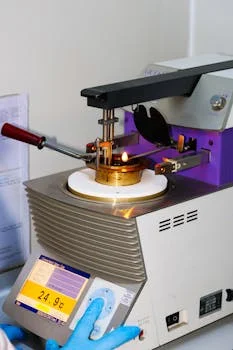
The Dulces Nombres wastewater treatment plant in Monterrey achieved a 95% reduction in total suspended solids (TSS) after replacing legacy chain-and-sprocket screens with automated rake systems in 2020. Before the upgrade, the plant faced chronic clogging issues that led to 40% downtime and approximately $200,000 USD in annual fines from water authorities. The legacy equipment was unable to handle the high volume of large debris typical of Monterrey’s combined sewer overflows during the rainy season.
The solution involved installing four Duperon FlexRake® GTS screens between October and December 2020. The results were immediate: downtime was reduced to less than 5%, and the plant achieved consistent compliance with NOM-001-SEMARNAT-1996. The project’s ROI was realized in just 18 months, driven by the total elimination of fines and a significant reduction in manual labor costs for screen cleaning. For industrial buyers, the lesson is clear: prioritizing equipment with a proven track record in Monterrey’s specific environmental conditions is the most effective way to mitigate project risk.
Frequently Asked Questions
What are the discharge limits for industrial wastewater in Nuevo León?
The primary standard is NOM-001-SEMARNAT-1996, which limits BOD to ≤30 mg/L, COD to ≤125 mg/L, and TSS to ≤40 mg/L. Additionally, the Nuevo León State Water Law often mandates a 20% water reuse rate for industrial facilities to combat local water scarcity.
How much does a sewage treatment plant cost in Monterrey?
CAPEX generally ranges from $800 to $3,000 USD per cubic meter of daily capacity. A 500 m³/day MBR system typically costs between $600,000 and $1.25 million USD, while a DAF system for pre-treatment costs between $400,000 and $750,000 USD.
Which technology is best for food processing wastewater?
Dissolved Air Flotation (DAF) is the preferred technology due to its high efficiency in removing Fats, Oils, and Grease (FOG) and suspended solids (95%+ removal). For facilities aiming for water reuse, a DAF system followed by an RO system is the industry standard.
How do I ensure my supplier complies with Mexico’s regulations?
Request certified test reports for NOM-001 compliance from previous local installations, verify the presence of a Monterrey-based technical support team, and include effluent quality guarantees in your procurement contract.
What’s the typical payback period for this equipment?
Depending on the technology and the cost of water, payback periods range from 3 to 10 years. Systems that enable water reuse or prevent high regulatory fines (like MBR) typically see a faster ROI, often within 6 to 8 years.