Why Wastewater Treatment Plant Costs in New Jersey Are Higher Than the National Average
In New Jersey, wastewater treatment plant costs are significantly elevated due to a combination of stringent regulatory standards, high energy prices, and some of the most expensive real estate in the United States. The New Jersey Pollutant Discharge Elimination System (NJPDES) program imposes discharge limits that are often three times stricter than federal EPA standards; for example, many New Jersey permits mandate Total Suspended Solids (TSS) limits of 10 mg/L, compared to the 30 mg/L national baseline. Achieving these levels necessitates the integration of advanced treatment technologies such as Membrane Bioreactors (MBR) or tertiary filtration systems, which increase both initial capital investment and ongoing operational complexity.
Land acquisition and site preparation in New Jersey’s industrial corridors, such as those in Middlesex or Essex counties, typically range from $150 to $300 per square foot. These high real estate values increase civil engineering and site preparation expenses by 20% to 40% compared to projects in rural or Southern states. New Jersey’s industrial energy rates average between $0.18 and $0.22 per kWh, which is 30% to 50% higher than the national average. This energy premium forces facilities to prioritize high-efficiency equipment, such as MBR systems for high-efficiency wastewater treatment in New Jersey, which utilize low-pressure membranes to mitigate long-term power consumption.
The regulatory environment also extends project timelines, adding substantial "soft costs" to the budget. The New Jersey Department of Environmental Protection (NJDEP) permitting process frequently adds 6 to 12 months to a project’s lifecycle. During this period, engineering, legal, and consulting fees continue to accrue, typically adding 10% to 15% to the total project cost before a single shovel hits the ground. For industrial facility managers, these regional factors mean that a budget based on national averages will likely result in a 25% to 35% funding shortfall.
Wastewater Treatment Plant Cost Framework: CAPEX vs. OPEX Breakdown
Capital Expenditure (CAPEX) for a New Jersey wastewater treatment plant encompasses equipment procurement, civil construction, permitting fees, and site preparation. Based on recent industrial installations and data from NJ American Water’s $108 million infrastructure investments, equipment typically accounts for 40% to 60% of the total CAPEX for industrial systems. For a standard 10,000 Gallons Per Day (GPD) industrial plant, CAPEX ranges from $1 million for conventional systems to over $3 million for advanced configurations that include lift stations and specialized effluent disposal mechanisms.
Operating Expenditure (OPEX) represents the recurring costs required to maintain compliance and functionality. In New Jersey, industrial OPEX averages between $0.50 and $2.50 per treated gallon. Energy consumption is the primary driver, accounting for 30% to 50% of the total OPEX, followed by sludge disposal at 20% to 30%. Municipal plants serving large populations (100,000+ residents) face even larger scales, with CAPEX often exceeding $50 million and annual OPEX ranging from $1 million to $5 million, depending on the age of the infrastructure and the level of automation utilized.
The relationship between CAPEX and OPEX is often inverse; investing in higher-end technology upfront can lead to significant long-term savings. For instance, while an MBR system may increase initial CAPEX by 20% to 30% compared to conventional activated sludge, it can reduce annual OPEX by 30% to 40% through reduced chemical demand and lower sludge production. Understanding these trade-offs is essential for engineering consultants who must justify the global cost benchmarks for wastewater treatment plants while meeting local NJDEP requirements.
| Cost Category | Component | Percentage of Total Cost | NJ-Specific Driver |
|---|---|---|---|
| CAPEX | Equipment & Materials | 45-55% | Advanced filtration for NJPDES compliance |
| CAPEX | Civil Works & Labor | 30-40% | High prevailing wage rates and land costs |
| CAPEX | Permitting & Engineering | 10-15% | Extended NJDEP review timelines |
| OPEX | Energy Consumption | 35-50% | $0.18–$0.22/kWh average utility rates |
| OPEX | Sludge Disposal | 20-30% | $100–$150/ton landfill tipping fees |
CAPEX Breakdown by Plant Size and Technology: What to Expect in 2025
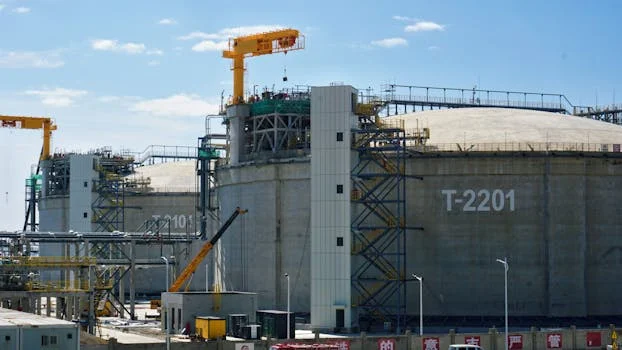
For industrial facilities in New Jersey, CAPEX is heavily influenced by the daily flow volume and the specific contaminants targeted for removal. Small-scale industrial plants (10,000 GPD) utilizing conventional activated sludge typically require a $1 million investment, but this figure climbs quickly if the facility requires DAF systems for industrial pretreatment in New Jersey to handle high fats, oils, and grease (FOG) loads. For mid-to-large industrial applications (100,000 GPD), CAPEX can reach $5 million, especially when high-purity effluent is required for water reuse or direct discharge into sensitive NJ watersheds.
Municipal plants ranging from 1 to 10 Million Gallons Per Day (MGD) involve massive civil engineering undertakings. Data adjusted for inflation from landmark EPA studies suggests that 50% to 70% of municipal CAPEX is allocated to concrete tanks, extensive piping, and lift stations, with only 20% to 30% dedicated to the mechanical treatment equipment itself. In New Jersey, the inclusion of NJDEP-mandated safety margins and redundant systems often pushes these projects toward the higher end of the $10 million to $50 million range.
One strategy to control these upfront costs is the adoption of modular or containerized systems. Utilizing compact underground wastewater treatment systems for urban sites can reduce CAPEX by 15% to 25%. These systems minimize the need for extensive on-site civil engineering and concrete work, as the units are pre-fabricated and tested in a controlled environment before being shipped to the New Jersey site for final connection.
| Plant Capacity (GPD) | Conventional CAPEX | MBR CAPEX | DAF (Pretreatment) CAPEX |
|---|---|---|---|
| 10,000 | $1.0M - $1.2M | $1.5M - $1.8M | $0.8M - $1.1M |
| 50,000 | $2.2M - $2.8M | $3.0M - $3.6M | $1.8M - $2.3M |
| 100,000 | $3.5M - $4.2M | $4.5M - $5.5M | $2.8M - $3.5M |
OPEX Breakdown: Energy, Chemicals, Labor, and Sludge Disposal Costs
Operational efficiency is the most critical factor in the total cost of ownership for New Jersey facilities. Energy is the largest variable, with aeration processes in activated sludge plants consuming the bulk of the power. According to 2024 EPA benchmarks, modern MBR systems can reduce energy intensity by 20% to 30% compared to legacy conventional systems by using advanced blower controls and high-efficiency diffusers. In a state where electricity costs are high, these efficiencies translate into tens of thousands of dollars in annual savings.
Chemical expenditures, including coagulants, flocculants, and pH adjusters, typically add $0.10 to $0.50 per treated gallon. Facilities using DAF systems often see higher chemical costs—sometimes 20% to 40% more than MBR systems—because DAF relies heavily on chemical de-emulsification to achieve high TSS removal rates. Conversely, sludge management remains a significant burden. With New Jersey landfill tipping fees averaging $100 to $150 per ton in 2025, reducing sludge volume is a financial necessity. Implementing sludge dewatering solutions to reduce disposal costs, such as plate and frame presses, can reduce the total mass of waste by 30% to 50%, directly impacting the bottom line.
Labor costs are also shifting as automation becomes more prevalent. A fully automated WSZ series system may only require 1 to 2 operators for part-time monitoring and maintenance. In contrast, older municipal or large-scale industrial plants may require a full-time staff of 3 to 5 operators per shift to manage manual valves, chemical dosing, and sludge handling. Reducing labor requirements through automation is one of the most effective ways to stabilize OPEX against rising wage inflation in the New York-Philadelphia industrial corridor.
| OPEX Component | Estimated Cost (per 1,000 Gal) | Optimization Strategy |
|---|---|---|
| Energy | $0.40 - $0.90 | VFDs and high-efficiency blowers |
| Chemicals | $0.15 - $0.55 | Automated dosing based on influent sensors |
| Sludge Disposal | $0.25 - $0.70 | Mechanical dewatering (Filter Press) |
| Labor & Maint. | $0.30 - $0.60 | Remote monitoring and SCADA integration |
Regulatory Costs in New Jersey: Permitting, Compliance, and Fines
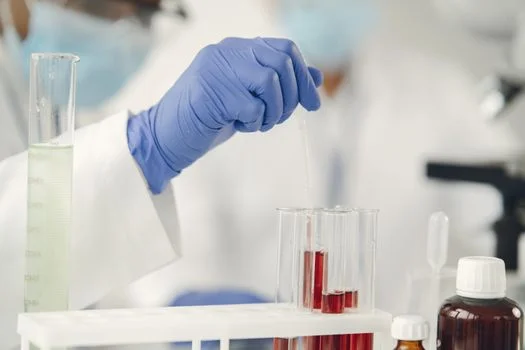
The regulatory landscape in New Jersey is governed by the NJDEP, which enforces the NJPDES permit system. Permitting fees are scaled based on the complexity and volume of the discharge, ranging from $5,000 for small industrial pretreatment permits to over $50,000 for large-scale municipal or direct-discharge industrial plants. Beyond the permit fees, the engineering documentation required for NJDEP approval—including Environmental Impact Statements and detailed process designs—often adds 10% to 20% to the initial CAPEX.
Compliance monitoring is a recurring cost that many buyers overlook. The NJDEP pretreatment program requires industrial dischargers to conduct regular sampling and reporting, which can cost between $2,000 and $10,000 annually in third-party laboratory fees. Failure to meet these strict limits (e.g., 10 mg/L BOD or TSS) results in severe financial penalties. Non-compliance fines in New Jersey are structured to be punitive, often ranging from $10,000 to $50,000 per violation per day, depending on the severity of the discharge and the facility's history of compliance.
New Jersey’s Water Quality Management Planning (WQMP) rules can significantly impact project timelines. If a proposed plant or expansion is not consistent with the regional WQMP, the amendment process can delay a project by 6 to 12 months. These delays are not merely administrative; they represent lost production time for industrial facilities and increased "holding costs" for engineering and legal teams, which can inflate soft costs by an additional 15% of the total project budget.
Technology Comparison: CAPEX, OPEX, and Performance for NJ Buyers
Selecting the right technology requires a balanced analysis of upfront investment versus long-term performance. Conventional activated sludge remains the lowest-CAPEX option, typically costing $1M to $3M for a 10,000 GPD plant. However, it requires a footprint 2 to 3 times larger than modern alternatives, making it difficult to implement in space-constrained New Jersey industrial parks. Its OPEX is also higher, often reaching $2.50 per gallon due to lower energy efficiency and higher sludge production.
MBR systems represent the high-performance tier. While the CAPEX is higher—ranging from $2.5M to $5M for a 100,000 GPD system—the effluent quality is superior, often achieving TSS and BOD levels below 5 mg/L. This makes MBR the preferred choice for facilities needing to meet strict NJPDES direct discharge limits or those pursuing water reuse. For more information on these systems, see the detailed engineering specs for MBR systems in New Jersey. DAF systems, meanwhile, are the gold standard for industrial pretreatment, specifically for removing solids and fats before the water enters a municipal sewer, thus avoiding heavy surcharges from local utility authorities.
| Technology | Relative CAPEX | Relative OPEX | Footprint | Effluent Quality (TSS) |
|---|---|---|---|---|
| Conventional | Low | High | Large | 15-30 mg/L |
| MBR | High | Low-Medium | Compact | < 5 mg/L |
| DAF | Medium | Medium-High | Medium | Varies (Pretreat) |
How to Choose the Right Wastewater Treatment Technology for Your Budget
Navigating the selection process in New Jersey requires a structured decision framework that accounts for both financial constraints and regulatory mandates. Follow these five steps to ensure a viable long-term solution:
- Define Influent and Discharge Requirements: Conduct a comprehensive wastewater characterization to determine TSS, BOD, COD, and FOG levels. Compare these against your NJPDES permit or local municipal pretreatment standards.
- Evaluate Footprint and Site Constraints: If your facility is located in a high-density area like Jersey City or Newark, prioritize compact technologies like MBR. If land is available, conventional systems may offer lower CAPEX.
- Perform a 10-Year TCO Analysis: Do not look at CAPEX in isolation. Calculate the Total Cost of Ownership (TCO) by factoring in New Jersey’s energy rates and sludge disposal fees. Often, the more expensive equipment pays for itself within 3 to 5 years through OPEX savings.
- Assess Automation Needs: Determine if your facility can support a full-time operations team. If not, invest in how package sewage treatment plants reduce CAPEX and footprint through integrated automation and remote monitoring.
- Factor in Regulatory Lead Times: Budget for a 12-month permitting window. Ensure your engineering partner has experience navigating NJDEP’s specific documentation requirements to avoid costly revisions and delays.
Frequently Asked Questions
Q: How much does a 10,000 GPD wastewater treatment plant cost in New Jersey?
A: For a 10,000 GPD plant, CAPEX typically ranges from $1 million for a conventional activated sludge system to $3 million for an advanced MBR system. These costs include the treatment units, lift stations, and necessary site improvements. OPEX for such a plant generally falls between $0.50 and $2.50 per gallon, heavily influenced by NJ’s high energy and sludge disposal rates. NJDEP permitting and engineering fees usually add another 10% to 20% to the upfront costs.
Q: Why are NJDEP permitting fees so high compared to other states?
A: NJDEP fees are based on the complexity of the environmental impact and the volume of discharge. In New Jersey, the high density of industrial activity and the sensitivity of local watersheds (like the Delaware River Basin) necessitate more rigorous review processes. This includes detailed technical audits and compliance with the Water Quality Management Planning (WQMP) rules, which require significant administrative and engineering oversight, pushing fees into the $5,000 to $50,000 range.
Q: Can water reuse technologies lower my long-term costs in New Jersey?
A: Yes. By implementing advanced treatment like MBR, facilities can produce high-quality effluent suitable for non-potable reuse (cooling towers, irrigation, or process wash water). This reduces the volume of water purchased from utilities and, more importantly, reduces the volume of discharge subject to NJPDES fees and municipal sewer surcharges. In many New Jersey industrial zones, water reuse can provide a return on investment within 4 to 6 years.
Q: What is the most cost-effective way to handle sludge in New Jersey?
A: Given that landfill tipping fees in NJ are among the highest in the nation ($100–$150/ton), mechanical dewatering is essential. Utilizing a plate and frame filter press to achieve 30% to 40% solids concentration can cut disposal costs by more than half compared to hauling liquid sludge. This is often the single most effective way to reduce the OPEX of an industrial wastewater plant in the state.