Food processing plants in Mexico face strict wastewater discharge limits under NOM-001-SEMARNAT, including BOD ≤ 150 mg/L, TSS ≤ 200 mg/L, and FOG ≤ 50 mg/L for most sub-sectors. A 2025 engineering blueprint for compliance combines screening (95% TSS removal), dissolved air flotation (DAF) for FOG reduction (90-98% efficiency), and biological treatment (A/O or MBR) to achieve 92-97% BOD removal. CAPEX for a 50 m³/h system ranges from $800K–$1.5M, with OPEX at $0.80–$1.50/m³, depending on technology and water reuse goals.
Why Mexican Food Processors Are Upgrading Wastewater Treatment in 2025
The 2025 implementation of NOM-001-SEMARNAT mandates a 30-50% reduction in permissible discharge limits for organic loads in Mexican food processing facilities compared to previous 1996 standards. This regulatory shift is compounded by extreme water scarcity; according to 2024 CONAGUA data, over 40% of food processing plants are located in regions classified as "high" or "extremely high" water stress, particularly in the Bajío and Northern industrial corridors. For these facilities, wastewater treatment is no longer just a compliance checkbox but a critical strategy for operational continuity through water reuse.
Real-world enforcement has intensified. In 2024, a major meat processing plant in Jalisco faced fines exceeding $200,000 USD and a temporary partial shutdown due to persistent violations of Fats, Oils, and Grease (FOG) limits. The plant's existing gravity grease traps were unable to handle the emulsified fats from high-temperature cleaning cycles. By contrast, a 100 m³/day dairy plant in Querétaro successfully avoided similar penalties and reduced municipal discharge fees by 70% after upgrading its headworks. Their new system, utilizing DAF systems for FOG and TSS removal in food processing wastewater followed by an MBR unit, transformed influent with 3,500 mg/L BOD into effluent with less than 30 mg/L BOD, suitable for cooling tower makeup.
Economic incentives are also driving upgrades. CONAGUA’s 2025 funding programs offer grants and tax rebates for plants achieving 60% or higher water reuse rates. When combined with the rising cost of fresh water—which has increased by 15-20% in industrial zones like Monterrey and San Luis Potosí—the ROI for advanced treatment systems has shortened to less than 36 months for many high-volume processors.
Mexico’s Regulatory Landscape for Food Processing Wastewater: NOM-001-SEMARNAT and Beyond
NOM-001-SEMARNAT 2021/2025 establishes a phased compliance schedule that requires food processors to meet stricter monthly average limits for BOD, TSS, and FOG based on their total organic load and receiving water body classification. While the federal standard provides the baseline, state-level variations often impose even tighter constraints. In Jalisco, for instance, local regulations (normas estatales) frequently limit FOG to ≤ 30 mg/L to protect municipal sewage infrastructure from "fatbergs," while Nuevo León has introduced mandates requiring specific percentages of treated water reuse for industrial cooling.
| Parameter | NOM-001-SEMARNAT (General) | Dairy Sub-Sector (Typ.) | Meat/Poultry (Typ.) | Beverage/Bottling (Typ.) |
|---|---|---|---|---|
| BOD₅ (mg/L) | ≤ 150 | ≤ 150 | ≤ 150 | ≤ 100 |
| TSS (mg/L) | ≤ 200 | ≤ 150 | ≤ 200 | ≤ 100 |
| FOG (mg/L) | ≤ 50 | ≤ 50 | ≤ 30 (State Dep.) | ≤ 15 |
| pH | 6.0 – 9.0 | 6.5 – 8.5 | 6.0 – 9.0 | 6.5 – 8.5 |
| Total Nitrogen (mg/L) | ≤ 15 - 25 | ≤ 20 | ≤ 25 | ≤ 15 |
Non-compliance carries severe financial and legal risks. PROFEPA (Procuraduría Federal de Protección al Ambiente) enforcement data from 2024 indicates that fines can reach up to 50,000 UDIs (Unidades de Inversión), approximately $350,000 USD, for repeat offenders. To mitigate these risks, environmental managers should conduct a 10-step self-audit:
- Verify sampling frequency against the volume-based requirements of NOM-001.
- Ensure all laboratory testing is conducted by EMA (Entidad Mexicana de Acreditación) certified labs.
- Check the calibration of flow meters (required for CONAGUA reporting).
- Audit FOG trap maintenance logs.
- Review the efficiency of filter media selection for food processing wastewater pretreatment.
- Assess nutrient (N and P) removal rates, as limits are tightening for sensitive water bodies.
- Document sludge disposal manifests.
- Verify pH stabilization records.
- Evaluate the adequacy of secondary containment for chemical storage.
- Compare current discharge data against the 2025 "Monthly Average" (P.M.) limits.
Engineering Specs for Food Processing Wastewater: Contaminant Profiles by Sub-Sector
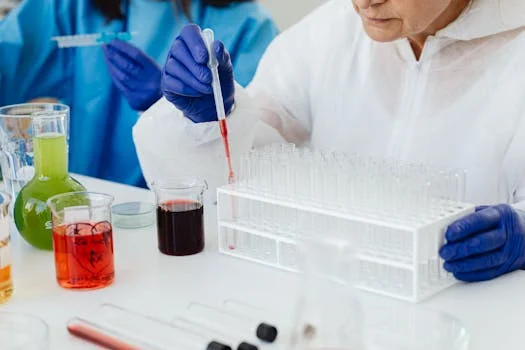
Wastewater from food processing sub-sectors in Mexico typically exhibits high organic strength, with dairy effluent often exceeding 3,000 mg/L of BOD and meat processing streams containing up to 2,500 mg/L of Fats, Oils, and Grease (FOG). Designing an effective system requires precise characterization of these contaminants, which vary significantly by process. Meat processing, for example, produces high nitrogen loads from blood and proteins, necessitating robust nitrification/denitrification stages that beverage plants—high in sugars but low in nitrogen—may not require.
| Contaminant Range | Dairy (Milk/Cheese) | Meat (Slaughter/Process) | Beverage (Soft Drinks) |
|---|---|---|---|
| Influent BOD (mg/L) | 1,000 – 4,000 | 800 – 3,500 | 500 – 2,500 |
| Influent TSS (mg/L) | 500 – 2,000 | 400 – 1,800 | 200 – 1,000 |
| Influent FOG (mg/L) | 300 – 1,500 | 500 – 2,500 | < 50 |
| COD:BOD Ratio | 1.5 : 1 to 2.0 : 1 | 1.8 : 1 to 2.5 : 1 | 1.4 : 1 to 1.7 : 1 |
| Nutrient Profile | High P, Mod N | High N, High P | Low N, Low P |
The typical process flow for a Mexican food plant involves a multi-stage approach. It begins with primary screening using GX series rotary bar screens for food processing headworks to remove large solids (skins, feathers, or packaging debris). This is followed by equalization to buffer pH and flow surges, and then a DAF unit for primary FOG and TSS removal. For dairy and meat plants, biological treatment follows—either through an Anaerobic/Oxic (A/O) process for standard discharge or an MBR for water reuse. The final stage often involves disinfection using chlorine dioxide generators for food plant effluent disinfection to ensure the water is pathogen-free for non-potable facility use.
Treatment Technology Comparison: DAF vs. MBR vs. Anaerobic Digestion for Food Processing
Dissolved Air Flotation (DAF) serves as the primary physical-chemical treatment for FOG removal in food processing, while Membrane Bioreactor (MBR) technology provides the highest BOD removal efficiency for plants targeting water reuse. Selecting the right technology depends on the influent strength and the desired final water quality. For high-strength organic wastewater, such as that found in large-scale meat rendering, anaerobic digestion is often used as a pre-biological step to reduce the load on aerobic systems and generate biogas.
| Technology | Removal Efficiency (BOD/FOG) | Footprint | Energy Use | Target Sub-Sector |
|---|---|---|---|---|
| DAF | 30% BOD / 95% FOG | Small | Low-Moderate | Meat, Dairy, Snacks |
| MBR (Integrated) | 99% BOD / 99% TSS | Compact | High | Dairy, Reuse-heavy plants |
| Anaerobic (UASB) | 75-85% BOD / 0% FOG | Large | Net Positive (Biogas) | Meat, High-COD Beverage |
| Act. Sludge (CAS) | 90-95% BOD / 80% TSS | Very Large | Moderate | Large sites w/ land |
For Mexican dairy plants, Integrated MBR systems for near-reuse-quality effluent in food plants are becoming the standard. The MBR combines biological degradation with membrane filtration, eliminating the need for secondary clarifiers and producing water that meets the strict turbidity requirements for Clean-In-Place (CIP) floor washing. In contrast, meat processors often opt for a DAF + Anaerobic + Aerobic train. The DAF protects the anaerobic digester from fat-induced crusting, while the anaerobic stage handles the bulk of the COD, significantly reducing the energy required for subsequent aeration. This configuration is particularly effective for achieving a low cost comparison for high-BOD food processing wastewater treatment in high-volume operations.
2025 Cost Breakdown: CAPEX, OPEX, and ROI for Food Processing Wastewater Systems in Mexico
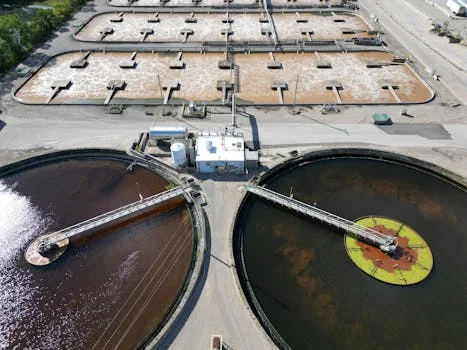
The total cost of ownership for a food processing wastewater system in Mexico is primarily driven by energy consumption and chemical dosing, which together account for 45-60% of annual OPEX. For a standard 50 m³/h treatment plant, CAPEX varies significantly based on the level of automation and the quality of materials (e.g., 304 vs. 316L stainless steel for corrosive food acids). In Northern Mexico (Monterrey, Tijuana), CAPEX is typically 15-20% higher than in Central Mexico due to increased logistics costs and higher demand for specialized labor.
| Cost Component | Standard DAF + CAS | Advanced DAF + MBR | DAF + Anaerobic + CAS |
|---|---|---|---|
| CAPEX (50 m³/h) | $800,000 – $1.1M | $1.2M – $1.8M | $1.5M – $2.2M |
| OPEX ($/m³) | $0.70 – $0.95 | $1.10 – $1.50 | $0.55 – $0.85* |
| Energy (kWh/m³) | 0.8 – 1.2 | 1.5 – 2.5 | 0.4 – 0.7 (Net) |
| Maintenance | Moderate | High (Membranes) | Moderate-High |
*Reflects biogas energy recovery offsets.
ROI is calculated by aggregating three primary factors: avoided fresh water costs ($0.50–$1.20/m³), avoided municipal discharge surcharges (which can be triple the base water rate for high-BOD effluent), and the elimination of PROFEPA non-compliance fines. Many Mexican food processors are leveraging NAFIN (Nacional Financiera) "Green Loans," which offer interest rates as low as 6% for environmental infrastructure. Additionally, prefabricated wastewater treatment solutions for food plants in Mexico can reduce installation CAPEX by up to 25% compared to traditional stick-built concrete plants, while also accelerating the depreciation schedule for tax purposes.
Case Study: 98% BOD Removal at a Mexican Dairy Plant Using DAF + MBR
A large-scale dairy facility in Guanajuato achieved a 98.7% BOD reduction and 70% water recovery rate following the integration of DAF pretreatment and MBR biological filtration. Before the upgrade, the plant struggled with fluctuating organic loads from cheese-making cycles, with influent BOD peaking at 3,200 mg/L and FOG at 1,200 mg/L. Their legacy activated sludge system was frequently "bulking," leading to TSS violations and consistent fines from local authorities.
The 2024 upgrade implemented a comprehensive treatment train:
- Headworks: A GX series rotary bar screen removed 95% of large solids and curd fragments.
- Pretreatment: A DAF-80 system reduced FOG to <20 mg/L using a tailored polymer program.
- Biological: An MBR system utilizing integrated MBR modules achieved a BOD discharge of 12 mg/L.
- Disinfection: A chlorine dioxide generator provided final polish for water reuse.
The results were immediate: discharge compliance was achieved within 48 hours of commissioning. The plant now reuses 56 m³/h of treated water for cooling towers and site irrigation, saving approximately $180,000 USD annually in fresh water purchases. With a total CAPEX of $1.3M and an OPEX of $0.95/m³, the project reached its break-even point in 3.1 years. Key lessons learned included the importance of automated CIP protocols for the MBR to prevent fouling from residual dairy proteins and the necessity of a robust equalization tank to manage pH swings from caustic cleaning agents.
Zero-Risk Equipment Selection: A Decision Framework for Mexican Food Processors
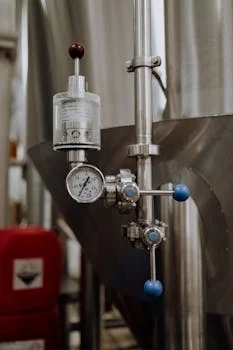
Technical selection of wastewater equipment for Mexican food plants must prioritize the "Monthly Average" (P.M.) compliance metric over "Daily Maximum" (P.D.) to ensure long-term regulatory adherence. When evaluating vendors, engineers should look beyond the initial price tag and focus on "serviceability in Mexico." A system that lacks a local spare parts inventory or 24/7 technical support in Spanish can lead to catastrophic downtime and immediate PROFEPA scrutiny.
"The most common failure point in Mexican food wastewater plants is not the technology itself, but the lack of pilot data for high-FOG streams. Without a minimum 3-month pilot trial, membrane fouling rates and chemical consumption are merely guesses." — HydropureWater Engineering Field Report 2024.
Critical Selection Criteria:
- Hydraulic Peak Factor: Can the system handle 2x flow during 3-hour sanitation windows?
- Material Compatibility: Are all wetted parts resistant to the specific CIP chemicals (nitric acid, peracetic acid) used in the plant?
- Automation Level: Does the PLC allow for remote monitoring via SCADA, a requirement for many modern corporate ESG reporting frameworks?
- Vendor Track Record: Can the vendor provide three references from the Mexican food industry with similar influent profiles?
Red flags to avoid include vendors who offer "one-size-fits-all" solutions without performing a comprehensive water analysis, or those who cannot provide performance guarantees backed by financial penalties. For MBR systems, insist on a 5-year pro-rated warranty on membranes and a guaranteed flux rate at the plant's maximum operating temperature (often higher in Mexican dairy/meat plants).
Frequently Asked Questions
What are the discharge limits for food processing wastewater in Mexico under NOM-001-SEMARNAT 2025?
The 2025 limits generally require BOD ≤ 150 mg/L, TSS ≤ 200 mg/L, and FOG ≤ 50 mg/L. However, if discharging into protected water bodies (Type C), limits can be as low as BOD ≤ 30 mg/L and TSS ≤ 40 mg/L. Always verify your specific receiving body classification with CONAGUA.
How much does a DAF system cost for a 50 m³/h food processing plant in Mexico?
A high-quality DAF system for this flow rate typically ranges from $120,000 to $180,000 USD for the equipment alone. Total installed CAPEX, including pumps, chemical dosing, and controls, typically ranges from $250,000 to $350,000 USD.
What’s the best wastewater treatment technology for a dairy plant in Mexico: DAF, MBR, or anaerobic digestion?
For most Mexican dairy plants, a combination of DAF (for FOG removal) followed by MBR is the best choice if water reuse is the goal. If the plant is very large (over 2,000 m³/day), anaerobic digestion may be added before the MBR to recover energy from the high-strength whey streams.
Are there government grants for food processing wastewater treatment in Mexico?
Yes, CONAGUA and FIRA offer various programs, including the "Programa de Devolución de Derechos" (PRODER), which can return a portion of water rights payments to companies that invest in treatment and reuse infrastructure.
How can I reduce FOG in my meat processing wastewater to comply with Mexican regulations?
The most effective method is a two-step approach: first, install a mechanical rotary screen to remove solids, followed by a Dissolved Air Flotation (DAF) system with chemical coagulation and flocculation. This combination typically removes over 95% of FOG.