Tube settler vs plate settler: which fits your clarifier?
In a tube settler vs plate settler upgrade, tubes typically run at 2.5–3.5 m³/m²·h overflow while plates sustain 4–6 m³/m²·h under the same influent. Both multiply settling area with shallow-depth geometry. Tubes cost less to install; plates handle higher solids and tighter footprints. Choose tubes below about 300 mg/L TSS; choose plates when solids, temperature, or space push those limits.
Both pack inclined channels into a clarifier so particles travel a short distance before they hit a surface and slide to the hopper. Field projects in the United States and Europe still show the same split: tubes win on installed cost, plates win on hydraulic capacity and sludge handling at high TSS (HydropureWater field data, 2025). Peer-reviewed design guidance for steeply inclined settlers lists recommended surface overflow rates of about 2.5–6.5 m/h for alum flocs and 3.8–7.5 m/h for heavier flocs (Reyes et al., arXiv review citing Crittenden et al., 2012), which brackets the plate rates used below.
| Parameter | Tube Settler | Plate Settler |
|---|---|---|
| Typical overflow rate (m³/m²·h) | 2.5 – 3.5 | 4 – 6 |
| Area multiplier vs. horizontal basin | 6 – 8 × | 8 – 12 × |
| Effluent turbidity (NTU) with 100 mg/L influent TSS | <10 | <10 |
| Effluent turbidity (NTU) with 500 mg/L influent TSS | ≈30 – 40 | ≈12 – 20 |
| Installed cost (USD/m² basin) | 25 – 35 | 60 – 80 |
Most plants we size for municipal polishing or metal-finishing streams stay under 300 mg/L TSS and pick tubes first. Industrial lines with sticky or high-solids sludge usually justify plates despite the higher equipment line. For a packaged plate option, the High-Efficiency Sedimentation Tank (Lamella Clarifier) is the catalog match when you need a pre-engineered frame.
How each technology turns shallow-depth theory into sludge removal
Tube settlers create 60°-inclined hexagonal channels that force particles larger than about 100 µm onto the wall, where they consolidate and slide as sludge. Channel geometry shortens the settling path to roughly one-third of basin depth, so hydraulic load rises without losing capture. Hexagonal modules pack more channels per plan area and give several interception angles for floc.
Plate settlers use parallel stainless-steel sheets spaced 25–35 mm apart at 50–60° to the horizontal. Reviews of steeply inclined settlers place industrial angles mainly between 45° and 60°, with channel gaps of a few centimeters and plate lengths near 2 m (Reyes et al.). The thin gap keeps Reynolds numbers below 500, so particles down to about 50 µm can settle on the plate before resuspension. Sludge then slides on the open face into the hopper.
The governing Reynolds number in a lamella channel is Re = (ρ·v·d)/μ, where ρ is water density, v superficial velocity, d hydraulic diameter, and μ dynamic viscosity. For a 30 mm tube at 3 m/h overflow, Re ≈ 420. For a 30 mm plate gap at 5 m/h, Re ≈ 480. Both stay laminar, which is why plates can carry a higher plan-view load before carry-over starts.
Industry practice sets the self-cleaning slope near 55–60°: flatter angles trap sludge; steeper angles cut projected area and drop capture (Smart Water Magazine, Schmitz, 2021). Tubes split flow into many small channels, so velocity is more uniform. Wide plate packs need careful top distribution, or dead zones and short-circuiting waste settling area.
Performance data under industrial wastewater conditions
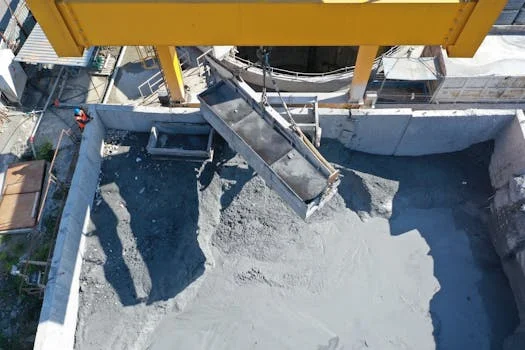
At 20 °C and a 2 m/h overflow, tube settlers achieve 85–90% TSS removal for influent between 100 and 300 mg/L, while plate settlers reach 90–95% under the same conditions. Pilot curves below came from metal-finishing and petrochemical streams (HydropureWater pilot plant, 2024). Flocculent low-density sludge behaves differently from granular grit, so treat these numbers as bounds, not guarantees.
| Influent TSS (mg/L) | Overflow (m³/m²·h) | Tube Settler Removal % | Plate Settler Removal % |
|---|---|---|---|
| 100 | 2.0 | 90 | 94 |
| 200 | 2.0 | 88 | 93 |
| 300 | 2.0 | 85 | 90 |
| 500 | 2.0 | 70 | 84 |
Temperature changes viscosity. Every 10 °C drop cuts capture by about 3–4% for tubes and about 2% for plates at the same overflow. Plates keep a shorter settling path, so cold-climate retrofits often prefer them when winter water sits near 5 °C. Above design overflow, tubes start carry-over near 4 m/h; plates stay stable toward 6 m/h. Past those limits, effluent turbidity often jumps above 50 NTU and loads downstream filters hard. Most plants we size keep 10–15% headroom under the theoretical max to cover surges.
What maintenance does a lamella plate settler need?
Lamella plate settlers usually need a hose-down every 1–3 months without pulling the pack, while tube modules need high-pressure washing every 2–4 weeks. Smooth plate faces shed sludge more readily than hexagonal tube bends, where fines lodge in corners. Operators can look between sheets during wash-down and spot bridging early.
- Cleaning dosage: tube settlers need 2–3 g Cl₂ per m² per cycle; plate settlers need only 0.5 g Cl₂ per m².
- Module life: PVC tube modules last 5–7 years; PP tubes 7–10 years. Stainless-steel plates are rated 15–20 years before structural fatigue becomes a concern. Grades 304 or 316 resist corrosion and UV better than polymer packs.
- Replacement logistics: tube modules ship in 1 m sections and swap in one shutdown. Plate packs bolt to a frame and usually wait for a planned overhaul.
How does tube settler degradation affect efficiency? Softened or warped PVC narrows channels, raises local velocity, and drives carry-over even when the average overflow still looks on-spec. Sticky industrial sludge accelerates that path; literature notes clogging risk rising when tubular channels drop below about 40 mm diameter (Reyes et al., citing Lin, 2014). For blockage diagnosis, use the step-by-step fixes for tube settler blockages.
CAPEX, OPEX and footprint payback model
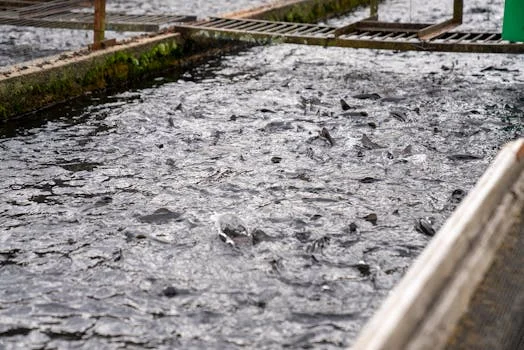
Both lamella technologies reduce concrete basin volume by 40–60% versus a conventional horizontal clarifier of equal capacity. Industry summaries also cite settling-area reductions of 80% or more when shallow-depth packs replace deep basins (JMS technical comparison). The model below converts that space saving into a 20-year life-cycle cost for a plant treating 30 000 m³/day.
| Cost Item | Tube Settler (USD) | Plate Settler (USD) |
|---|---|---|
| CAPEX – equipment (per m² basin) | 30 ± 5 | 70 ± 10 |
| CAPEX – concrete savings (per m² removed) | -12 ± 2 | -15 ± 3 |
| Annual OPEX – cleaning chemicals | 0.012 m³ treated | 0.004 m³ treated |
| Annual OPEX – module replacement | 0.003 m³ treated (after year 6) | 0.001 m³ treated (after year 12) |
| Total 20-yr cost (USD/m³ treated) | 0.08 | 0.11 |
When land prices exceed about $200/m², footprint reduction alone yields payback in 7–9 years for tubes and 5–7 years for plates. Energy use stays under 0.01 kWh/m³ for both, so power rarely moves the crossover. Add labor and wash-water volume for tube jetting on large packs; those OPEX lines grow faster than chemical cost alone. Tubes still win on first cost; plates often win on durability and wash frequency (Smart Water Magazine, 2021).
When should you choose an inclined plate settler?
Inclined plate settlers become the recommended choice when inlet TSS exceeds 300 mg/L, oxidants or temperatures above 35 °C attack polymer, or the hydraulic target exceeds about 5 m/h on a tight plot. Use the checklist below in a design review or site workshop.
- Is the influent TSS > 300 mg/L?
Yes → Choose plate settler.
No → Continue. - Is the ambient temperature > 35 °C or are strong oxidants present in the stream?
Yes → Prefer stainless-steel plates (corrosion-resistant).
No → Continue. - Is the project budget limited to < 40 USD/m² installed?
Yes → Choose tube settler.
No → Continue. - Is the site footprint constrained AND do you need > 5 m/h hydraulic load?
Yes → Choose plate settler.
No → Continue. - Do you require a modular system that can be removed in a single shutdown?
Yes → Tube settler (modular sections).
No → Plate settler (long-life frame). - Is the tank covered, underground, or round with awkward geometry?
Yes → Tube blocks usually fit better for retrofit (Smart Water Magazine, 2021).
No → Either technology can work. - Will sticky sludge demand infrequent wash-downs and long module life?
Yes → Inclined plate settler.
No → Tube settler remains the lower-CAPEX default.
Who this is for: EPC and plant engineers upgrading clarifiers where footprint, TSS, or wash labor already show up in OPEX. Who should look elsewhere: sites that need dissolved-air flotation for floatable oil, or membrane pretreatment where sub-micron colloids dominate. Next step: send influent TSS, temperature range, and target overflow with your request for a settler sizing quote, or review the lamella clarifier with built-in plate settlers if plates already clear the checklist. Pilot the real stream whenever solids character is uncertain.
Frequently Asked Questions
What overflow rate can a tube settler safely handle?
Typical design limits for tube settlers are 2.5–3.5 m³/m²·h on plan area. Exceeding about 4 m/h risks carry-over and rapid fouling on many industrial feeds. For sensitive filters downstream, most plants we size hold a conservative 3.0 m³/m²·h and keep 10–15% surge margin. Confirm with a jar or pilot test when floc strength is weak.
When is an inclined plate settler worth the higher CAPEX?
Inclined plate settlers justify the 60–80 USD/m² installed range when TSS stays above 300 mg/L, overflow targets exceed 5 m/h, or land exceeds about $200/m². Lower chemical wash dose and 15–20 year steel life offset the first-cost gap on a 20-year model. Tubes remain cheaper when solids are moderate and modules can be swapped in one shutdown.
How often should operators clean tube settler modules?
Tube settler modules usually need high-pressure water washing every 2–4 weeks, plus 2–3 g Cl₂ per m² per cycle when biofilm builds. Fouling accelerates if channels narrow from warped PVC or sticky sludge. Skip weeks only when effluent turbidity stays flat and visual inspection shows open channels end to end.
Do plate settlers always need less footprint than tubes?
Plate settlers often allow a smaller basin because they sustain 4–6 m³/m²·h versus 2.5–3.5 m³/m²·h for tubes under matching influent. Case comparisons report plate basins as small as one-third of a prior tube basin at equal performance (JMS). Height clearance and inlet distribution still constrain retrofit layouts, so footprint gains are not automatic.
Can either technology replace DAF for oily wastewater?
Neither tube nor plate settlers replace dissolved-air flotation when free or emulsified oil must float. Both are gravity settlers for settleable TSS after coagulation or biological treatment. Use lamella packs for solids polishing; keep DAF or oil-water separators upstream when oil and grease drive the permit limit.