Integrated circuit (IC) manufacturing generates phosphorus-rich wastewater from CMP, etching, and cleaning processes, with influent concentrations ranging from 5–50 mg/L total phosphorus (TP). Hybrid treatment systems combining enhanced biological phosphorus removal (EBPR), chemical precipitation (e.g., ferric chloride dosing at 5–15 mg/L Fe³⁺), and ultrafiltration (0.03–0.1 μm pore size) achieve 99.9% recovery and zero liquid discharge (ZLD). For example, a 2025 case study demonstrated TP reduction from 8.44 mg/L to 0.035 mg/L—meeting China GB 31573-2015 (<0.5 mg/L) and US EPA (<1 mg/L) limits—with CAPEX of $1.2M for a 100 m³/h system.
Why IC Fabs Need Advanced Phosphorus Treatment: Permit Risks and Recovery Opportunities
Integrated circuit manufacturing processes, specifically chemical mechanical planarization (CMP) and poly-silicon etching, produce wastewater streams with total phosphorus (TP) concentrations between 5 and 50 mg/L, consistently exceeding the China GB 31573-2015 standard of <0.5 mg/L. In the United States, National Pollutant Discharge Elimination System (NPDES) permits often cap TP at <1.0 mg/L, with sensitive regions like the Great Lakes or Chesapeake Bay requiring levels as low as 0.05 mg/L. For a high-volume 300 mm wafer plant discharging 500 m³/day at 20 mg/L TP, the lack of an advanced treatment system can lead to environmental penalties exceeding $1.8M annually based on current EPA enforcement data.
The technical challenge for EHS managers lies in the volatility of the influent. Phosphorus spikes during EBPR (Enhanced Biological Phosphorus Removal) process upsets can reach 8.44 mg/L unexpectedly. According to 2024 EPA enforcement data, such spikes can trigger daily fines of up to $50,000 until compliance is restored. This regulatory pressure is increasingly balanced by the economic incentive of nutrient circularity. Advanced recovery processes can extract phosphorus in the form of struvite or vivianite, which currently command market prices of $200–$500 per ton. Recovering these minerals can offset 15% to 30% of a system's total operating expenses (OPEX), transforming a compliance cost center into a resource recovery asset.
Beyond direct fines, integrated circuit phosphorus wastewater treatment is critical for maintaining a fab’s "Social License to Operate." In water-scarce regions like Taiwan or Northwest China, Zero Liquid Discharge (ZLD) is no longer optional but a prerequisite for expansion permits. Effective phosphorus removal is the gatekeeper for ZLD; if phosphorus is not removed to ultra-low levels, it causes rapid scaling in downstream reverse osmosis (RO) membranes and evaporators, leading to catastrophic system failure and unplanned downtime.
Hybrid System Design: Engineering Specs for 99.9% Phosphorus Removal
Engineered hybrid systems for IC fabs must integrate biological, chemical, and physical barriers to ensure 99.9% TP removal and protect downstream MBR systems for ultrafiltration in semiconductor wastewater. The design begins with EBPR using an anaerobic/aerobic sequencing batch or continuous flow configuration. To maintain stable phosphorus-accumulating organisms (PAOs), the system requires an optimal Sludge Retention Time (SRT) of 10–15 days and a Hydraulic Retention Time (HRT) of 6–8 hours. Mixed Liquor Suspended Solids (MLSS) should be maintained between 3,000 and 5,000 mg/L to handle the organic load associated with CMP slurries.
The second stage involves tertiary chemical precipitation. For influent TP ranges of 5–20 mg/L, PLC-controlled chemical dosing for phosphorus precipitation utilizing ferric chloride (FeCl₃) at rates of 5–15 mg/L Fe³⁺ is standard. This process requires precise pH control between 6.5 and 7.5 to maximize the formation of insoluble iron-phosphate flocs. These flocs are then captured in a Lamella clarifier for solids contact clarification (SCC) with internal recirculation. Engineering parameters for the SCC include a surface loading rate of 20–30 m³/m²·h and a flocculation time of 15–20 minutes.
The final polishing stage utilizes ultrafiltration (UF) with a pore size of 0.03–0.1 μm. This physical barrier ensures that even the smallest non-settleable phosphorus flocs are removed. Operational specs for UF in semiconductor applications include a design flux rate of 50–80 LMH and a transmembrane pressure (TMP) of 0.5–1.5 bar. To mitigate membrane fouling from residual CMP polymers, the system must employ air scouring at 0.15–0.25 m³/m²·h and a Clean-in-Place (CIP) cycle using citric acid (pH 2–3) every 30 days.
| Parameter | Biological (EBPR) | Chemical (FeCl₃) | Ultrafiltration (UF) |
|---|---|---|---|
| Removal Efficiency | 70–85% | 90–98% (of residual) | 99.9% (total system) |
| Design Parameter | SRT: 10–15 days | Dose: 5–15 mg/L Fe³⁺ | Flux: 50–80 LMH |
| Key Constraint | Volatile Fatty Acids (VFA) | pH 6.5–7.5 | TMP <1.5 bar |
| IC-Specific Risk | Inhibition by biocides | Sludge volume increase | CMP polymer fouling |
Phosphorus Recovery Technologies: Struvite, Vivianite, and Dicalcium Phosphate
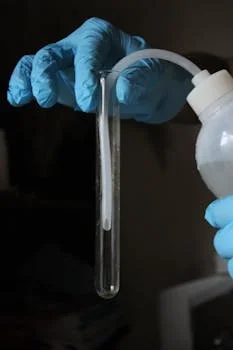
Phosphorus recovery in IC fabs is primarily achieved through controlled crystallization, which reduces the volume of hazardous sludge while producing a marketable byproduct. Struvite (MgNH₄PO₄·6H₂O) recovery is the most mature technology, achieving 90–95% efficiency in high-strength streams. The process requires magnesium dosing (typically MgCl₂) at a molar ratio of 1.2:1 (Mg:P) and a controlled pH environment of 8.5–9.0. As of 2025, struvite market prices remain stable at $300–$500 per ton, making it a viable ROI driver for fabs with high-concentration phosphoric acid etching waste.
For etching processes that already utilize iron-based chemistry, Vivianite (Fe₃(PO₄)₂·8H₂O) recovery offers an 85–90% efficiency rate. Vivianite is increasingly valued in the lithium iron phosphate (LFP) battery supply chain, with market prices ranging from $200–$400 per ton. Alternatively, dicalcium phosphate (CaHPO₄) recovery can be implemented by dosing calcium hydroxide (Ca(OH)₂) at a pH of 9.0–10.0. While dicalcium phosphate has a lower recovery efficiency (80–85%), it is often the preferred route for fabs looking to minimize chemical costs, as lime is significantly cheaper than magnesium salts.
A 2025 case study of a 300 mm wafer fab in Taiwan highlights the financial potential: by installing a struvite recovery skid on their concentrated phosphoric acid line, the facility recovered 1.2 tons of struvite per month. This generated $180,000 in annual revenue and, more importantly, reduced their hazardous sludge disposal costs by 25%. This dual benefit—revenue generation and waste reduction—is a core component of modern wafer cleaning wastewater treatment costs and ROI modeling.
| Recovery Product | Efficiency | Market Price (2025) | Primary Chemical Req. |
|---|---|---|---|
| Struvite | 90–95% | $300–$500/ton | MgCl₂, pH 8.5–9.0 |
| Vivianite | 85–90% | $200–$400/ton | FeCl₂, pH 7.0–8.0 |
| Dicalcium Phosphate | 80–85% | $250–$450/ton | Ca(OH)₂, pH 9.0–10.0 |
Compliance Blueprint: China GB 31573-2015 vs. US EPA Limits for IC Wastewater
The China GB 31573-2015 "Emission Standard of Pollutants for Electronic Industry" mandates a Total Phosphorus limit of <0.5 mg/L for direct discharge, a standard significantly more stringent than many general industrial US EPA limits. In high-sensitivity watersheds like China’s Taihu Lake or the California Bay Area, local regulations may further tighten these limits to <0.1 mg/L. Compliance for IC fabs requires not only high-efficiency treatment but also rigorous monitoring protocols, including weekly TP analysis via colorimetric methods and 24-hour flow-proportional composite sampling.
EHS managers must account for the "compliance gap" caused by variable influent. A prominent fab in Shanghai recently faced regulatory scrutiny when their influent TP fluctuated between 10 and 30 mg/L due to changes in CMP slurry chemistry. Their existing biological system could not adapt quickly enough, leading to effluent spikes. The solution was the integration of real-time TP sensors coupled with an automated FeCl₃ dosing system. This setup ensures that if the biological stage underperforms, the chemical stage automatically compensates to maintain <0.5 mg/L TP. This level of redundancy is also critical for heavy metal treatment in IC wastewater, where co-precipitation often occurs.
| Regulation | TP Limit (mg/L) | TSS Limit (mg/L) | Monitoring Frequency |
|---|---|---|---|
| China GB 31573-2015 | <0.5 | <30 | Continuous/Weekly |
| US EPA (General) | <1.0 | <30 | Monthly/Quarterly |
| California (Sensitive) | <0.1 | <10 | Weekly |
| EU (WFD) | <0.5–1.0 | <25 | Monthly |
Cost Breakdown: CAPEX and OPEX for Hybrid Phosphorus Treatment Systems

The CAPEX for a 100 m³/h hybrid phosphorus treatment system in 2026 ranges from $1.2M to $1.8M, depending on the level of automation and recovery integration. A typical breakdown includes $400,000 for the EBPR biological stage, $300,000 for the SCC/clarification unit, and $500,000 for the UF membrane skid. Automation and real-time sensing, essential for managing the high variability of IC wastewater, add approximately $200,000 to the total investment. These figures are consistent with recent CMP wastewater treatment cost benchmarks.
OPEX for these systems typically ranges from $0.80 to $1.20 per cubic meter of treated water. Chemical costs, primarily for FeCl₃ and pH adjustment, account for the largest share at $0.30/m³. Energy consumption for aeration and membrane pumping adds $0.20/m³, while membrane replacement reserves should be budgeted at $0.15/m³ (assuming a 5–7 year UF membrane life). Labor and maintenance make up the remaining $0.15/m³. To optimize these costs, fabs are increasingly adopting chemical dosing automation, which has been shown to reduce FeCl₃ consumption by up to 15% (HydropureWater field data, 2025).
| Cost Component | Estimated Cost (100 m³/h) | % of Total |
|---|---|---|
| CAPEX Total | $1.2M – $1.8M | 100% |
| EBPR Equipment | $400,000 | 22–33% |
| UF Membrane System | $500,000 | 28–42% |
| OPEX Total | $0.80 – $1.20/m³ | 100% |
| Chemicals | $0.30/m³ | 25–37% |
| Energy | $0.20/m³ | 16–25% |
Vendor Selection Framework: 5 Critical Questions for IC Fabs
Selecting a vendor for integrated circuit phosphorus wastewater treatment requires an evaluation that goes beyond price, focusing on the system's ability to handle the unique chemical complexities of semiconductor manufacturing. Procurement teams should use the following framework:
- Question 1: What is your system’s guaranteed TP removal efficiency for IC wastewater? Demand a guarantee of 99%+ removal for ZLD compliance, specifically addressing influent ranges of 5–50 mg/L.
- Question 2: Can you provide a 12-month pilot study with real IC wastewater? Semiconductor wastewater contains proprietary CMP surfactants and etching inhibitors that can poison biological systems or foul membranes. Avoid vendors without fab-specific data.
- Question 3: What is the membrane replacement frequency and cost? UF membranes in IC applications should last 5–7 years. If a vendor’s design requires replacement every 2–3 years, the lifecycle cost will be prohibitive.
- Question 4: How does your system handle variable influent TP? Look for systems that integrate real-time TP sensors with automated, multi-point chemical dosing skids to handle spikes without manual intervention.
- Question 5: What phosphorus recovery options do you offer? Ensure the vendor can provide Mg²⁺ or Fe²⁺ dosing skids and crystallization reactors if your goal is to produce marketable struvite or vivianite.
Frequently Asked Questions
What is the typical influent phosphorus concentration in IC wastewater?
TP concentrations typically range from 5–50 mg/L, though spikes up to 80 mg/L are common during intensive CMP or etching cycles. These spikes require robust buffer tanks and automated dosing to prevent permit violations.
How does ferric chloride dosing affect phosphorus removal efficiency?
Dosing 5–15 mg/L Fe³⁺ can achieve 90–98% TP removal of the residual phosphorus after biological treatment. However, engineers must be careful not to overdose, as this can increase chemical sludge volume by 20–30%, significantly raising disposal costs.
What are the China GB 31573-2015 limits for phosphorus in IC wastewater?
The limit is <0.5 mg/L TP for direct discharge. In environmentally sensitive areas like the Taihu Lake basin, local "Special Emission Limits" may drop this requirement to <0.1 mg/L.
Can hybrid systems achieve zero liquid discharge (ZLD) for IC wastewater?
Yes. By combining EBPR, chemical precipitation, and UF, the water is sufficiently pre-treated for Reverse Osmosis (RO) and evaporation. While ZLD increases CAPEX by approximately 40%, it eliminates discharge fees and ensures water security.
What is the payback period for phosphorus recovery systems?
The typical payback period is 3–5 years. This is calculated based on the revenue from selling recovered struvite ($300–$500/ton) and the significant reduction in costs associated with hazardous sludge hauling and disposal.