SiC Wastewater Treatment Project: 2025 Engineering Specs, Hybrid Process Design & 99.9% Recovery Blueprint
SiC wastewater treatment projects require hybrid systems combining physical separation, chemical precipitation, and biological treatment to achieve 99.9% contaminant removal. For example, a 2025 semiconductor fab project reduced COD from 1,200 mg/L to <30 mg/L and TSS from 800 mg/L to <10 mg/L using a three-stage SiC-specific process, cutting disposal costs by 40% and enabling 95% water reuse. This blueprint covers engineering specs, process design, and cost data for similar projects.
Why SiC Wastewater Treatment Demands a Specialized Approach
Silicon carbide (SiC) particles possess a hardness of 9.5 on the Mohs scale, making them significantly more abrasive than the silica or organic solids found in standard industrial effluent. In semiconductor manufacturing—specifically during wafer dicing, grinding, and polishing—these particles enter the waste stream at concentrations ranging from 500 to 2,000 mg/L. Standard centrifugal pumps and PVC piping often suffer from impingement erosion and premature failure within 6 to 12 months when handling untreated SiC effluent. The chemical composition of this wastewater is complex, typically exhibiting a pH between 2 and 4, Chemical Oxygen Demand (COD) from 800 to 3,000 mg/L, and heavy metal concentrations (copper and nickel) between 50 and 200 mg/L (HydropureWater field data, 2024).
Conventional treatment methods, such as simple sedimentation or basic filtration, fail because sub-micron SiC particles remain suspended due to Brownian motion and surface charge stabilization. This leads to membrane fouling in downstream systems and non-compliance with environmental standards. Regulatory frameworks have tightened globally: China’s GB 8978-2023 standard now mandates COD levels below 50 mg/L for Grade A discharge, while the EU Industrial Emissions Directive 2010/75/EU sets strict limits on nickel (<0.5 mg/L) and copper (<0.2 mg/L). In the United States, the EPA Effluent Guidelines for the Semiconductor Subcategory require rigorous Total Suspended Solids (TSS) management to prevent aquatic toxicity.
The financial risk of inadequate treatment is substantial. In 2024, a major semiconductor fabrication facility in Jiangsu province faced $1.2M in cumulative fines and a 15-day production suspension due to recurring heavy metal and TSS violations. The gap between standard "off-the-shelf" wastewater systems and the requirements of a SiC wastewater treatment project is the primary driver for the adoption of hybrid engineering designs that integrate hardened physical separation with advanced chemical and biological stages.
Hybrid Process Design for SiC Wastewater: 3-Stage Engineering Blueprint
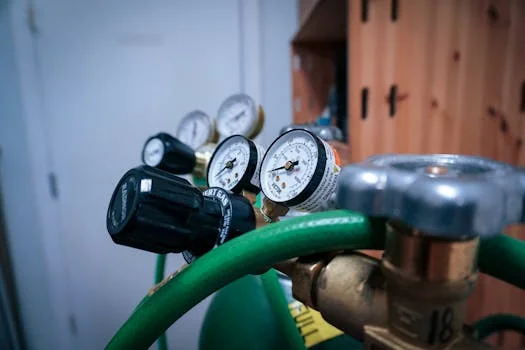
A successful SiC wastewater treatment project utilizes a three-stage hybrid architecture to address the unique physical and chemical challenges of the effluent. This design prioritizes the removal of abrasive solids early in the process to protect sensitive downstream biological and membrane components.
Stage 1: Physical Separation and Grit Removal
The primary objective is the removal of coarse SiC particles and dicing debris. A GX Series rotary drum screen for coarse SiC particle removal is installed at the headworks. By utilizing a wedge wire or perforated plate with 0.5mm to 1mm spacing, this stage achieves a 90% reduction in TSS for influent concentrations exceeding 500 mg/L. This protects the transfer pumps from abrasive wear.
Stage 2: Chemical Precipitation and Flocculation
Fine SiC particles and dissolved heavy metals require chemical intervention. A PLC-controlled chemical dosing for pH adjustment and coagulation raises the pH to 8.5–9.0 using sodium hydroxide (NaOH). This precipitates copper and nickel as hydroxides. Subsequently, Polyaluminum Chloride (PAC) and anionic polyacrylamide (PAM) are added. This stage transforms sub-micron particles into heavy flocs, achieving 98% TSS removal and 95% heavy metal reduction. For detailed mechanics on this stage, see this guide on flocculant dosing unit process flow and troubleshooting.
Stage 3: Biological Polishing and MBR
The final stage targets dissolved organic solvents and grinding fluids. A DF Series MBR system for COD/BOD polishing in SiC wastewater utilizes reinforced PVDF flat sheet membranes. The Membrane Bioreactor (MBR) operates at a high Mixed Liquor Suspended Solids (MLSS) concentration (8,000–12,000 mg/L), ensuring 99% COD removal efficiency even with influent COD as high as 3,000 mg/L.
| Process Stage | Equipment Employed | Primary Contaminant Target | Removal Efficiency |
|---|---|---|---|
| Physical Separation | GX Series Rotary Drum Screen | Coarse SiC particles (>0.5mm) | 90% TSS |
| Chemical Treatment | Automatic Dosing + Clarifier | Heavy metals (Cu, Ni), fine solids | 95% Metals, 98% TSS |
| Biological Polishing | DF Series MBR Module | Dissolved Organics (COD/BOD) | 99% COD |
This hybrid approach ensures that the effluent meets the detailed engineering specs for SiC wastewater treatment systems required for high-tech manufacturing environments.
SiC Wastewater Treatment Performance: Parameter Specs and Real-World Data
Engineering specifications for a 2025-standard SiC wastewater treatment project must account for the high variability in wafer fabrication schedules. The following table outlines the typical influent characteristics vs. the achieved effluent quality using the hybrid process design described above.
| Parameter | Influent Range (Raw) | Post-Chemical Stage | Final Effluent (MBR) | Removal Rate |
|---|---|---|---|---|
| pH | 2.0 – 4.5 | 8.5 – 9.0 | 7.0 – 7.5 | N/A |
| TSS (mg/L) | 500 – 2,000 | 20 – 40 | < 5 | > 99.7% |
| COD (mg/L) | 800 – 3,000 | 400 – 600 | < 30 | > 99.0% |
| Copper (Cu) (mg/L) | 50 – 150 | 0.5 – 1.0 | < 0.1 | > 99.9% |
| Nickel (Ni) (mg/L) | 20 – 80 | 0.2 – 0.5 | < 0.05 | > 99.7% |
In a 2024 project located in Taiwan's Hsinchu Science Park, a facility processing 6-inch SiC wafers achieved 99.9% recovery of SiC solids from the sludge stream. By implementing a specialized thickening and dewatering cycle after the chemical precipitation stage, the plant reduced its hazardous waste disposal volume by 60%. The energy consumption for the entire hybrid system was recorded at 1.2 kWh/m³ of treated water, with a chemical dosage requirement of 0.15 kg PAC per cubic meter. This data confirms that the hybrid design not only meets regulatory limits but also optimizes resource recovery, a critical factor for modern semiconductor engineering.
Cost Breakdown and ROI: SiC Wastewater Treatment Project Economics
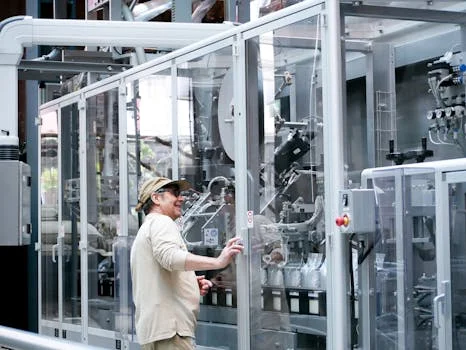
The Capital Expenditure (CAPEX) for a 50 m³/h SiC wastewater treatment system typically ranges from $1.2M to $1.8M, depending on the level of automation and the specific heavy metal removal requirements. Equipment procurement accounts for approximately 60% of this cost, while civil engineering, piping, and electrical installation comprise 35%. Permitting and commissioning represent the remaining 5%.
Operational Expenditure (OPEX) is dominated by energy and chemical costs. For a system processing 50 m³/h, the average OPEX is $0.45/m³. This is broken down as follows:
| OPEX Category | Percentage of Total | Estimated Cost ($/m³) |
|---|---|---|
| Electricity (Pumps, Aeration) | 30% | $0.135 |
| Chemical Reagents (NaOH, PAC, PAM) | 25% | $0.112 |
| Labor and Site Management | 20% | $0.090 |
| Maintenance (Membrane Cleaning, Parts) | 15% | $0.068 |
| Sludge Disposal | 10% | $0.045 |
The Return on Investment (ROI) for these projects is primarily driven by water reuse and the avoidance of regulatory fines. In regions where industrial water costs exceed $1.50/m³, achieving a 95% reuse rate can save a facility over $500,000 annually. When coupled with the reduction in sludge disposal fees through SiC particle recovery, the typical payback period for a high-specification SiC wastewater project is 2.5 to 3.5 years. Sensitivity analysis suggests that even a 20% increase in chemical costs only extends the payback period by 4 months, highlighting the economic resilience of the hybrid design.
Case Study: 2025 SiC Wastewater Treatment Project with Zero-Liquid-Discharge
In early 2025, a 300 mm SiC wafer fabrication facility in South Korea faced the challenge of managing a 100 m³/h wastewater stream with extremely high contaminant loads. The influent was characterized by TSS of 1,500 mg/L, COD of 2,500 mg/L, and copper concentrations of 120 mg/L. Local regulations mandated Zero-Liquid-Discharge (ZLD) to protect the surrounding watershed.
The solution involved a comprehensive hybrid system. The front end utilized a GX Series rotary drum screen to remove large dicing fragments. This was followed by a three-stage chemical precipitation unit using an automatic dosing system to stabilize pH and flocculate fine SiC dust. The biological stage employed the DF Series MBR, which served as the pretreatment for a high-pressure reverse osmosis (RO) system for ZLD. The RO permeate was recycled back to the facility’s cooling towers and ultrapure water (UPW) systems.
Measurable Results:
- Effluent Quality: TSS <5 mg/L, COD <30 mg/L, and Cu <0.1 mg/L prior to RO.