Why Chip Fab Grinding Wastewater Is a Hidden Revenue Stream (Not Just a Cost Center)
Backgrinding wastewater generated in 200 mm and 300 mm fabs contains approximately 95% water and 5% pure silicon particles, representing a high-value stream typically lost to expensive sludge disposal processes. Unlike CMP wastewater treatment solutions for semiconductor fabs, which involve complex slurries and chemical abrasives, grinding wastewater is essentially a suspension of ultra-pure silicon in deionized water. This composition makes it the most viable candidate for circular economy initiatives within the semiconductor facility. According to TSMC’s 2021 sustainability data, their physical regeneration system successfully recycled 15,000 metric tons of wastewater into 30 metric tons of industrial-grade silicon, which was subsequently sold as a steel deoxidizer at market prices ranging from $1,200 to $1,800 per ton (Q2 2025 data).
Conventional treatment methods rely heavily on coagulation and flocculation. While effective at meeting basic discharge limits, these chemical-heavy processes introduce aluminum or iron salts and polymer chains into the sludge. This contamination increases the total sludge volume by 30–50% and renders the silicon unrecoverable for industrial reuse. EPA 2023 benchmarks indicate that fabs using traditional chemical treatment face sludge disposal fees that are 40% higher than those utilizing zero-chemical physical separation. The introduction of chemicals complicates the potential for water reuse, as residual coagulants can foul downstream reverse osmosis (RO) membranes.
Regulatory frameworks are tightening the requirements for semiconductor water management. China’s GB8978-2025 standard and the EU Industrial Emissions Directive 2010/75/EU now mandate that new semiconductor builds achieve 80% or higher water reuse rates. For a typical fab, the grinding process is one of the largest water consumers; failing to implement a recovery system not only results in lost revenue from silicon sales but also risks non-compliance with regional discharge permits. By shifting from a "treat-and-dump" mentality to a "recover-and-reuse" strategy, engineers can transform a significant OPEX burden into a predictable revenue stream.
Physical vs. Chemical Treatment: Performance, Costs, and Silicon Recovery Rates
Physical treatment systems using plate-and-frame technology achieve a 99% silicon recovery rate, whereas chemical coagulation methods limit recovery to 50-70% due to flocculant contamination and inefficient settling of sub-micron particles. The primary differentiator lies in the mechanical separation of solids. A plate-and-frame filter press for silicon recovery utilizes high-pressure filtration (15–25 bar) to force water through a specialized filter cloth with a pore size of 1–5 μm. This captures even the finest silicon fines without the need for chemical bridges, resulting in a filter cake with less than 10% moisture content and a purity level exceeding 98% silicon.
Chemical treatment involves the addition of 3–5 kg of coagulants per cubic meter of wastewater. While this effectively aggregates particles for sedimentation, it creates a "mixed sludge" that is classified as industrial waste. According to EPA 2024 benchmarks, the OPEX for chemical systems averages $0.20/m³, largely driven by the recurring cost of reagents and the high cost of disposing of hazardous sludge. Physical systems, while requiring a 20–30% higher initial CAPEX (approximately $1.2M vs. $900K for a 50 m³/h system), reduce OPEX to roughly $0.12/m³ by eliminating chemical procurement and reducing sludge volume by up to 60%.
| Parameter | Physical Treatment (Filter Press) | Chemical Treatment (Coagulation) |
|---|---|---|
| TSS Removal Efficiency | 95% – 99.9% | 85% – 92% |
| Silicon Recovery Rate | 90% – 95% (Industrial Grade) | 50% – 70% (Contaminated Sludge) |
| Chemical Consumption | 0 kg/m³ | 3 – 5 kg/m³ |
| OPEX (Energy + Labor + Disposal) | $0.12 / m³ | $0.20 / m³ |
| Cake Moisture Content | <10% (Pre-drying) | 60% – 85% |
| Compliance (GB8978-2025) | Direct Compliance (<5 mg/L) | Requires UF Polishing |
From a regulatory standpoint, physical systems provide a more robust path to compliance. The effluent from a high-pressure filter press typically contains less than 5 mg/L of silicon, meeting the stringent China GB8978-2025 limits without additional polishing. Chemical systems often suffer from "pin floc" carryover, where small aggregates escape the clarifier and require secondary ultrafiltration (UF) to protect downstream water reuse equipment. This adds another layer of CAPEX and maintenance that physical recovery systems bypass entirely.
Step-by-Step Process Flow: How to Recover 99% Silicon from Grinding Wastewater
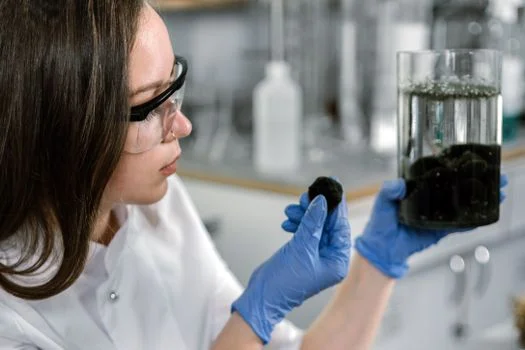
A zero-chemical silicon recovery system operates through a four-stage physical separation sequence designed to maintain silicon purity above 98% for industrial resale. The engineering design must account for the high abrasive nature of silicon particles and the need for precise pressure control to prevent filter cloth blinding.
Step 1: Equalization and pH Stabilization
Wastewater enters an equalization tank with a minimum 2-hour retention time to buffer flow fluctuations from the grinding tools. For a 200 mm wafer fab, the flow rate typically ranges from 30–50 m³/h. It is critical to maintain a pH between 6.5 and 7.5, as silicon solubility is at its minimum near pH 7.0. Using automated pH adjustment systems for equalization tanks ensures that the silicon remains in a solid, filterable state. The tank should be constructed of HDPE or epoxy-coated steel, equipped with a low-shear mixer (30–50 RPM) to keep particles in suspension without fracturing them into smaller, harder-to-filter fines.
Step 2: High-Pressure Filtration
The heart of the recovery process is the plate-and-frame filter press. Slurry is pumped into the press at 15–25 bar. The cycle time usually lasts 2–4 hours, depending on the TSS concentration. Engineering specs for the filter cloth are paramount: a 1–5 μm pore size using monofilament polypropylene is recommended for its superior cake release properties and resistance to mechanical wear. This stage reduces the wastewater TSS from 5,000 mg/L to less than 5 mg/L, while producing a cake with 1–3 mm thickness.
Step 3: Thermal Cake Drying
The silicon cake harvested from the press still contains roughly 10% interstitial moisture. To reach the "industrial-grade" specification of <1% moisture, the cake is transferred via conveyor to a convection drying oven. The drying process operates at 60–80°C for 12–24 hours. While solar drying is an option in specific climates, convection ovens offer the consistency required for steel industry certifications. Energy costs for this stage typically range from $0.05 to $0.10 per kg of recovered silicon.
Step 4: Validation and Packaging
The final product must undergo validation to ensure it meets ISO 9001:2015 standards for industrial-grade silicon. Key metrics include a purity of >98% Si and a particle size distribution (D50) of 5–10 μm. Once validated, the silicon is packaged into bulk bags for sale as a deoxidizer. The entire system is typically arranged in a U-shape to minimize the footprint within the fab’s utility building, consisting of a feed pump, the press, a cake conveyor, and the drying unit.
Equipment Specs: What to Look for in a Zero-Chemical Grinding Wastewater System
Engineering specifications for a 50 m³/h grinding wastewater system require a minimum filtration area of 10-50 m² and a feed pressure of 15-25 bar to achieve optimal cake dryness. Procurement teams must look beyond the base price and evaluate the mechanical durability of the components, as silicon fines are highly abrasive and can cause premature failure in standard centrifugal pumps and valves.
| Component | Specification for 50 m³/h System | Specification for 100 m³/h System | Specification for 200 m³/h System |
|---|---|---|---|
| Filter Press Area | 10 – 50 m² | 60 – 120 m² | 150 – 300 m² |
| Feed Pump Type | Air-Operated Diaphragm (AODD) | Multi-stage Centrifugal | High-Pressure Plunger |
| Pump Material | Stainless Steel 316 / Hastelloy C | Stainless Steel 316 | Hardened Alloy Steel |
| Filter Cloth Pore Size | 1 – 3 μm (Polypropylene) | 3 – 5 μm (Polypropylene) | 1 – 5 μm (Reinforced PP) |
| Automation Protocol | Modbus TCP / Profibus | EtherNet/IP / SCADA | Full SCADA Integration |
A major red flag during vendor evaluation is the offering of "one-size-fits-all" municipal filter presses for semiconductor applications. Silicon particles in grinding wastewater have a very narrow size distribution; if the filter cloth pore size exceeds 5 μm, silicon loss can exceed 10%, clouding the effluent and potentially violating discharge limits. The system must include automated cloth washing. Silicon fines can embed themselves in the weave of the cloth, reducing throughput over time. An integrated high-pressure water wash system can extend cloth life by 40% and reduce manual labor by 60%.
For the pumping system, centrifugal pumps should be fitted with silicon carbide mechanical seals to handle the abrasive slurry. Alternatively, air-operated diaphragm (AODD) pumps are preferred for smaller systems (up to 50 m³/h) because they can run dry without damage and handle high solids concentrations without the wear associated with high-speed impellers. For zero-liquid-discharge (ZLD) strategies for microelectronics wastewater, these equipment specs ensure that the primary separation stage is efficient enough to protect the high-recovery RO and evaporator stages that follow.
Cost-Benefit Analysis: ROI of Zero-Chemical Silicon Recovery Systems
The CAPEX for a 50 m³/h physical recovery system is approximately $1.2M, but it yields a 40% reduction in OPEX compared to traditional chemical treatment plants. To justify this investment to executive leadership, procurement teams must look at the four-way financial impact: chemical savings, water reuse savings, sludge disposal avoidance, and revenue from silicon sales.
ROI Formula:
ROI (%) = [(Annual Chemical Savings + Water Reuse Savings + Disposal Avoidance + Silicon Revenue) - Annual OPEX] / CAPEX
For a fab processing 400,000 m³ of grinding wastewater annually:
- Silicon Revenue: 30 tons/year × $1,500/ton = $45,000
- Chemical Savings: 1,600 kg/year avoidance = $120,000
- Disposal Avoidance: 60% reduction in sludge volume = $350,000