Why IC Wastewater Discharge Standards Matter: A Compliance Crisis for Semiconductor Fabs
China’s GB8978-1996 sets the IC wastewater discharge standard for semiconductor fabs, with strict limits for fluoride (<10 mg/L), copper (<0.5 mg/L), and COD (<100 mg/L). Unlike EPA’s technology-based effluent guidelines (BPT/BAT), GB8978 enforces concentration-based limits, requiring advanced treatment like zero-liquid-discharge (ZLD) systems to achieve 95%+ water recovery and compliance. This guide compares global standards and provides engineering specs for ZLD solutions.
For EHS managers at integrated circuit (IC) manufacturing plants, the regulatory environment is shifting from a "monitor and report" model to a "strict enforcement" reality. In 2023, a Tier-1 semiconductor fab in Shanghai faced a landmark ¥5M fine and a temporary production halt after a surprise inspection revealed fluoride concentrations exceeding 15 mg/L in its final effluent—a direct violation of the GB8978 Grade I standard. This scenario is becoming common as China’s Ministry of Ecology and Environment (MEE) increases the frequency of automated, real-time monitoring at industrial discharge points. Non-compliance doesn't just mean fines; it risks the "green manufacturing" certifications required for high-tech subsidies and international ESG reporting.
IC wastewater is uniquely challenging due to the convergence of high-volume chemical mechanical polishing (CMP) slurries, acidic etching baths, and solvent-heavy cleaning processes. A typical 12-inch wafer fab generates a complex waste stream characterized by five critical pollutants:
- Fluoride: Derived from hydrofluoric acid (HF) etching; typical influent 50–500 mg/L.
- TMAH (Tetramethylammonium hydroxide): Used as a developer; typical influent 10–100 mg/L. It is highly toxic to biological treatment systems.
- Copper: From electroplating and CMP; typical influent 5–50 mg/L.
- Arsenic: From ion implantation processes; highly regulated due to toxicity.
- COD (Chemical Oxygen Demand): Driven by solvents like IPA and developers; often exceeding 500 mg/L before treatment.
Unlike municipal wastewater, IC effluent exhibits extreme pH fluctuations (from pH 2 to pH 11) and high salinity (TDS), which can foul standard membrane systems. Treating this water requires a specialized engineering approach that moves beyond simple neutralization to sophisticated heavy metal removal and organic destruction.
China’s GB8978-1996: Pollutant Limits for IC Wastewater (2025 Update)
In the context of the Chinese regulatory framework, IC manufacturing falls under the "Electronic Components" industry classification. While the national standard remains GB8978-1996, many modern industrial parks in the Yangtze River Delta and Pearl River Delta enforce even stricter regional standards (e.g., DB31/199 in Shanghai). However, GB8978 remains the baseline for all environmental impact assessments (EIAs).
The standard is divided into "Grades" based on the destination of the treated water. Grade I applies to discharge into surface water bodies (Class III water function zones), while Grade III applies to discharge into municipal sewer systems for further treatment at a POTW. For IC fabs, achieving Grade I is often the goal to ensure long-term operational security against tightening local regulations. As of 2025, the MEE is actively reviewing drafts to modernize GB8978, with expected updates to include specific limits for TMAH and stricter nitrogen/phosphorus controls to combat eutrophication in major river basins.
| Pollutant | Grade I Limit (mg/L) | Grade II Limit (mg/L) | IC Process Source |
|---|---|---|---|
| Fluoride (F-) | 10 | 20 | HF Etching, Cleaning |
| Total Copper (Cu) | 0.5 | 1.0 | Electroplating, CMP |
| Total Arsenic (As) | 0.1 | 0.5 | Ion Implantation |
| CODcr | 100 | 150 | IPA, Photoresist, Solvents |
| BOD5 | 20 | 30 | Organic developers |
| Suspended Solids (SS) | 70 | 150 | CMP Slurry (Silica/Alumina) |
| pH | 6 - 9 | 6 - 9 | Acidic/Alkaline Cleaning |
| TMAH* | <5 (Regional) | <10 (Regional) | Developer (Photolithography) |
| Total Nickel (Ni) | 1.0 | 1.0 | Barrier layer deposition |
| Hexavalent Chromium (Cr VI) | 0.5 | 0.5 | Surface treatment |
*Note: While TMAH is not explicitly listed in the 1996 national standard, it is increasingly regulated under "Total Nitrogen" or specific local toxic organic limits. (HydropureWater Compliance Data, 2025).
Global Comparison: GB8978 vs EPA Effluent Guidelines vs EU Industrial Emissions Directive
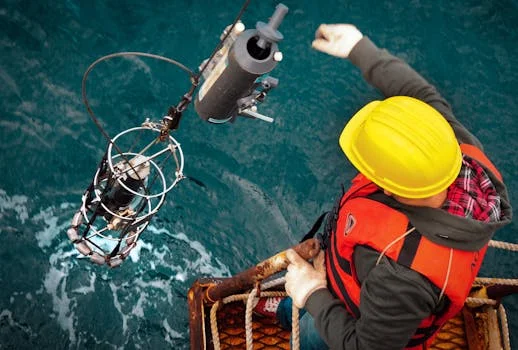
For multinational semiconductor firms, benchmarking China’s GB8978 against the US Environmental Protection Agency (EPA) and European Union (EU) standards is critical for global EHS alignment. The EPA regulates semiconductors under 40 CFR Part 469 (Electronic Crystals and Semiconductors Subcategory). Unlike China’s concentration-based approach, the EPA often utilizes Best Available Technology (BAT) standards, which focus on mass-based limits or the implementation of specific treatment sequences.
The EU’s Industrial Emissions Directive (IED) relies on Best Available Techniques (BAT) Reference Documents (BREFs). For the electronics industry, EU limits are often the most stringent regarding heavy metals. A key difference lies in fluoride: while China allows 10 mg/L for Grade I, some US states and EU jurisdictions mandate <5 mg/L to protect local aquatic life from bioaccumulation.
| Pollutant | China GB8978 (Grade I) | US EPA (BAT - 40 CFR 469) | EU IED (BAT Limits) |
|---|---|---|---|
| Fluoride | 10 mg/L | 17.4 mg/L (Daily Max) | 5 - 15 mg/L |
| Total Copper | 0.5 mg/L | Set by local POTW | 0.2 - 0.5 mg/L |
| Total Arsenic | 0.1 mg/L | 2.09 mg/L | 0.05 - 0.1 mg/L |
| COD | 100 mg/L | N/A (Technology based) | 30 - 125 mg/L |
| TTO (Total Toxic Organics) | N/A (Individual limits) | 1.37 mg/L | 0.5 - 1.0 mg/L |
| TSS | 70 mg/L | N/A | 10 - 35 mg/L |
Verification of compliance also differs. The US uses the National Pollutant Discharge Elimination System (NPDES) permit program, which requires self-monitoring and periodic reporting. In China, the focus is on the "Pollutant Discharge Permit" system, which is increasingly linked to automated monitoring equipment that transmits data directly to the local environmental bureau every 2 hours. This makes real-time treatment stability, such as that provided by MBR systems for IC wastewater pretreatment, a necessity rather than an option.
Zero-Liquid-Discharge (ZLD) for IC Wastewater: Engineering Specs and Cost-Optimized Design
To meet the stringent 2025 GB8978 requirements and internal water reuse mandates, many fabs are transitioning to Zero-Liquid-Discharge (ZLD). A ZLD system eliminates liquid waste by converting it into high-purity recycled water and solid salt cake. This is particularly effective for IC fabs because it handles the high TDS and fluoride concentrations that would otherwise lead to discharge violations.
A standard ZLD blueprint for IC wastewater involves three distinct engineering stages:
- Chemical Pretreatment: Two-stage coagulation and flocculation. Calcium chloride is added to precipitate fluoride as calcium fluoride (CaF2), followed by organosulfur dosing for copper and nickel removal.
- Membrane Concentration: High-pressure RO systems for fluoride and heavy metal removal in IC wastewater concentrate the brine to 40,000–60,000 mg/L TDS. Nanofiltration (NF) is often used to separate monovalent and divalent ions.
- Thermal Evaporation: Mechanical Vapor Recompression (MVR) or Multi-Effect Evaporation (MEE) crystallizes the remaining brine into solids.
| Parameter | Typical Engineering Specification | Performance Target |
|---|---|---|
| Treatment Capacity | 10 – 200 m³/h | Scalable for 8/12-inch lines |
| Fluoride Removal Efficiency | >99.5% | Effluent <1.0 mg/L |
| Water Recovery Rate | 90% – 98% | Minimal makeup water required |
| Energy Consumption | 5 – 12 kWh/m³ | Optimized via MVR technology |
| CAPEX Range | ¥2.5M – ¥25M | Dependent on TDS and flow |
| OPEX (Chemicals + Power) | ¥6 – ¥18/m³ | HydropureWater field data, 2025 |
For fabs with high-salinity organic streams, explore hybrid ZLD systems for IC wastewater compliance that incorporate forward osmosis (FO). FO systems use a natural osmotic pressure gradient to pull water through a membrane, significantly reducing the energy required for thermal evaporation and lowering total lifecycle costs. You can also read a real-world IC wastewater ZLD case study to see how these specs translate into 99.8% contaminant removal in a high-volume production environment.
How to Choose the Right Treatment Technology for GB8978 Compliance
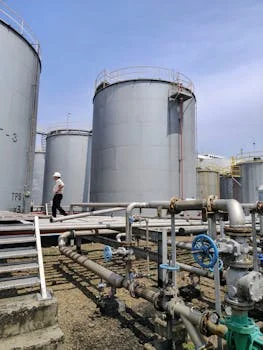
Selecting a technology suite depends on your specific pollutant profile and local discharge requirements. A fab discharging into a specialized industrial park treatment plant has different needs than a facility discharging into a Class III river. The following framework assists in matching the pollutant to the most cost-effective solution.
| Primary Pollutant | Recommended Technology | Removal Efficiency | Relative Cost |
|---|---|---|---|
| High Fluoride (>100 mg/L) | Two-stage Ca-Precipitation + RO | 99% | Medium |
| TMAH & Organics | Advanced Oxidation (Fenton/O3) + MBR | 95% | High |
| Heavy Metals (Cu, Ni) | Ion Exchange or Chelating Precipitation | 99.9% | Low-Medium |
| High TDS / Salinity | ZLD (RO + Evaporation) | 99.9% | Very High |
In many cases, biological treatment is insufficient for IC wastewater due to the antimicrobial nature of TMAH and other photoresist components. Using ClO₂ generators for IC wastewater disinfection and organic oxidation can help break down complex nitrogenous compounds before they reach the discharge point.
Engineers often make three common mistakes when designing these systems:
- Ignoring TMAH Toxicity: TMAH can inhibit nitrifying bacteria in biological stages. It must be pre-treated using advanced oxidation or isolated for specialized incineration.
- Underestimating Sludge Disposal: Chemical precipitation for fluoride produces massive amounts of CaF2 sludge. If not properly dewatered, disposal costs can exceed the entire OPEX of the treatment plant.
- Scaling Membrane Systems: High-silica CMP wastewater causes rapid RO membrane scaling. Specialized silica-removal stages (e.g., magnesium oxide dosing) are essential for 2025-ready designs.
Frequently Asked Questions
What is the difference between GB8978 and GB3838 for IC fabs?
GB8978-1996 is the discharge standard that defines the maximum allowable concentration of pollutants in the wastewater leaving your facility. GB3838-2002 is the environmental quality standard for surface water. Fabs must comply with GB8978 limits to ensure the receiving water body maintains the quality levels mandated by GB3838. In 2025, regional authorities often calculate "allowable discharge loads" based on GB3838 capacity, which may result in permit limits stricter than the national GB8978 Grade I.
Is TMAH regulated under China’s national wastewater standards?
TMAH is not currently listed as a standalone pollutant in the national GB8978-1996 table. However, it is regulated under "Total Nitrogen" (TN) and "COD" limits. regional standards like Shanghai’s DB31/199 and Jiangsu’s DB32 standards have introduced specific limits for TMAH (often <5 mg/L) due to its high toxicity to aquatic ecosystems and biological treatment plants.
How can an IC fab achieve the <10 mg/L fluoride limit consistently?
Traditional calcium hydroxide precipitation often struggles to consistently stay below 10 mg/L due to the solubility equilibrium of CaF2. To guarantee compliance with GB8978 Grade I, a two-stage process is required: initial precipitation with calcium chloride to reach 15–20 mg/L, followed by polishing with aluminum-based coagulants or a dedicated RO stage to bring the final concentration below 1.0 mg/L.
What is the typical ROI for a ZLD system in a semiconductor plant?
The ROI for ZLD is typically 3 to 5 years, driven by three factors: the recovery of high-purity water (reducing raw water purchase costs), the elimination of discharge fees/fines, and the potential for byproduct recovery (e.g., copper). In water-scarce regions of Northern China, ZLD is often a prerequisite for obtaining a "Right to Operate" for new 12-inch fab expansions.
Does GB8978 apply to water discharged into a municipal sewer?
Yes, but the fab must typically meet the Grade III standard. Grade III is less stringent for COD (500 mg/L) and SS (400 mg/L), but "Category I" pollutants like Arsenic, Nickel, and Hexavalent Chromium must still meet strict limits at the point of discharge from the production workshop, regardless of where the water eventually flows.