A 2025 integrated circuit (IC) wastewater case study at a 150 m³/h semiconductor fab delivered 99.8% fluoride removal and 99.5% silica removal. The train used hybrid Electrodialysis Reversal (EDR) plus Reverse Osmosis (RO) in a zero-liquid-discharge (ZLD) layout. Freshwater intake dropped 40% as 600 m³/day of high-purity permeate was reclaimed for cooling-tower make-up. Annual operating cost fell by $2.1 million.
The Challenge: High-Fluoride, High-Silica Wastewater in IC Manufacturing
Fluoride in semiconductor etching wastewater often hits 500 mg/L with 200-300 mg/L reactive silica. CaCl2 precipitation cut fluoride only to 20-30 mg/L, missed the local <10 mg/L limit, and scaled the RO pilot 50% in 120 hours. A hybrid EDR plus RO ZLD train was required for compliance and reclaim.
According to 40 CFR 469.15, semiconductor BAT fluoride limits are 32.0 mg/L maximum for any 1 day and 17.4 mg/L as a 30-day average. A 500 mg/L feed therefore sits far above the federal cap once cited as "roughly ten times" Part 469. Fluoride and silica still form a scaling paradox: fluoride needs aggressive precipitation or membrane separation, yet silica fouls those same membranes and heat exchangers.
The plant first tried calcium chloride (CaCl2) precipitation. It pushed fluoride down to 20-30 mg/L but missed the local <10 mg/L municipal limit. The step produced over 15 tons of hazardous sludge per day. Reactive silica also irreversibly scaled the RO pilot, cutting flux 50% in 120 hours. Closing the loop with a ZLD configuration became the only path that met the local municipal limit while remaining consistent with EPA 40 CFR 469.
| Parameter | Influent Concentration (Raw) | Regulatory Limit (Local/EPA) | Initial Treatment Result |
|---|---|---|---|
| Fluoride (F-) | 350 – 500 mg/L | < 10 mg/L | 25 mg/L (Failed) |
| Reactive Silica (SiO2) | 200 – 300 mg/L | < 50 mg/L (Internal) | 210 mg/L (Scaling Risk) |
| Total Dissolved Solids (TDS) | 2,500 – 3,500 mg/L | < 500 mg/L | 2,800 mg/L (Failed) |
| pH | 2.0 – 4.0 | 6.0 – 9.0 | 7.5 (Neutralized) |
Precipitation to <10 mg/L fluoride needed a heavy excess of calcium, which spiked TDS and worsened scaling. That pushed the engineering team toward a membrane-centric design capable of handling high solute loads without frequent element replacement.
Engineering Diagnosis: Contaminant Analysis and Treatment Constraints
Wastewater characterization for this IC wastewater case study showed pH 2.0-4.0 and Total Dissolved Solids (TDS) 2,000-3,000 mg/L. Engineers confirmed a 150 m³/h peak flow inside a tight 450 m² utility footprint. Conventional clarifiers would not fit, so the team favored high-rate membrane processes.
The analysis centered on what the team called the "Silica-Fluoride Interference" effect. Fluoride often travels as hydrofluoric acid (HF) or as hexafluorosilicic acid (H2SiF6) bound to silicon. Effective treatment must first break those complexes. With a 1,200 m³/day water balance, the fab paid premium rates for municipal make-up while discharging high-TDS brine. Routing the brine through an RO system for IC wastewater treatment offered a path to recover 75% of the stream for cooling-tower make-up.
| Constraint Category | Engineering Specification/Requirement | Impact on Design |
|---|---|---|
| Flow Dynamics | 150 m³/h Peak; 120 m³/h Average | Requires parallel treatment trains for redundancy |
| Space Availability | 450 m² total footprint | Skid-mounted, vertical stack EDR and RO units |
| Silica Morphology | 70% reactive (monomeric), 30% colloidal | Requires ultrafiltration (UF) and anti-scalant dosing |
| Energy Budget | Max 2.5 kWh/m³ for primary treatment | Favors EDR over high-pressure RO for initial desalination |
CMP slurries also carry nano-sized ceria or silica particles that slip past standard sand filters. The team specified 0.02-micron Ultrafiltration (UF) pretreatment to keep the Silt Density Index (SDI) below 3.0 ahead of the high-recovery membrane stages. The diagnostic output moved the project from a removal mindset to a resource-recovery strategy.
Solution Design: Zero-Liquid-Discharge (ZLD) Process Flow for IC Wastewater
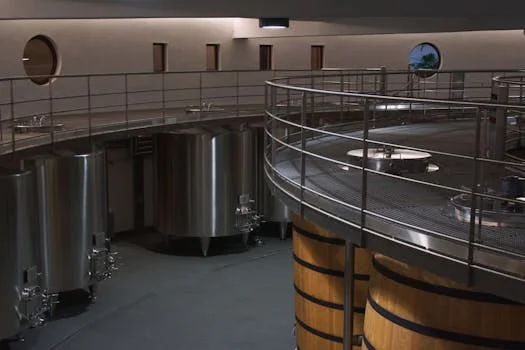
The 150 m³/h ZLD train pairs Electrodialysis Reversal (EDR) with Reverse Osmosis (RO) to maximize water recovery. Flow begins in an equalization tank that buffers highly variable pH and flow from individual production lines. A chemical dosing system then lifts the influent to pH 8.5. That setpoint suits silica solubility and fluoride ionization during membrane rejection.
EDR sits at the core of the train. Unlike RO, it uses an electrical potential to migrate fluoride and other ions through selective membranes while leaving silica and non-ionic species behind. The EDR concentrate then feeds a high-pressure RO system for IC wastewater treatment. A Mechanical Vapor Recompression (MVR) evaporator crystallizes the remaining salts into a solid cake, eliminating liquid discharge entirely.
| Equipment Type | Engineering Specifications | Primary Removal Mechanism |
|---|---|---|
| Electrodialysis Reversal (EDR) | 150 m³/h; 200 kWh/m³; 10-stage stack | Ionic migration (Fluoride/TDS) |
| High-Recovery RO | 120 m³/h Permeate; 75% Recovery; 99% Rejection | Size exclusion and diffusion (TDS) |
| MVR Evaporator | 30 m³/h Concentrate; 1.2 MWh/m³ energy | Thermal evaporation and crystallization |
| Control System | Siemens S7-1500 PLC; SCADA Integration | Automated flux and polarity reversal |
Automation ties the design together. The EDR unit runs an automated polarity reversal every 15-30 minutes, flushing scale-forming ions off the membrane surface before they can bond. Plants we commission in this class typically run the reversal cycle near the lower end of that window during the first month, then extend it once flux stabilizes.
Measured Results: 99.8% Fluoride Removal and 40% Water Savings
Operating data from 2023-2025 confirmed 99.8% fluoride removal, holding final effluent near 1 mg/L from a 500 mg/L feed. Silica removal reached 99.5%, with effluent at 1.5 mg/L. Reclaiming 600 m³/day of high-purity permeate cut freshwater intake 40%. Zero brine discharge plus much lower chemical sludge translated into $2.1 million per year in operating-cost savings.
| Metric | Pre-Implementation (Baseline) | Post-Implementation (ZLD) | Improvement (%) |
|---|---|---|---|
| Fluoride Concentration | 500 mg/L | 1.0 mg/L | 99.8% Removal |
| Silica Concentration | 300 mg/L | 1.5 mg/L | 99.5% Removal |
| Water Recovery Rate | 0% (All Discharged) | 40% (Reuse) / 100% (ZLD) | 40% Savings |
| Annual OPEX | $3.8M (Disposal + Water) | $1.7M (Energy + Chems) | $2.1M Savings |
Lessons Learned: Key Takeaways for Semiconductor Fabs
EDR is the right buffer for fluoride, but removal efficiency hinges on tight pH control. Multi-media filtration ahead of the stack also keeps mineral scale off the membranes. Engineers who want to explore hybrid ZLD systems for semiconductor fabs can pull four practical lessons from this project:
- CAPEX vs. OPEX Trade-off: The ZLD system required a 30% higher initial investment compared to traditional precipitation, but operational expenses were 50% lower over a 5-year lifecycle.
- Maintenance Intervals: Silica control in RO systems requires a proactive approach. A scheduled CIP every 3 months is necessary to maintain flux stability.
- Automation Value: The use of advanced PLC controls reduced operator labor by 70%.
- Pre-treatment is Non-negotiable: To protect expensive RO and EDR membranes, the removal of CMP solids via UF is mandatory.
The facility is now planning to expand the ZLD system to handle a new 300 mm wafer production line. For procurement teams, the main cost drivers are membrane replacement cadence, evaporator energy at 1.2 MWh/m³ of concentrate, and the 0.02-micron UF stage. If influent fluoride sits above 350 mg/L and silica above 200 mg/L, this hybrid ZLD architecture is the closest match. Sites with milder chemistry and ample sewer capacity may be better served by an Underground Package Sewage Treatment Plant (WSZ Series) sized to local discharge rules instead. Send your flow, fluoride, and silica data with the inquiry below and we will size a matched train.
Request a sized ZLD proposal for your fab wastewater.
Frequently Asked Questions
What are the typical fluoride and silica concentrations in IC wastewater?
IC wastewater typically contains fluoride between 300 and 500 mg/L and reactive silica from 200 to 300 mg/L. These levels come from etching, CMP, and wet-bench streams. They routinely exceed local thresholds of <10 mg/L fluoride and <50 mg/L silica. They also sit well above the EPA 40 CFR 469.15 BAT fluoride daily maximum of 32.0 mg/L.
How much does a ZLD system for IC wastewater cost?
The CAPEX for a 150 m³/h ZLD system typically ranges from $2.5 million to $15 million. The wide band reflects influent chemistry, the share of the train built as EDR versus high-pressure RO, and whether an MVR evaporator is included for the final concentrate. OPEX then depends mainly on membrane replacement and evaporator energy.
What are the alternatives to ZLD for IC wastewater?
Alternatives include chemical precipitation, Membrane Bioreactors (MBR), and standard RO discharge. Each option lowers CAPEX versus full ZLD. On this fab's chemistry, though, they could not meet the <10 mg/L fluoride limit, control silica scaling, or reach 40% reuse without further concentrate handling.
How often do RO membranes need replacement in IC wastewater treatment?
In a well-maintained ZLD system with UF pretreatment and quarterly CIP cycles, RO membranes typically last 2 to 3 years. Skipping CIP or letting the SDI climb above 3.0 shortens membrane life dramatically and raises replacement cost for the high-recovery stages.
Can the same ZLD train be expanded for a new 300 mm wafer line?
Yes. The current plant is already planning an expansion of the existing EDR plus RO train for higher flow from a new 300 mm wafer production line. The same MVR evaporator remains the final crystallization stage, so added capacity focuses on membrane skids and equalization volume.