Chip fab nickel wastewater treatment requires specialized engineering to achieve 99.5%+ nickel removal and 95%+ water recovery, meeting stringent discharge limits (e.g., <0.1 mg/L nickel per EPA 40 CFR Part 469). Nickel in semiconductor wastewater exists as chelated complexes (e.g., EDTA-Ni²⁺), requiring advanced oxidation (AOP) or chemical precipitation with pH adjustment (9.5-10.5) and coagulants like FeCl₃ or PAC. Hybrid systems combining precipitation, ultrafiltration, and ion exchange can recover nickel at 10.2 tons/year (Memsift data), reducing operational costs by 30-40% through metal reuse and ZLD compliance.
Why Nickel Wastewater is a Critical Challenge for Semiconductor Fabs
Nickel management in modern semiconductor manufacturing has transitioned from a routine compliance task to a critical operational bottleneck. As fabs migrate to 3nm and 2nm process nodes, the intensity of electroplating and Chemical Mechanical Planarization (CMP) processes increases, leading to higher nickel concentrations in wastewater streams. Primary sources of nickel include electroless nickel plating for Under Bump Metallurgy (UBM), wafer etching, and cleaning cycles that use nickel-containing catalysts. According to 2024 SEMI S23 standards, maintaining ultra-pure water (UPW) quality requires rigorous isolation of heavy metal streams to prevent cross-contamination of the fab’s primary water loop.
Regulatory pressure is intensifying globally. The EPA 40 CFR Part 469 mandates nickel discharge limits below 0.1 mg/L for the semiconductor subcategory, while the EU Industrial Emissions Directive 2010/75/EU often sets even tighter thresholds of <0.5 mg/L for total heavy metals, with local municipalities in high-tech hubs like Hsinchu or Eindhoven pushing limits as low as 0.05 mg/L. Non-compliance is not merely a legal risk; it poses direct operational threats. Nickel is highly toxic to aquatic life, with an LC50 for Daphnia magna at just 0.05 mg/L, making it a focal point for environmental impact assessments (EIA).
The operational risk extends to the fab’s internal infrastructure. Residual nickel acts as a potent catalyst for fouling in biological treatment plants and can irreversibly damage reverse osmosis (RO) membranes used in water reclamation. TSMC’s 2023 sustainability report highlighted that 22% of fab wastewater violations were linked to heavy metal exceedances, primarily nickel. Such exceedances can trigger mandatory production slowdowns or temporary shutdowns of specific plating lines, costing fabs millions in lost wafer starts. nickel in wastewater often exists as stable chelates which, if not treated at the source, pass through conventional systems and interfere with the removal of other regulated ions like copper and zinc.
Nickel Wastewater Characteristics and Treatment Challenges
Effective chip fab nickel wastewater treatment begins with a precise characterization of the influent. Unlike standard industrial effluent, semiconductor wastewater is characterized by extreme variability in pH and the presence of complexing agents. Nickel concentrations typically range from 5 mg/L in rinse waters to over 500 mg/L in spent plating baths. The primary technical hurdle is the presence of chelating agents such as EDTA, citric acid, and gluconates. These molecules form stable coordination complexes with nickel (EDTA-Ni²⁺ has a stability constant log K of 18.6), preventing standard hydroxide precipitation at conventional pH levels.
| Parameter | Typical Influent Range | Discharge Target (ZLD) | Treatment Challenge |
|---|---|---|---|
| Nickel (Ni²⁺) | 5 - 500 mg/L | < 0.1 mg/L | High removal efficiency required (>99.9%) |
| pH | 2.0 - 12.0 | 6.5 - 8.5 | Requires high-precision neutralization |
| Chelating Agents (EDTA) | 10 - 200 mg/L | Trace | Prevents precipitation of Ni(OH)₂ |
| Total Dissolved Solids (TDS) | 1,000 - 10,000 mg/L | < 500 mg/L | Membrane scaling and osmotic pressure |
| Fluoride (F⁻) | 50 - 500 mg/L | < 8.0 mg/L | Interferes with flocculation; requires HF wastewater treatment integration |
| Ammonia (NH₃-N) | 10 - 200 mg/L | < 10 mg/L | Forms soluble ammine complexes with nickel |
The 2024 ITRS (International Technology Roadmap for Semiconductors) identifies wastewater variability as a top-tier challenge. As fabs transition between process nodes (e.g., from 7nm to 3nm), the chemical makeup of the CMP slurry and plating baths changes, often introducing new surfactants or organic solvents like IPA and NMP. These co-contaminants can coat nickel hydroxide particles, inhibiting settling and increasing the demand for chemical coagulants. batch discharges from cleaning tools create "shock loads" that can overwhelm static treatment systems, necessitating robust equalization and automated monitoring.
Engineering Process Design for Nickel Removal and Recovery
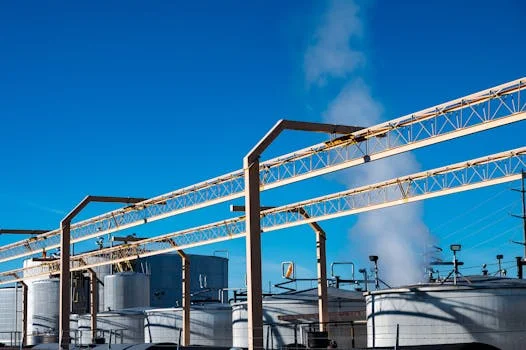
Designing a robust system for nickel removal requires a multi-stage hybrid approach that combines chemical, physical, and ion-exchange technologies. The first stage is chelate destruction or "de-complexation." If EDTA or other strong chelates are present, Advanced Oxidation Processes (AOP) are required. Fenton’s reagent (Fe²⁺/H₂O₂) or UV/H₂O₂ systems are standard, with H₂O₂:Ni molar ratios typically maintained between 5:1 and 10:1. UV doses of 500-1,000 mJ/cm² are often necessary to break the organic bonds and release the nickel ions for subsequent precipitation (HydropureWater field data, 2025).
Following de-complexation, the wastewater enters a PLC-controlled chemical dosing system for pH adjustment. The optimal pH for nickel hydroxide [Ni(OH)₂] precipitation is between 9.5 and 10.5. To enhance floc formation, coagulants such as Ferric Chloride (FeCl₃) at 30-100 mg/L or Polyaluminum Chloride (PAC) at 20-50 mg/L are added. The resulting flocs are then separated using a high-efficiency DAF system for nickel hydroxide separation, which offers superior performance for lightweight, metal-hydroxide flocs compared to traditional gravity settling. For high-flow applications with denser solids, a lamella clarifier for nickel floc separation provides a compact footprint with surface loading rates of 1.5-3 m/h.
| Process Step | Equipment/Media | Key Engineering Specification | Expected Performance |
|---|---|---|---|
| Pre-Treatment | AOP (Fenton/UV) | ORP Control (+400mV); pH 3.5 (Fenton) | >90% Chelate destruction |
| Precipitation | Reaction Tank | pH 9.8 - 10.2; Retention time > 30 min | Nickel concentration < 2.0 mg/L |
| Separation | DAF or Lamella | Surface Load: 2.0 m/h; Alum/Poly dosing | Turbidity < 5 NTU |
| Polishing | Ultrafiltration (UF) | PVDF 0.03 μm; Flux: 40 LMH | Nickel concentration < 0.5 mg/L |
| Recovery | Ion Exchange (IX) | Chelating Resin (Iminodiacetic acid) | Nickel concentration < 0.05 mg/L |
The final polishing and recovery stage utilizes selective ion exchange (IX) resins. Chelating resins, such as those with iminodiacetic acid functional groups (e.g., Purolite S930), are highly effective at capturing trace nickel even in the presence of high calcium or sodium concentrations. These resins have a typical operating capacity of 1.2 eq/L. When the resin reaches saturation, it is regenerated with sulfuric acid (H₂SO₄), producing a concentrated nickel sulfate solution. This solution can be further purified and sold back to plating suppliers or used in steel manufacturing, effectively closing the loop on metal waste.
Comparison of Nickel Wastewater Treatment Technologies
Selecting the appropriate technology depends on the concentration of nickel, the presence of chelates, and the fab's recovery goals. Chemical precipitation remains the baseline for high-concentration streams (100+ mg/L) due to its low CAPEX, but it generates significant sludge volumes and struggles with chelated nickel. Ion exchange is the gold standard for high-purity recovery and meeting the <0.1 mg/L limit, but it requires clean influent with low suspended solids to prevent resin fouling. Membrane systems, specifically Membrion’s electro-ceramic desalination or high-pressure RO, are increasingly used for water reuse but require significant pretreatment.
| Technology | Nickel Removal Efficiency | CAPEX (per 100 m³/h) | OPEX ($/m³) | Sludge Generation | Recovery Potential |
|---|---|---|---|---|---|
| Chemical Precipitation | 85 - 95% | $400K - $600K | $0.40 - $0.70 | High | Low (Sludge only) |
| Ion Exchange (IX) | 99.0 - 99.9% | $600K - $900K | $0.60 - $1.20 | None | High (NiSO₄ solution) |
| Hybrid (AOP + IX) | > 99.9% | $1.2M - $1.8M | $1.50 - $2.50 | Low | Very High |
| Membrane Filtration | 95 - 98% | $800K - $1.2M | $0.80 - $1.50 | Concentrate | Medium (Water recovery) |
For procurement teams, the decision framework should follow an "if-then" logic: If the stream is predominantly rinse water with low nickel (<20 mg/L) and high chelates, prioritize AOP followed by Ion Exchange. If the stream is a concentrated plating bath, lead with chemical precipitation to remove the bulk of the metal, followed by UF and IX for polishing. Vendors like Memsift have demonstrated that high-efficiency recovery systems can reclaim up to 10.2 tons of nickel per year for a mid-sized fab, which significantly offsets the higher CAPEX of advanced hybrid systems.
Zero-Liquid-Discharge (ZLD) Integration for Nickel Wastewater
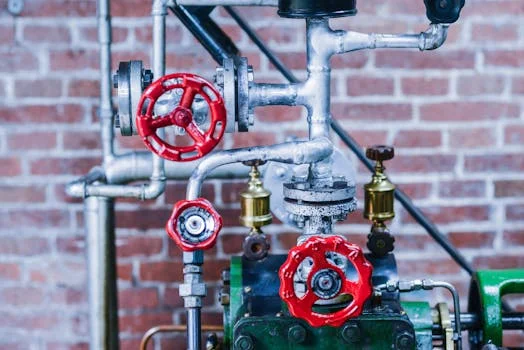
Achieving Zero-Liquid-Discharge (ZLD) for nickel-bearing streams is a multi-step process that integrates metal removal with high-recovery desalination. In a typical ZLD blueprint, the nickel-free effluent from the IX or DAF stage is sent to a high-recovery RO system. To reach 95%+ water recovery, the RO concentrate is further processed through an evaporator and crystallizer. Integrating ZLD system design for semiconductor wastewater ensures that no liquid waste leaves the site, transforming the nickel into a dry hydroxide cake or a concentrated sulfate liquid.
Energy optimization is the primary hurdle in ZLD. Mechanical Vapor Recompression (MVR) evaporators are the preferred choice for fabs, as they utilize waste heat and offer 30-50% energy savings compared to multi-effect evaporators. By integrating heat exchangers between the fab’s cooling towers and the ZLD plant, engineers can significantly reduce the SEC (Specific Energy Consumption) of the treatment process. TSMC’s 2024 ZLD initiatives have demonstrated that such integrations can cut total water usage by 35%, a critical metric for fabs operating in water-stressed regions (e.g., Arizona or Tainan).
ZLD systems provide a hedge against future regulatory changes. By eliminating the discharge pipe, fabs remove the risk of permit violations and the associated ESG reporting burdens. For high-salinity streams, hybrid ZLD approaches using Forward Osmosis (FO) or Nanofiltration (NF) are emerging. These systems can selectively separate monovalent ions from divalent nickel and sulfate, improving the efficiency of the subsequent evaporation stage. For more on managing high-TDS streams, see our guide on high-salinity wastewater treatment solutions.
Cost-Benefit Analysis and ROI Calculator for Nickel Recovery
The financial justification for advanced nickel treatment rests on three pillars: metal recovery revenue, water reuse savings, and avoided compliance costs. A standard CAPEX for a 100 m³/h hybrid nickel treatment system ranges from $800,000 to $1.5 million, depending on the complexity of the chelates. However, the OPEX is often partially offset by the value of recovered nickel. At current market prices, nickel recovered as sulfate or high-purity hydroxide can fetch between $5 and $15 per kg. For a fab discharging 10 tons of nickel annually, this represents $50,000 to $150,000 in direct revenue.
| Cost/Benefit Category | Estimated Annual Value (USD) | Description |
|---|---|---|
| CAPEX Amortization | ($150,000 - $250,000) | 10-year straight-line depreciation |
| Operational Costs (OPEX) | ($120,000 - $180,000) | Power, chemicals, resin replacement |
| Nickel Recovery Revenue | $50,000 - $150,000 | Based on 10 tons/year at market rates |
| Water Reuse Savings | $80,000 - $120,000 | Based on 90% recovery at $1.50/m³ |
| Avoided Fines/Compliance | $20,000 - $100,000 | Reduced risk of EPA/local permit violations |
| Net Annual Impact | ($120,000) to +$40,000 | Positive ROI typically achieved in 3-5 years |
Intel’s 2023 nickel recovery project serves as a prime case study. By implementing a selective ion exchange system for their plating rinse waters, they achieved a 3-year payback period. The system not only recovered high-purity nickel but also allowed the treated water to be recycled back to the cooling towers, reducing their raw water demand by 150,000 m³ annually. For engineers looking to build a business case, an ROI calculator should include inputs for influent flow rate, nickel concentration, local water costs, and sludge disposal fees—which can exceed $400/ton for hazardous metal waste.
Frequently Asked Questions
How do chelating agents like EDTA affect nickel removal efficiency?
Chelating agents form highly stable, soluble complexes with nickel ions, preventing them from reacting with hydroxide ions during pH adjustment. Without pretreatment (like AOP), removal efficiency can drop from 99% to below 50%. De-complexation via Fenton’s reagent or UV oxidation is required to break these bonds.
What is the optimal pH for nickel hydroxide precipitation in semiconductor wastewater?
The theoretical minimum solubility for nickel hydroxide occurs at pH 10.2. In practice, most fab treatment systems operate in the 9.5 to 10.5 range. Operating above pH 11.0 can actually increase solubility due to the formation of nickelate ions [Ni(OH)₃]⁻.
Can nickel be recovered from CMP slurry wastewater?
Yes, but it is more challenging due to the high concentration of abrasive particles (silica or alumina). The slurry must first be clarified using a DAF or lamella clarifier to remove solids before the dissolved nickel can be captured via ion exchange resins.
What are the main causes of membrane fouling in nickel ZLD systems?
The primary foulants are nickel hydroxide precipitates, calcium sulfate (gypsum) scaling, and organic surfactants from the plating baths. Rigorous pretreatment, including fine filtration and antiscalant dosing, is essential to maintain membrane flux.
How often do chelating resins for nickel recovery need to be replaced?
With proper pretreatment and regular regeneration using 5-10% H₂SO₄, high-quality chelating resins can last 3 to 5 years. Performance degradation is usually caused by organic fouling or "poisoning" by irreversible metal binding.