Alarm tripped: is it channeling, scaling, or chemical drift?
Wet scrubber troubleshooting field fixes begin with ΔP and slurry pH. A wet scrubber fails when ΔP drops below 2.5 mbar or pH leaves the 5.5–6.2 window, cutting SO₂ removal by 15–20%. Restoring design L/G, clearing clogged spray headers, and recalibrating the pH probe within 30 minutes can regain 95% uptime without a permit breach.
A ΔP below 2.5 mbar indicates gas channeling through packing or spray voids, according to DeLoach data. Conversely, if ΔP climbs above 15 mbar, spray header scaling or mist eliminator plugging is likely. These mechanical faults track SO₂ removal closely. A pH drift of ±0.5 units from setpoint can cut removal by up to 20% in lime/limestone service. According to the EPA Air Pollution Control Cost Manual chapter on wet and dry scrubbers, limestone wet FGD pH is typically held between 5.0 and 6.0, and wet FGD units typically achieve 90%–99% SO₂ removal. Compare live ΔP and pH to design thresholds within three minutes. If a portable pitot tube is available, confirm gas velocity within ±10% of design flow before opening scrubber internals.
| Symptom | Diagnostic Threshold | Probable Root Cause | Immediate Action |
|---|---|---|---|
| Low ΔP | < 2.5 mbar | Gas Channeling / Low L/G | Increase pump Hz; check nozzle spray pattern |
| High ΔP | > 15 mbar | Header Scaling / Demister Plug | Initiate online acid wash; verify wash cycle |
| High Opacity | > 20% | L/G Ratio < 0.5 L/m³ | Check recycle pump amps; clear header blockage |
| Low SO₂ Removal | < 90% | pH < 5.5 or > 6.2 | Recalibrate pH probe; adjust lime feed rate |
Nine wet scrubber troubleshooting field fixes that restore contact
Channeling in a wet scrubber occurs when gas bypasses the liquid spray, often shown by a ΔP drop below 2.5 mbar. SO₂ then misses the limestone slurry and stack SO₂ rises at once. Raise recycle pump speed 10–15% on the VFD first, targeting about 0.9 L/m³ within five minutes without a shutdown.
If ΔP stays low, expect localized nozzle failure. Blocking 10% of nozzles on one header can open a low-resistance gas path. Rotate or swap clogged nozzles until blockage stays under 10% per header. Raising the sump level by 0.3 m increases inlet turbulence and forces gas into the spray zone. That buys time until a planned nozzle clean during the next outage. For recurring dp fall off on wet scrubber of dissolving tank events, lock pump Hz and spray pattern into the O&M round sheet so the same low-ΔP trip does not repeat each shift.
Pressure drop too high: descale spray headers on the run
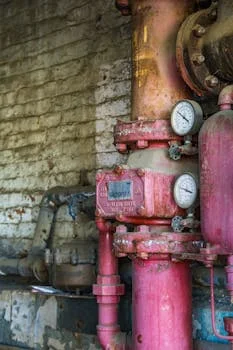
Scaling on spray headers raises backpressure, typically pushing ΔP above 15 mbar while pump amps climb. Calcium sulfite or calcium sulfate deposits on nozzle orifices and header walls restrict reagent flow. When ΔP exceeds 15 mbar and amps are high, an online acid wash can restore flow in 30 minutes, versus a 4-hour shutdown for manual hydro-blasting.
To run an online descale, switch the affected spray level to a temporary 5% HCl recirculation loop. Hold pH at 1.5–2.0 for 30 minutes to dissolve calcium scale without damaging FRP or high-alloy shells. Flush with service water for 5 minutes afterward so mist-blanket ΔP returns below 3 mbar. The scrubber can stay online at reduced capacity, protecting SO₂ compliance while spray pattern recovers.
Which wet scrubber fixes restore SO₂ control?
Wet scrubber SO₂ control fails first when reagent stoichiometry drifts outside the design pH band, not when fan speed alone changes. A 0.5 unit deviation from target pH reduces SO₂ removal by 15–20% in lime/limestone systems. Fouled probes make the reagent valve hunt, swinging slurry density and chemical use. If stack SO₂ rises while DCS pH looks normal, calibrate with pH 4 and 7 buffers. In high-solids FGD service, clean and calibrate every 48 hours.
Set a 0.1 pH-unit dead-band on the lime/limestone feed valve so minor noise does not drive oscillation. Aim for pH 5.8–6.0 at an L/G of 0.9 L/m³ when that is the design target. Trade press guidance for utility limestone absorbers places typical operation near pH 5.0–5.7, and warns that sustained pH above 6.0 can hurt gypsum quality and raise scaling risk (Power Engineering / Amec Foster Wheeler). If slurry is stale, raise blowdown to bring fresh reagent. A correctly sized Flue Gas Desulfurization (FGD) Scrubber System keeps L/G, pH, and blowdown in the same control narrative so SO₂ stays inside permit.
| Operating pH | SO₂ Removal Efficiency | Scaling Risk | Reagent Utilization |
|---|---|---|---|
| 5.0 - 5.4 | 70% - 85% | Low | High (Wasteful) |
| 5.5 - 6.2 | 95% - 98% | Moderate | Optimal |
| > 6.5 | 99% | Severe (Clogging) | Low (Excessive) |
What keeps high-efficiency wet scrubbers compliant?
High-efficiency wet scrubbers stay permit-compliant when mist eliminators shed gypsum and chlorides stay controlled in the recycle loop. High chloride promotes fine gypsum crystals that bypass demisters and raise stack opacity. That carry-over drives opacity violations, duct corrosion, and fan imbalance. If Cl⁻ exceeds 15 g/L, raise wastewater blowdown, especially on an FGD scrubber with automatic gypsum dewatering.
Wash the mist eliminator with 0.3 MPa fresh service water for 2 minutes every 8 hours. If opacity creeps up while L/G looks healthy, shorten the wash to every 4 hours. Do not use recycled wash water; dissolved solids seed scale on demister blades. Where wash water comes from a recovery train, use a reverse osmosis system troubleshooting guide so low-TDS supply stays available.
Quick-restart checklist: from alarm to compliant in 30 min
Shift supervisors should clear this checklist before releasing the unit to day shift or confirming restart to the control room. Each item ties a measurable limit to a pass/fail decision.
- Verify ΔP: Hold differential pressure between 5 and 12 mbar. Lower values suggest channeling; higher values suggest residual scaling.
- Check pH: Lock pH at 5.8 (±0.1) and confirm the reagent valve is not oscillating.
- L/G Ratio: Confirm recycle delivery of at least 0.9 L/m³ at current gas flow, and check motor amps for cavitation.
- Stack Monitoring: Watch opacity for 5 consecutive minutes; keep it below 10% to prove demister function.
- Documentation: Log restart time, chemical pump strokes, and nozzle swaps for the next deep-clean plan.
Who this is for: plant operators, shift supervisors, and EPC commissioning teams running lime/limestone or packed wet scrubbers on SO₂ and particulate permits. Who should look elsewhere: buyers seeking only VOC carbon beds or dry sorbent injection without a liquid recycle loop. If your unit still trips after these checks, send ΔP, pH, L/G, and opacity trends with the inquiry so sizing and wash logic can be reviewed against the installed FGD design basis.
Frequently Asked Questions
What ΔP range indicates channeling vs scaling?
A ΔP below 2.5 mbar indicates channeling or low liquid flow across the packing or spray zone. A ΔP above 15 mbar typically means spray-header scaling or a plugged mist eliminator. Hold a healthy band near 5–12 mbar after restart. Confirm gas velocity within ±10% of design before blaming internals alone, so upstream fan issues are not missed.
How often should pH probes be calibrated on a lime FGD scrubber?
pH probes should be cleaned and calibrated every 48 hours in high-solids lime FGD slurry because calcium scale fouls the junction fast. Aggressive chloride duty may need daily two-point checks with pH 4 and 7 buffers. Stable probe readings keep reagent feed from hunting and support about 95% SO₂ removal when L/G is on design.
Can I acid-wash headers while the scrubber is online?
Yes. A dedicated recirculation loop with 5% HCl can descale one spray header while other levels stay in service. Hold loop pH at 1.5–2.0 for about 30 minutes, then flush 5 minutes with service water. This avoids the roughly 4-hour downtime of vessel entry and manual hydro-blasting when ΔP exceeds 15 mbar.
What causes gypsum dust at the stack when ΔP looks normal?
Gypsum carry-over usually comes from high slurry chloride or a fouled mist eliminator, not from bed ΔP alone. If Cl⁻ exceeds 15 g/L, raise blowdown. Wash demisters at 0.3 MPa for 2 minutes every 8 hours, or every 4 hours when opacity climbs, using fresh low-TDS water only.
How do wet scrubbers handle dust and acid gas together?
Wet scrubbers remove acid gases such as SO₂ by absorption into alkaline slurry while droplets and demisters capture entrained particulate. Keep L/G near design, pH inside the 5.5–6.2 window for lime systems, and demister washes on schedule. Losing either liquid coverage or mist elimination raises opacity and SO₂ together even when fan flow is unchanged.