Wastewater Treatment Plant Cost in Bogotá 2025: Engineering Breakdown, Budget Data & ROI Calculator
In Bogotá, wastewater treatment plant costs vary widely based on scale and technology. A 1,000 m³/day compact MBR plant starts at COP $2.5B (≈$625K USD), while large-scale municipal plants like El Salitre exceed $60M for 4 m³/s capacity. Key cost drivers include land acquisition (Bogotá’s urban density adds 15-20% to CAPEX), energy consumption (30-40% of OPEX), and compliance with Colombian Resolution 0631/2015, which mandates tertiary treatment for industrial discharges. This guide breaks down costs by technology, plant size, and regulatory requirements to help engineers and planners optimize budgets.
Why Bogotá’s Wastewater Crisis Demands Immediate Investment
Bogotá River pollution levels currently exceed Resolution 0631/2015 limits by three to five times, with Chemical Oxygen Demand (COD) often surpassing 500 mg/L and Total Suspended Solids (TSS) exceeding 300 mg/L according to 2023 CAR (Corporación Autónoma Regional de Cundinamarca) data. These figures represent more than an environmental hazard; they are the baseline for calculating the necessary intensity of biological and chemical treatment. The urgency is underscored by the 2025 operational deadline for secondary and tertiary treatment upgrades across the basin.
The expansion of the El Salitre plant serves as a technical benchmark for the region's geological and engineering challenges. To stabilize structures in Bogotá's soft lacustrine soil, contractors installed 3,084 piles ranging from 31m to 52m in depth. This level of geotechnical engineering significantly inflates Colombia’s municipal wastewater treatment standards and cost benchmarks, making foundation work a primary budget line item that often accounts for 15% of total construction costs. Additionally, public health risks further drive the necessity for investment.
Wastewater Treatment Plant Cost Breakdown by Size and Technology
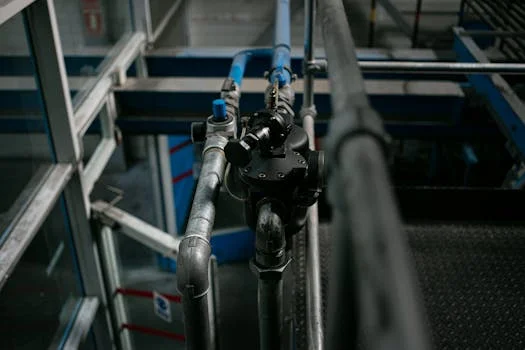
CAPEX for a 1,000 m³/day wastewater treatment plant in Bogotá ranges from COP $2.5B to $4B depending on the chosen technology, while larger municipal systems scale up to COP $200B for 100,000 m³/day capacities. These estimates reflect 2025 market data and account for the specific equipment necessary to meet local discharge limits. Technology selection is the most significant variable; for instance, Membrane Bioreactor (MBR) systems command a 30% CAPEX premium over traditional activated sludge but offer a significantly smaller footprint, which is critical in land-scarce urban zones like Fontibón or Puente Aranda.
For industrial applications requiring the removal of fats, oils, and grease (FOG), Dissolved Air Flotation (DAF) serves as a cost-effective pre-treatment phase. Implementing cost-effective DAF systems for industrial pre-treatment in Bogotá typically adds 20% to the initial budget but reduces the organic load on secondary biological stages, preventing system upsets and lowering long-term maintenance costs. The following table outlines the estimated CAPEX and energy benchmarks for different plant scales in the Bogotá metropolitan area.
| Plant Capacity (m³/day) | Technology Type | Estimated CAPEX (COP) | Energy Use (kWh/m³) | Footprint Requirement |
|---|---|---|---|---|
| 1,000 | MBR (Membrane Bioreactor) | $2.5B – $4.0B | 0.8 – 1.2 | Minimal (Compact) |
| 1,000 | Activated Sludge | $1.8B – $2.8B | 0.3 – 0.5 | High |
| 10,000 | MBR (Membrane Bioreactor) | $18B – $28B | 0.7 – 1.0 | Moderate |
| 10,000 | Activated Sludge + DAF | $15B – $25B | 0.4 – 0.6 | High |
| 100,000 | Conventional Municipal | $120B – $200B | 0.3 – 0.4 | Extensive |
Land cost impact cannot be overstated. In Bogotá’s central industrial corridors, land scarcity and high valuation can add 15-20% to the total project cost. Engineers must weigh the higher CAPEX of advanced technologies like MBR against the land acquisition savings they provide. Energy efficiency benchmarks in 2024 suggest that while MBR has a higher energy demand (0.8–1.2 kWh/m³), its ability to produce high-quality effluent suitable for reuse often justifies the operational expense in water-stressed sectors.
CAPEX vs. OPEX: How Treatment Technology Affects Long-Term Costs
Membrane Bioreactor (MBR) systems in Bogotá typically maintain a 60/40 CAPEX-to-OPEX ratio over a 20-year lifecycle, whereas traditional activated sludge systems shift toward a 40/60 ratio due to higher land and sludge management requirements. Choosing high-efficiency MBR systems for water reuse in Bogotá allows facilities to consolidate treatment stages, reducing the volume of sludge produced and the physical space required for secondary clarifiers. However, the operational budget must account for periodic membrane replacement, which occurs every 5 to 7 years and can cost between COP $50M and $100M per module.
Energy consumption remains the dominant factor in OPEX, accounting for 30-40% of total running costs for aeration-based systems. With Bogotá’s 2024 energy tariffs averaging COP $550/kWh, a 10,000 m³/day plant utilizing MBR may face annual electricity bills significantly higher than an activated sludge plant. Conversely, DAF systems are remarkably efficient for pre-treatment, consuming only 0.2–0.4 kWh/m³ and representing only 10-15% of the OPEX in industrial configurations.
| Cost Component | MBR System (1k m³/day) | Activated Sludge (1k m³/day) | DAF Pre-treatment |
|---|---|---|---|
| Annual Energy Cost | COP $160M – $240M | COP $60M – $100M | COP $40M – $80M |
| Sludge Disposal (Annual) | COP $30M – $50M | COP $70M – $120M | COP $40M – $90M |
| Chemical Dosing (Monthly) | COP $1M – $3M | COP $2M – $4M | COP $2M – $5M |
| Maintenance Reserve | 15% of OPEX | 8% of OPEX | 10% of OPEX |
Sludge disposal costs are another critical variable under Resolution 0631/2015. Hazardous sludge classification requires specialized transport and incineration or secure landfilling, costing between COP $150,000 and $300,000 per ton. Systems that minimize sludge yield or increase sludge dryness, such as high-performance dewatering presses, can save industrial operators millions in annual hauling fees.
Colombian Compliance Costs: How Resolution 0631/2015 Impacts Your Budget
Compliance with Colombian Resolution 0631/2015 necessitates tertiary treatment for most industrial discharges, adding an estimated 20-30% to the initial CAPEX to achieve limits of <10 mg/L TSS and <20 mg/L BOD. This regulation moved the goalposts for many Bogotá-based industries, requiring the addition of sand filtration, UV disinfection, or advanced oxidation processes to existing primary and secondary lines. Integrating tertiary treatment systems for Resolution 0631/2015 compliance is no longer optional for those discharging into the Bogotá River or its tributaries.
Beyond equipment, the compliance tax includes ongoing monitoring and administrative fees. CAR-accredited laboratory testing is mandatory, with monthly sampling protocols costing between COP $5M and $10M depending on the number of parameters tracked. The permitting timeline for new plants or major expansions is currently 6 to 12 months. CAR processing fees for environmental licenses and water discharge permits range from COP $20M to $50M.
Cost-Saving Strategies for Bogotá Wastewater Projects
Implementing modular wastewater designs can reduce initial CAPEX by 15-20% by minimizing the need for deep foundation piling. These compact underground sewage treatment plants for urban Bogotá sites are pre-engineered and factory-tested, which slashes on-site construction time and labor costs. By utilizing a modular approach, developers can also scale their investment, adding modules as production capacity or population density increases.
Energy recovery is another high-impact strategy. For plants exceeding 5,000 m³/day, anaerobic digestion can be used to capture biogas, which can then be converted to electricity or heat. Energy tariffs and pilot projects in Bogotá have shown that biogas recovery can offset up to 30% of a plant's total energy demand. Additionally, for industrial sectors like food processing or textiles, using cost-effective DAF systems for industrial pre-treatment in Bogotá can be 40% cheaper than MBR for initial FOG removal.
ROI Calculator: How to Justify Your Wastewater Treatment Investment
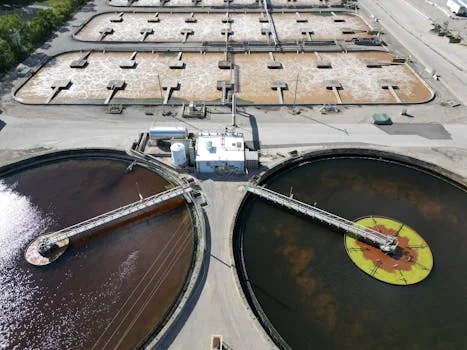
Industrial facilities in Bogotá can achieve a positive ROI within 3 to 5 years by offsetting non-compliance fines and utilizing treated effluent for industrial processes. The financial justification for a wastewater plant has shifted from regulatory burden to resource recovery. By treating water to a standard where it can be reused in cooling towers, boilers, or floor washing, companies significantly reduce their reliance on the municipal water supply.
To calculate the ROI for a proposed project, engineers should use the following framework: ROI = (Annual Operational Savings + Avoided Fines) / (Total CAPEX + Annual OPEX). The table below provides a simplified ROI template based on a 5,000 m³/day industrial facility in Bogotá.
| Factor | Annual Value (Estimated) | 5-Year Cumulative |
|---|---|---|
| Avoided Regulatory Fines | COP $400M – $1.2B | COP $2B – $6B |
| Water Reuse Savings (at 50% reuse) | COP $1.1B | COP $5.5B |
| Energy Efficiency Savings (vs. old tech) | COP $150M | COP $750M |
| Total Potential Savings | COP $1.65B – $2.45B | COP $8.25B – $12.25B |
Frequently Asked Questions
What is the average cost per m³ for a wastewater treatment plant in Bogotá?For municipal-scale plants (10,000–100,000 m³/day), the cost typically ranges from COP $1,500 to $3,500 per m³. For industrial systems utilizing MBR technology (1,000–10,000 m³/day), costs are higher.