IC wastewater treatment systems cost $10,000–$1.5M+ depending on capacity, influent COD, and industry. For a 100 m³/h semiconductor fab, CAPEX ranges from $800,000–$1.2M, with OPEX of $0.25–$0.50/m³ (including energy, chemicals, and sludge disposal). IC reactors achieve 85–95% COD removal at hydraulic retention times of 4–8 hours, generating 0.35–0.5 m³ biogas/kg COD removed—offsetting energy costs by 20–40%. Use this guide to calculate ROI for your plant.
Why IC Wastewater Treatment Costs Are Rising in 2025
Chemical prices for pH adjustment and nutrient dosing have surged by 30–50% since 2020 according to Producer Price Index (PPI) data, directly impacting the operational budgets of industrial wastewater facilities. For plant managers at semiconductor fabs and distilleries, these rising costs are compounded by volatile energy markets, where electricity and gas now account for 40–60% of total OPEX in traditional aerobic systems. Internal Circulation (IC) reactors mitigate this exposure by operating anaerobically, which not only eliminates the high energy demand of aeration but also produces combustible biogas as a byproduct.
Regulatory pressure is the second major driver of cost increases. Stricter discharge limits, such as China’s GB 31573-2015 and the updated EU Urban Waste Water Directive, often necessitate the addition of tertiary treatment stages. These requirements can add 20–30% to the initial CAPEX to ensure compliance with nitrogen and phosphorus limits. In the semiconductor sector, the EPA’s 2024 proposed 4 parts per trillion (ppt) limit for PFAS has forced manufacturers to integrate advanced carbon filtration or specialized 2025 discharge standards for semiconductor wastewater compliance modules, typically increasing pretreatment costs by $150,000–$300,000.
Finally, the shift toward "Zero Liquid Discharge" (ZLD) and water reuse initiatives has made high-efficiency anaerobic digestion a prerequisite. By removing the bulk of organic loads (COD) at the front end, IC reactors protect downstream membranes, reducing the frequency of expensive cleaning cycles and replacement. For a facility processing 1,000 m³/day, the failure to optimize this primary stage can lead to an additional $50,000 in annual chemical and membrane maintenance costs.
IC Wastewater Treatment Price Breakdown: CAPEX, OPEX, and Hidden Costs
A standard IC anaerobic reactor unit costs between $10,000 and $500,000 per set, though the total system price scales significantly when accounting for balance-of-plant requirements. For a medium-scale industrial application, ancillary equipment—including influent equalization tanks, biogas scrubbers, flare systems, and automated control logic (PLC)—adds an additional $50,000 to $200,000 to the equipment budget. Engineering and design fees typically represent 10–15% of the total CAPEX, covering hydraulic modeling and piping instrumentation diagrams (P&IDs).
Installation and logistics are often underestimated in initial quotes. Civil works, including the reinforced concrete foundation required to support a 20-meter tall reactor, along with mechanical piping and electrical integration, usually costs 15–20% of the equipment value. Shipping for a large-scale reactor can range from $5,000 for local delivery to $50,000 for international freight, depending on whether the unit is shipped as a single piece or in modular sections (HydropureWater field data, 2025).
| Cost Category | Estimated Price Range (USD) | % of Total Budget |
|---|---|---|
| IC Reactor Core (Equipment) | $10,000 – $500,000 | 40 – 50% |
| Ancillary Equipment (Pumps, Biogas, PLC) | $50,000 – $200,000 | 15 – 20% |
| Engineering & Design | $50,000 – $150,000 | 10 – 15% |
| Installation & Civil Works | $150,000 – $300,000 | 15 – 20% |
| Shipping & Logistics | $5,000 – $50,000 | 5 – 10% |
| Total CAPEX (100 m³/h System) | $800,000 – $1,200,000 | 100% |
Operational expenses (OPEX) for IC systems range from $0.25 to $1.20 per cubic meter of treated water. This is broken down into energy (40%), chemicals for pH control (20%), labor (15%), sludge disposal (15%), and routine maintenance (10%). Hidden costs are the most significant risk to ROI; for instance, unplanned downtime at a semiconductor fab can cost upwards of $10,000 per day in lost production, while environmental compliance fines for exceeding COD limits can exceed $50,000 per violation. if the system utilizes MBR systems for tertiary treatment and water reuse, membrane replacement costs of $20,000–$50,000 per year must be factored into the long-term budget.
Engineering Specs That Drive IC Reactor Costs and Efficiency
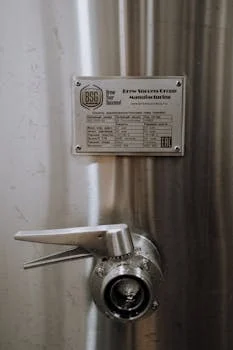
Internal Circulation (IC) reactors achieve 85–95% COD removal efficiency by utilizing a multi-stage anaerobic process that creates a high-velocity upward flow, effectively mixing biomass with influent wastewater. The cost of an IC system is directly proportional to the organic loading rate (OLR). Industrial influent COD typically ranges from 2,000 mg/L in light manufacturing to 20,000 mg/L in alcohol distilleries. Higher COD concentrations require larger reactor volumes or specialized thermophilic configurations (operating at 50–60°C), which increase CAPEX but significantly improve the degradation of complex organics.
Hydraulic Retention Time (HRT) is a critical spec that dictates the physical footprint and cost of the vessel. IC reactors typically operate at an HRT of 4–8 hours, which is substantially lower than the 12–24 hours required by traditional UASB reactors. A shorter HRT allows for a smaller reactor diameter, reducing material costs for stainless steel or glass-fused-to-steel tanks. Additionally, the biogas yield—averaging 0.35 to 0.5 m³ of methane per kg of COD removed—serves as a direct cost offset. In high-load plants, this biogas can be used to fuel boilers or CHP (Combined Heat and Power) engines, potentially covering 20–40% of the plant's total energy consumption.
| Engineering Parameter | Standard IC Specification | Impact on Cost/Efficiency |
|---|---|---|
| Influent COD Range | 2,000 – 20,000 mg/L | Higher COD increases reactor size/CAPEX |
| COD Removal Rate | 85% – 95% | Reduces downstream aeration costs |
| Hydraulic Retention Time (HRT) | 4 – 8 Hours | Smaller HRT = Lower CAPEX (smaller tank) |
| Biogas Yield | 0.35 – 0.5 m³/kg COD | Offsets OPEX by 20–40% |
| Sludge Yield | 0.05 – 0.1 kg TSS/kg COD | Lowers disposal costs vs. aerobic systems |
| Operating Temperature | 30°C – 38°C (Mesophilic) | Maintains stable biomass activity |
Sludge production in IC reactors is remarkably low, yielding only 0.05 to 0.1 kg of total suspended solids (TSS) per kg of COD removed. Compared to aerobic processes that produce 0.3 to 0.5 kg of sludge, the IC reactor significantly reduces the cost of dewatering and landfilling. For plants requiring ultra-clean effluent for reuse, integrating DAF systems for pre-treatment and TSS removal can further optimize the IC reactor's performance by preventing fats, oils, and grease (FOG) from fouling the anaerobic granules.
IC vs. UASB vs. MBR: Cost and Performance Comparison for Industrial Wastewater
IC reactors offer a 30-50% smaller footprint than traditional UASB systems due to their taller, vertical design and higher volumetric loading rates. While the CAPEX for an IC reactor ($10,000–$500,000) is slightly higher than a UASB ($8,000–$400,000), the IC reactor's ability to handle fluctuating loads and its superior biogas recovery often leads to a lower total cost of ownership over a 10-year lifecycle. In contrast, Membrane Bioreactors (MBR) provide the highest effluent quality but come with significantly higher OPEX due to the energy required for membrane scouring and the periodic cost of membrane replacement.
| Feature | IC Reactor | UASB Reactor | MBR System |
|---|---|---|---|
| Relative CAPEX | Moderate | Low | High |
| OPEX ($/m³) | $0.25 – $0.50 | $0.20 – $0.45 | $0.50 – $1.20 |
| Footprint | Smallest (Vertical) | Moderate | Large (Basins) |
| Effluent Quality | Secondary (COD 85%+) | Secondary (COD 80%+) | Reuse Quality (TSS <1) |
| Biogas Recovery | High (0.45 m³/kg) | Moderate (0.35 m³/kg) | None |
| Best Use Case | High COD, variable loads | Stable, low-strength loads | Strict discharge/Reuse |
The choice between these technologies depends on the plant's ultimate goal. If the objective is to reduce heavy organic loads from a distillery or semiconductor fab before municipal discharge, the IC reactor is the most cost-effective solution. However, if the plant must meet strict 2025 discharge standards for heavy metals or PFAS, a combination of IC for bulk COD removal followed by MBR systems for tertiary treatment and water reuse is often the most reliable engineering approach. For pre-treatment of solids-heavy influent, engineers should also evaluate DAF systems for pre-treatment and TSS removal to ensure the IC reactor remains efficient.
How to Calculate ROI for an IC Wastewater Treatment System
The payback period for an IC wastewater treatment system typically ranges from 2 to 5 years, depending on the local cost of energy and discharge fees. To calculate the Return on Investment (ROI) for your facility, follow this five-step framework used by HydropureWater engineering teams:
- Estimate Total Investment: Combine the IC reactor CAPEX, ancillary equipment, and installation costs (e.g., $1,000,000).
- Calculate Biogas Value: Multiply your daily COD removal (kg) by 0.4 m³/kg COD, then multiply by the local energy rate. For a plant removing 10,000 kg COD/day at $0.15/kWh equivalent, this equals approximately $219,000 in annual energy savings.
- Quantify Avoided Costs: Include the reduction in municipal surcharges, avoided fines for non-compliance, and the elimination of offsite hauling for high-strength waste.
- Subtract Annual OPEX: Deduct costs for labor, chemicals, and maintenance (e.g., $120,000/year).
- Determine Payback: Divide the Total Investment by the Net Annual Savings (Biogas Value + Avoided Costs - OPEX).
"For a 50 m³/h semiconductor fab with an influent COD of 10,000 mg/L, the transition to an IC reactor saved the facility $350,000 per year in combined energy and discharge costs, resulting in a 3.2-year payback period." — HydropureWater Field Report, 2024.
By using an IC reactor, plants shift wastewater treatment from a "sunk cost" to a "resource recovery" center. The stability of the IC process also reduces the risk of process upsets that lead to production halts, which provides an "insurance" value that is difficult to quantify but vital for procurement managers evaluating long-term feasibility.
Industry-Specific IC Wastewater Treatment Costs and Case Studies
High-strength wastewater from alcohol distilleries requires an average CAPEX of $800,000 to $1.5 million for a 50 m³/h system. Because distillery wastewater is rich in biodegradable organics (COD 10,000–20,000 mg/L), the biogas recovery potential is maximized. A case study of a 120 m³/h alcohol plant in Shandong demonstrated a 40% reduction in OPEX, bringing treatment costs down to $0.30/m³ through efficient methane capture, achieving full CAPEX recovery in just 2.8 years.
Semiconductor fabs face a different cost structure, with CAPEX ranging from $1.2M to $2.5M for a 100 m³/h capacity. This higher price point is driven by the need for corrosion-resistant materials to handle solvent-laden streams and the integration of tertiary polishing units. Despite the higher initial cost, the detailed cost breakdown for semiconductor fabs shows that IC reactors are essential for reducing the organic load before the water enters sensitive RO or MBR stages, extending the life of those systems by 300%.
| Industry Sector | Avg. CAPEX (Typical Capacity) | Avg. OPEX ($/m³) | Primary Cost Driver |
|---|---|---|---|
| Semiconductor Fab | $1.2M – $2.5M (100 m³/h) | $0.35 – $0.60 | Solvent removal & tertiary polish |
| Alcohol Distillery | $800k – $1.5M (50 m³/h) | $0.25 – $0.45 | High COD loading & biogas recovery |
| Pharmaceuticals | $1.0M – $2.0M (80 m³/h) | $0.40 – $0.70 | pH adjustment & nutrient dosing |
Pharmaceutical plants often deal with variable COD (3,000–10,000 mg/L) and high nitrogen levels. Their systems require advanced automation to manage nutrient dosing, leading to OPEX in the $0.40–$0.70/m³ range. However, the IC reactor’s ability to maintain high biomass concentrations ensures that even "shock loads" of pharmaceutical active ingredients (APIs) do not crash the biological system, preventing costly compliance failures.
Frequently Asked Questions About IC Wastewater Treatment Costs
How much does an IC reactor cost?
A standalone IC reactor unit typically costs between $10,000 and $500,000. A complete 50 m³/h system for a semiconductor fab, including engineering and ancillary equipment, generally ranges from $300,000 to $500,000 for the core reactor components.
What is the typical payback period for an IC system?
Most industrial IC reactors achieve a return on investment within 2 to 5 years. This is driven by 20–40% energy savings from biogas recovery and a 50–70% reduction in sludge disposal costs compared to aerobic treatment.
How does influent COD affect the price?
As influent COD increases, the required reactor volume and the complexity of the biogas handling system also increase. For COD levels above 15,000 mg/L, CAPEX may rise by 15-20% to accommodate higher gas-liquid-solid separation requirements.
Is an IC reactor cheaper than a UASB?
The initial CAPEX for an IC reactor is 10–15% higher than a UASB. However, the IC reactor requires 30–50% less land and offers higher COD removal efficiency, making it more cost-effective on a "per kg COD removed" basis over the equipment's lifespan.
What are the main hidden costs in IC wastewater treatment?
The primary hidden costs include the civil engineering for the tall reactor tower ($50k+), specialized nutrient chemicals for biomass health ($10k-$20k/year), and potential production losses if the pretreatment system fails to protect the IC granules from toxic shock.