
How sludge press equipment works is a pressure balance between feed pressure, cloth resistance, and the water bound to each particle. Wet sludge that is still 80-90% water is often budgeted above $50 per ton in the United States and €80 per ton in the European Union. Removing that water commonly cuts sludge volume by 70-90%. Most plants we size for still haul cake at the wet end of that range, where the $50 figure hurts most.
How sludge press equipment works
Sludge dewatering presses hold solids on a cloth and push free water through it under set pressure. Plate units feed at 5-15 bar for 1 to 4 hours and often reach 30-50% cake. Screw units run at 0.5-2 bar and 0.5-5 RPM, with cake nearer 20-40%, while belt units use 2-10 bar and often finish at 18-35% on mixed municipal sludge.
Raising cake solids from 5% to 25% at a 10,000 m³/day municipal plant was logged at about $1.2 million a year in HydropureWater field data from 2025. The $50 and €80 figures are planning allowances from that cost discussion, not a 2025 EPA tariff. Council Directive 1999/31/EC does not publish a euro-per-ton sludge fee either. Haul distance and cake dryness move the bill more than the press name does.
Article 2(q) of Council Directive 1999/31/EC, in the 4 July 2018 consolidated text, defines liquid waste as waste in liquid form, including waste water, and excludes sludge. Article 5(3) still bars liquid waste from landfill, yet that bar does not impose a 20% solids shear-strength test. Earlier notes used 20% solids as a practical cake target for acceptance. China's GB 18918-2002 standard still sets moisture limits for municipal sludge reuse or disposal, which is why dryness stays a permit item for buyers comparing industrial sludge treatment standards and equipment selection.
The engineering objective is to overcome surface tension and capillary forces that bind water to solid particles. Mechanical pressure drives the liquid through a semi-permeable filter medium and retains the solids as cake. That cake is easier to handle, incinerate, or compost than the wet sludge. On biological sludge, the last water is usually the capillary fraction, not the free water.
Sludge press equipment engineering mechanics and pressure profiles
Sludge press equipment engineering mechanics separate water by shrinking the volume around the solids until filtrate must leave through the medium. The press type sets both the pressure and the cake solids you can honestly specify. A batch plate pack, a slow screw, and a belt-and-roller train are not interchangeable.
What cake solids does a plate and frame filter press reach?
A plate and frame filter press often reaches 30-50% cake solids, with the high end more common on inorganic industrial sludge than on municipal biosolids. US EPA (2000) records primary plus waste activated sludge at 3 to 8 percent feed reaching 45 to 50 percent cake in 2 to 2.5 hours with lime and ferric chloride. The same sheet says many solids can be pressed above 30 percent, and that this press is more common in industry than in municipal plants.
Plate and frame units run as a batch. A hydraulic ram clamps the plates at 100-300 bar so the pack seals against an internal feed of 5-15 bar. US EPA (2000) sets the usual terminal pressure at 100 psi or 225 psi, about 6.9 bar or 15.5 bar. Fill, filtration, and a membrane squeeze with air or water typically take 1 to 4 hours.
Sites that need maximum dryness usually specify a Plate and Frame Filter Press for Sludge Dewatering. On plate presses we commission, a clean cloth and a 3-5% feed often finish nearer 2 hours than 4. Polymer can stretch filtration past 3 hours, which matches the EPA contrast with lime and ferric chloride cycles of 1 to 3 hours. Lime and ferric chloride can also make up 15 to 40 percent of the cake mass, so part of the weighed cake is chemical, not sludge.
A screw press dewaters continuously at 0.5-2 bar. A rotating screw with decreasing pitch and a larger shaft diameter squeezes sludge as the free volume falls through thickening, dewatering, and discharge zones. Water leaves through a wedge-wire or perforated screen. Speed stays low, about 0.5-5 RPM, which suits plants that want uptime more than the last points of dryness.
Most municipal screws we size for run at the lower end of 0.5-2 bar, not at the 2 bar ceiling. The taper angle is usually 3-10 degrees, and that angle sets residence time. The thickening zone is often 5-10% solids and the dewatering zone 15-30% solids before the discharge cone. Those bands move if the feed is thin or the screen blinds.
A belt filter press works in three mechanical stages: gravity drainage, a wedge zone, and a high-pressure zone between two tensioned belts on rollers. Effective pressure is about 2-10 bar, and volumetric throughput can reach 300 m³/h. Belt speed of 0.5-5 m/min and belt tension are what stop sludge blowout at the roller edges. US EPA (2000) expects the gravity zone to lift solids about 5 to 10 percent above the incoming biosolids.
| Equipment Type | Process Mode | Operating Pressure | Typical Cake Solids | Primary Application |
|---|---|---|---|---|
| Plate & Frame Press | Batch | 5-15 bar | 30-50% | Industrial (Chemical, Mining, Food) |
| Screw Press | Continuous | 0.5-2 bar | 20-40% | Municipal & Biological Sludge |
| Belt Filter Press | Continuous | 2-10 bar | 18-35% | Large-scale Municipal Plants |
Filter cloth, clamp force, and polymer dose

Filter cloth, clamp force, and polymer dose decide whether the pressure in the table above is even reachable on a given day. Woven polypropylene or polyester cloth is the usual barrier, with a pore size of 5-50 μm so capture and flow stay in balance. Crews wash cloths every 50-100 cycles, using acid at pH 2-3 or alkali at pH 10-12, to clear fines and biological growth. Crews we train skip that wash first, and solids capture is the number that falls.
The hydraulic system on a plate press supplies the 100-300 bar clamp that stops slurry leaks during the high-pressure feed. A pressure loss or a misaligned plate makes an uneven cake and can damage the plate handles. The screw drive is a torque machine instead. Pitch and the 3-10 degree taper hold the sludge in the 5-10% thickening zone and the 15-30% dewatering zone long enough for filtrate to leave before the cone.
Conditioning is the auxiliary step that turns fines into flocs a cloth can hold. A PLC-controlled chemical dosing system for optimal sludge conditioning should hold polymer near 0.5-5 kg per ton of dry solids. Overdosing raises operating cost by 15-20% and can make a slimy sludge that blinds cloth. Underdosing leaves a soupy cake that will not release from the medium.
US EPA (2000) lists belt-press polymer from 1 to 10 grams per kilogram of dry solids, the same scale as kilograms per ton. Difficult belt feeds can therefore sit above the 5 kg ceiling used on many dosing skids. Dose to filtrate clarity and cake release, not to a fixed drum setting. Oil and grease in the feed blind belts the same way excess polymer blinds a plate cloth.
What is a fair sludge solids capture rate benchmark?
A fair sludge solids capture rate benchmark is 95-98% on a plate and frame press, 92-96% on a screw press, and 90-95% on a belt press, each measured as solids kept in the cake rather than lost in filtrate. Inorganic industrial sludge, such as mining or metal-finishing solids, usually captures more cleanly and makes a drier cake than municipal sludge rich in organic matter and bound water. Dairy processing sludge has reached 40-50% solids with tuned conditioning in HydropureWater field data from 2025. US EPA (2000) likewise ranks the recessed-plate press highest for both cake solids and solids capture against belt presses and centrifuges, without printing those three percent bands.
The comparison table on this page keeps an 18-35% belt cake band for mixed municipal duty. US EPA (2000) shows a wider spread by sludge type on a high-pressure belt press. Anaerobically digested waste-activated sludge at 3 to 4 percent feed made only 12 to 22 percent cake. Raw primary sludge at 3 to 10 percent feed reached 28 to 44 percent cake, with polymer at 1 to 5 grams per kilogram.
Energy use separates the machines at equal dry-solids throughput. A screw press typically draws 0.3-0.8 kWh per ton of dry solids, against 0.5-1.5 kWh per ton for a plate press, which is about 30-50% less energy on the screw. A belt press usually falls at 0.4-1.0 kWh per ton. Most screw presses we size for sit at the lower end of the 0.3-0.8 kWh band once the feed is already thickened.
Floor space follows the same split. At a 100 m³/h duty, a screw press needs about 50% less area than a plate and frame press. The ranges we use are 5-20 m² for the screw, 10-50 m² for the plate press, and 15-30 m² for the belt press. Maintenance follows cloth washing, slow rotation, or belt tracking, as the next table shows.
| Metric | Plate & Frame Press | Screw Press | Belt Filter Press |
|---|---|---|---|
| Solids Capture Rate | 95-98% | 92-96% | 90-95% |
| Energy Use (kWh/ton) | 0.5-1.5 | 0.3-0.8 | 0.4-1.0 |
| Footprint (100 m³/h) | 10-50 m² | 5-20 m² | 15-30 m² |
| Maintenance Frequency | Medium (Cloth wash) | Low (Slow RPM) | High (Belt alignment) |
Sludge dewatering equipment selection criteria
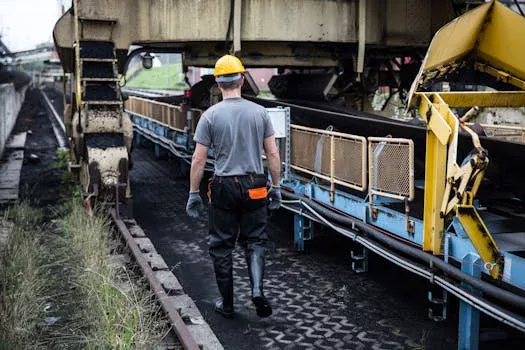
Sludge dewatering equipment selection criteria start with sludge type, then daily dry tons, the disposal fee, and the floor area you actually have. Biological sludge from municipal secondary treatment does not behave under pressure like inorganic industrial sludge. A continuous screw is often the lower-cost fit for high-throughput municipal duty. A plate press is the drier choice when hazardous-waste fees make every point of moisture expensive.
Oily sludge should not go straight onto a cloth. Install a DAF system for pre-treatment of oily or high-TSS sludge upstream so oil does not blind the medium. If the disposal fee is priced like hazardous waste, we stop arguing for the screw press and test a plate press on that sludge. Local maintenance skill and the regional cost of cloths, belts, and polymer belong in the same decision.
Automation should match labor and capital, not a catalog default. Manual presses have the lowest initial cost, about $50,000 to $150,000 for mid-range units, but operators must discharge cake and wash cloths. Fully automated PLC systems at about $200,000 to $500,000 or more add plate shifters and cloth washing for 24/7 running with little attendance. US EPA (2000) vendor estimates put a 0.5 meter belt press near $47,500 and a 1.5 meter unit near $115,000, excluding installation, on a 5 percent solids feed. Those belt prices are not current bids.
Check these seven points before naming the machine:
- Sludge type: organic municipal, inorganic industrial, or oily.
- Target cake solids against the disposal fee per wet ton.
- Continuous running versus a 1 to 4 hour batch window.
- Floor area at design flow, using the footprint row above.
- Polymer budget at 0.5-5 kg per ton of dry solids, with room above that on difficult belt feeds.
- Whether the crew can change cloths, or only track a belt.
- Abrasive solids, where a belt is easier to replace than a machined screw.
Buyers comparing a sludge press on harsh industrial sludge should read that cost framework, and teams choosing belt press sludge dewatering should settle the plate-versus-belt split before the order. A parallel note on engineering mechanics and efficiency data for press selection covers the same duty if the shortlist is still open.
| Selection Factor | Recommendation | Reasoning |
|---|---|---|
| High Organic Content | Screw Press | Handles "greasy" municipal sludge without blinding. |
| High Disposal Costs | Plate & Frame | Maximizes dryness to reduce weight/volume. |
| Limited Floor Space | Screw Press | Vertical or compact horizontal design. |
| Abrasive Solids | Belt Press | Easier to replace belts than a machined screw. |
Faults that add cycle time
Filter cloth blinding is the usual reason cycle time rises by 20% or more, or cake dryness drops off the last accepted sample. The fix is a wash cycle. Alkaline wash at pH 10-12 removes fats and proteins from biological sludge. Acid wash at pH 2-3 removes inorganic scale. Cloths are generally replaced every 1,000 to 2,000 cycles, earlier when the solids are abrasive.
Uneven cake in a plate press shows up as wet cores or plates that will not seal, and then as spraying slurry. Check hydraulic clamp pressure and hold it within ±5% of the setpoint, and inspect the center feed pipe for a blockage. Screw jams usually come from debris over 5 mm or from viscosity that is too high. A 2-5 mm pre-screen, plus a 10-15% cut in screw speed, takes that load off the flight.
A 2-5 mm screen has stopped more screw jams, on the lines we visit, than a speed cut used alone. Belt life is a separate clock. US EPA (2000) reports average belt life near 2,700 running hours, with a range of 400 to 12,000 hours, and calls for a wash after cake discharge. Track belts daily. A wandering belt ruins capture faster than a dull screw.
Who should specify a press, and who should wait
A press specification is for plants that already pay to haul wet sludge, or that must hit a landfill or reuse moisture limit. Municipal secondary sludge and industrial chemical, mining, or food solids are the duties these three machines are built around. The buyer who only needs a continuous, compact unit with 20-40% cake should start with the screw column in the tables. The buyer paying hazardous disposal fees should start with the plate column.
Plants that should look elsewhere are the small ones where a machine is not the cheapest legal path. US EPA (2000) says mechanical dewatering is often not the lowest-cost choice below about 4 million gallons per day, near 15,140 m³/d, and that those plants should price liquid haul, drying beds, or reed beds first. A site that truly needs 1,000-3,000 G of centrifugal separation, rather than 5-15 bar of cloth pressure, should compare a centrifuge instead of forcing a press. If the sludge is mostly oil, fix that with upstream separation before any cloth purchase.
Next step: send feed solids, sludge type, dry tons per day, and the disposal fee per ton to the sizing desk for this press duty. Ask for a cake target tied to your permit, not a single dryness number copied from another plant.
Frequently Asked Questions
How often should filter cloths be replaced?
Filter cloths are generally replaced every 1,000 to 2,000 cycles, sooner when the sludge is abrasive. A wash every 50-100 cycles, acid at pH 2-3 or alkaline at pH 10-12, is what keeps a cloth inside that life. Biological fats and proteins respond to the alkaline wash, and inorganic scale needs the acid wash. Belt media follow a different clock. US EPA (2000) reports average belt life near 2,700 running hours, with a reported range of 400 to 12,000 hours. Replace on blinding and cycle time, not on a calendar alone.
What is the difference between a filter press and a centrifuge?
A filter press dewaters with mechanical pressure, typically a 5-15 bar feed on a plate unit, while a centrifuge uses 1,000-3,000 G. The press holds sludge against a cloth. The centrifuge spins it in a bowl. US EPA (2000) ranks the recessed-plate press highest for cake solids and solids capture among the options it compared, including belt presses and centrifuges. Plate cake is often 30-50%, which is why high disposal fees still point to the press. Choose the centrifuge when a continuous enclosed machine is worth a wetter cake.
How much polymer should conditioning use per dry ton?
Conditioning is usually held at 0.5-5 kg of polymer per ton of dry solids. Overdosing can raise operating cost by 15-20% and make a slimy sludge that blinds the cloth. Underdosing leaves a soupy cake that will not release from the medium. US EPA (2000) lists belt-press polymer from 1 to 10 grams per kilogram of dry solids, which is the same unit as kilograms per ton. Difficult belt feeds can therefore sit above the 5 kg ceiling. Dose to filtrate clarity and cake release, then lock the setpoint.
Does the EU landfill directive ban sludge as liquid waste?
No. Article 2(q) of Council Directive 1999/31/EC excludes sludge from the definition of liquid waste. Article 5(3) bars liquid waste from landfill, and that bar does not set a 20% solids or shear-strength number. The text used here is the 4 July 2018 consolidation. Member states still write dryness into the landfill permit. A 20% cake remains a practical target many sites use so the load is handleable. It is not a figure printed in that directive. Check the permit before you promise a cake solids number.