Brazil’s sludge dewatering equipment market is shaped by CONAMA 498/2020, which classifies biosolids into A, B, and C categories—with class B (15–20% solids) being the minimum for land application. In Niterói, Teknobag-Draimad filter bags achieved 15% solids in 10 days (ABES 2024), while mechanized alternatives like filter presses deliver 27–33% solids but require higher CAPEX. This guide compares specs, costs, and compliance for Brazil’s top technologies, including chemical dosing needs and footprint requirements for urban WWTPs.
Why Sludge Dewatering Matters for Brazilian WWTPs: Costs, Compliance, and Land Constraints
Disposal costs for untreated sludge in Brazilian urban centers range from R$120 to R$200 per ton (ABES 2023), whereas dewatered cake reduces these operational expenditures to R$40–R$80 per ton. This price differential is the primary driver for equipment procurement in municipal and industrial sectors. Landfills in metropolitan areas like São Paulo and Rio de Janeiro are reaching capacity, which is escalating tipping fees and making volume reduction a financial necessity.
Compliance with CONAMA 498/2020 is the critical technical benchmark for any Brazilian facility. This regulation dictates the disposal pathway based on biosolid quality. Class B biosolids, requiring a minimum of 15–20% solids, are the baseline for restricted land application in agriculture or forestry. Class A biosolids, which require over 30% solids and strict pathogen reduction, allow for unrestricted use but demand more intensive dewatering technologies. Failure to meet these thresholds forces facilities to utilize Class C disposal, which typically involves expensive landfilling (R$100–R$150/ton tipping fees).
Land scarcity further complicates the technology selection process. Traditional drying beds require a footprint of 0.5–1.0 m² per person equivalent (PE). In densely populated Brazilian cities, this is often unfeasible. Mechanized systems, such as screw presses or centrifuges, require 20–50% less space, allowing WWTPs to expand capacity within existing boundaries. A food processing plant in São Paulo recently transitioned from drying beds to a high-efficiency plate and frame filter press for CONAMA 498/2020 compliance, reducing sludge volume by 70% and saving approximately R$1.2M annually in disposal and transport costs.
The need for efficient sludge dewatering solutions drives the adoption of various technologies in Brazilian WWTPs.Sludge Dewatering Technologies for Brazil: How They Work and When to Use Each
Mechanized dewatering systems like filter presses achieve up to 33% solids content, significantly exceeding the 15% threshold required for Class B biosolid land application under Brazilian law.Filter Presses: These operate by pumping sludge into chambers between recessed plates. Under high pressure (typically 6–16 bar), water is forced through filter cloths. They are the "gold standard" for achieving Class A biosolid levels (27–33% solids). They require chemical conditioning, usually with polymers at a rate of 2–5 kg per ton of dry solids. While they have a higher CAPEX, their ability to produce the driest possible cake makes them ideal for facilities with high disposal costs.
Centrifuges: Utilizing centrifugal force (2,000–4,000 G), these units separate solids from liquids based on density. They are best suited for high-flow WWTPs (>50 m³/h) where continuous operation is required. They typically achieve 13–20% solids. While efficient, they have high energy consumption (0.8–1.2 kWh/m³) and require precise balancing to avoid mechanical wear from abrasive Brazilian grit.
Screw Presses: These use a slow-moving auger within a screened cylinder to gradually increase pressure (0.5–1.0 bar). They are highly valued in smaller Brazilian municipalities due to their low energy use (0.2–0.4 kWh/m³). They achieve 15–22% solids, which is sufficient for Class B compliance, but they can struggle with high-FOG (fats, oils, and grease) sludge from food processing without significant pretreatment.
Geobags and Drying Beds: Passive systems like geobags (e.g., Teknobag-Draimad) rely on gravity and evaporation. In Niterói, these reached 15% solids in 10 days. While they have low CAPEX, their land requirement (0.2–0.4 m²/m³ sludge) and sensitivity to Brazil’s rainy seasons—particularly in the Amazon and Southeast—limit their application in large-scale urban environments.
| Technology | Solids Content (%) | Energy Use (kWh/m³) | CONAMA 498 Class | Best Use Case |
|---|---|---|---|---|
| Filter Press | 27–33% | 0.5–1.0 | Class A/B | Industrial & Large Municipal |
| Centrifuge | 13–20% | 0.8–1.2 | Class B | High-flow (>50 m³/h) WWTPs |
| Screw Press | 15–22% | 0.2–0.4 | Class B | Small/Medium WWTPs |
| Geobags | 15% (10 days) | 0 | Class B | Small WWTPs with land |
Engineering Specs for Brazilian Sludge: Flow Rates, Solids Content, and Chemical Dosing
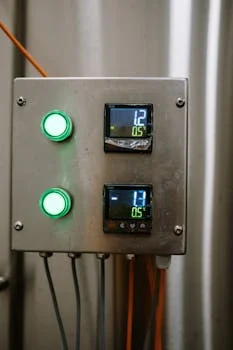
Chemical conditioning is the most significant OPEX factor after disposal. Most Brazilian systems utilize a PLC-controlled chemical dosing system for sludge conditioning to optimize polymer consumption. Dosing rates typically range from 2–5 kg/ton of dry solids for filter presses and 1–3 kg/ton for screw presses. In Brazil, polymer costs fluctuate between R$15 and R$30 per ton of treated sludge, making automated dosing essential for ROI.
Footprint and energy requirements are also critical engineering parameters. A filter press generally requires 0.1–0.3 m² per m³/h of throughput, while a centrifuge is more compact at 0.05–0.15 m²/m³/h. When designing for Brazilian facilities, engineers must account for the "grit" factor—high levels of sand and silt in municipal sewage that can cause premature wear on centrifuge scrolls and screw press screens.
| Industry Sector | Influent Solids (%) | Typical COD (mg/L) | Recommended Dosing (kg/ton) |
|---|---|---|---|
| Municipal | 2–5% | 400–800 | 2–4 |
| Food Processing | 5–10% | 5,000–10,000 | 3–5 |
| Textile | 1–3% | 1,000–3,000 | 2–5 |
| Pulp & Paper | 3–8% | 2,000–5,000 | 1–3 |
CONAMA 498/2020 Compliance: How Each Technology Meets Brazil’s Biosolid Standards
CONAMA Resolution 498/2020 mandates that biosolids intended for unrestricted agricultural use (Class A) must achieve a solids content greater than 30% and maintain fecal coliform levels below 1,000 MPN/g.Pathogen reduction is the second pillar of compliance. While dewatering reduces volume, it does not inherently eliminate pathogens. To reach Class A status, the dewatered cake often undergoes further treatment such as solar drying, composting, or alkaline stabilization (adding lime to raise pH > 12). Most Brazilian municipal WWTPs target Class B as a cost-effective middle ground, using screw presses to reach 18–20% solids and then applying lime for stabilization.
Heavy metal thresholds also dictate disposal pathways. Industrial sludge from metalworking or textile dyeing must meet strict limits for Lead (Pb), Cadmium (Cd), and Mercury (Hg) to be considered for land application. A WWTP in Rio de Janeiro recently upgraded to a filter press specifically to produce Class A biosolids for a local reforestation project, successfully reducing their landfill dependency by 60%.
Cost Comparison: CAPEX, OPEX, and ROI for Brazilian WWTPs
Operational expenditure (OPEX) is dominated by energy, chemicals, and labor. Energy costs in Brazil vary by state but generally fall between R$0.50 and R$1.50 per m³ of treated sludge. Labor requirements typically involve 1–2 operators per shift for mechanized systems. The reduction in transportation and landfill fees drives the ROI calculation. By moving from 5% solids (liquid sludge) to 30% solids (filter cake), a facility reduces the weight of material to be hauled by more than 80%.
A 50 m³/h municipal WWTP in Brazil can save upwards of R$800,000 per year in disposal costs by implementing mechanized dewatering. With a CAPEX of R$1.2M, the payback period is often less than 1.5 years.
| Cost Component | Filter Press (BRL) | Screw Press (BRL) | Centrifuge (BRL) |
|---|---|---|---|
| CAPEX (50 m³/h) | R$500k – R$2M | R$200k – R$800k | R$300k – R$1.5M |
| Energy (per m³) | R$0.50 – R$1.00 | R$0.20 – R$0.40 | R$0.80 – R$1.20 |
| Chemicals (per ton) | R$15 – R$30 | R$15 – R$25 | R$20 – R$35 |
| ROI (Years) | 1.5 – 2.5 | 2.0 – 3.5 | 2.0 – 3.0 |
Choosing the Right Sludge Dewatering Equipment for Your Brazilian WWTP
Selecting dewatering equipment for Brazilian WWTPs requires a multi-variable analysis of flow rates, available footprint, and pathogen reduction requirements.Before procurement, a pilot test is highly recommended, especially for industrial sludge. On-site trials typically cost between R$20,000 and R$50,000 for a two-week period but provide the only certain way to determine the exact polymer dosing and achievable solids content for a specific sludge type. A textile facility in Minas Gerais discovered during pilot testing that a filter press could reach 30% solids where a centrifuge struggled to hit 18% due to the specific nature of their dye-laden sludge.
Supplier Evaluation Checklist:
- Can the vendor provide a pilot unit for on-site testing?
- Does the equipment carry a CONAMA 498/2020 compliance guarantee