Wastewater treatment plant costs in North Carolina vary widely—from $1.5M for pump upgrades, such as Xylem’s 2017 McAlpine Creek contract, to $17.5M for municipal expansions like Roxboro’s 2023 upgrade. In 2025, budget $3–$8 per gallon of daily capacity for new plants, depending on technology, such as $5.20/gal for MBR versus $2.80/gal for conventional activated sludge. North Carolina’s $223M DEQ funding, allocated in Spring 2023, prioritizes aging infrastructure and PFAS compliance, with application deadlines opening August 2 annually. This guide helps match flow rate, treatment needs, and budget to the right system and funding pathway.
Why Wastewater Treatment Plant Costs in North Carolina Are Rising in 2025
North Carolina funded 770 water and wastewater projects between 2021 and 2023, totaling $1.6B, with 62% of that capital allocated to WWTP upgrades and expansions, according to NC DEQ data. This surge in spending is driven by aging infrastructure, tightening environmental regulations, and population growth. As of 2025, municipal engineers must account for specific cost drivers that were less prevalent five years ago.
PFAS contamination is the most significant regulatory cost driver. Meeting the NC DEQ’s anticipated 2025 compliance standards can add 15–25% to a facility’s capital costs due to the need for advanced treatment stages, such as granular activated carbon or RO systems for PFAS and TDS removal in NC. These technologies are no longer optional for many municipalities in the Cape Fear River basin and industrial corridors where "forever chemicals" have impacted local aquifers.
Demographic shifts are straining existing capacity. The Raleigh-Durham metro area has seen a 12% population increase since 2020, according to the Triangle J Council of Governments. This growth necessitates a 30% increase in hydraulic capacity for new plants to ensure a 20-year operational lifespan. Coastal resilience has become a mandatory budget item. Following the catastrophic failures during Hurricane Florence in 2018, the NC DEQ 2022 report highlights that over $180M has been spent on FEMA-funded resilience upgrades, including elevated electrical controls and reinforced levee systems for plants in flood-prone Eastern NC counties.
Wastewater Treatment Plant Cost Ranges in North Carolina by Size and Technology
Capital expenditure for North Carolina WWTPs is currently benchmarked between $2.80 and $5.20 per gallon of daily capacity, depending on the chosen secondary treatment process and effluent quality requirements. These figures represent "all-in" construction costs, including site preparation, engineering, and equipment installation, adjusted for current North Carolina labor and material indices.
| Treatment Technology | 0.1–1 MGD (Cost/Gal) | 1–5 MGD (Cost/Gal) | 5–10 MGD (Cost/Gal) | 10+ MGD (Cost/Gal) |
|---|---|---|---|---|
| Conventional Activated Sludge | $4.10 | $2.80 | $2.45 | $2.10 |
| Membrane Bioreactor (MBR) | $7.20 | $5.20 | $4.80 | $4.30 |
| Dissolved Air Flotation (DAF) | $3.50 | $2.60 | $2.20 | $1.90 |
| Sequencing Batch Reactor (SBR) | $4.50 | $3.10 | $2.75 | $2.40 |
| Lagoon Systems (Aerated) | $2.10 | $1.40 | N/A | N/A |
A 2 MGD MBR system for North Carolina’s PFAS compliance in a high-growth area like Charlotte typically costs $10.4M ($5.20/gal). In contrast, a conventional activated sludge plant of the same capacity costs approximately $5.6M ($2.80/gal). While the MBR system carries a higher upfront cost, it requires 60% less physical footprint, a critical factor in urban North Carolina where land prices have appreciated by 18% since 2022.
Engineering specifications vary by region. Coastal plants in Wilmington or Morehead City often incur a 10–15% cost premium due to the requirement for 316 stainless steel components and corrosion-resistant coatings to withstand salt-air environments, as outlined in the NC DEQ 2023 technical guidelines. These regional adjustments are essential for accurate municipal WWTP budgeting.
Real-World Cost Examples: North Carolina WWTP Projects (2017–2025)
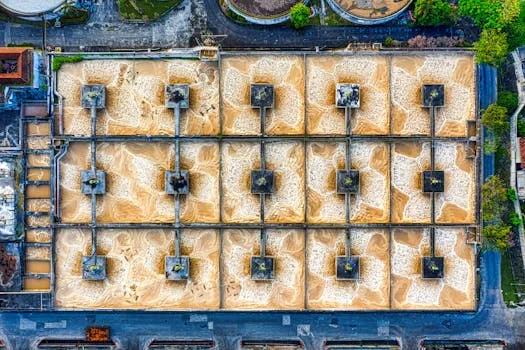
The 2023 Roxboro expansion, a major municipal upgrade in North Carolina, demonstrates that secondary treatment upgrades now average $17.5 million for mid-sized facilities. The Roxboro project, executed by Haren Construction, utilized an A/O biological contact oxidation process combined with advanced sedimentation to handle increased industrial loading while maintaining strict nitrogen limits.
Smaller-scale infrastructure improvements provide a different cost perspective. In 2017, the McAlpine Creek WWTP invested $1.5M specifically for the replacement of aging influent pumps. By installing Xylem Flygt NP-3400 submersible pumps, the facility achieved a 20% reduction in kWh per gallon treated. This type of targeted upgrade is a common strategy for North Carolina managers looking to defer full plant replacements while improving wastewater infrastructure efficiency.
In 2023, the Ahoskie WWTP in Hertford County secured $4.16M in NC DEQ funding for tertiary treatment upgrades. This project targeted stringent removal benchmarks: 95% Total Suspended Solids (TSS) and 90% Biological Oxygen Demand (BOD) reduction. Similarly, the Pineville WWTP utilized a $1.2M budget to install a DAF system for industrial and municipal FOG removal. This installation successfully reduced influent Fats, Oils, and Grease (FOG) from 300 mg/L to less than 10 mg/L, protecting downstream biological processes. These localized examples reflect Charlotte Water’s broader $1.5B 10-year capital plan (2023–2033), which allocates 40% of its total budget to WWTP capacity and compliance upgrades.
North Carolina Funding for Wastewater Treatment Plants: Deadlines, Eligibility, and How to Apply
The North Carolina Department of Environmental Quality (NC DEQ) allocated $238 million for the Spring 2025 funding round, targeting municipalities struggling with aging systems and emerging contaminants. Eligibility is broad, but the State Water Infrastructure Authority prioritizes municipalities, counties, and regional authorities with populations under 50,000. Hertford County’s success in securing $350K for planning in 2023 followed by a $4.16M construction grant in 2024 for the Ahoskie facility exemplifies this.
| Funding Source | Max Award (Construction) | Match Requirement | Key Deadline |
|---|---|---|---|
| NC DEQ State Revolving Fund | $30M per applicant | 0% - 20% (based on LGU indicators) | Oct 2, 2024 |
| EPA Clean Water SRF | Varies by federal allocation | 20% State Match | Rolling/Annual |
| USDA Rural Development | Based on population/need | Varies (Grants/Loans) | Ongoing |
| NC DEQ Planning Grants | $400,000 | 5% - 25% | Oct 2, 2024 |
The application window for the Fall 2024/Spring 2025 round opens on August 2 and closes on October 2 at 5:00 p.m. Virtual training sessions are typically held in early August to guide procurement managers through the required documentation. Applicants must provide a Preliminary Engineering Report (PER), an Environmental Assessment (EA), and certified financial statements proving the long-term viability of the utility. Projects that demonstrate significant energy consumption or nutrient loading reduction receive higher priority scores during the review process.
Choosing the Right Wastewater Treatment Technology for Your Budget and Needs
Choosing treatment technology in North Carolina requires balancing the smaller footprint of MBR systems against the lower initial capital requirements of conventional activated sludge. For municipalities in the Research Triangle or Charlotte-Mecklenburg areas, where land acquisition costs can exceed $100,000 per acre, the higher CapEx of MBR systems for North Carolina’s PFAS compliance is often offset by the reduction in required land area.
| Technology | CapEx | OpEx (20-yr) | Footprint | NC DEQ Compliance Strength |
|---|---|---|---|---|
| MBR | High | Medium-Low | Minimal | Superior (PFAS/Nutrients) |
| DAF | Medium | Medium | Small | Excellent (FOG/Industrial) |
| Conventional | Low | High | Large | Standard (BOD/TSS) |
| SBR | Medium | Medium | Moderate | Good (Variable Flows) |
Operational costs are a critical secondary consideration. According to a 2023 lifecycle analysis by Xylem, MBR systems can reduce long-term O&M costs by 25% over 20 years due to automated controls and reduced sludge handling requirements. However, coastal plants in regions like Wilmington must also budget for an additional 5–8% in hurricane-proofing costs, including redundant power systems and high-wind-rated enclosures. If a facility is located near industrial discharge points, the NC DEQ’s 2025 PFAS limit of 70 ppt for PFOA/PFOS may necessitate the integration of RO systems for PFAS and TDS removal in NC as a tertiary polishing step.
ROI Calculator: How to Justify Your Wastewater Treatment Plant Investment
Energy-efficient pump replacements at facilities like McAlpine Creek demonstrate that a $1.5 million investment can yield a 20% reduction in annual kWh consumption. For a 10 MGD plant, this translates to hundreds of thousands of dollars in annual savings. When presenting budgets to city councils or procurement boards, engineers should utilize a 20-year lifecycle cost analysis rather than focusing solely on upfront procurement.
| Investment Factor (1 MGD Example) | Conventional System | Advanced MBR System |
|---|