Why Fort Worth’s Wastewater Costs Are Unique: Local Factors That Drive Budgets
Fort Worth's wastewater treatment plant costs in 2025 are shaped by a confluence of unique local factors, from rapid population expansion and stringent state regulations to the region's specific geological characteristics. Understanding these drivers is critical for accurate budgeting and effective procurement.
Tarrant County's ongoing population surge necessitates scalable wastewater solutions. The Village Creek Water Reclamation Facility (VCWRF), for instance, serves approximately 1.3 million residents and operates at a 166 MGD capacity. Expansion and upgrades to such large-scale municipal facilities, like the recent $59M investment approved by the Texas Water Development Board (TWDB), directly influence the cost per MGD. For smaller industrial or commercial projects, the total flow rate remains a primary cost determinant, impacting everything from pipe sizing to treatment unit capacity.
The Texas Commission on Environmental Quality (TCEQ) Chapter 317 standards impose strict effluent limitations, particularly for industrial dischargers. While municipal plants typically aim for limits around 10 mg/L BOD and TSS, industries in sectors like food processing or chemical manufacturing face much tighter regulations, often requiring removal efficiencies upwards of 99%. Fort Worth’s local ordinances may also introduce specific parameters or monitoring frequencies not covered by statewide TCEQ rules, adding complexity and cost to permitting and operations.
Fort Worth's regional approach to wastewater management, exemplified by the VCWRF's wholesale customer model, offers economies of scale. However, the inherent cost of land in a growing metropolitan area, coupled with local soil conditions—predominantly heavy clay—significantly influences civil engineering and construction expenses. These factors can increase the cost of underground infrastructure by 15% or more compared to areas with more stable soil, impacting the feasibility and budget for underground treatment systems versus above-grade facilities.
| Factor | Impact on Cost | Fort Worth Specifics |
|---|---|---|
| Population Growth & Flow Rate | Higher flow = higher capital and O&M costs | 1.3M+ served by VCWRF, demanding scalable solutions |
| TCEQ Chapter 317 Standards | Stricter limits = more advanced/costly technology | Higher pretreatment requirements for industrial sectors |
| Village Creek Water Reclamation Facility (VCWRF) | Economies of scale for wholesale customers | 166 MGD capacity, $59M recent TWDB upgrade |
| Soil Conditions (Clay) & Land Costs | Increased civil engineering for foundations/underground work | Higher excavation costs, potential for higher land acquisition prices |
Fort Worth Wastewater Treatment Plant Costs 2025: Breakdown by Size and Technology
Estimating the capital investment for a wastewater treatment plant in Fort Worth requires a detailed understanding of both the required treatment capacity (flow rate) and the chosen technology. Costs can range dramatically, from compact industrial units to expansive municipal upgrades.
For municipal plants, the cost per MGD typically falls between $3M–$5M for conventional activated sludge (CAS) systems. However, for advanced treatment, such as Membrane Bioreactor (MBR) systems, which offer superior effluent quality and a smaller footprint, costs can range from $4M–$7M per MGD. The $59M TWDB-funded upgrade to Fort Worth's VCWRF, serving 166 MGD, provides a benchmark for large-scale municipal projects, indicating a substantial investment in maintaining and enhancing regional capacity.
Industrial plants present a broader cost spectrum. Smaller facilities, typically in the 0.1–1 MGD range, often utilize Dissolved Air Flotation (DAF) or chemical treatment systems, with estimated costs between $1.2M–$3M. For higher-demand industrial applications requiring advanced purification, such as semiconductor manufacturing or pharmaceuticals, MBR or Reverse Osmosis (RO) systems for 5–10 MGD can range from $5M–$15M. These higher costs reflect the complexity and stringent removal efficiencies demanded by these industries.
The choice between underground and above-grade construction also significantly impacts the budget. Underground systems, such as Fort Worth’s most cost-effective underground wastewater solution like the WSZ series, can reduce land acquisition costs by up to 30% but add $100–$200 per square foot for excavation. Given Fort Worth’s prevalent clay soil, this excavation cost can increase by an additional 15%, making careful site assessment crucial. For example, a 0.5 MGD hotel wastewater plant utilizing an underground WSZ series system in Fort Worth cost approximately $1.8M in 2024, with a breakdown of 40% for equipment, 30% for civil work, 20% for permitting, and 10% for contingency.
| Plant Type | Capacity (MGD) | Technology | Estimated Capital Cost (USD) | Cost per MGD (USD) |
|---|---|---|---|---|
| Municipal | 0.1 - 1 | Conventional Activated Sludge (CAS) | $300,000 - $5,000,000 | $3M - $5M |
| Municipal | 0.1 - 1 | MBR Membrane Bioreactor Wastewater Treatment System | $400,000 - $7,000,000 | $4M - $7M |
| Industrial (e.g., Food Processing) | 0.1 - 1 | DAF / Chemical Treatment | $1,200,000 - $3,000,000 | $1.2M - $3M |
| Industrial (e.g., Semiconductor) | 5 - 10 | MBR / RO | $5,000,000 - $15,000,000 | $1M - $3M |
| Underground System (Example) | 0.5 | WSZ Series Integrated | $1,800,000 | $3.6M |
For Fort Worth's high-efficiency TCEQ compliance needs, MBR systems offer advanced treatment. For more cost-sensitive underground installations, consider Fort Worth’s most cost-effective underground wastewater solution.
Engineering Specs That Determine Your Fort Worth Plant’s Cost
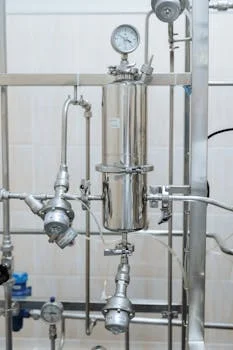
Beyond overall capacity, specific engineering parameters dictate the complexity, efficiency, and ultimately, the cost of a wastewater treatment plant in Fort Worth. These technical specifications directly influence the required equipment, operational intensity, and compliance capabilities.
TCEQ effluent limits are a primary driver of technology selection. For municipal plants, removal efficiencies typically target 90% BOD and 95% TSS. However, industrial facilities often require much higher standards, with some sectors needing 99% or more removal of specific contaminants. MBR systems, for example, can achieve over 99.9% TSS removal, significantly exceeding the 95% typical for CAS, making them essential for stringent discharge permits. This higher performance comes with a higher capital investment but can reduce downstream treatment or costly compliance issues.
Footprint is another critical consideration, especially in urban Fort Worth where land is at a premium. MBR systems generally require up to 60% less space than conventional activated sludge plants. For a 0.5 MGD plant, this could mean an MBR occupying around 1,200 sq. ft. compared to 3,000 sq. ft. for a CAS system. This space saving can translate into significant land acquisition or development cost reductions.
Energy consumption is a major operational expense. MBR systems typically consume 0.8–1.2 kWh/m³, while CAS systems use 0.4–0.6 kWh/m³. For a 1 MGD plant operating 365 days a year, the annual energy cost difference at Fort Worth’s average rate of $0.12/kWh could be tens of thousands of dollars, a factor that impacts the total cost of ownership and ROI.
Sludge handling is a substantial, often underestimated, cost. Fort Worth's landfill tipping fees, around $50/ton, create a strong incentive for efficient sludge dewatering. Comparing equipment like a plate frame filter press, costing approximately $80K for a 1 MGD plant, versus a belt press at $120K, highlights the capital expenditure trade-offs. The choice impacts not only initial cost but also dewatering efficiency and subsequent disposal volumes and costs.
| Specification | Typical Range/Value | Cost Impact | Fort Worth Considerations |
|---|---|---|---|
| BOD/TSS Removal Efficiency | Municipal: 90-95% Industrial: 99%+ |
Higher efficiency = more advanced, costly technology (e.g., MBR) | TCEQ Chapter 317 for industrial applications |
| Footprint | MBR: 60% smaller than CAS | Reduced land acquisition/development costs | Critical for urban sites in Fort Worth |
| Energy Consumption | MBR: 0.8-1.2 kWh/m³ CAS: 0.4-0.6 kWh/m³ |
Higher operational cost for MBR | Fort Worth electricity rates ($0.12/kWh) amplify differences |
| Sludge Dewatering | Plate Press: $80K (1 MGD) Belt Press: $120K (1 MGD) |
Capital cost vs. dewatering efficiency | Fort Worth landfill tipping fees ($50/ton) incentivize high solids capture |
To achieve high removal efficiencies for TCEQ compliance, MBR systems for Fort Worth’s high-efficiency TCEQ compliance are often the preferred choice. For managing sludge volumes and reducing disposal costs, consider sludge dewatering to reduce Fort Worth’s $50/ton landfill fees.
Local Compliance and Permitting: What Fort Worth Plants Must Include
Navigating the regulatory landscape in Fort Worth is paramount to avoiding costly delays and fines. Compliance with TCEQ standards, local ordinances, and effective permitting strategies are integral components of any wastewater treatment project budget.
TCEQ Chapter 317 establishes stringent pretreatment standards for industrial dischargers. In Fort Worth, these requirements often include specific limits for heavy metals, such as copper (e.g., 1.3 mg/L) and zinc (e.g., 2.0 mg/L), in addition to biochemical oxygen demand (BOD) and total suspended solids (TSS). Exceeding these limits can result in significant penalties. The Village Creek Water Reclamation Facility may also impose its own pretreatment requirements for industrial users discharging into its system, potentially mandating daily sampling and reporting for facilities above a certain flow rate, adding an annual cost of $20K–$50K.
Fort Worth’s stormwater management ordinance is another critical consideration. Facilities must incorporate robust spill containment measures to prevent pollutants from entering local waterways. These containment systems can add an estimated $50K–$150K to the overall civil engineering and construction costs, depending on the facility's size and the nature of the chemicals handled.
Securing the necessary permits can be a lengthy process. For municipal plants, the TCEQ permitting timeline typically ranges from 6 to 12 months. Industrial facilities, due to more complex pretreatment requirements and potential environmental impact assessments, may face longer timelines of 12 to 18 months. Partnering with experienced local engineering firms or equipment suppliers who are familiar with Fort Worth’s specific permitting nuances can help streamline this process.
Financial assistance is available to mitigate capital costs. The TWDB's Clean Water State Revolving Fund (CWSRF) offers attractive financing options, including 30-year loans at interest rates as low as 2% for eligible municipal wastewater projects. The $59M awarded to Fort Worth for VCWRF improvements exemplifies the scale of funding available for essential infrastructure upgrades.
Fort Worth Wastewater Treatment Suppliers: How to Choose the Right Partner
Selecting the right wastewater treatment equipment supplier in Fort Worth is a strategic decision that impacts project timelines, compliance, and long-term operational costs. Both local expertise and national capabilities should be weighed.
Local Fort Worth-based suppliers often provide advantages in understanding regional permitting processes and can offer more responsive on-site support for installation and commissioning. They may also have a better grasp of local soil conditions and civil engineering requirements. However, for very large-scale projects exceeding 10 MGD, national suppliers might offer greater manufacturing capacity and a broader range of specialized technologies.
A structured decision framework can guide the selection process. Key criteria include:
- Cost Competitiveness: Evaluating not just the initial equipment price but also long-term operational and maintenance costs.
- Lead Time: Assessing the supplier's ability to deliver equipment within project timelines, considering Fort Worth’s specific logistical factors.
- Local Compliance Support: Verifying the supplier's understanding of TCEQ Chapter 317 and Fort Worth’s specific environmental regulations.
- After-Sales Service & Training: Ensuring availability of technical support, spare parts, and operator training.
- Scalability & Future-Proofing: Selecting a partner whose solutions can adapt to potential future increases in flow rate or stricter regulatory requirements.
For instance, a Fort Worth food processing company recently selected a local supplier for a 0.3 MGD DAF system, realizing savings of approximately $200K in permitting assistance and reducing the equipment lead time by six months compared to a national bid.
When evaluating potential suppliers, be wary of those lacking TCEQ-certified engineers or verifiable Fort Worth project references. Crucial questions to ask include: "Can you provide a TCEQ-compliant process diagram tailored for Fort Worth’s industrial discharge standards?", "What is your estimated lead time for equipment delivery considering Fort Worth's soil conditions and permitting requirements?", and "Do you offer comprehensive on-site training for our operational staff?"
| Evaluation Criterion | Key Considerations for Fort Worth | Example of Red Flag |
|---|---|---|
| Cost | Initial CAPEX, O&M, lifecycle costs, financing options (TWDB) | Lowest upfront price without considering long-term efficiency |
| Lead Time & Local Support | Permitting support, on-site service, proximity to Fort Worth | Supplier unfamiliar with local permitting timelines or soil issues |
| Compliance Expertise | TCEQ Chapter 317, Fort Worth ordinances, discharge permits | Lack of TCEQ-certified engineers on staff |
| Technology & Scalability | Suitability for specific industrial waste streams, future growth potential | Offering a one-size-fits-all solution without customization |
| References & Reputation | Fort Worth project history, client testimonials | No verifiable local project experience or poor reviews |
For industrial pretreatment needs in Fort Worth, consider DAF systems for Fort Worth food processing and industrial pretreatment.
ROI Calculator: How to Justify Your Fort Worth Wastewater Plant Investment
Demonstrating the financial viability of a wastewater treatment plant investment is crucial for securing budget approval. A well-structured Return on Investment (ROI) calculation, incorporating Fort Worth-specific variables, can effectively justify capital expenditures.
The fundamental formula for payback period is: (Capital Cost + Annual O&M) / (Annual Savings + Avoidance Costs). This equation highlights the interplay between initial investment, ongoing expenses, and the financial benefits derived from the treatment system.
Fort Worth projects can realize significant financial benefits through various avenues. Water reuse initiatives can generate credits, often valued at $0.50 per 1,000 gallons. Avoiding TCEQ violations is paramount, as penalties can range from $10K to $50K per infraction. industrial dischargers can reduce their wastewater utility bills, which in Fort Worth can be approximately $2.50 per 1,000 gallons, by implementing effective pretreatment and reducing pollutant loads.
For example, a 1 MGD MBR system in Fort Worth might represent a capital investment of $5M. However, if this system enables water reuse and significantly reduces sewer discharge fees, it could generate annual savings of $800K. In this scenario, the payback period would be approximately 6.25 years ($5M / $800K), a compelling figure for long-term budget planning.
To facilitate this analysis, a downloadable spreadsheet template is available. This tool is pre-loaded with Fort Worth's current sewer rates, estimated TCEQ fine schedules, and local energy costs, allowing for a customized ROI calculation tailored to your specific project parameters.
Download the Fort Worth Wastewater Treatment ROI Calculator Spreadsheet Here.
Frequently Asked Questions
What is the average cost per gallon for a wastewater treatment plant in Fort Worth?
The cost per gallon varies significantly based on plant size and technology. For municipal plants in the 1–10 MGD range, expect costs between $0.05–$0.20 per gallon of capacity. For industrial plants, particularly smaller units (0.1–1 MGD) with specialized treatment needs, costs can range from $0.30–$1.00 per gallon, heavily influenced by compliance requirements.
How much does it cost to upgrade a Fort Worth wastewater plant to meet TCEQ 2025 standards?
Upgrading a 1 MGD wastewater plant to meet evolving TCEQ 2025 standards can cost between $1M–$5M, depending on the existing infrastructure and the specific upgrades required. For larger municipal facilities, the $59M upgrade to the Village Creek Water Reclamation Facility serves as a significant benchmark for comprehensive system enhancements.
Can industrial plants in Fort Worth discharge to Village Creek?
Yes, industrial plants can discharge treated wastewater to the Village Creek system, but only after rigorous pretreatment to meet TCEQ Chapter 317 limits and any specific requirements set by the City of Fort Worth. The associated costs for sampling, reporting, and advanced pretreatment can add $20K–$50K annually.
What are the most cost-effective wastewater treatment technologies for Fort Worth’s clay soil?
For Fort Worth’s clay soil conditions, underground integrated sewage treatment systems, such as the WSZ series, are often the most cost-effective as they minimize excavation compared to traditional above-grade CAS plants, potentially saving up to 30% on civil costs. Containerized MBR units are also a strong option, offering a compact footprint and reduced on-site civil work. Lagoon systems are generally less suitable due to potential soil instability and larger land requirements.
How long does it take to get a TCEQ permit for a new wastewater plant in Fort Worth?
The TCEQ permitting timeline for a new wastewater plant in Fort Worth typically ranges from 6–12 months for standard municipal facilities. Industrial plants, due to their more complex pretreatment and discharge considerations, may require 12–18 months for permitting. Partnering with local suppliers who can provide pre-approved process diagrams and regulatory expertise can potentially reduce these timelines by up to 30%.