Why Houston’s Wastewater Treatment Costs Are Rising: 3 Key Drivers
In Houston, municipal wastewater treatment costs $1.90 per 1,000 gallons (City of Houston 2020 data), but industrial facilities with high-strength waste (COD > 1,000 mg/L) face surcharges up to 300% of base rates. For example, a petrochemical plant discharging 1 MGD could pay $693,500/year in sewer fees—while an on-site MBR system (capital cost: $2.1M) would break even in 6.5 years and cut long-term costs by 40%. This guide breaks down Houston’s wastewater treatment costs by influent quality, technology, and permit requirements, with a downloadable ROI calculator for on-site vs. municipal treatment decisions.
Houston’s industrial and municipal stakeholders are currently navigating a period of unprecedented capital expenditure in water infrastructure. The primary driver is the city’s aging infrastructure; the East Water Purification Plant, a 70-year-old cornerstone of the region’s water supply, requires more than $4 billion for a complete replacement to avoid catastrophic failure (Houston Public Works, 2025). For industrial facility managers, this translates to rising utility rates as the city seeks to fund these massive upgrades.
Simultaneously, Houston is under a $9 billion federal consent decree mandated by the EPA and the State of Texas. This legal mandate requires the city to upgrade 39 wastewater treatment plants and address over 7,000 sanitary sewer overflows by 2036 (Houston Public Media). These systemic costs are being passed down to industrial users through more aggressive surcharge structures. For instance, the 2020 Cost of Service Study indicates that high-strength waste can trigger surcharges as high as $5.70 per 1,000 gallons for COD levels exceeding 1,000 mg/L.
The Port of Houston’s petrochemical expansion further complicates the landscape. As production increases, so does the volume of high-strength wastewater. Many facilities are finding that the "status quo" of municipal discharge is no longer financially viable. A nearby refinery recently demonstrated this shift, saving $1.2 million annually by transitioning from municipal sewer reliance to an integrated on-site DAF and MBR system, which allowed them to bypass city surcharges and meet stringent discharge limits independently.
Houston Wastewater Treatment Costs: Municipal Rates vs. On-Site System Costs
Understanding the wastewater treatment plant cost in Houston requires a side-by-side analysis of municipal utility fees versus the capital and operational expenses (CAPEX/OPEX) of on-site infrastructure. For many developers, the decision hinges on the specific constituents of their waste stream, as Houston Public Works applies tiered surcharges for "extra-strength" wastewater.
Current municipal rates typically range from $1.90 to $2.44 per 1,000 gallons for standard domestic-strength sewage. However, industrial facilities are penalized for waste that exceeds base levels: BOD (Biological Oxygen Demand) > 300 mg/L, TSS (Total Suspended Solids) > 350 mg/L, or FOG (Fats, Oils, and Grease) > 100 mg/L. A food processing plant in Houston discharging 50,000 GPD with a COD of 2,500 mg/L can expect to pay over $120,000 per year in surcharges alone, on top of base volumetric rates.
On-site treatment systems represent a significant upfront investment but offer lower long-term unit costs. For a mid-sized facility (50–500 m³/day), compact MBR systems for Houston’s space-constrained industrial sites generally range from $1.2M to $3.5M in capital costs. Operational costs for these systems typically fall between $0.30 and $0.80 per cubic meter, depending on energy prices and chemical requirements. For facilities with high oil or solids content, Houston’s top-rated DAF system for high-strength industrial wastewater can be installed for $800K to $2M, significantly reducing the surcharge burden before the water even reaches the municipal tie-in.
| Cost Factor | Municipal Sewer (Houston) | On-Site Treatment (MBR/DAF) |
|---|---|---|
| Base Volumetric Rate | $1.90 – $2.44 / 1,000 gal | $0.00 (Utility-free) |
| Surcharges (High Strength) | $2.85 – $5.70 / 1,000 gal | N/A |
| Capital Investment (CAPEX) | $0 (Connection fees only) | $1.2M – $4.5M (Typical) |
| Operating Expense (OPEX) | Included in rate | $0.30 – $0.90 / m³ |
| Compliance Risk | Low (City manages) | Moderate (Facility manages) |
For facilities with flows exceeding 100 m³/day, the break-even point for an on-site system typically occurs within 5 to 8 years. This ROI is accelerated in sectors like food processing or petrochemicals where high-strength surcharges are most punitive.
How Influent Quality and Permit Limits Drive Houston Wastewater Treatment Costs
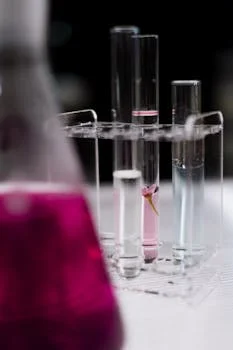
The engineering complexity and subsequent cost of a wastewater plant in Houston are dictated by two primary variables: what is in the water (influent quality) and what the law says must be removed (permit limits). The Texas Commission on Environmental Quality (TCEQ) sets the standard for industrial discharges, which often requires BOD < 30 mg/L, TSS < 30 mg/L, and ammonia < 3 mg/L for facilities discharging into local waterways (TCEQ 2024 data).
Influent quality varies drastically by industry. Petrochemical facilities often deal with COD levels between 1,500 and 5,000 mg/L, while food processing plants can see levels spike to 10,000 mg/L. In contrast, standard municipal influent rarely exceeds 500 mg/L COD. Treating high-COD waste requires advanced pretreatment, such as Dissolved Air Flotation (DAF) or anaerobic stages, which adds approximately $0.50–$1.20/m³ to the total O&M budget. When compared to how Kentucky’s industrial wastewater permit requirements compare to Houston’s, Texas facilities often face stricter nutrient limits due to the sensitive ecosystems of the Gulf Coast and local bayous.
| Industry Segment | Avg. Influent COD (mg/L) | TSS (mg/L) | Required Technology |
|---|---|---|---|
| Petrochemical | 1,500 – 5,000 | 200 – 800 | DAF + Biological (MBR) |
| Food Processing | 3,000 – 10,000 | 500 – 2,000 | Anaerobic + MBR |
| Metal Plating | 500 – 2,000 | 300 – 1,500 | Chemical PPT + DAF |
| Municipal/Residential | 250 – 500 | 150 – 400 | CAS or Package Plant |
Compliance is not just a regulatory hurdle; it is a financial strategy. A Houston metal plating facility recently integrated a DAF and biological system to reduce their influent COD from 4,200 mg/L to 250 mg/L. By meeting the city's "domestic strength" standards before discharge, they reduced their monthly surcharge bill by 70%, effectively funding the system’s O&M through utility savings. Detailed DAF system specs and costs for Houston’s food processing industry show that these pretreatment steps are often the most cost-effective way to manage high-load waste.
Houston Wastewater Treatment Plant Cost Breakdown by Technology
Selecting the right technology is the most critical factor in managing Houston industrial wastewater treatment costs. Each technology offers a different balance of footprint, CAPEX, and OPEX. In Houston’s high-density industrial zones, footprint often carries a premium, making compact solutions more attractive despite higher initial costs.
- Conventional Activated Sludge (CAS): This remains the standard for large-scale municipal applications. It features a capital cost of $1.5M–$4M for 50–500 m³/day and O&M costs of $0.80–$1.50/m³. While reliable, CAS requires a large footprint and is less effective at handling the rapid load swings common in industrial settings.
- Membrane Bioreactors (MBR): MBR systems represent the gold standard for high-performance treatment. With a 60% smaller footprint than CAS, they are ideal for space-constrained Houston sites. Capital costs range from $1.2M to $3.5M, with O&M costs between $0.50 and $1.00/m³.
- Dissolved Air Flotation (DAF): Primarily used for pretreatment, DAF systems excel at removing FOG and TSS. They are cost-effective, with capital requirements of $300K–$1.2M and low O&M costs ($0.20–$0.60/m³).
- Sequencing Batch Reactors (SBR): These systems are highly flexible and common in the food processing sector. They cost between $1M and $2.5M for mid-sized flows, offering excellent nutrient removal in a single-tank design.
- Anaerobic Digestion: For high-COD streams (breweries, slaughterhouses), anaerobic systems offer the unique benefit of biogas recovery. While the CAPEX is high ($2M–$5M), the energy recovery can offset 30–50% of total facility energy costs.
| Technology | CAPEX (50-500 m³/d) | OPEX ($/m³) | Primary Benefit |
|---|---|---|---|
| CAS | $1.5M – $4.0M | $0.80 – $1.50 | Proven reliability |
| MBR | $1.2M – $3.5M | $0.50 – $1.00 | Small footprint; High effluent quality |
| DAF | $300K – $1.2M | $0.20 – $0.60 | 95%+ TSS/FOG removal |
| SBR | $1.0M – $2.5M | $0.40 – $0.90 | Operational flexibility |
| Anaerobic | $2.0M – $5.0M | $0.10 – $0.30 | Energy recovery from waste |
For residential or commercial developers in the Greater Houston area, a fully automated underground sewage treatment for Houston’s residential and commercial developments (WSZ Series) provides a low-profile, cost-effective alternative to expensive municipal extensions, especially in fast-growing suburbs where sewer capacity is limited.
Hidden Costs of Houston Wastewater Treatment: Permits, Surcharges, and Compliance
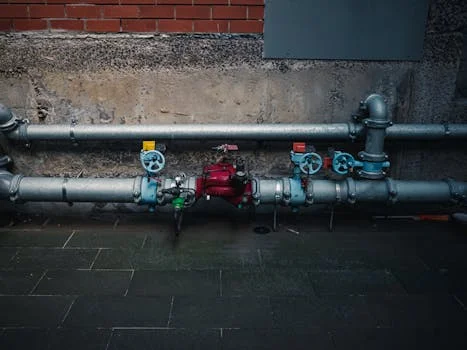
Budgeting for a wastewater project in Houston requires looking beyond the equipment and electricity. "Soft costs" and recurring compliance fees can add 20% to 40% to the total lifecycle cost of a system. Navigating the TCEQ industrial permit process, for instance, involves application fees ranging from $1,000 to $3,000, with annual fees thereafter of $500 to $5,000 based on the complexity of the discharge (2024 TCEQ fee schedule).
Sampling and laboratory analysis are another significant recurring expense. Most industrial permits require quarterly or even monthly sampling of effluent. With professional lab analysis costing between $200 and $500 per sample for parameters like TPH (Total Petroleum Hydrocarbons), heavy metals, and priority pollutants, a facility can easily spend $10,000 annually just on data validation.
The financial risk of non-compliance has also escalated. Under the current enforcement guidelines, facilities failing to meet discharge limits can face penalties of up to $25,000 per day (EPA 2024 enforcement guidelines). This is particularly relevant in Houston, where the $9 billion consent decree has put municipal and industrial discharges under heightened scrutiny. Many chemical plants have mitigated this risk by installing a Houston’s top-rated DAF system for high-strength industrial wastewater as a "safety net" to pre-treat waste before it reaches the municipal system, ensuring they never trigger high-strength surcharges ($2.85–$5.70/1,000 gal) or permit violations.
Municipal vs. On-Site Wastewater Treatment in Houston: ROI Calculator and Decision Framework
Deciding between paying municipal fees and investing in an on-site treatment plant is a complex financial maneuver. Facility managers must weigh immediate CAPEX against long-term operational stability. To assist in this process, we utilize a decision framework based on five key metrics: flow rate, waste strength (COD/TSS), available footprint, local permit limits, and projected growth.
A typical ROI calculation for a Houston-based food processing plant illustrates the potential savings. Consider a facility discharging 200 m³/day (approx. 53,000 GPD) with a COD of 4,500 mg/L.
- Municipal Path: Base fees + surcharges = ~$380,000/year.
- On-Site Path (MBR): $2.1M CAPEX + $80,000/year OPEX = ~$2.18M in Year 1.
- Annual Savings: $300,000.
- Break-even: 7.0 years.
| Decision Factor | Favor Municipal Sewer | Favor On-Site Treatment |
|---|---|---|
| Daily Flow Rate | < 50 m³/day | > 100 m³/day |
| Influent COD | < 500 mg/L | > 1,500 mg/L |
| Space Availability | Extremely Limited | Adequate for MBR/DAF |
| Growth Plans | Static volume | Expanding production |
| Financing | N/A | Access to TWDB/WIFIA loans |
Financing options in Texas can further improve the ROI. The Texas Water Development Board (TWDB) offers low-interest loans (3–5%) for water quality projects, while the EPA’s WIFIA program provides long-term, low-cost supplemental loans for regionally significant projects. Private leasing programs are also becoming a popular way for industrial facilities to upgrade equipment without a massive upfront capital outlay.
Frequently Asked Questions

What is the average cost to build a wastewater treatment plant in Houston?
Construction costs for municipal plants (5–50 MGD) typically range from $15M to $150M. For industrial on-site systems (50–500 m³/day), capital costs usually fall between $1.2M and $5M, depending on the technology selected and specific TCEQ permit requirements.
How much does Houston charge per 1,000 gallons for industrial wastewater?
The base rate is approximately $1.90 per 1,000 gallons. However, surcharges for high-strength waste (COD > 1,000 mg/L or TSS > 350 mg/L) can increase the total effective rate to $5.70 per 1,000 gallons or more.
What are the permit requirements for discharging wastewater in Houston?
TCEQ industrial permits generally require effluent to meet limits of BOD < 30 mg/L, TSS < 30 mg/L, and ammonia < 3 mg/L. Facilities must also conduct regular sampling (quarterly or monthly) and pay annual fees ranging from $500 to $5,000.
Can I reduce my Houston sewer fees by treating wastewater on-site?
Yes. Facilities with high-strength waste and flows exceeding 100 m³/day can often reduce their utility costs by 30–60% by installing on-site treatment systems like DAF or MBR to pre-treat waste to domestic-strength levels before discharge.
What funding options are available for Houston wastewater treatment projects?
Common funding sources include Texas Water Development Board (TWDB) loans, EPA WIFIA loans, and municipal grants for public-sector projects. Industrial facilities often utilize private equipment leasing or capital improvement loans with interest rates typically between 3% and 7%.