Industrial dust collection specifications set airflow, filter media, and stack targets so plants meet EPA, OSHA, and NFPA rules without oversizing fans. A pulse jet baghouse such as HydropureWater's typically holds particulate emissions below 10 mg/Nm³, with CFM from 2,000–60,000+ by duct diameter and dust load. Key parameters include transport velocity (3,500–4,500 FPM for heavy dust), polyester/cellulose or nanofiber media, and the OSHA PEL of 50 µg/m³ for respirable crystalline silica. This guide gives current engineering data, standards, and a selection framework for heavy-duty service.
Why Dust Collection System Specifications Matter: Compliance, Safety, and Efficiency
Dust collection specifications matter because they set CFM, duct velocity, filter media, and stack targets that determine EPA emission compliance, OSHA exposure control, and NFPA combustible-dust risk. Wrong airflow or media raises fines, downtime, and explosion exposure. Correct specs keep particulate often below 10 mg/Nm³ while holding silica exposure to the 50 µg/m³ PEL.
Non-compliance creates direct financial exposure. Earlier OSHA schedules listed serious penalties near $15,625 per violation; the 2025 penalty schedule sets a maximum of $16,550 per serious violation (OSHA, effective after January 15, 2025). Beyond fines, weak capture shortens equipment life, raises maintenance cost, and leaves combustible dust hazards that NFPA 652 addresses.
One metal fabrication plant cut equipment downtime about 30% after upgrading to a high-efficiency pulse jet baghouse averaging 4,000 FPM transport velocity. Less abrasive wear on bearings and less fugitive dust on motors drove the gain. Engineers and EHS managers must lock total airflow (CFM), filter media, duct diameter, and allowable static pressure drop before purchase.
Airflow Requirements: Calculating CFM and Duct Velocity for Your Application
Industrial dust collection systems size airflow from Q = V × A, where Q is CFM, V is FPM, and A is duct area in ft². Transport velocity tracks dust density and particle size. Heavy abrasive dusts such as metal shavings or foundry sand need 3,500–4,500 FPM to limit settling. Lighter materials such as wood flour or plastic pellets often convey at 2,500–3,500 FPM.
Duct diameter sets CFM at a fixed velocity. A 6-inch duct (0.196 ft²) at 4,000 FPM moves about 785 CFM; a 12-inch duct (0.785 ft²) moves 3,140 CFM. Oversized ducts waste fan energy; undersized ducts drop velocity and allow buildup. Capture velocity at the hood typically runs 100–500 FPM for passive hoods and 500–2,000 FPM for high-velocity close-capture hoods. Add dust load (g/m³) and a 10–20% margin on summed hood CFM for leakage and future pickup points.
| Duct Diameter (Inches) | Cross-sectional Area (ft²) | CFM at 3,500 FPM | CFM at 4,000 FPM | CFM at 4,500 FPM |
|---|---|---|---|---|
| 6 | 0.196 | 686 | 785 | 882 |
| 8 | 0.349 | 1,221 | 1,396 | 1,570 |
| 10 | 0.545 | 1,908 | 2,180 | 2,453 |
| 12 | 0.785 | 2,748 | 3,140 | 3,533 |
| 16 | 1.396 | 4,886 | 5,584 | 6,282 |
| 20 | 2.182 | 7,637 | 8,728 | 9,819 |
Filter Media and Efficiency: Matching Dust Properties to Collector Type
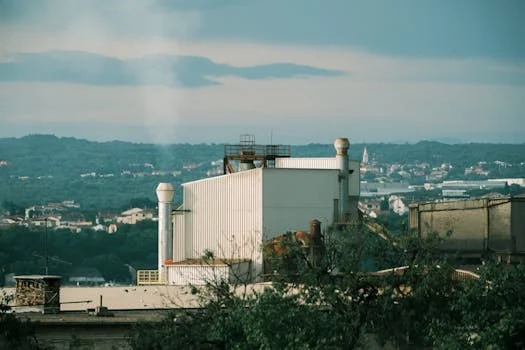
Filter media selection sets achievable stack particulate. Standard polyester/cellulose blends typically reach 99.9% efficiency on particles greater than 1 µm; nanofiber-coated media push that to 99.99% on finer fractions. Baghouses suit high-temperature service (up to 550°F with fiberglass or PTFE media), abrasive dusts, and high dust loads. Cartridge collectors fit fine dry dusts (typically <5 µm) and tight floor space because pleated packs raise media area per footprint.
Moisture behavior matters as much as efficiency. Standard polyester handles dry dust; PTFE membrane filters suit wet, sticky, or hygroscopic dusts that blind fabric. For combustible dusts, NFPA 652 calls for antistatic media (often carbon-impregnated) to dissipate charge. Pulse cleaning uses compressed air bursts (80–100 psi); cleaning frequency drives life: standard media often lasts 1–2 years, while premium nanofiber coats reach 3–5 years. Most plants we size for abrasive dust clean on differential pressure, not a timer. For high-temperature furnace duty, the Pulse Jet Baghouse Dust Collector pairs advanced media with PLC-controlled pulse cleaning.
| Parameter | Baghouse Collector | Cartridge Collector |
|---|---|---|
| Typical Dust Type | High temperature, abrasive, heavy, high dust load | Fine, dry, light, moderate dust load |
| Particle Size (µm) | >1 µm (can handle larger and finer with specific media) | <5 µm (optimized for sub-micron) |
| Max Temperature (Approx.) | Up to 550°F (with specialized media) | Up to 250°F (standard media) |
| Filter Area per Footprint | Moderate to High | Very High (compact design) |
| Moisture Resistance | Good (with PTFE/membrane coating) | Moderate (prone to blinding with wet dust) |
| Initial Pressure Drop | Lower | Higher |
| Filter Lifespan (Typical) | 1-5 years (media dependent) | 1-3 years (media dependent) |
| Cost per CFM | Generally lower for very high CFM | Generally higher for very high CFM |
Compliance Standards: EPA, OSHA, and NFPA Requirements for Industrial Dust Collection
Industrial dust collection systems sit inside layered rules for emissions, worker exposure, and fire/explosion risk. EPA sets NESHAP and NSPS limits; many industrial stacks still use below 10 mg/Nm³ as a practical high-efficiency filtration target. 40 CFR Part 60, Subpart Dc for small industrial-commercial-institutional steam generating units does not use that mg/Nm³ figure. Per § 60.43c, units that commenced construction, reconstruction, or modification after February 28, 2005, face a base PM limit of 13 ng/J (0.030 lb/MMBtu) heat input, with opacity and fuel-specific alternatives also listed (EPA eCFR).
OSHA enforces PELs for respiratory hazards. Respirable crystalline silica carries a PEL of 50 µg/m³ as an 8-hour TWA (29 CFR 1910.1053); general respirable dust sits at 15 mg/m³ under the air contaminants framework in 29 CFR 1910.1000. Compliance needs source capture, ventilation, and often PPE. NFPA 652, Standard on Fundamentals of Combustible Dust, requires a Dust Hazard Analysis (DHA) for grain, wood, reactive metals (aluminum, magnesium), pharmaceuticals, or plastics that can form explosive clouds. The DHA drives venting, isolation, and antistatic media choices. Plants that export or operate abroad may also need EN 13284-1 for emission measurement practice and ATEX rules for explosive atmospheres. Keep stack tests, CEMS records, and filter efficiency reports on file.
System Components: Engineering Specifications for Ductwork, Fans, and Controls

Duct material follows corrosivity and temperature. General industrial service uses 16–20 gauge galvanized steel for strength and cost. Corrosive chemical or mining dusts call for stainless steel (304 or 316L) to slow wall thinning. Keep runs short with few bends; each fitting adds static loss and burns fan energy.
Fan selection sets motive force for the whole system. Backward-curved centrifugal fans are standard because they deliver up to 20 in. w.g. static pressure and hold efficiency across a wide CFM band. A Variable Frequency Drive (VFD) on the motor tracks production demand and is the largest energy lever in most dust systems. Hoppers need at least a 60° slope for free-flowing dry dust; sticky food or chemical solids need vibrators or rotary valves to stop bridging. PLC controls should pulse on differential pressure, not timers, to extend bag life and flag blinding early. A 10,000 CFM system designed for 15 in. w.g. total static pressure sizes the motor to clear that resistance at rated volume.
| Component | Key Specification | Typical Range/Material | Purpose in System |
|---|---|---|---|
| Ductwork | Material & Gauge | Galvanized Steel (16-20 gauge); Stainless Steel (304/316L) for corrosive | Transport dust-laden air from source to collector |
| Fan (Blower) | Type & Static Pressure | Backward-curved centrifugal, up to 20 in. w.g. | Generate airflow (CFM) to capture and convey dust |
| Motor | Horsepower & Control | TEFC, NEMA Premium Efficiency, VFD-compatible | Power the fan, often with VFD for energy savings |
| Hopper | Slope & Discharge | Min. 60° slope; Rotary valve/Double-dump gate | Collect and discharge captured dust |
| Control Panel | Logic & Monitoring | PLC-based, NEMA 4/4X enclosure, DP sensors | Automate cleaning, monitor performance, safety interlocks |
| Filter Cleaning System | Type & Pressure | Pulse-jet (80-100 psi compressed air) | Dislodge dust from filter media, maintain airflow |
Cost and ROI: Budgeting for Dust Collection Systems in 2025
Capital and operating cost both track CFM, dust type, and filtration grade. Portable units from 2,000–10,000 CFM typically run $5,000–$50,000. Stationary systems from 20,000–60,000+ CFM, common in power plants and heavy manufacturing, range from $50,000 to over $500,000 before installation. Those figures cover the collector, fan, motor, ductwork, and controls.
Operating cost is dominated by fan energy and filter replacement. Energy typically runs $0.50–$2.00 per CFM per year; filter replacement averages $1,000–$5,000 annually by media and dust load. A VFD on the fan motor can cut fan power 30–50% during low-demand shifts. Cleaner air also extends equipment life; large plants commonly book $10,000/year or more in avoided downtime. A $100,000 system that returns $30,000/year in energy and maintenance savings pays back in roughly 3.3 years. Where dust is hot, sticky, or explosive, a wet scrubber may fit better even at higher operating cost; for combined particulate and SO₂ removal, see the SO₂ scrubber system specifications guide. For integrated SO₂ and particulate removal at power plants, the flue gas desulfurization scrubber covers capacity and technical data. To get tailored pricing for a specific CFM, dust type, and stack limit, request a free quote from our engineering team.
| System Type | Typical Capital Cost Range (2025) | Annual Operating Cost Range (Energy & Filters) | Best Suited For |
|---|---|---|---|
| Cyclone Collector | $10,000 - $100,000 | $0.20 - $1.00 per CFM/year (low filter cost) | Large, coarse particles; high dust loads (often pre-filter) |
| Cartridge Collector | $20,000 - $250,000 | $0.50 - $1.50 per CFM/year | Fine, dry dusts; compact footprint; moderate dust loads |
| Pulse Jet Baghouse | $50,000 - $500,000+ | $0.75 - $2.00 per CFM/year | High temperature, abrasive, heavy dusts; high efficiency required |
| Wet Scrubber | $70,000 - $600,000+ | $1.00 - $2.50 per CFM/year (water, sludge, energy) | Hot, moist, sticky, or explosive dusts; combined dust & gas treatment (e.g., SO₂ scrubber specifications for combined dust and gas treatment) |
Who this is for: plant engineers and procurement managers sizing dry collectors for abrasive, high-load, or silica-bearing dust. Who should look elsewhere: teams that only need wet gas scrubbing with no particulate capture duty. Next step: share CFM, dust type, and stack limits through a project inquiry for a sized package.
Frequently Asked Questions
What is the typical lifespan of an industrial dust collector?
A well-maintained industrial dust collector runs 15 to 25 years for the main housing and structural steel. Wear parts need scheduled replacement: filters, diaphragms, and solenoid valves typically cycle every 1–5 years by dust type and cleaning frequency. Routine inspections and manufacturer service intervals separate units that hit 25 years from early failures.
How do I calculate the correct CFM for my dust collection system?
Start with capture velocity at each dust source: 100–500 FPM for passive hoods, 500–2,000 FPM for high-velocity close-capture hoods. Multiply velocity by hood opening area to get CFM per pickup, sum all pickups, and add a 10–20% safety factor for leakage and expansion. Then size ducts to hold transport velocity for your dust: 3,500–4,500 FPM for heavy or abrasive dust, 2,500–3,500 FPM for lighter material.
What are the main considerations for combustible dust compliance?
NFPA 652 requires a Dust Hazard Analysis (DHA) that maps ignition scenarios across the process. Mitigation typically combines explosion protection (vents or suppression), isolation (rotary valves, fast-acting gates), antistatic filter media, and verified bonding and grounding. Housekeeping matters as much as hardware: a 1 mm layer of fine organic dust can fuel a secondary explosion, so routine cleaning belongs in the compliance case.
When should I consider a wet scrubber instead of a dry dust collector?
Wet scrubbers earn their premium when dust is hot, moist, sticky, or hygroscopic enough to blind dry filters, and when dust is flammable, because the water phase suppresses ignition. They are also the default when you need combined treatment of particulates and gases such as SO₂ or NOx in one vessel, which avoids two separate reagent and disposal trains.
How does a dust collection system integrate with food production lines?
Food production dust collection typically uses stainless contact surfaces, food-grade filter media, and washdown-capable enclosures (NEMA 4 or 4X). Capture targets transfer points, grinders, mixers, and packaging lines where flour, sugar, and protein dusts accumulate. NFPA 652 still applies to many food dusts as combustible dust, so DHA, explosion protection, and antistatic media remain mandatory even when the product is edible.