In 2025, wastewater treatment plant costs in Russia range from 150 million RUB for a compact 50 m³/day MBR system to 4 billion RUB for a 100,000 m³/day municipal plant like the Adler WWTP (BAT-certified). Government-funded projects average 70,000 RUB per m³/day capacity, while private industrial plants can exceed 120,000 RUB/m³/day due to stricter compliance needs. Energy costs (1.2–2.5 kWh/m³) and footprint (0.5–2 m²/m³/day) vary significantly by technology, directly impacting long-term ROI.
For a municipal engineer in Vladivostok, the challenge of modernizing infrastructure on Russian Island is not merely a matter of civil engineering but a complex fiscal puzzle. With a 4 billion RUB budget allocated for the 2026 completion of the Russian Island facilities, the pressure to balance "Best Available Techniques" (BAT) with regional logistics in the Far East is immense. Every ruble must be justified against strict SanPiN discharge limits and the harsh reality of rising energy prices. Understanding the granular breakdown of these costs is the only way to navigate the procurement landscape without facing massive budget overruns.
How Russia’s 70 Billion RUB WWTP Modernization Budget Breaks Down
70 billion RUB is allocated in 2025 for the modernization of wastewater treatment plants across the Russian Federation as part of the ongoing "Clean Water" and "Volga Recovery" national programs. This federal injection is part of a larger 200 billion RUB expenditure strategy over five years aimed at upgrading aging Soviet-era infrastructure to meet modern environmental standards. For procurement managers, aligning a project with these national priorities is often the difference between securing federal co-financing or relying entirely on regional municipal bonds.
The funding structure for these large-scale projects typically follows a tiered model. Federal contributions usually cover 60% of the capital expenditure (CAPEX), while regional budgets provide 30%. The remaining 10% is often sourced through private-public partnerships (PPPs) or direct private investment, particularly for projects that serve both municipal residents and nearby industrial zones. In industrial sectors, the split shifts significantly, with private enterprises often bearing 100% of the cost unless the plant qualifies for specific "green" subsidies under the BAT certification framework.
A prime example of this funding in action is the Russian Island project in Vladivostok. With a 4 billion RUB budget, the facility is designed for a capacity of 15,000 m³/day. The RFP process for such projects now prioritizes contractors who can demonstrate compliance with "Best Available Techniques" (BAT) status, similar to the 100,000 m³/day Adler WWTP. BAT certification is not just a badge of environmental honor; it is a prerequisite for many federal grants and can reduce environmental impact fees by up to 90% once the plant is operational.
| Funding Source | Municipal Project Split (%) | Industrial Project Split (%) | Typical Application |
|---|---|---|---|
| Federal Budget | 60% | 0–15% | National programs (Clean Water) |
| Regional/Municipal | 30% | 0–10% | Local infrastructure upgrades |
| Private/PPP | 10% | 75–100% | Corporate compliance/Industrial zones |
Wastewater Treatment Plant Cost in Russia: 2025 Budget Framework
Average capital expenditure for industrial WWTPs in Russia ranges from 80,000 to 180,000 RUB per m³ of daily capacity depending on the complexity of the effluent and the required treatment depth. Municipal plants, which generally handle lower concentrations of chemical oxygen demand (COD) and toxic pollutants, see a slightly lower range of 50,000 to 120,000 RUB per m³/day. The higher price tag for industrial facilities is driven by the need for specialized pre-treatment stages, such as DAF systems for pre-treatment and industrial wastewater in Russia, to remove oils, fats, and suspended solids before biological treatment.
When calculating costs per population equivalent (PE), conventional activated sludge systems cost between 3,000 and 8,000 RUB/PE. However, modern MBR membrane bioreactor systems for compact, high-efficiency WWTPs in Russia typically range from 5,000 to 12,000 RUB/PE. While the initial investment for MBR is higher, the 60% smaller footprint often makes it the only viable choice for urban areas like Moscow or St. Petersburg, where land acquisition costs can exceed 15,000 RUB/m².
Regional variations play a critical role in the final budget. Projects in Moscow and St. Petersburg carry a 20% premium due to labor and land costs. In contrast, the Far East and Arctic regions can see markups of 30% or more due to the logistical challenges of transporting heavy equipment and the need for specialized insulation and heating systems for outdoor tanks. hidden costs such as permitting (5–10%), import duties for high-end membrane components (15–25%), and mandatory staff training (3–5%) must be integrated into the initial feasibility study.
| Region | Cost Multiplier | Primary Driver |
|---|---|---|
| Central Russia (Baseline) | 1.0x | Standard logistics and labor |
| Moscow/St. Petersburg | 1.2x | Land costs and strict discharge audits |
| Far East (Vladivostok) | 1.3x | Logistics and specialized engineering |
| Arctic/Siberia | 1.45x | Thermal insulation and remote mobilization |
Engineering Specs That Drive WWTP Costs in Russia
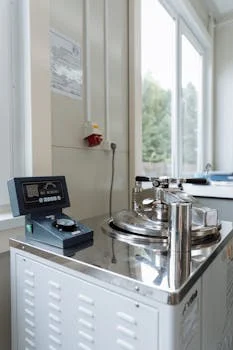
Land footprint requirements for MBR systems in Russia are typically 50-60% lower than conventional activated sludge plants, averaging 0.5 to 1 m² per m³/day. In contrast, conventional systems require 1.5 to 2 m²/m³/day to accommodate large secondary clarifiers. For industrial planners, this footprint reduction is a major cost-saving lever, especially when expanding existing facilities where space is at a premium. Utilizing DAF systems for pre-treatment and industrial wastewater in Russia can further optimize the footprint by efficiently removing solids in a fraction of the space required by traditional sedimentation tanks.
Energy consumption is the largest component of a plant’s operational expenditure (OPEX). Conventional systems are relatively efficient at 0.8–1.5 kWh/m³, whereas MBR systems consume 1.2–2.5 kWh/m³ due to the high-pressure air required for membrane scouring. With Russia’s average industrial electricity cost sitting at approximately 6.5 RUB/kWh, an MBR plant’s energy bill can be significant. However, this is often offset by the elimination of tertiary treatment stages and lower chemical requirements for phosphorus removal. For a more technical look at these trade-offs, see this detailed MBR technology selection guide.
Chemical dosing and sludge handling represent the remaining 30-40% of OPEX. Coagulants and flocculants for industrial wastewater can cost between 500 and 1,500 RUB per treated m³, depending on the influent quality. Sludge disposal is becoming increasingly expensive due to 2025 updates to landfill regulations, which ban the disposal of untreated liquid sludge. Dewatering costs currently range from 1,000 to 3,000 RUB per ton of dry solids, making high-efficiency equipment like a plate and frame filter press essential for reducing sludge volume and disposal fees.
| Specification | Conventional AS | MBR System | DAF (Pre-treatment) |
|---|---|---|---|
| Footprint (m²/m³/day) | 1.5 – 2.0 | 0.5 – 1.0 | 0.8 – 1.2 |
| Energy Use (kWh/m³) | 0.8 – 1.5 | 1.2 – 2.5 | 0.5 – 1.0 |
| Chemical Cost (RUB/m³) | 200 – 600 | 100 – 300 | 500 – 1,500 |
| Sludge Yield (Low/High) | High | Low | Moderate |
MBR vs. Conventional vs. DAF: Cost Comparison for Russian Projects
Membrane Bioreactor (MBR) systems in Russia require 1.2 to 2.5 kWh per m³ of treated water, which is higher than conventional systems but necessary for meeting strict SanPiN discharge limits. The upfront capital cost for MBR is 80,000–120,000 RUB/m³/day, compared to 50,000–80,000 RUB/m³/day for conventional activated sludge. However, the effluent quality of MBR is vastly superior, with Total Suspended Solids (TSS) often below 5 mg/L and BOD below 10 mg/L, making it suitable for direct discharge into sensitive water bodies or for industrial reuse applications.
Dissolved Air Flotation (DAF) is primarily used as a pre-treatment or specialized treatment for oily wastewater. Its capital cost is mid-range at 60,000–90,000 RUB/m³/day. While its operational cost is the lowest (10–20 RUB/m³), it cannot achieve the biological nutrient removal required for municipal discharge on its own. It is frequently paired with biological systems to reduce the organic load and protect downstream membranes or aerobic bacteria from oil fouling. Maintenance cycles also differ; MBR membranes require replacement every 5–7 years (costing 20–30% of initial CAPEX), whereas conventional clarifiers require quarterly cleaning and mechanical maintenance of scrapers.
When comparing these technologies, one must consider the total cost of ownership over 20 years. While a conventional system is cheaper to build, the potential for environmental fines under SanPiN 2.1.3684-21 can quickly erode those savings. If the effluent does not meet the "Fishery Standards" (the strictest in Russia), the facility may face daily penalties that exceed the cost of an MBR upgrade within just three years of operation.
| Metric | Conventional | MBR | DAF |
|---|---|---|---|
| CAPEX (RUB/m³/day) | 50k – 80k | 80k – 120k | 60k – 90k |
| OPEX (RUB/m³) | 15 – 25 | 20 – 40 | 10 – 20 |
| TSS Effluent (mg/L) | < 30 | < 5 | < 50 (Pre-treat) |
| Maintenance Focus | Clarifiers/Scrapers | Membrane Cleaning | Pump/Saturator |
Russia’s WWTP Compliance Checklist: Avoid Costly Permit Delays
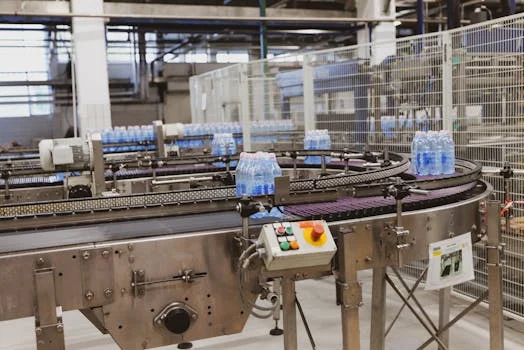
The environmental impact assessment (EIA) for Russian WWTP projects exceeding 50,000 m³/day requires a mandatory public hearing phase and a state expertise review lasting up to 4 months. Failing to account for this timeline can lead to construction delays that inflate project costs by 1-2% per month due to idle labor and equipment. Compliance is governed by several key regulations, most notably SanPiN 2.1.3684-21, which dictates discharge limits for water bodies, and GOST R 58466-2019, which outlines the engineering design standards for wastewater facilities.
A common compliance pitfall in Russia is underestimating the complexity of sludge disposal. Many regions are beginning to implement landfill bans on organic waste, forcing facilities to invest in advanced dewatering or incineration. Planners should consult sludge handling cost optimization strategies (adaptable to Russia) to ensure their dewatering circuit meets the 2025 moisture content requirements for transport. Additionally, BAT certification is increasingly becoming a requirement for industrial projects to avoid the maximum "pollution tax" brackets.
- SanPiN 2.1.3684-21: Verify all effluent parameters (BOD, COD, N, P, Heavy Metals).
- EIA & Public Hearings: Budget 6 months for the full approval cycle.
- Sludge Management Plan: Secure a contract with a certified landfill or incineration site early.
- Stormwater Integration: Check if regional decrees (like Moscow’s 743-PP) require separate treatment for runoff.
ROI Calculator: Is Your WWTP Project Worth the Investment?
Avoided environmental fines for non-compliant industrial discharge in Russia can range from 500,000 to 5 million RUB per violation, significantly shortening the ROI for modern treatment systems. When calculating the return on investment, procurement managers must look beyond CAPEX and OPEX. The formula for the payback period is: (Total Capital Cost) / (Annual Operational Savings + Avoided Fines + Revenue from Water Reuse). For a typical 1,000 m³/day industrial plant, the payback period is usually 3 to 5 years, whereas municipal plants may take 5 to 7 years due to lower "avoided fine" incentives.
Financing options in the Russian market include government grants (covering up to 50% for priority regions like the Far East), loans from major state banks, and private leasing for modular equipment. Leasing interest rates for "green" or BAT-certified projects currently range from 8% to 12%. For smaller projects, a compact underground WWTP for small-scale projects in Russia can offer an even faster ROI by eliminating the need for expensive building structures and land preparation.
| Factor | Impact on ROI | Estimated Value (Annual) |
|---|---|---|
| Avoided Fines | High | 2M – 10M RUB |
| Water Reuse Savings | Medium | 15 – 30 RUB per m³ |
| Energy Efficiency | Low/Medium | 0.5M – 1.5M RUB |
| Sludge Volume Reduction | Medium | 1M – 3M RUB |
To estimate your project’s ROI, enter your plant capacity into your internal model: Capacity (m³/day) x 100,000 RUB (Avg CAPEX). If your current fines exceed 3 million RUB annually, a modern upgrade will likely pay for itself within 48 months. For a broader perspective on how these costs compare internationally, you can review how European compliance standards compare to Russia’s.
Frequently Asked Questions
What is the cost of a wastewater treatment plant in Russia?
In 2025, a small 50 m³/day MBR system costs approximately 7.5–12 million RUB. A mid-sized 1,000 m³/day plant ranges from 50 to 120 million RUB, while large-scale municipal plants can reach 4 billion RUB depending on the technology and regional logistics.
Does Russia have a sewer system?
Yes, approximately 85% of urban areas in Russia are served by centralized sewer systems. However, only 30% of rural areas have access to centralized treatment. This gap is driving a 12% annual growth rate in decentralized solutions like compact underground WWTPs for small-scale projects in Russia.
How much does a small WWTP cost in Russia?
A small-scale, 10 m³/day underground system (such as the WSZ Series) typically costs between 3 and 5 million RUB, including the equipment and basic installation, making it ideal for hotels, small housing complexes, or remote industrial outposts.
What are the operating costs for a WWTP in Russia?
Operational costs generally range from 15 to 40 RUB per m³ of treated water. This includes electricity (6.5 RUB/kWh), chemical dosing, labor, and sludge disposal fees. MBR systems tend to be on the higher end of this range due to energy needs, while DAF and conventional systems are lower.
Can I get government funding for my WWTP project?
Yes, projects with a capacity exceeding 50,000 m³/day or those located in priority environmental zones (like the Volga River basin or the Far East) may qualify for 30–50% federal co-financing under the "Clean Water" program, provided they utilize BAT-certified equipment.