Wastewater Treatment Plant Cost in Cancun 2025: Engineering Breakdown with Local Compliance, Cost Data & ROI Calculator
In 2025, wastewater treatment plant costs in Cancun range from $1.2M for a compact 50 m³/day MBR system to $600M for a 25-million-gallon/day municipal plant. Local factors like saline intrusion (up to 1,500 mg/L chloride in influent), tourism-driven flow spikes (30–50% seasonal variation), and Quintana Roo’s strict NOM-001-SEMARNAT-1996 discharge limits (BOD <30 mg/L, TSS <40 mg/L) require tailored engineering. This guide provides a cost breakdown by technology, compliance checklist, and ROI calculator to help municipalities and private investors plan projects.Why Cancun’s Wastewater Treatment Costs Are Unique: Local Challenges Driving Engineering Decisions
Cancun’s wastewater characteristics present distinct engineering challenges that significantly influence treatment plant design and costs, differentiating it from other regions in Mexico. Average influent BOD levels range from 250–400 mg/L and TSS from 300–500 mg/L, but a critical factor is chloride concentration, often between 500–1,500 mg/L due to coastal groundwater intrusion into sewer networks (HydropureWater field data, 2025). tourism-driven flow spikes can cause a 30–50% increase in wastewater volume during peak months, according to Quintana Roo Water Commission 2024 data, demanding flexible and robust system designs. Regulatory pressures are stringent, with NOM-001-SEMARNAT-1996 mandating discharge limits of BOD <30 mg/L, TSS <40 mg/L, and fecal coliform <1,000 MPN/100mL. Recent enforcement actions, such as the 2026 plant closure for a 300 L/s discharge violation, underscore the critical need for compliant operations. Despite these regulations, Cancun faces significant infrastructure gaps; only 60% of its wastewater is currently treated, falling short of the 90% national target, and 40% of existing plants operate at less than 70% capacity (FINFRA 2023 report). This deficit necessitates new construction and upgrades. For example, Cozumel's $210M expansion in 2025 to handle 12,000 m³/day highlights the scale of investment required for regional wastewater infrastructure. Similar projects in Cancun demand saline-resistant materials and modular designs to cope with local conditions and operational variability. For a broader perspective on regional costs, consider reviewing wastewater treatment plant costs in Jalisco for regional comparison.Wastewater Treatment Plant Cost Breakdown: Cancun-Specific Engineering and Budgeting
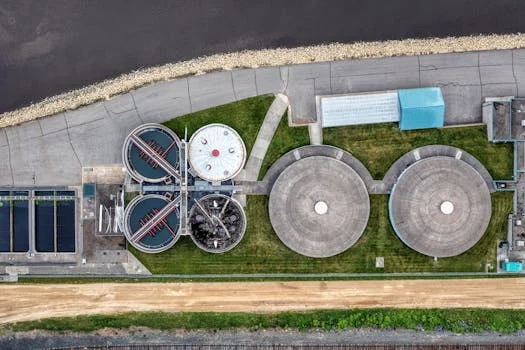
| Cost Category | Range for Municipal Plants (5,000–50,000 m³/day) | Range for Industrial/Hotel Systems (50–1,000 m³/day) | Notes |
|---|---|---|---|
| Capital Cost (per m³) | $0.80–$2.50/m³ | $1.50–$4.00/m³ | Includes equipment, civil works, installation |
| Equipment vs. Civil Works Split | 30% Equipment / 70% Civil | 60% Equipment / 40% Civil | Higher civil for large scale, higher equipment for compact/advanced |
| Environmental Impact Assessment (EIA) | $50,000–$200,000 | $50,000–$200,000 | Required by SEMARNAT |
| NOM-001-SEMARNAT-1996 Discharge Permit | $20,000–$50,000 | $20,000–$50,000 | Required by CONAGUA |
| CONAGUA Water Rights Permit | $10,000–$30,000 | $10,000–$30,000 | If extracting groundwater |
| Skilled Labor Rate (per hour) | $15–$30 | $15–$30 | Quintana Roo average (2025) |
| Installation Timeline | 24–36 months | 6–12 months | From ground-breaking to commissioning |
| O&M: Chemical Dosing (per m³) | $0.10–$0.30 | $0.10–$0.30 | Includes coagulants, disinfectants, pH adjusters |
| O&M: MBR Membrane Replacement (per m³) | N/A (if not MBR) | $0.05–$0.15 | Specific to MBR systems |
| O&M: Sludge Disposal (per m³) | $0.02–$0.08 | $0.02–$0.08 | Based on Quintana Roo landfill tipping fees |
Technology Comparison for Cancun: MBR vs. DAF vs. Conventional Systems with Cost and Performance Data
Selecting the appropriate wastewater treatment technology in Cancun is critical, with Membrane Bioreactor (MBR) systems costing $2,500–$4,000/m³/day of capacity and offering 95–99% BOD/TSS removal, making them ideal for hotels and resorts due to their small footprint and ability to produce reuse-quality effluent. For example, a 50 m³/day MBR system for compact, reuse-quality wastewater treatment in Cancun can cost $120,000–$200,000 installed in 2025. Dissolved Air Flotation (DAF) systems, priced at $1,200–$2,000/m³/day, achieve 85–92% TSS removal and are best suited for industrial wastewater streams with high suspended solids or oil and grease, such as those from food processing or textile industries. A 200 m³/day DAF system for industrial wastewater treatment in Cancun might cost $240,000–$400,000 installed in 2025. Conventional Activated Sludge systems, combined with a clarifier, are more economical at $800–$1,500/m³/day, providing 85–90% BOD removal, making them suitable for larger municipal plants due to their lower O&M costs but requiring a larger footprint. A 5,000 m³/day conventional plant, for instance, could cost $4M–$7.5M installed in 2025. Given Cancun’s high chloride levels (500–1,500 mg/L), saline-resistant materials are essential, adding 15–25% to equipment costs. This involves using corrosion-resistant alloys like duplex stainless steel or protective coatings such as epoxy or HDPE. While modular systems, including containerized MBR units, can reduce civil costs by 30–40% due to pre-fabrication, their equipment costs tend to be higher, ranging from $3,000–$5,000/m³/day capacity.| Technology | Capital Cost (per m³/day capacity) | BOD/TSS Removal Efficiency | Footprint | Suitability for Cancun | Example Installed Cost (2025) |
|---|---|---|---|---|---|
| MBR (Membrane Bioreactor) | $2,500–$4,000 | 95–99% | Small | Hotels/resorts (reuse quality, compact sites) | 50 m³/day: $120,000–$200,000 |
| DAF (Dissolved Air Flotation) | $1,200–$2,000 | 85–92% TSS | Medium | Industrial (high TSS, FOG, e.g., food processing) | 200 m³/day: $240,000–$400,000 |
| Conventional (Activated Sludge + Clarifier) | $800–$1,500 | 85–90% BOD | Large | Municipal (lower O&M, larger land availability) | 5,000 m³/day: $4M–$7.5M |
| Saline-Resistant Material Surcharge | +15–25% to equipment costs | N/A | N/A | Mandatory for most coastal applications | Varies by base equipment cost |
ROI Calculator: How to Justify Your Wastewater Treatment Investment in Cancun
- Step 1: Estimate Capital Cost. Use the cost per m³ data from earlier sections. For instance, an MBR system for a hotel might cost $2,500/m³/day of capacity. A 100 m³/day hotel system would therefore have an estimated capital cost of $250,000.
- Step 2: Calculate Annual O&M Costs. Factor in expenses for chemicals (e.g., from an automatic chemical dosing system for pH adjustment and coagulation in Cancun’s saline wastewater), labor, sludge disposal, and energy. If O&M is estimated at $0.20/m³, then for a 100 m³/day plant operating 365 days a year, annual O&M would be $0.20/m³ × 36,500 m³/year = $7,300/year.
- Step 3: Quantify Annual Savings. This includes avoided municipal sewer fees, which typically range from $0.50–$1.20/m³ in Cancun. For the 100 m³/day hotel, this could be $1.00/m³ × 36,500 m³/year = $36,500 in sewer fees saved. Additional savings come from water reuse (e.g., for irrigation or cooling towers) and avoided fines, which can be up to $50,000 per violation for NOM-001 non-compliance.
- Step 4: Calculate Payback Period. The formula is (Capital Cost) / (Annual Savings - Annual O&M Costs). Using the example: $250,000 / ($36,500 sewer fees saved - $7,300 O&M) = $250,000 / $29,200 = approximately 8.5 years. This calculation provides the time it takes for the initial investment to be recovered through operational savings.
- Step 5: Factor in Financing. Financing significantly impacts the net present value of the investment. FINFRA offers attractive terms for municipal projects, including 15-year loans at 6–8% interest. Private investors typically secure loans from Mexican banks or international development agencies at 9–12% interest.
Quintana Roo Compliance Checklist: Permits, Discharge Limits, and Inspection Requirements
Adhering to Quintana Roo’s wastewater discharge regulations is non-negotiable for any treatment plant project in Cancun to avoid severe penalties. The primary standard governing effluent quality is NOM-001-SEMARNAT-1996, which specifies strict discharge limits: Biochemical Oxygen Demand (BOD) must be less than 30 mg/L, Total Suspended Solids (TSS) less than 40 mg/L, and fecal coliform less than 1,000 MPN/100mL. Additionally, pH must be maintained between 6 and 9, and oil & grease concentrations below 15 mg/L. Several permits are mandatory before and during plant operation. An Environmental Impact Assessment (EIA) from SEMARNAT is required, with costs ranging from $50,000–$200,000 depending on project scale. A discharge permit from CONAGUA is also essential, typically costing $20,000–$50,000. If groundwater extraction is part of the project, a separate water rights permit from CONAGUA, costing $10,000–$30,000, is necessary. Inspection frequencies are rigorous, with municipal plants subject to quarterly checks and industrial/hotel systems inspected biannually by the Quintana Roo Water Commission (2024). Penalties for non-compliance are substantial, including fines up to $50,000 per violation, plant closures (e.g., the 2026 Cancun plant shutdown for a 300 L/s discharge), and potential criminal liability for severe environmental damage. Project developers can leverage local resources like the Quintana Roo Water Commission website (www.ceaqroo.gob.mx) for detailed guidelines, FINFRA funding programs (www.finfra.gob.mx) for financing, and the CONAGUA regional office in Cancun for permit processing. For comparative industrial challenges, consider how Barcelona’s industrial wastewater challenges compare to Cancun’s.| Regulatory Requirement | Standard/Limit | Issuing Authority | Estimated Cost/Frequency |
|---|---|---|---|
| BOD Discharge Limit | <30 mg/L | NOM-001-SEMARNAT-1996 | Compliance Requirement |
| TSS Discharge Limit | <40 mg/L | NOM-001-SEMARNAT-1996 | Compliance Requirement |
| Fecal Coliform Discharge Limit | <1,000 MPN/100mL | NOM-001-SEMARNAT-1996 | Compliance Requirement |
| pH Range | 6–9 | NOM-001-SEMARNAT-1996 | Compliance Requirement |
| Oil & Grease Limit | <15 mg/L | NOM-001-SEMARNAT-1996 | Compliance Requirement |
| Environmental Impact Assessment (EIA) | Required | SEMARNAT | $50,000–$200,000 (one-time) |
| Discharge Permit | Required | CONAGUA | $20,000–$50,000 (one-time) |
| Water Rights Permit (if applicable) | Required | CONAGUA | $10,000–$30,000 (one-time) |
| Inspection Frequency (Municipal) | Quarterly | Quintana Roo Water Commission | Ongoing Compliance |
| Inspection Frequency (Industrial/Hotel) | Biannual | Quintana Roo Water Commission | Ongoing Compliance |
| Penalties for Non-Compliance | Fines up to $50,000/violation, plant closure | SEMARNAT, CONAGUA | Risk Mitigation |
Frequently Asked Questions
What is the average cost per m³ for a wastewater treatment plant in Cancun?
The cost ranges from $0.80–$2.50/m³ for municipal plants (5,000–50,000 m³/day) and $1.50–$4.00/m³ for industrial/hotel systems (50–1,000 m³/day), depending on the chosen technology and capacity, based on 2025 data.
How does saline intrusion affect wastewater treatment costs in Cancun?
Saline intrusion, with chloride levels up to 1,500 mg/L in influent, increases equipment costs by 15–25% due to the necessity of corrosion-resistant materials such as duplex stainless steel or protective HDPE coatings for long-term durability.
What are the most common wastewater treatment technologies used in Cancun?
MBR (Membrane Bioreactor) systems are popular for hotels and resorts due to their small footprint and ability to produce reuse-quality effluent. DAF (Dissolved Air Flotation) systems are frequently employed for industrial wastewater with high TSS or FOG loads. Conventional activated sludge systems remain common for larger municipal plants due to their lower operational costs and suitability for larger land availability.
How long does it take to build a wastewater treatment plant in Cancun?
Construction timelines vary significantly by scale: compact systems (50–500 m³/day) typically require 6–12 months, while large municipal plants (5,000–50,000 m³/day) can take 24–36 months, including permitting, civil works, and equipment installation.
Are there financing options for wastewater treatment projects in Cancun?
Yes, FINFRA offers favorable 15-year loans at 6–8% interest for municipal projects. Private investors can secure financing from Mexican banks or international development agencies, typically at interest rates ranging from 9–12%.