Argentina’s industrial wastewater treatment sector is governed by Law 25.688 and provincial decrees, with effluent limits including pH 6–9, TSS < 30 mg/L, and COD < 250 mg/L. The Riachuelo system (2.3 million m³/day) sets a benchmark for large-scale projects, while electrocoagulation (EC) systems like WaterTectonics’ Argentina installation achieve 92–97% TSS removal for produced water. Costs range from $0.80–$3.50/m³ depending on system type (DAF, MBR, or EC), with CAPEX for a 50 m³/h plant starting at $250,000. This guide provides 2025 engineering specs, compliance checklists, and equipment selection frameworks for food processing, mining, and petrochemical applications.
Argentina’s Industrial Wastewater Treatment Landscape: Regulatory Drivers and Market Trends
The regulatory framework for water management in Argentina is anchored by Law 25.688 (Régimen de Gestión Ambiental de Aguas), which establishes the minimum environmental protection standards for the preservation and sustainable use of water. Under this national umbrella, provincial authorities exercise jurisdiction, leading to a tiered compliance structure that industrial plant managers must navigate. For instance, a food processing facility in Córdoba must align with Law 9814, while a petrochemical plant in the Greater Buenos Aires area must adhere to Decree 3395/96. Failure to comply often results in escalating fines and potential operational shutdowns, as seen in recent enforcement actions across the Matanza-Riachuelo basin.
Market data indicates an annual investment of approximately $1.2 billion in water and sanitation infrastructure between 2023 and 2027, supported by Inter-American Development Bank (IDB) funding. The mining sector accounts for 35% of this demand, driven by lithium extraction in the northern provinces, followed by food processing at 28%. The Riachuelo system, with its 2.3 million m³/day capacity, represents the most significant infrastructure benchmark in the country, forcing upstream industrial users to upgrade their pre-treatment systems to meet stricter discharge standards into the public collector.
| Parameter | National (Law 25.688) | Buenos Aires (Decree 3395/96) | Santa Fe (Decree 1087/01) | Córdoba (Law 9814) |
|---|---|---|---|---|
| pH | 6.0 – 9.0 | 6.5 – 10.0 | 6.5 – 9.5 | 6.0 – 9.0 |
| TSS (mg/L) | < 30 | < 50 | < 40 | < 30 |
| COD (mg/L) | < 250 | < 500 (sewer) / 250 (surface) | < 300 | < 250 |
| BOD₅ (mg/L) | < 50 | < 200 (sewer) / 50 (surface) | < 70 | < 50 |
| Hydrocarbons (mg/L) | < 10 | < 20 | < 15 | < 10 |
Industry-Specific Wastewater Challenges and Treatment Pathways
Industrial wastewater profiles in Argentina vary drastically by sector, requiring specific engineering pathways to achieve compliance. In the food processing sector—encompassing dairy, meat processing (frigoríficos), and beverage production—the primary challenges are high Biological Oxygen Demand (BOD) and Fats, Oils, and Grease (FOG). Typical influent BOD levels range from 1,000 to 5,000 mg/L. To manage this, a high-efficiency DAF system for food processing wastewater is the standard primary treatment, capable of achieving 95% FOG removal and significantly reducing the organic load before secondary biological treatment.
The mining sector, particularly lithium and gold operations in San Juan and Jujuy, deals with heavy metal contamination (Arsenic, Lead, Mercury) and high Total Dissolved Solids (TDS). Treatment often involves Electrocoagulation (EC) combined with chemical precipitation. Field data from projects in the region show that EC systems can remove 90–98% of dissolved metals at flow rates of 50–200 m³/h. Meanwhile, the petrochemical hubs in Bahía Blanca face high chemical oxygen demand (COD) and volatile organic compounds (VOCs). For these facilities, an MBR system for petrochemical wastewater reuse is increasingly preferred, as it delivers high-quality effluent (MBR system design parameters typically show BOD < 10 mg/L) suitable for cooling tower makeup or process irrigation.
| Industry Sector | Key Contaminants | Typical Influent (COD/TSS) | Recommended Pathway | Compliance Target |
|---|---|---|---|---|
| Food Processing | BOD, FOG, Proteins | 3,500 / 1,200 mg/L | Screening + DAF + Aerobic Bio | BOD < 50 mg/L |
| Mining | Metals, TDS, Sulfates | 800 / 2,500 mg/L | EC + Precipitation + RO | TSS < 30 mg/L |
| Petrochemical | COD, Phenols, Oil | 6,000 / 400 mg/L | API + MBR + Carbon Filter | COD < 250 mg/L |
| Textile | Dyes, Surfactants | 1,500 / 300 mg/L | Coagulation + Fenton + UF | Color removal > 90% |
Key Technologies for Industrial Wastewater Treatment in Argentina
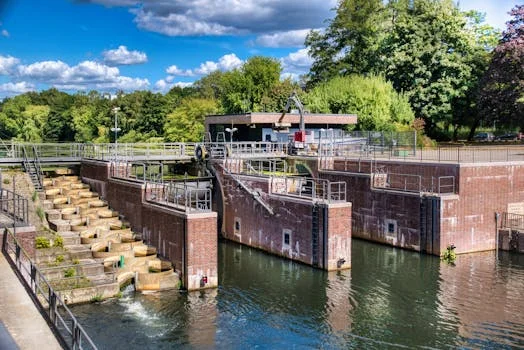
Selection of treatment technology depends on the desired effluent quality, available footprint, and operational budget. Dissolved Air Flotation (DAF) remains the workhorse of Argentine industry. By generating micro-bubbles (20–50 microns), DAF systems attach to suspended solids and oils, floating them to the surface for mechanical skimming. Engineering benchmarks for detailed DAF system specifications and selection criteria show that high-rate units can handle solids loading rates of 5–10 kg/m²/h, significantly outperforming traditional sedimentation tanks.
Membrane Bioreactors (MBR) represent the "gold standard" for space-constrained plants or those seeking water reuse. By replacing the secondary clarifier with ultrafiltration membranes (< 0.1 μm), MBR systems achieve a 60% smaller footprint. A notable 2023 installation at a Mendoza winery demonstrated the ability to treat high-strength winery waste to COD levels < 30 mg/L, allowing the water to be reused for vineyard irrigation, thus bypassing local discharge restrictions. For mining applications, Electrocoagulation (EC) is gaining traction as an alternative to chemical-heavy precipitation. While EC has a higher OPEX ($1.50–$3.00/m³) due to electricity and sacrificial electrode consumption, it produces 40% less sludge than chemical alum/ferric systems, reducing disposal costs in remote Andean locations.
| Technology | Removal Efficiency (TSS) | Footprint Requirement | Best Application in Argentina |
|---|---|---|---|
| DAF | 92% – 97% | Medium | Slaughterhouses, Dairy, Poultry |
| MBR (DF Series) | > 99% | Low | Pharma, Petrochemical Reuse |
| Electrocoagulation | 90% – 95% | Low | Mining Tailings, Produced Water |
| Anaerobic (UASB) | 70% – 80% | High | High-load Brewery Waste |
Cost Breakdown and ROI Calculator for Industrial Wastewater Projects
Budgeting for a wastewater project in Argentina requires balancing initial Capital Expenditure (CAPEX) with long-term Operational Expenditure (OPEX). For a standard 50 m³/h treatment plant, CAPEX varies widely: a DAF-based system may start at $250,000, whereas a fully integrated MBR system can exceed $800,000. OPEX in Argentina is heavily influenced by energy costs and the price of imported chemicals. Current benchmarks suggest a range of $0.80/m³ for simple physical-chemical treatment to $3.50/m³ for advanced oxidation or EC processes.
To justify these investments, plant managers use an ROI framework based on avoided fines, reduced freshwater procurement costs, and sludge disposal savings. Argentina’s Law 27.424 and various provincial incentives offer tax credits for water reuse and energy-efficient technologies, which can offset up to 20% of the CAPEX. the IDB provides low-interest green loans specifically for mining and industrial environmental upgrades.
ROI Formula: Payback Period (Years) = Total CAPEX / (Annual Savings in Water/Fines – Annual OPEX)
Example: A $500,000 MBR system that saves $200,000 annually in water reuse and avoids $30,000 in environmental fines, with an annual OPEX of $50,000, has a payback period of 2.7 years.
| System Type (50 m³/h) | Estimated CAPEX (USD) | Estimated OPEX (USD/m³) | Primary Cost Driver |
|---|---|---|---|
| DAF Primary | $250,000 – $350,000 | $0.80 – $1.20 | Chemical Coagulants |
| MBR Secondary | $750,000 – $950,000 | $2.00 – $2.50 | Energy (Membrane Scouring) |
| EC System | $1,100,000 – $1,400,000 | $3.00 – $3.50 | Electricity & Electrodes |
| Sludge Dewatering | $150,000 – $250,000 | $0.50 – $0.90 | Polymer & Disposal |
Compliance Checklist: How to Meet Argentina’s Effluent Standards
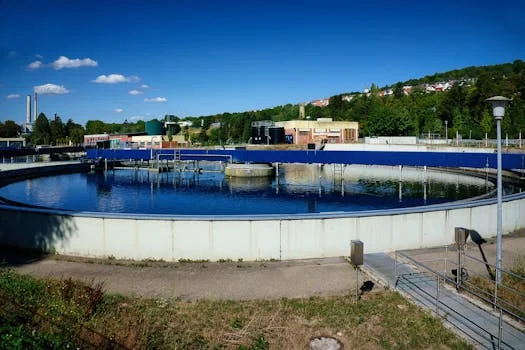
Ensuring compliance with Law 25.688 and provincial regulations requires a systematic approach to treatment and monitoring. Use this checklist to audit your current or proposed system:
- Pre-treatment: Install a stainless steel rotary bar screen for pretreatment to remove solids > 5mm. This protects downstream pumps and prevents clogging in DAF or MBR units.
- pH Stabilization: Implement automated pH dosing to maintain a range of 6.0–9.0. Most provincial decrees require continuous pH monitoring at the final discharge point.
- Primary Load Reduction: Utilize DAF or sedimentation to ensure TSS < 100 mg/L before biological stages. This is often an interim limit for discharge to municipal sewers.
- Secondary Treatment: For surface water discharge, employ biological systems (A/O or MBR) to meet the BOD < 50 mg/L and COD < 250 mg/L thresholds.
- Tertiary Disinfection: If discharging near recreational areas or reusing water, an on-site ClO₂ generator for wastewater disinfection ensures pathogen removal without the harmful byproducts of traditional chlorine.
- Sludge Management: Implement sludge dewatering solutions for Argentina’s industrial sector to reduce waste volume by 70–80%, lowering transport costs.
- Monitoring & Reporting: Maintain a log of quarterly laboratory results from certified third-party labs, as required for annual environmental permit renewals.
Frequently Asked Questions
What is the primary law governing industrial wastewater in Argentina?
The primary regulation is Law 25.688 (National Water Resources Law), which sets the minimum standards for water protection. However, specific effluent limits are typically enforced by provincial bodies like ADA (Buenos Aires) or DIPAS (Córdoba), which may set stricter local requirements based on the receiving water body’s sensitivity.
How much does it cost to treat industrial wastewater in Argentina?
Operating costs typically range from $0.80 to $3.50 per cubic meter. DAF systems are the most economical for high-fat waste ($0.80–$1.20/m³), while advanced technologies like MBR or Electrocoagulation cost more due to energy and specialized media, averaging $2.20 and $3.00/m³ respectively (HydropureWater field data, 2025).
Can industrial wastewater be reused for irrigation in Argentina?
Yes, but it must meet specific "Reuse Criteria" which are generally stricter than discharge limits. For example, in Mendoza and San Juan, treated effluent used for irrigation must meet COD < 150 mg/L and specific conductivity limits to prevent soil salinization. MBR technology is the preferred choice for achieving these reuse standards reliably.
What are the penalties for non-compliance with effluent standards?
Penalties vary by province but often include daily fines based on the "Unit of Environmental Transgression." In Buenos Aires, fines can exceed several million ARS per day for serious violations, coupled with the potential for the "Clausura" (closure) of the facility until a compliant treatment plan is implemented.