Seoul Industrial Wastewater Discharge Compliance 2025: What the Permit Requires
Seoul industrial wastewater discharge compliance 2025 is a permit question, not a single COD number. The Minister of Climate, Energy and Environment sets limits by area and by pollutant under the Water Environment Conservation Act. A factory in a water-source buffer, or one that discharges specific hazardous substances above the ministerial threshold, needs an installation permit before construction.
Design screens on this page still open with COD <50 mg/L for electronics and TSS <30 mg/L for food processing. Penalties in that screen run up to ₩100M. MBR is carried at 95%+ TSS removal, and DAF at 92% FOG reduction. CAPEX on the same screen runs from ₩500M–₩5B at a flow of 10–500 m³/h.
An electronics manufacturer in the Guro Digital Complex, or a food processor in Gyeonggi-do discharging into Seoul’s municipal lines, is the reader this note is written for. Quarterly sampling and real-time monitoring for heavy metals stay in the compliance plan. Earlier copy treated a permit as mandatory for every facility. The decree does not use that shortcut.
According to the National Law Information Center, the consolidated Act is headed Act No. 21368, amended on 19 February 2026. The latest enforcement date printed on that text is 20 February 2027. The permit test used here is already in Enforcement Decree Article 31, effective 24 March 2026 under Presidential Decree No. 36220. Earlier notes said any facility above 0.1 m³/day must hold a formal permit, and that flow cutoff is not the legal test.
moe korea discharge limits electronics manufacturer seoul
MOE Korea, the name still printed on many Seoul files, is now the Ministry of Climate, Energy and Environment. It does not publish one electronics-only COD number for a manufacturer. Permissible limits apply by area class and by pollutant, covering BOD, COD, and suspended solids, plus phenols and other items, under Enforcement Rule Article 34 and Attached Table 13. Easy Law’s summary of that rule is dated 15 August 2026.
Seoul, as a special city, may set a stricter ordinance when the regional environmental standard is hard to hold, under Act Article 32(3). The Minister may set a stricter or special limit inside a special countermeasure area under Article 32(6). A plant that sends all wastewater to a public works can receive a separate acceptance standard under Article 32(9), only for items that works can treat. Zero-discharge facilities, defined in Act Article 2, are outside the discharge standard when nothing reaches public waters.
The sector table below stays an equipment screen, not a substitute for Attached Table 13. Semiconductors and electronics on that screen focus on copper and fluoride, with COD <50 mg/L, BOD <30 mg/L, and TSS <10 mg/L. Food and beverage stay on FOG, and textile work stays on chromium and color. Stamp the drawing only after the area cell and any Seoul ordinance are checked.
| Industrial Sector | COD Limit (mg/L) | BOD Limit (mg/L) | TSS Limit (mg/L) | Heavy Metal Focus |
|---|---|---|---|---|
| Semiconductors & Electronics | <50 | <30 | <10 | Copper (Cu), Fluoride (F) |
| Food & Beverage Processing | <100 | <80 | <30 | N/A (FOG Focus) |
| Pharmaceuticals | <70 | <50 | <20 | Active Ingredients |
| Textile & Dyeing | <80 | <60 | <30 | Chromium (Cr), Color |
A permit is required when specific hazardous substances meet the ministerial threshold. A permit is also required in a special countermeasure area, a notified restriction zone, or a water-source protection zone. The upstream buffer is 10 km from a protection-zone boundary, and 15 km upstream of an intake where no zone is designated. Other facilities file an installation report, unless a raw-material change newly pushes specific hazardous substances over the threshold.
Inside a sensitive zone, a report can replace the permit when hazardous substances stay under the threshold and all wastewater goes to a public wastewater plant or a public sewage plant. Full consignment to a receiver outside those zones is also a report, not a permit. Most plants we size in Seoul only see which path applies after the water balance is drawn.
A permitted plant must seek a change permit if volume rises by 50% or more, or by 700 m³/day or more. The trigger tightens to 30% when specific hazardous substances already exceed the ministerial threshold. The file is a location map, a wastewater process flow, a raw-material and water balance with predicted pollutants, and the control-facility specification with drawings. A report may use a layout in place of full drawings, and the existing permit certificate is required only on a change.
The 2025 file on this page still cites the Integrated Environmental Permitting System and a Best Available Techniques (BAT) pack of engineering documents and pilot data. Keep that pack, because the decree asks for the same process flow and predicted-pollutant sheet. Seoul’s metropolitan government has integrated Tele-Monitoring Systems (TMS) into primary discharge points for "Class 1" facilities discharging >2,000 m³/day. Those points transmit pH, COD, and SS in real time, so a silent channel is treated here as a failure even when the grab sample passes.
Budget a first COD exceedance at a ₩10M fine. Repeated violations, or evidence of bypassing treatment, are budgeted at ₩100M, and older notes here used a shutdown of up to 30 days. Article 39 is the improvement order, and Article 40 allows a suspension of up to 6 months if that order is missed or the sample still fails. Violating that suspension, or a closure order, can mean up to 5 years or a fine of up to ₩50 million, according to Easy Law’s 15 August 2026 summary of Act Article 76.
Failing the improvement order or the suspension can also cancel the installation permit or close the facility, under Act Article 42. Names of violating companies are still treated here as publishable in the Korea Gazette under the Environmental Impact Assessment Act, with the hit to ESG ratings and public procurement. A benchmark on this page is the Samsung Electronics’ Yongin facility BTO project (HydropureWater field data, 2025). Centralized O&M (Operations & Maintenance) on that job held effluent well below the legal ceiling, which is the bar this page uses for a long O&M contract.
Seoul Water Reclamation Corporation, on a page modified 15 May 2026, publishes the city plant’s own river limit. For Region I at a daily capacity of 500 m³ or above, that limit is BOD at 5 mg/L or below, TOC at 15 mg/L or below, and SS at 10 mg/L or below. Total nitrogen is 20 mg/L or below, total phosphorus is 0.2 mg/L or below, and total coliform is 1,000 per mL or below. Those numbers bind the city plant, not the factory sewer tap.
How to Meet Seoul’s Discharge Limits: Engineering Specifications by Treatment Technology
Meeting Seoul’s discharge limits starts with the contaminant, not with the equipment brand. MBR, DAF, and chemical dosing cover different duties, and the ranges below are the ones this page already uses for a first size. Pick the duty before you pick the tank.
mbr system specifications for seoul industrial wastewater
Membrane Bioreactor (MBR) systems achieve 95% to 99% removal of Total Suspended Solids (TSS) with a PVDF pore size of 0.1 μm. For a Seoul lot with little land, MBR runs at Mixed Liquor Suspended Solids (MLSS) of 8,000–12,000 mg/L, above conventional activated sludge. Design parameters for a detailed MBR system specifications for Seoul’s industrial wastewater include flux rates of 15–25 Liters per Square Meter per Hour (LMH). Specific energy consumption ranges from 0.8 to 1.2 kWh/m³.
The resulting effluent often shows TSS <1 mg/L and turbidity <0.2 NTU, which is why reuse is even on the table. Most plants we size for Seoul electronics run flux at the low end of 15–25 LMH. Fluoride rinse water fouls PVDF faster than ordinary sewage, so the low end is the honest point. Do not sell the top of that band on a copper-fluoride line.
Dissolved Air Flotation (DAF) remains the primary tool where Fats, Oils, and Grease (FOG) are high, including food plants in the Seoul metropolitan area. High-performance units make micro-bubbles of 30–50 μm in a recycle pressurized system. The hydraulic loading rate is typically held between 5 and 10 m/h. To reach 92–97% FOG removal, dose Polyaluminum Chloride (PAC) at 50–150 mg/L so the emulsion breaks before flotation.
If you are assessing how to select a DAF system for Seoul’s FOG-heavy wastewater, focus on the solids loading rate. That rate should not exceed 10 kg/m²/h for stable operation. Above that loading the float blanket collapses and FOG returns downstream. Most plants we size learn this in the first week a kitchen line runs a double shift.
| Parameter | MBR System | DAF System | Chemical Dosing Unit |
|---|---|---|---|
| Pore/Bubble Size | 0.1 μm (Membrane) | 30–50 μm (Bubble) | N/A |
| Hydraulic Retention Time | 6–10 Hours | 20–40 Minutes | 15–30 Minutes |
| Energy Use (kWh/m³) | 0.8–1.2 | 0.3–0.5 | 0.1–0.2 |
| Sludge Concentration | 2.0–3.0% | 3.0–5.0% | 1.0–2.0% |
| Effluent TSS | <1 mg/L | <20 mg/L | <50 mg/L |
chemical dosing heavy metal precipitation seoul
Chemical dosing for heavy metal precipitation in Seoul is how copper and nickel leave metal-finishing and pharmaceutical wastewater. Hold pH between 8.5 and 9.5 with 10–30 mg/L of Sodium Hydroxide (NaOH). That band is the precipitation window this page uses for the 2025 metal screen. Past it, some metals redissolve and the caustic is wasted.
The G-value still decides whether the floc forms. Rapid mix should run at 500–1000 s⁻¹, then slow flocculation at 20–50 s⁻¹. Sludge disposal in Seoul is budgeted at ₩150,000 to ₩250,000 per ton, so dewatering is part of the process, not a side contract. Modern centrifuges on this page are carried at 30–40% dry solids, which cuts the tonnes hauled to regional centers.
MBR vs. DAF vs. Chemical Dosing: Which System Fits Your Seoul Facility?
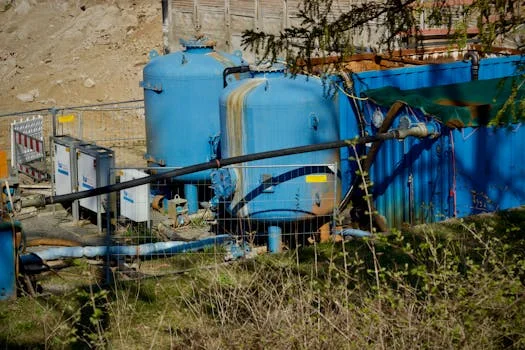
MBR, DAF, and chemical dosing fit different Seoul influents, and the wrong pick fails the limit even when the skid is new. Electronics and semiconductor plants chasing COD <50 mg/L on fine solids and organic carbon should look at Seoul-optimized MBR systems for high-TSS wastewater. Energy use is higher than DAF or dosing. The footprint is about 60% smaller than a conventional activated sludge plant, which is why a tight urban lot can still take it.
If the influent contains oils or grease at >200 mg/L, an MBR fouls fast and DAF has to come first. Install high-efficiency DAF systems for FOG and oil removal in Seoul as the primary stage for that buoyant load. For metals or a simple pH correction, an precise chemical dosing for pH adjustment and heavy metal removal unit can stand alone or sit as pre-treatment. Dosing has the lowest CAPEX and a continuous reagent bill, and leftover reagent is its own pollutant if the dose runs high.
| Decision Factor | Choose MBR If... | Choose DAF If... | Choose Chem-Dosing If... |
|---|---|---|---|
| Primary Contaminant | High BOD/COD & TSS | FOG, Oils, & Grease | Heavy Metals & pH Imbalance |
| Space Constraints | Extreme (Very Compact) | Moderate | Low (Requires Tankage) |
| Effluent Goal | Water Reuse/Strict Limits | Pre-treatment/FOG removal | Metal Precipitation |
| Operational Skill | High (Automated PLC) | Moderate | Moderate |
Use a short order before the purchase. If FOG exceeds 200 mg/L, DAF is mandatory ahead of any membrane. If the discharge is to a sensitive water with TSS limits <10 mg/L, MBR is the technical fit. If CAPEX is tight and the duty is only a basic municipal sewer code, chemical dosing plus simple sedimentation can be enough.
Rising water cost in Seoul pushes many plants toward MBR so they can recycle inside the fence. The ROI case on this page is a 5-year horizon, not a one-year payback. Read how Osaka’s regulations compare to Seoul’s before you treat a Korea reuse credit as if it were a Japan incentive. The water tariff and the ordinance are both local.
A sister factory in the southeast should read Industrial Wastewater Treatment in Daegu: 2026 Compliance & Engineering Guide for that city’s file, and should not paste those limits onto a Seoul drawing. The national permit path is shared. The city ordinance does not have to be. Most plants we size still put DAF ahead of the membrane whenever FOG is above 200 mg/L.
Cost Breakdown for Industrial Wastewater Treatment in Seoul (2025)
Treatment cost in Seoul is a CAPEX band plus power, chemical, and sludge, not one package price. The bands below are the 2025 planning ranges already used on this page. They are not a vendor quotation.
industrial wastewater treatment cost in seoul
Capital Expenditure (CAPEX) in Seoul tracks membranes, pumps, sensors, and local installation labor. For a mid-sized MBR system processing 100 m³/h, CAPEX typically ranges between ₩3B and ₩5B. A DAF system for a food plant at 50 m³/h usually needs ₩800M to ₩1.5B. A 10 m³/h chemical dosing unit costs between ₩200M and ₩500M.
Those figures include the main equipment, PLC integration for real-time monitoring, and initial commissioning. Operating cost is mostly energy and chemicals. Seoul industrial power on this page runs between ₩120 and ₩200 per kWh, depending on the peak season. On an MBR, energy is nearly 50% of the OPEX.
Chemical cost for DAF and dosing typically runs from ₩50 to ₩150 per cubic meter of treated water. Labor is at least two trained operators, at an average annual salary of ₩45M–₩60M each. Membrane replacement every 5–7 years, or DAF scraper repairs, should be budgeted at 5–10% of initial CAPEX each year. Most plants we size lose the first-year budget on sludge haulage, not on power, when dry solids miss 30–40%.
| Cost Component | MBR (100 m³/h) | DAF (50 m³/h) | Chem-Dosing (10 m³/h) |
|---|---|---|---|
| Estimated CAPEX | ₩3B – ₩5B | ₩800M – ₩1.5B | ₩200M – ₩500M |
| Annual Energy Cost | ₩100M – ₩150M | ₩30M – ₩50M | < ₩10M |
| Annual Chemical Cost | ₩20M – ₩40M | ₩60M – ₩100M | ₩30M – ₩70M |
| Sludge Disposal | ₩80M – ₩120M | ₩100M – ₩180M | ₩20M – ₩50M |
Return on investment on this page comes from fines avoided and from raw water not purchased. A food plant that installs DAF plus dosing at ₩1.2B CAPEX and ₩300M annual OPEX is shown reaching payback in 4–6 years. That case avoids a potential ₩100M annual fine and cuts raw water intake by 30%. Treat it as a worked example, not as your site’s result.
The cost model still carries a grant of up to 30% of the CAPEX for MBR or reuse that beats the minimum standard. This page ties that credit to the 2025 "Green Industry" push to cut load on the Han River basin. Confirm the live notice before a board paper books the credit. The statute pages read for this update do not restate that 30% figure.
Compliance Checklist for Seoul’s Industrial Wastewater Discharge Permit
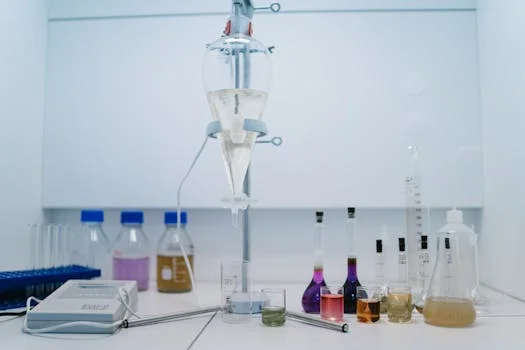
A Seoul discharge permit file is a data pack, and a story with no 7-day sample set is the one that fails first review. Map every contaminant source. Measure flow, COD, BOD, TSS, and the specific heavy metals over a 7-day period, and build the baseline from that set. The engineering process flow diagram (PFD) has to travel with the application, or MOE Korea’s e-permit review rejects the file.
The decree’s attachment list is the location map, the wastewater process flow, the raw-material sheet including water use and predicted pollutants, and the control-facility specification. The plant file on this page still adds the four items below. Keep both lists, because they overlap and a clerk can ask for either.
- Detailed facility layout showing all drainage and discharge points.
- Treatment process flow diagrams and equipment specifications (e.g., membrane flux, dosing rates).
- A formal monitoring plan, including the location of sampling ports and the calibration schedule for pH and flow meters.
- Emergency response plans for system failures or chemical spills.
Approval on this page is carried at 60 to 90 days. After that, most Seoul industrial sectors sample quarterly, while Class 1 and Class 2 may file monthly. Real-time monitoring for pH, turbidity, and heavy metals is carried at 99% uptime. Records stay available for 3 years for an unannounced visit by the Seoul Metropolitan Government’s environmental task force.
Missing the quarterly reporting deadline is budgeted at a ₩10M fine. Failing to calibrate monitoring equipment is budgeted at a ₩5M fine. Automated logging removes both of those misses. Most plants we size lose a month because the 7-day set skipped a night-shift dump.
Reuse figures from Seoul Water Reclamation Corporation, modified 15 May 2026, are not a factory discharge limit. BOD is 5 mg/L or below for toilet flushing, wash water, and grounds irrigation. Recreational contact is BOD at 3 mg/L or below, river maintenance is 5 mg/L or below, and agriculture is 8 mg/L or below. Turbidity on the urban uses is 2 NTU or below, and pH on the listed uses is 5.8–8.5.
The industrial-water column on that reuse table does not state one BOD number. The coliform cell in that column points at the drinking-water quality rule instead. Grade A planning on this page remains TSS <5 mg/L and BOD <5 mg/L for cooling or cleaning reuse. Do not mix that screen with the city plant’s river limit.
Who Should Use This Note
This note is for a Seoul process plant that must hold a discharge permit or a sewer acceptance limit. Use it when you are closing Seoul industrial wastewater discharge compliance 2025 on a real file, not on a brochure comparison. A site with only domestic sewage, and with no process metals and no FOG, should not copy the MBR or DAF cost bands. Older forms still print industrial waste water, and the clerk will take that wording.
A campus that only treats domestic sewage can place an Underground Package Sewage Treatment Plant (WSZ Series) below grade when the Seoul lot has no room for a surface tank. That unit is not a metal-precipitation plant, and it will not hit a copper limit. Keep process waste on the MBR, DAF, or dosing train described above. Most plants we size that only have domestic sewage do not need the metal train at all.
The next step is a water balance plus the 7-day composite, then the permit class from Article 31. Send that pack with the sizing review request for this Seoul duty before CAPEX is locked. One review beats a rebuild after the first failed sample. Do not file the drawing set while the hazardous-substance screen is still a guess.
Frequently Asked Questions
What are the penalties for exceeding Seoul discharge limits?
Seoul discharge penalties on this page start at ₩10M for a first COD exceedance and ₩100M for a repeat breach or a bypass. Older notes here also used a shutdown of up to 30 days. Article 40 allows a suspension of up to 6 months if an improvement order fails. Violating that suspension or a closure order can mean up to 5 years or a ₩50 million fine (Easy Law, 15 August 2026).
How often does MOE Korea inspect a Seoul factory?
Inspections are planned here at least once per year for a standard facility. Class 1 sites with TMS sit under continuous digital watch, and a data anomaly can trigger an unannounced visit. The attachment rule on this page is the Class 1 cutoff above 2,000 m³/day, with pH, COD, and SS sent in real time. A missed calibration is budgeted at a ₩5M fine, and a missed quarterly report at ₩10M.
Can a Seoul plant reuse treated wastewater?
Yes, cooling and cleaning reuse on this page uses a Grade A screen of TSS <5 mg/L and BOD <5 mg/L. The cost model still carries a grant of up to 30% of CAPEX. Seoul’s reuse table, modified 15 May 2026, sets BOD at 5 mg/L or below for toilet, wash, and grounds irrigation. Recreational contact is 3 mg/L or below, and agriculture is 8 mg/L or below.
What is the lead time for an MBR in Seoul?
Plan 6 to 9 months from design to commissioning for an MBR in Seoul. About 2 months go to engineering and the permit file. Fabrication takes 3-4 months. On-site installation and biological seeding take 1-2 months. Most plants we size for Seoul run the first compliance sample only after seeding is stable, and that step still sits inside the 1-2 month installation window.
Are local DAF units in Seoul cheaper than imports?
Local DAF packages in Seoul are generally 20-30% lower in CAPEX than imported skids, and spare parts arrive faster. Imported units still show up where a multinational wants the automation it already runs in other plants. Compare both on solids loading, not on the nameplate. Hold the solids loading rate at or below 10 kg/m²/h, with bubbles at 30–50 μm and a hydraulic loading of 5–10 m/h.