Osaka’s industrial wastewater treatment regulations require factories to meet strict effluent standards for COD (<60 mg/L), BOD (<20 mg/L), and suspended solids (<50 mg/L) under the Osaka Prefecture Water Pollution Control Ordinance. With 12 sewage treatment plants processing 2.5 million m³/day, non-compliance risks fines up to ¥10 million or facility shutdowns. This guide provides 2025 engineering specs, cost benchmarks (¥5–20/m³ for onsite treatment), and a decision framework to select equipment like DAF systems or MBR bioreactors tailored to Osaka’s industrial sectors.
Imagine a plant manager at a food processing facility in Osaka’s Suminoe Ward. An unannounced audit by the Osaka City Sewage Works Bureau reveals that the effluent’s Oil and Grease (FOG) levels exceed the discharge limit of 30 mg/L due to a failing grease trap. The result is an immediate "Improvement Order," a potential ¥10 million fine, and the threat of a production halt. This scenario is increasingly common as Osaka tightens its 2025 environmental oversight. To navigate this, engineers must move beyond basic filtration and implement integrated systems that balance regulatory compliance with operational overhead.
Osaka’s Industrial Wastewater Regulations: 2025 Compliance Checklist
The Osaka Prefecture Water Pollution Control Ordinance establishes effluent limits that are often more stringent than Japan’s national standards to protect the water quality of Osaka Bay and the Yodo River system. Factories discharging more than 50 m³/day of wastewater are classified as "Specified Facilities" and are subject to rigorous monitoring. For 2025, the enforcement focus has shifted toward nitrogen and phosphorus removal to combat eutrophication in the Seto Inland Sea.
Osaka employs a two-tiered enforcement system. The Osaka Prefecture government oversees industrial standards for direct discharge into rivers or the sea, while the Osaka City Sewage Works Bureau manages discharge rules for those connected to the public sewer system. Violations of these standards are criminal offenses under Japanese law, potentially leading to imprisonment of responsible officers or corporate fines up to ¥10 million (per Osaka Prefecture regulatory data).
| Parameter | Osaka Prefecture Limit (Direct Discharge) | Osaka City Sewer Limit (Sewer Discharge) | Monitoring Frequency |
|---|---|---|---|
| Chemical Oxygen Demand (COD) | <60 mg/L | <600 mg/L | Daily/Weekly |
| Biochemical Oxygen Demand (BOD) | <20 mg/L | <600 mg/L | Daily/Weekly |
| Suspended Solids (SS) | <50 mg/L | <600 mg/L | Daily |
| pH Value | 5.8 – 8.6 | 5.0 – 9.0 | Continuous |
| n-Hexane Extract (FOG) | <5 mg/L (Mineral), <30 mg/L (Animal/Veg) | <5 mg/L (Mineral), <30 mg/L (Animal/Veg) | Monthly |
| Total Nitrogen (T-N) | <120 mg/L | <240 mg/L | Monthly |
To ensure 2025 compliance, factory managers should follow this 5-step checklist:
- Wastewater Characterization: Conduct a 24-hour composite sampling to identify peak pollutant loads, specifically targeting heavy metals in metalworking or high BOD in food processing.
- Pretreatment Verification: Ensure that grease traps, screeners, and pH adjustment tanks are sized for 1.2x the maximum hourly flow rate.
- Discharge Point Audit: Confirm whether the facility discharges to the public sewer or a public water body, as this dictates the required effluent quality.
- Monitoring Protocol: Install automated pH and flow meters with data logging capabilities to provide evidence during inspections.
- Reporting Obligations: Submit annual pollutant load reports to the Prefectural Governor. Note that food processing plants with <10 m³/day may qualify for simplified reporting, though they must still meet effluent limits.
Effective wastewater management in Osaka involves understanding both regulations and infrastructure. The city's sewage infrastructure plays a critical role in this process.
How Osaka’s Sewage Infrastructure Impacts Industrial Wastewater Treatment
Osaka City operates 12 major sewage treatment plants with a combined capacity of 2.5 million m³/day, a centralized infrastructure that significantly influences onsite treatment decisions. For many factories, the choice is between high onsite treatment costs to meet direct discharge standards or paying sewer surcharges for high-strength wastewater. Onsite treatment costs in Osaka typically range from ¥5–20/m³, whereas sewer discharge fees range from ¥1.2–3.5/m³, but these fees escalate rapidly if COD or SS levels exceed the base thresholds.
The Sewage Works Bureau acts as a strict gatekeeper. Connecting to the public sewer requires an approval process that typically takes 3 to 6 months. This involves submitting detailed engineering drawings of the pretreatment facility and undergoing inspection protocols to ensure that the industrial discharge will not damage the municipal biological treatment processes or the sewer piping infrastructure. High-concentration acidic or alkaline waste from metalworking, for instance, must be neutralized onsite using chemical dosing systems for Osaka’s pretreatment requirements before it enters the municipal grid.
A case example in the Higashinari district illustrates the economic trade-off. A metalworking plant was spending ¥4.2 million annually on sewer surcharges due to high suspended solids and mineral oil concentrations. By installing an onsite DAF system to reduce SS to <50 mg/L, the plant eliminated the surcharges and reduced its total water management costs by 30% within 18 months. This shift highlights the trend among Osaka’s industrial leaders: investing in onsite technology to gain independence from volatile municipal utility pricing.
Industrial Wastewater Treatment Technologies for Osaka Factories: A Comparison
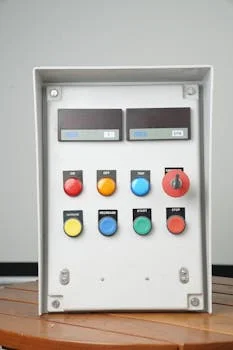
Selecting the correct technology requires balancing removal efficiency against the high cost of industrial land in Osaka. While traditional activated sludge systems are effective, their large footprint is often prohibitive for factories in densely packed zones like Joto or Konohana. Modern alternatives like Membrane Bioreactors (MBR) and Dissolved Air Flotation (DAF) offer higher efficiency in a fraction of the space.
| Technology | Primary Target | Footprint Requirement | Removal Efficiency (COD/SS) | Suitability |
|---|---|---|---|---|
| DAF (Dissolved Air Flotation) | FOG, SS, Light Organics | Medium | 85% / 95% | Food Processing, Slaughterhouses |
| MBR (Membrane Bioreactor) | BOD, COD, Bacteria | Very Small | 98% / 99% | Textiles, Chemicals, High-Strength Bio |
| Lamella Clarifier | Heavy Metals, Sludge | Small | 60% / 90% | Metalworking, Electroplating |
| Chemical Precipitation | Heavy Metals, Phosphorus | Medium | N/A / 95% | Electronics, Metal Finishing |
For sectors such as food and beverage, DAF systems for Osaka’s food processing and metalworking industries are the standard for removing fats, oils, and greases. These systems use micro-bubbles to float solids to the surface for mechanical skimming, achieving SS removal rates of up to 99% when paired with appropriate flocculants. In contrast, for textile manufacturers dealing with complex dyes or chemical plants with high organic loads, MBR systems for space-constrained Osaka factories provide a superior solution by combining biological treatment with membrane filtration, often allowing for water reuse within the plant.
Metalworking and textile plants in Osaka often prioritize Lamella clarifiers for Osaka’s metalworking and textile plants because they offer a high settling area in a compact vertical design. These are particularly effective at removing heavy metal hydroxides following chemical precipitation. When selecting these technologies, engineers must also account for Osaka-specific constraints: noise levels must be kept below 55–65 dB(A) in mixed-use zones, and equipment is frequently installed in basements or on rooftops to maximize production floor space.
Step-by-Step Guide to Selecting Wastewater Treatment Equipment for Osaka Factories
Engineering a wastewater solution in Osaka requires a systematic approach to ensure the equipment handles the specific chemical profile of the local industry while fitting within the logistical constraints of urban manufacturing.
- Step 1: Wastewater Characterization: Identify the specific pollutants. For Osaka’s food sector, typical COD ranges from 500–5,000 mg/L and BOD from 300–3,000 mg/L. Metalworking facilities must test for Chrome (Cr), Nickel (Ni), and Zinc (Zn) in addition to mineral oils.
- Step 2: Regulatory Matching: Compare your raw wastewater data against the Osaka Prefecture 2025 limits. This delta determines the required removal efficiency. If you are discharging to the sewer, focus on pH, SS, and FOG; if discharging to a river, focus on COD, Nitrogen, and Phosphorus.
- Step 3: Flow Rate and Load Calculation: Size your equipment based on peak flow, not average flow. DAF systems are typically sized for 4–300 m³/h, while MBR systems for industrial use are scaled from 10–2,000 m³/day depending on the organic loading rate (OLR).
- Step 4: Space and Budget Constraints: Evaluate the footprint. A DAF system might require 20–100 m², whereas an MBR can achieve the same treatment in 10–50 m². Capital costs (CAPEX) for DAF range from ¥2–10M, while MBR systems, due to membrane costs, range from ¥5–25M.
- Step 5: Vendor Selection and Compliance: Choose a supplier with a track record in Osaka. A checklist for evaluation should include: (1) Availability of local maintenance teams, (2) Proven compliance with Osaka City Sewage Works Bureau standards, and (3) Provision of automated monitoring systems.
Additionally, consider the end-of-pipe requirements. Effective treatment generates sludge, necessitating sludge dewatering solutions for Osaka’s industrial wastewater to reduce disposal volumes. In Osaka, industrial waste disposal costs are high, making moisture reduction from 98% to 75% a critical factor in ROI.
Cost Breakdown: Industrial Wastewater Treatment in Osaka (2025 Data)
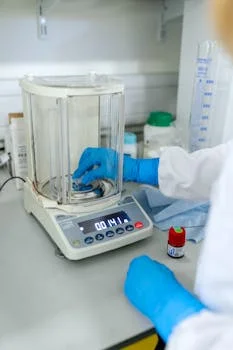
Understanding the total cost of ownership (TCO) is vital for procurement teams. In Osaka, the capital investment is only one part of the equation; electricity prices and chemical costs are significant drivers of operational expenditure (OPEX). Onsite treatment typically pays for itself by avoiding municipal surcharges and reducing raw water intake through recycling.
| Cost Category | DAF System (100 m³/day) | MBR System (100 m³/day) | Lamella Clarifier (100 m³/day) |
|---|---|---|---|
| Capital Cost (CAPEX) |