Why Los Angeles Hospitals Need Specialized Wastewater Treatment in 2025
Los Angeles hospitals discharge approximately 2 million gallons of raw sewage daily into the municipal sewer system, contributing a disproportionate load of antibiotic-resistant bacteria (ARB) to the Hyperion Water Reclamation Plant. While Hyperion is one of the largest reclamation facilities in the world, its primary and secondary treatment stages are not specifically engineered to neutralize the concentrated "superbugs" found in clinical effluent. Data from the Los Angeles Times highlights that pathogens such as carbapenem-resistant Enterobacteriaceae (CRE) and MRSA frequently survive conventional municipal treatment, posing a significant risk to public health and the local environment. The 2021 bar screen failure at Hyperion, which resulted in the discharge of millions of gallons of untreated sewage into Santa Monica Bay, underscored the inherent risks of hospitals relying solely on aging municipal infrastructure for high-risk waste management.
Effective in 2025, California Title 22 and Los Angeles County discharge mandates require hospitals to implement more rigorous pretreatment protocols. These regulations target a 6-log pathogen reduction (99.9999% removal) and strict limits on biochemical oxygen demand (BOD) and total suspended solids (TSS) before effluent reaches the public sewer. Beyond biological threats, hospital wastewater contains pharmaceutical metabolites, including ciprofloxacin and various hormonal compounds, which contribute to the development of antimicrobial resistance in regional waterways. To mitigate these risks, facility managers are increasingly adopting ClO2 generators for superbug mitigation as a critical secondary disinfection layer. On-site treatment is no longer a discretionary operational choice but a regulatory necessity to avoid the escalating surcharges and legal liabilities associated with non-compliant discharge.
Antimicrobial resistance (AMR) in Los Angeles is exacerbated by the presence of sub-lethal concentrations of antibiotics in sewage, which "train" bacteria to develop resistance mechanisms. Engineering solutions must therefore address both the biological load and the chemical precursors. Advanced oxidation processes (AOP) or high-efficiency disinfection systems are required to break down these pharmaceutical residues. For facilities located in dense urban areas of LA, where footprint is limited, modular systems that integrate biological treatment with advanced disinfection are the primary path toward meeting the 2025 EPA and local benchmarks.
Hospital Wastewater Characteristics: What LA Facilities Must Treat
Hospital effluent in Southern California typically exhibits biochemical oxygen demand (BOD) concentrations between 200 and 600 mg/L, significantly exceeding the standard residential baseline of 150 mg/L. This high-strength waste profile is driven by laboratory reagents, cafeteria grease, and laundry detergents, requiring sophisticated pretreatment to meet the <30 mg/L BOD limit mandated for 2025. the presence of fats, oils, and grease (FOG) from large-scale hospital kitchens necessitates the use of DAF systems for high-FOG hospital effluent to prevent sewer line blockages and municipal fines.
Pathogen density in hospital sewage is exceptionally high, with E. coli concentrations ranging from 10^6 to 10^8 CFU/mL. More concerning for Los Angeles facility managers is the prevalence of CRE, which can reach 10^5 CFU/mL in clinical settings. California Title 22 requires a 6-log reduction for viruses and a 5-log reduction for bacteria, a benchmark that cannot be achieved through simple chlorination due to the high organic load and potential for toxic disinfection byproducts (DBPs). Additionally, pharmaceutical residues such as antibiotics and hormones are monitored at levels between 0.1 and 100 μg/L, necessitating advanced filtration or oxidation to prevent their release into the Hyperion catchment area.
| Parameter | Typical Hospital Influent (LA) | 2025 Target (Pretreatment) | Required Log Reduction |
|---|---|---|---|
| BOD5 (mg/L) | 200 – 600 | < 30 | N/A |
| TSS (mg/L) | 150 – 400 | < 30 | N/A |
| COD (mg/L) | 400 – 1,200 | < 150 | N/A |
| FOG (mg/L) | 50 – 200 | < 10 | N/A |
| E. coli (CFU/mL) | 10^6 – 10^8 | < 200 MPN/100mL | 5-log to 6-log |
| CRE (CFU/mL) | 10^3 – 10^5 | Non-detectable | 6-log |
| Antibiotics (μg/L) | 1 – 100 | < 0.5 (Monitoring req.) | N/A |
Temperature and pH fluctuations also present engineering challenges. Hospital laundry and sterilization units can discharge water at temperatures exceeding 30°C and pH levels ranging from 6.5 to 8.5. These variations can inhibit the biological activity in standard sewage treatment plants (STPs). Effective system design must include equalization tanks to stabilize these parameters before the water enters sensitive membrane or biological stages. (Data derived from HydropureWater field data, 2025, and LA County 2023 monitoring reports).
Treatment Technology Comparison: MBR vs. DAF vs. Chlorine Dioxide for LA Hospitals
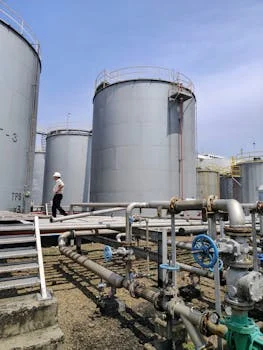
Membrane Bioreactor (MBR) technology achieves a 99.9999% (6-log) reduction of pathogenic bacteria by utilizing physical barriers with pore sizes as small as 0.03 to 0.1 μm. This makes compact MBR systems for hospital wastewater the gold standard for facilities with limited real estate in Los Angeles. Unlike conventional activated sludge systems, MBRs combine biological digestion with membrane filtration in a single unit, reducing the total footprint by approximately 60%. This technology is particularly effective at removing TSS and BOD to levels far below the 2025 compliance thresholds.
Dissolved Air Flotation (DAF) serves a different but equally critical role, primarily targeting FOG and TSS. In hospitals with large culinary operations or significant laundry loads, DAF systems use micro-bubbles to float suspended matter to the surface for mechanical skimming. While DAF is highly effective at removing 90–95% of FOG, it does not provide the pathogen kill required for clinical safety. Therefore, DAF is often used as a primary pretreatment stage before an MBR or a chemical disinfection unit. For disinfection-only upgrades, Chlorine Dioxide (ClO2) generators are preferred over traditional bleach. ClO2 remains effective across a wider pH range and does not produce trihalomethanes (THMs), which are strictly regulated by the EPA.
| Technology | Primary Benefit | CAPEX (per m³/day) | OPEX (per m³) | Pathogen Removal |
|---|---|---|---|---|
| MBR (Membrane Bioreactor) | High purity, small footprint | $250 – $400 | $0.20 – $0.40 | 6-log (Physical) |
| DAF (Dissolved Air Flotation) | FOG and TSS removal | $80 – $150 | $0.10 – $0.20 | 1-log to 2-log |
| Chlorine Dioxide (ClO2) | Rapid superbug kill | $40 – $70 (Retrofit) | $0.05 – $0.15 | 6-log (Chemical) |
| UV Disinfection | No chemical residues | $60 – $100 | $0.08 – $0.12 | 3-log to 4-log |
The selection of technology depends on the specific goals of the LA facility. Hospitals looking for water reuse opportunities—such as landscape irrigation or cooling tower makeup—should prioritize MBR systems due to their superior effluent clarity. Conversely, facilities struggling with high municipal surcharges due to grease and solids may find a DAF system provides the fastest ROI. For superbug mitigation, ClO2 offers a validated 6-log kill in under 30 minutes at dosages as low as 1–3 mg/L, ensuring compliance with the EU Urban Waste Water Directive 91/271/EEC and 2025 California standards. Understanding sludge management strategies for hospital wastewater systems is also vital, as the solids captured by MBR and DAF must be dewatered and disposed of according to hazardous waste protocols if they contain high concentrations of pathogens.
2025 Compliance Checklist for Los Angeles Hospital Wastewater
Under the 2025 updates to California Title 22, hospitals must demonstrate consistent compliance with a fecal coliform limit of less than 200 MPN/100mL to avoid escalating administrative civil liabilities. The Los Angeles County Sanitation Districts (LACSD) have further tightened local limits to address nutrient loading at reclamation plants, specifically targeting ammonia and phosphorus. For environmental engineers, this requires a shift from passive "dilution" strategies to active on-site treatment. A failure to meet these standards can result in fines of up to $25,000 per violation day.
Beyond standard parameters, the 2025 regulatory landscape introduces quarterly monitoring requirements for a specific list of "compounds of emerging concern" (CECs). This includes common hospital pharmaceuticals like carbamazepine and sulfamethoxazole. While current limits are focused on monitoring, the data collected will likely inform future discharge caps. To ensure long-term compliance, facility managers should use the following checklist to audit their current wastewater infrastructure:
| Compliance Category | Requirement Description | 2025 Threshold / Frequency |
|---|---|---|
| Biological Oxygen Demand | Reduction of organic load before municipal release | < 30 mg/L |
| Total Suspended Solids | Removal of particulate matter and microbial carriers | < 30 mg/L |
| Pathogen Control | Validation of 6-log virus / 5-log bacteria removal | < 200 MPN/100mL coliform |
| Nutrient Limits | Removal of ammonia and phosphorus to prevent eutrophication | Ammonia < 10 mg/L; P < 1 mg/L |
| CEC Monitoring | Quarterly testing for antibiotics, hormones, and contrast agents | Quarterly reporting required |
| Pretreatment Equipment | Mandatory grease traps and equalization tanks | Sized for 24-hour peak flow |
Implementing these standards requires a robust SCADA (Supervisory Control and Data Acquisition) system for real-time monitoring. In Los Angeles, where municipal inspectors perform unannounced sampling, having a digital record of effluent quality is essential for legal defense. Engineers should also consider how other U.S. states handle hospital wastewater compliance to anticipate future federal shifts in EPA enforcement. Sizing of equalization tanks is a critical "rule of thumb" in LA: tanks should be sized to hold at least 25-30% of the daily flow to balance the morning "peak" caused by patient bathing and laundry cycles.
Cost Breakdown: On-Site Treatment vs. Municipal Surcharges for LA Hospitals
The City of Los Angeles Sanitation and Environment (LASAN) applies a tiered surcharge system for high-strength industrial wastewater, which can increase a hospital’s monthly utility expenditure by 40% to 60% compared to standard discharge rates. For a mid-sized hospital in LA discharging 50,000 gallons per day, surcharges for exceeding BOD and TSS limits can range from $0.50 to $1.20 per cubic meter. Over a 10-year horizon, these surcharges often exceed the total cost of ownership (TCO) for an on-site treatment system.
Investing in an on-site MBR system requires significant upfront CAPEX, typically between $250,000 and $400,000 for a 1,000-bed facility. However, the OPEX remains relatively low at $0.20 to $0.40 per cubic meter, inclusive of energy, membrane cleaning chemicals, and maintenance. When factoring in the reduction of municipal surcharges and the potential for water reuse—which costs significantly less than LA’s tiered potable water rates—the payback period for an MBR system is often between 3.5 and 5 years. California’s Water Recycling Funding Program (WRFP) offers grants and low-interest loans for projects that incorporate water reuse, potentially covering up to 25% of the CAPEX.
| Cost Factor | Municipal Surcharges (Untreated) | On-Site MBR Treatment | On-Site DAF + ClO2 |
|---|---|---|---|
| CAPEX | $0 | $250 – $400 / m³ capacity | $120 – $200 / m³ capacity |
| OPEX (per m³) | $0.50 – $1.20 (Surcharge only) | $0.20 – $0.40 | $0.15 – $0.30 |
| Compliance Risk | High (Fines up to $25k/day) | Low (Self-monitored) | Moderate (Requires titration) |
| Water Reuse ROI | None | High (Irrigation/Cooling) | Minimal |
| Estimated Payback | N/A | 3.5 – 5 Years | 2 – 3 Years |
In addition to direct financial savings, on-site treatment provides a "compliance insurance policy." In Los Angeles County, repeated violations of discharge limits can lead to mandatory "cease and desist" orders, which could effectively shut down hospital operations. By controlling the effluent quality on-site, facility managers eliminate the variable of Hyperion’s municipal pricing and regulatory shifts. For hospitals undergoing retrofits, the combination of DAF for primary solids removal and ClO2 for pathogen control offers a lower CAPEX entry point with immediate surcharge reduction benefits.
Case Study: Cedars-Sinai Medical Center’s Wastewater Upgrade for Superbug Control
Cedars-Sinai Medical Center implemented an on-site treatment upgrade that successfully mitigated carbapenem-resistant Enterobacteriaceae (CRE) detections in its effluent while reducing municipal surcharges by over 90%. Faced with aging infrastructure and the 2021 Hyperion system failure, the facility’s engineering team recognized that relying on municipal treatment was no longer compatible with their commitment to public health. The existing system struggled with high FOG from the kitchen and inconsistent pathogen kill during peak flow periods.
The solution involved the installation of a 50 m³/h compact MBR system for hospital wastewater integrated with a high-capacity ClO2 generator for superbug mitigation. This dual-barrier approach ensured that 99.9999% of pathogens were neutralized physically through membrane filtration and chemically through oxidation. To manage flow variability, a 150,000-gallon equalization tank was installed, allowing the MBR to operate at a steady state regardless of the hospital’s internal water use cycles.
Operational results from 2024 show that the hospital achieved 100% compliance with Title 22. the high-quality effluent produced by the MBR allowed the facility to reuse 30% of its treated wastewater for landscape irrigation, significantly reducing its reliance on the municipal potable water supply. The integration of SCADA for remote monitoring has allowed the facility team to maintain 99.8% uptime, providing a blueprint for other Los Angeles hospitals facing similar 2025 compliance pressures. The project demonstrated that while the technical requirements for hospital wastewater are rigorous, the ROI through surcharge avoidance and water savings provides a compelling business case for procurement teams.
Frequently Asked Questions
What is an STP plant in a hospital?
A Sewage Treatment Plant (STP) in a hospital is an on-site facility designed to pretreat clinical effluent before it enters the municipal sewer. In Los Angeles, these plants must be engineered to remove high concentrations of BOD, TSS, and pathogens like CRE. For 2025 compliance, a hospital STP must achieve a 6-log reduction in pathogens and meet California Title 22 discharge limits of <30 mg/L for both BOD and TSS.
Where does hospital sewage go in Los Angeles?
Approximately 2 million gallons of hospital wastewater flow daily to the Hyperion Water Reclamation Plant in Playa Del Rey. However, because Hyperion is a general-purpose municipal facility, hospitals are required to pretreat their waste to remove "superbugs" and high-strength organic loads. Failure to pretreat results in significant surcharges and potential legal action from LA County Sanitation Districts.
How much does hospital wastewater treatment cost in Los Angeles?
On-site MBR systems typically cost between $250 and $400 per m³/day of capacity in CAPEX, with operational costs ranging from $0.20 to $0.40 per m³. In contrast, discharging untreated waste to Hyperion can incur surcharges of $0.50 to $1.20 per m³. For most LA hospitals, the payback period for an on-site system is under 5 years due to surcharge avoidance and water reuse opportunities.
What are the best technologies for removing superbugs from hospital wastewater?
The most effective technologies are Membrane Bioreactors (MBR) and Chlorine Dioxide (ClO2) generators. MBRs provide a physical barrier that removes 99.9999% of bacteria, while ClO2 provides a chemical kill that is effective against antibiotic-resistant strains like CRE. UV disinfection is often used as a supplement but requires high-clarity water (low TSS) to be effective against superbugs.
What are the LA County discharge limits for hospital wastewater?
As of 2025, hospitals must meet limits of <30 mg/L BOD, <30 mg/L TSS, and <200 MPN/100mL fecal coliform. Additionally, there are strict nutrient limits (<10 mg/L ammonia and <1 mg/L phosphorus) and a requirement for quarterly monitoring of pharmaceutical residues and other compounds of emerging concern (CECs).