Wastewater treatment plant cost in Colombia in 2025 ranges from $500,000 for a 50 m³/day industrial MBR unit to over $2 billion for a large municipal package such as Bogotá's Canoas plant. Capital cost averages $1,200–$3,500 per m³/day for conventional activated sludge (CAS) and $4,500–$6,000 per m³/day for MBR. Operating cost adds $0.30–$1.20 per m³, with energy at 40–60% of OPEX. Compliance with Resolution 0631/2015 (TSS < 30 mg/L, BOD < 50 mg/L) adds 10–20% in CAPEX for tertiary treatment.
Why wastewater treatment costs in Colombia are rising in 2025
Colombia's National Water Plan 2022–2031 targets wastewater treatment coverage rising from 48% in 2020 to 80% by 2031. The Ministry of Environment and Sustainable Development (2023) ties that goal to roughly $12 billion in infrastructure spend. Metropolitan areas are shifting toward regional plants to capture scale economies.
Earlier engineering estimates put Bogotá's Canoas plant near $1.52 billion. The Alcaldía de Bogotá (2025) cites an estimated investment of 12 billones COP for the multi-year package. Cúcuta's $2 billion tender targets per-capita treatment cost of $400–$800, down from historic highs near $1,506.
For industry, Resolution 0631/2015 is the main cost driver. It sets discharge limits for over 50 activities. Textile, food, and mining facilities in Medellín and Cali must move past primary treatment to avoid escalating fines. That push raises demand for MBR systems for high-efficiency wastewater treatment in Colombia. Climate forcing matters too. Intensified La Niña cycles in Atlántico and Bolívar add about 30% to baseline civil works cost versus inland highland sites.
Wastewater treatment plant cost breakdown: capital vs. operational expenses
CAPEX for wastewater treatment in Colombia tracks effluent quality and scale. Municipal CAS plants run $1,200–$3,500 per m³/day of capacity. MBR plants run $4,500–$6,000 per m³/day where land is tight or reuse is required. Industrial plants show wider variance. Physical-chemical systems such as DAF systems for industrial wastewater pretreatment in Colombia run $800–$2,500 per m³/day. Integrated trains for textile or pharmaceutical waste can exceed $5,000 per m³/day.
OPEX typically runs $0.30–$1.20 per m³ of treated water. Energy is the dominant line at 40–60% of OPEX. CAS consumes 0.8–1.2 kWh/m³. MBR consumes 1.5–2.5 kWh/m³ due to membrane scouring. Chemical cost for coagulation, flocculation, and pH trim averages $0.05–$0.20 per m³. Labor follows regional rates. A Bogotá plant operator commands $1,200–$2,000 per month versus $800–$1,500 in Bucaramanga or Ibagué (DANE, 2024). Most plants we size for Colombian municipal tenders still run in the lower half of the OPEX band once aeration controls are tuned.
| Cost Component | Municipal (CAS) | Industrial (DAF + Bio) | Advanced (MBR) |
|---|---|---|---|
| CAPEX (per m³/day) | $1,200 – $3,500 | $2,500 – $4,500 | $4,500 – $6,000 |
| OPEX (per m³) | $0.30 – $0.60 | $0.60 – $1.00 | $0.80 – $1.20 |
| Energy Consumption | 0.8 – 1.2 kWh/m³ | 1.0 – 1.5 kWh/m³ | 1.5 – 2.5 kWh/m³ |
| Chemical Costs | $0.02 – $0.08/m³ | $0.10 – $0.25/m³ | $0.05 – $0.15/m³ |
| Maintenance Reserve | 2% of CAPEX/yr | 3% of CAPEX/yr | 5% of CAPEX/yr |
Cost comparison by technology: MBR vs. DAF vs. conventional activated sludge
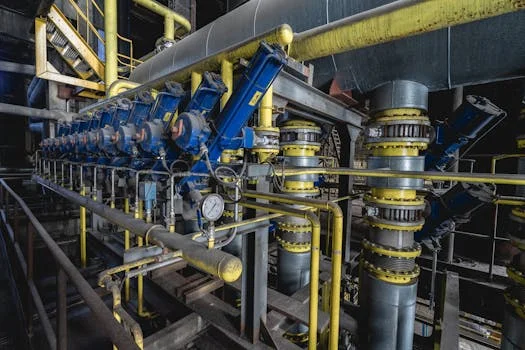
Technology choice in Colombia balances first cost against compliance risk. CAS has the lowest CAPEX but needs a large footprint. That footprint is often unavailable along the Bogotá-Facatativá industrial corridor. DAF is the workhorse for industrial pretreatment, especially dairy and meat, hitting 90–98% TSS removal. DAF CAPEX is modest, but OPEX climbs with coagulant and flocculant dosing. For sites targeting reuse to offset municipal water tariffs, MBR delivers TSS < 1 mg/L and BOD < 5 mg/L.
| Capacity / Tech | MBR (CAPEX/OPEX) | DAF (CAPEX/OPEX) | CAS (CAPEX/OPEX) |
|---|---|---|---|
| 50 m³/day | $275K / $1.10 per m³ | $95K / $0.90 per m³ | $140K / $0.75 per m³ |
| 500 m³/day | $2.4M / $0.95 per m³ | $850K / $0.75 per m³ | $1.1M / $0.55 per m³ |
| 5,000 m³/day | $22M / $0.85 per m³ | $7.5M / $0.65 per m³ | $12M / $0.40 per m³ |
| Footprint Req. | Minimal (1x) | Medium (1.5x) | High (2.5x) |
| Compliance Grade | Reuse Quality | Pretreatment Only | Discharge Standard |
To handle the byproduct of these trains, sludge dewatering solutions for Colombian wastewater treatment plants are essential. CAS and DAF produce significant sludge volumes that require mechanical thickening and dewatering. Poor dewatering can consume 15–20% of total OPEX. MBR runs at higher MLSS and often yields less sludge, but membrane cleaning chemistry adds its own line item.
Regional cost variations: Bogotá vs. Medellín vs. rural Colombia
Location shifts the cost profile through land price, environmental engineering labor supply, and chemical logistics. Bogotá sits at the high end. Industrial land in Fontibón or Aranda runs $150–$300 per m². Concentrated high-tech industry also lifts specialty labor rates. Medellín typically comes in 10–15% below Bogotá on CAPEX. Industrial land there runs $80–$150 per m² with a tight local supply chain for civil materials.
In rural Caribbean and Amazonian regions, the cost curve flips. Land is cheap, but CAPEX inflates by about 20% from logistics for heavy equipment and membrane skids. OPEX in departments like Chocó or La Guajira runs 30% above urban baselines. Electricity is costly and chemical distributors are sparse. For these regions, 5 critical stages of wastewater treatment for Colombian plants should be simplified toward low-maintenance biological processes or rugged compact units.
| Region | Labor Multiplier | Land Cost Multiplier | Logistics Multiplier | Total CAPEX Factor |
|---|---|---|---|---|
| Bogotá (D.C.) | 1.0 | 1.0 | 1.0 | 1.0 |
| Medellín (Antioquia) | 0.9 | 0.6 | 1.0 | 0.85 – 0.90 |
| Cali (Valle) | 0.85 | 0.5 | 1.1 | 0.80 – 0.85 |
| Rural (Atlántico) | 0.7 | 0.2 | 1.3 | 0.75 – 0.80 |
Compliance costs: permitting, discharge standards, and penalties
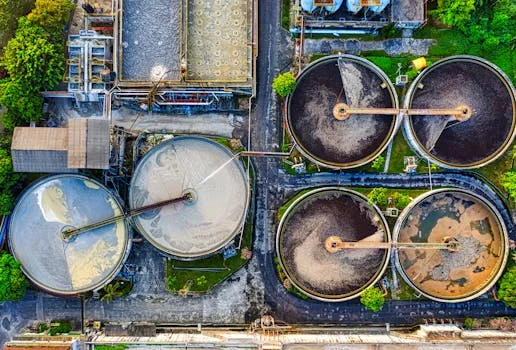
Resolution 0631/2015 governs wastewater discharge in Colombia. Domestic limits include COD < 150 mg/L, BOD < 50 mg/L, and TSS < 30 mg/L. Industrial sectors face tighter sector-specific limits. Textiles, for example, must control color and phenols. Meeting these typically requires tertiary treatment such as sand filtration or advanced oxidation. That work adds 10–20% to initial CAPEX but avoids the penalties framed under Decree 1076/2015.
Permitting is a budget line that often gets missed. An Environmental Impact Assessment (EIA) for a medium plant runs $10,000–$50,000. An operational discharge permit (Permiso de Vertimientos) runs $5,000–$20,000 depending on receiving-water sensitivity. Non-compliance fines range from $5,000 to $500,000 per violation. To control pathogen discharge, many plants integrate chlorine dioxide generators for compliance with Colombian discharge standards. For high-end reuse cases, industrial wastewater treatment standards and costs in Medellín serve as a national benchmark.
ROI calculator: how to justify your wastewater treatment investment
Justifying a WWTP in Colombia means framing the plant as an asset, not a sunk cost. ROI flows from three streams: avoided fines, water-tariff savings through reuse, and lower chemical cost from process optimization. A 5,000 m³/day municipal plant with $15 million CAPEX can hit a 7-year payback. That case assumes $200,000 per year in avoided regional non-compliance fines plus a basic reuse loop for municipal landscaping.
Industrial sites often pay back faster. A 200 m³/day DAF system with $400,000 CAPEX can hit a 3-year payback when industrial water in Bogotá exceeds $2.50 per m³. Reusing 50% of process water saves over $90,000 per year. A 20% jump in energy cost, plausible in Colombia's volatile grid, extends payback by roughly 14 months. Energy-efficient equipment selection during procurement is therefore non-negotiable.
Example ROI Calculation (Industrial MBR):
CAPEX: $500,000
Annual OPEX: $65,000
Avoided Fines: $45,000/year
Water Reuse Savings (70% reuse at $2.20/m³): $112,000/year
Net Annual Benefit: $92,000 | Payback Period: 5.4 Years
Who this is for: plant managers and EPC buyers sizing municipal or industrial trains under Resolution 0631/2015. Who should look elsewhere: potable-only projects with no discharge or reuse duty. Next step: share flow, COD/BOD, and discharge or reuse targets in a request for quote so CAPEX and OPEX can be scoped to your site.
Frequently Asked Questions
How much does it cost to set up a sewage treatment plant in Colombia?
Costs range from $500,000 for a 50 m³/day industrial MBR unit to over $2 billion for large municipal packages such as Bogotá's Canoas plant. CAPEX averages $1,200–$6,000 per m³/day depending on technology and scale. Municipal CAS sits at the low end. MBR sits at the high end when land is scarce or reuse is required. Tertiary polishing for Resolution 0631/2015 can still move a bid outside that average range.
Which technology is most cost-effective for industrial wastewater in Colombia?
DAF systems offer the lowest CAPEX at $800–$2,500 per m³/day for industrial pretreatment. They suit dairy, meat, and other high-TSS streams that need 90–98% solids removal before biological treatment. MBR is the right pick for space-constrained sites that need near-reuse-quality effluent. CAS remains the cheapest full-treatment option when footprint is available and discharge, not reuse, is the end use.
What are the operational costs of a wastewater treatment plant in Colombia?
OPEX runs $0.30–$1.20 per m³, with energy at 40–60% of OPEX and chemicals at $0.05–$0.20 per m³. Labor averages $1,200/month in Bogotá versus $800/month in rural departments. CAS typically uses 0.8–1.2 kWh/m³. MBR uses 1.5–2.5 kWh/m³ because of membrane scouring. Poor sludge dewatering can consume another 15–20% of total OPEX if solids handling is undersized.
How do I comply with Colombia's wastewater discharge standards?
Resolution 0631/2015 sets TSS < 30 mg/L, BOD < 50 mg/L, and COD < 150 mg/L for domestic discharge. Industrial sectors may need tertiary treatment such as sand filtration or UV disinfection to meet sector-specific limits. Budget 10–20% extra CAPEX for that polishing step. Keep the Permiso de Vertimientos current, and track Decree 1076/2015 enforcement exposure when estimating avoided-fine value in the business case.
Can I reuse treated wastewater in Colombia?
Yes. Resolution 1207/2014 sets rules for reuse of treated wastewater in agricultural and industrial uses, including irrigation of non-food or processed crops, green areas, and industrial cooling. MBR systems consistently meet the effluent quality these end uses require when operated to the resolution's quality criteria. Confirm the concession and quality criteria with the competent environmental authority before locking reuse savings into the ROI model.