Jerusalem’s Wastewater Treatment Challenges: Why Supplier Choice Matters
Jerusalem’s water demand, approximately 100 million cubic meters per year, is increasingly met by unconventional sources, with 30% currently sourced from recycled wastewater, according to the Israel Water Authority's 2023 report. This reliance drives stringent municipal discharge limits, mandating advanced sewage treatment equipment capable of achieving effluent quality such as BOD < 10 mg/L, TSS < 10 mg/L, and fecal coliform < 10 CFU/100mL, as stipulated by Jerusalem Municipality’s 2024 guidelines. The city's dense urban environment presents significant constraints, with an estimated 60% of new developments lacking adequate space for conventional, large-footprint treatment plants. This scarcity of land fuels a demand for compact solutions like MBR systems or underground WSZ Series package plants. The industrial sector in Jerusalem, encompassing food processing, pharmaceuticals, and textiles, faces additional pressure to implement robust pretreatment systems. These facilities require specialized equipment, such as DAF units and chemical dosing systems, to meet the industrial discharge standards set by the Ministry of Environmental Protection (MOE) in 2023, which often include limits on heavy metals and fats, oils, and grease (FOG). Failure to comply can result in substantial penalties. For example, a 200-room hotel expansion in the Talpiot industrial zone recently faced significant fines for exceeding TSS limits, necessitating a rapid upgrade to a 50 m³/h package plant to avoid operational disruptions and further enforcement actions. Selecting the right sewage treatment equipment supplier in Jerusalem is therefore not merely a procurement decision but a strategic imperative for operational continuity, regulatory compliance, and environmental stewardship.Key Technologies for Jerusalem’s Sewage Treatment Needs
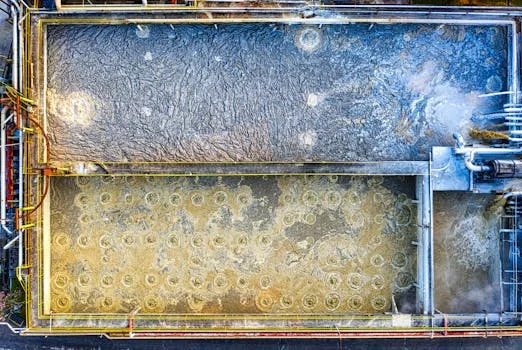
Jerusalem's unique challenges require careful consideration of sewage treatment technologies. Selecting the appropriate sewage treatment technology is crucial for meeting Jerusalem’s specific environmental and urban challenges, balancing space efficiency, energy consumption, and effluent quality. Membrane Bioreactor (MBR) systems are particularly ideal for urban sites with severe space constraints. These advanced systems, often utilizing PVDF membranes with a 0.1 μm pore size, consistently achieve an effluent quality suitable for unrestricted irrigation, typically yielding TSS < 1 mg/L and turbidity < 0.2 NTU. The energy consumption for MBR systems for Jerusalem’s space-constrained urban projects, such as those in the DF Series, ranges from 0.6–1.2 kWh/m³, making them a highly efficient option for high-quality reuse. Building on the need for efficient and compact solutions, Dissolved Air Flotation (DAF) systems are highly effective for industrial pretreatment, especially in sectors like food processing and textiles. DAF systems for industrial pretreatment in Jerusalem are designed to remove over 95% of FOG and more than 90% of TSS, operating at flow rates from 4–300 m³/h with a micro-bubble size between 20–50 μm. This makes them indispensable for facilities needing to significantly reduce pollutant loads before discharging into municipal sewers. For decentralized applications in residential or commercial sites, compact WSZ Series package plants offer fully automated, often buried, solutions. These systems handle flow rates from 1–80 m³/h and consistently comply with Israeli Standard 5452 for secondary treatment. Finally, chemical dosing systems are frequently required for pH adjustment, maintaining effluent within the 6.5–8.5 range, and for phosphorus removal, targeting concentrations below 1 mg/L. PLC-controlled dosing systems can optimize chemical usage, reducing waste by up to 20%. The following table provides a comparison of these key technologies:| Technology | Footprint (m²/m³/day) | Energy Use (kWh/m³) | Effluent Quality (BOD/TSS mg/L) | Best Use Case |
|---|---|---|---|---|
| MBR Systems | Compact (0.1-0.2) | 0.6-1.2 | < 5/< 1 | Urban, High-Quality Reuse, Space-Constrained |
| DAF Systems | Moderate (0.2-0.5) | 0.2-0.5 | 30-50/10-20 (pre-treatment) | Industrial Pre-treatment (FOG, TSS) |
| Package Plants (WSZ Series) | Compact (0.1-0.3) | 0.3-0.7 | < 10/< 10 | Decentralized, Residential, Commercial |
Jerusalem’s Regulatory Landscape: Compliance Requirements for 2025
Cost Benchmarks: Sewage Treatment Equipment in Jerusalem (2025)
Understanding the financial implications of sewage treatment equipment in Jerusalem requires a detailed breakdown of both Capital Expenditure (CAPEX) and Operational Expenditure (OPEX), which are significantly influenced by local conditions. For compact WSZ Series package plants, designed for flow rates of 10–50 m³/h, the CAPEX typically ranges from ₪600,000–₪1,600,000 ($160,000–$430,000). This cost generally includes the civil works for installation and the automation systems necessary for efficient operation. DAF systems for industrial pretreatment in Jerusalem, suitable for 4–100 m³/h applications, have a CAPEX between ₪350,000–₪1,200,000 ($95,000–$325,000). Their OPEX is heavily influenced by chemical costs, which can range from ₪2–₪5/m³ treated, primarily for polymer and pH adjusters. MBR systems, offering higher effluent quality and a smaller footprint, represent a larger initial investment, with CAPEX for 50–200 m³/day systems falling between ₪1,000,000–₪3,000,000 ($270,000–$810,000). Annual membrane replacement for MBR systems, such as those in the DF Series, can add approximately ₪150,000 per year to the OPEX.Top 8 Sewage Treatment Equipment Suppliers in Jerusalem (2025)
10-Point Supplier Evaluation Checklist for Jerusalem Projects
A rigorous supplier evaluation is essential for Jerusalem-based sewage treatment projects, ensuring that selected equipment not only meets technical specifications but also adheres to local regulatory requirements and provides reliable, ongoing support. This checklist provides a practical framework for assessing potential suppliers during the RFP process or site visits.Frequently Asked Questions
Q: Which country has the best sewage treatment plant?
A: Israel is recognized as a global leader in wastewater reuse, achieving a 90% recycling rate and pioneering advanced treatment technologies like MBR and DAF systems.
Q: How does Israel reuse its wastewater?
A: Israel treats 90% of its wastewater to tertiary standards, involving advanced filtration and disinfection, for various reuse purposes.
Q: What are the discharge limits for sewage treatment plants in Jerusalem?
A: Jerusalem Municipality’s 2024 guidelines enforce strict discharge limits: BOD must be < 10 mg/L, TSS < 10 mg/L, fecal coliform < 10 CFU/100mL, and pH between 6.5–8.5.
Q: How much does a sewage treatment plant cost in Jerusalem?
A: Costs vary significantly by technology and capacity.
Q: Can I use treated sewage water for irrigation in Jerusalem?
A: Yes, treated sewage water can be used for irrigation in Jerusalem, provided the effluent meets Israeli Standard 5452.