Why Bihar Hospitals Need Wastewater Treatment: The 2025 Risk Landscape
Bihar’s healthcare facilities have a dismal record of treating hospital wastewater, with only 10% of facilities treating wastewater, risking groundwater contamination with antibiotic-resistant superbugs and CPCB fines up to ₹1 lakh/day.
The current state of hospital wastewater management in Bihar represents a critical intersection of public health risk and regulatory liability. According to a 2024 study published in the International Journal For Multidisciplinary Research (IJFMR), approximately 90% of healthcare facilities in the state operate in direct violation of Section 7 of the Water Act, 1974. These facilities discharge untreated effluent containing high concentrations of pharmaceuticals, pathogens, and chemical reagents directly into municipal sewers or open water bodies.
The health consequences are already manifesting in Bihar’s hydrogeology. Antibiotic-resistant genes, specifically the blaNDM-1 (New Delhi metallo-beta-lactamase) superbug, have been detected in Bihar’s groundwater systems (India Water Portal 2024). This contamination is linked to a 30% increase in healthcare-associated infections (HAIs) in Patna, as hospital effluent serves as a breeding ground for multi-drug resistant organisms. In Siwan, the Daha River case study revealed that 90% of water samples failed WHO safety thresholds for coliforms, directly attributed to the discharge of biomedical liquid waste.
Financial risks for hospital administrators are equally severe. Under 2023 Central Pollution Control Board (CPCB) guidelines, environmental compensation for non-compliance is structured at ₹1 lakh/day for the first offense, escalating to ₹2 lakh/day for repeat violations. Bihar’s groundwater crisis compounds these risks; 60% of districts currently report nitrate levels exceeding 45 mg/L (CGWB 2023). When hospitals contribute untreated organic waste to these aquifers, they accelerate the degradation of the primary water source for their own clinical operations.
Bihar Hospital Wastewater Treatment Standards: CPCB and State-Specific Compliance Checklist
Bihar hospitals must comply with CPCB general standards for discharge (Schedule VI, Water Act 1974) and specific directives issued by the Bihar State Pollution Control Board (BSPCB).
The 2024-2025 regulatory focus in Bihar has shifted toward disinfection efficacy and heavy metal removal. While organic parameters like BOD and COD remain fundamental, the BSPCB 2024 draft guidelines emphasize a minimum chlorine residual of 1 mg/L at the point of discharge to ensure the neutralization of enteric pathogens. Hospitals with oncology or advanced pathology units are now scrutinized for heavy metal concentrations, including mercury limits of < 0.01 mg/L and lead limits of < 0.1 mg/L.
| Parameter | CPCB/BSPCB Limit | Monitoring Frequency | Sampling Method |
|---|---|---|---|
| pH Value | 6.5 – 8.5 | Daily | Grab Sample |
| BOD (3 days at 27°C) | < 30 mg/L | Weekly | 24-hour Composite |
| COD (Chemical Oxygen Demand) | < 250 mg/L | Weekly | 24-hour Composite |
| TSS (Total Suspended Solids) | < 100 mg/L | Weekly | 24-hour Composite |
| Fecal Coliform | < 100 MPN/100mL | Monthly | Grab Sample |
| Chlorine Residual | > 1.0 mg/L | Daily | Grab Sample |
| Oil and Grease | < 10 mg/L | Monthly | Grab Sample |
Penalties for failing these standards are no longer merely administrative. Under the Bihar Water Pollution Control Act (2020 amendments), repeat offenders face mandatory power and water supply disconnection. Monitoring protocols require that hospitals maintain a digital log of flow meter readings and chemical consumption, which must be submitted to the BSPCB portal quarterly.
Hospital Wastewater Treatment Processes: How to Choose the Right System for Bihar’s Needs
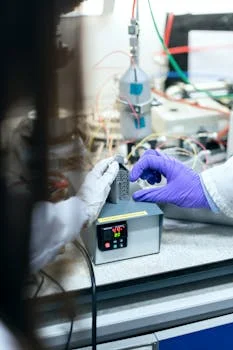
Designing an effective ETP for a Bihar hospital requires a multi-stage approach that accounts for the specific contaminants present in medical effluent, such as blood, disinfectants, and pharmaceutical residues.
Primary Treatment: This stage must include fine screening (bar spacing < 6 mm) to prevent clinical waste like cotton, plastic, and gauze from damaging downstream pumps. Sedimentation tanks should be designed with a surface loading rate of 20–40 m³/m²/day.
Secondary Treatment Options: This is the core of the ETP, where organic matter is degraded.
- Activated Sludge Process (ASP): A traditional choice that achieves 85–95% COD removal. However, it requires a large footprint and skilled operators to manage sludge age and aeration.
- Membrane Bioreactor (MBR): This is the gold standard for hospital applications. By combining biological treatment with membrane filtration, MBR systems for hospital wastewater treatment in Bihar achieve 99% pathogen removal. A 10 KLD MBR plant requires only 10–20 m², making it suitable for urban clinics.
- Dissolved Air Flotation (DAF): Hospitals with large canteen facilities or high surgical volumes often have elevated Oil and Grease (FOG) levels. DAF systems for hospitals with high FOG waste are effective at removing 90-95% of these contaminants before they foul biological membranes.
Tertiary Treatment and Disinfection: Given the AMR crisis in Bihar, disinfection is non-negotiable. Chlorine dioxide disinfection for hospital effluent is often preferred in Bihar because it maintains a longer-lasting residual than liquid chlorine and is more effective at penetrating biofilms and killing antibiotic-resistant bacteria.
Equipment Selection Guide: MBR vs. DAF vs. Chlorine Dioxide Systems for Bihar Hospitals
Selecting the correct equipment involves balancing CAPEX against the hospital's specific effluent profile.
| Technology | Ideal Flow (KLD) | Pathogen Removal | Footprint | Maintenance (1-5) | Bihar-Specific Advantage |
|---|---|---|---|---|---|
| MBR | 10 – 200 | 99.9% | Very Small | 4 (High) | Eliminates AMR superbugs; fits in basement/parking. |
| DAF | 50 – 500 | Low | Medium | 3 (Med) | Handles high FOG from hospital kitchens/canteens. |
| ClO2 Generator | All | 99.99% | Compact | 2 (Low) | Effective in high-turbidity water; long residual. |
| ASP | > 100 | Moderate | Large | 5 (Expert) | Lowest CAPEX for large government hospitals. |
A 2024 case study of a 50 KLD MBR system at Patna Medical College demonstrated the technology's efficacy. For smaller facilities, compact ETPs for small clinics in Bihar provide a "plug-and-play" solution that integrates biological treatment and disinfection into a single skid.
Cost Breakdown: How Much Does a Hospital ETP Cost in Bihar? (2025 Data)
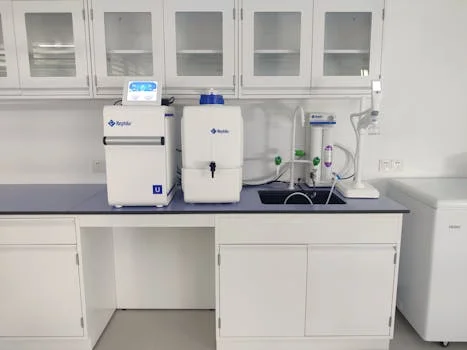
Budgeting for a hospital ETP in Bihar requires a distinction between Capital Expenditure (CAPEX) and Operating Expenditure (OPEX).
| System Capacity | Technology Type | Estimated CAPEX (₹ Lakh) | Estimated OPEX (₹/KL) |
|---|---|---|---|
| 10 KLD | Compact MBR | ₹5 – ₹8 Lakh | ₹15 – ₹20 |
| 50 KLD | MBR + ClO2 Disinfection | ₹15 – ₹25 Lakh | ₹12 – ₹18 |
| 50 KLD | ASP + DAF + Chlorine | ₹12 – ₹18 Lakh | ₹8 – ₹12 |
| 100 KLD | MBR + Advanced Oxidation | ₹30 – ₹50 Lakh | ₹10 – ₹15 |
Step-by-Step Implementation: How to Install a Hospital ETP in Bihar
The transition from non-compliance to a fully operational ETP involves a structured engineering and administrative process.
Step 1: Wastewater Characterization & Sizing Conduct a 72-hour flow monitoring and characterization study.
Step 2: Regulatory Approvals Apply for the Consent to Establish (CTE) from the Bihar SPCB.
Step 3: Civil and Mechanical Installation Civil works (excavation and tank construction) take 2–4 weeks.
Step 4: Commissioning and Training Commissioning requires 2–3 weeks to stabilize the biological culture (seeding).
Frequently Asked Questions
Q: What are the CPCB discharge limits for hospital wastewater in Bihar?
A: The standards require BOD < 30 mg/L, COD < 250 mg/L, TSS < 100 mg/L, and fecal coliform < 100 MPN/100mL.
Q: How much does a 50 KLD hospital ETP cost in Bihar?
A: A 50 KLD system typically costs between ₹15 lakh and ₹25 lakh for CAPEX.
Q: Which is better for hospital wastewater: MBR or DAF?
A: MBR is superior for pathogen and organic removal in small footprints.
Q: What are the penalties for not treating hospital wastewater in Bihar?
A: Under CPCB 2023 guidelines, hospitals face fines of ₹1 lakh per day for initial non-compliance.
Q: Can small clinics in Bihar use compact ETPs?
A: Yes, compact, skid-mounted ETPs are designed specifically for clinics generating 5–20 KLD.