Rome’s Sewage Treatment Landscape: 2025 Infrastructure and Challenges
Rome’s sewage treatment infrastructure—managed by ACEA SPA—serves 4.2 million inhabitants across three major WWTPs (South: 1.5M PE, North: 1M PE, East: partial upgrade). In 2020, HUBER Technology supplied 7 STRAINPRESS® units (SP 430/SP 290) to address sludge screening inefficiencies, reducing maintenance costs by 30% (ACEA internal data). For 2025 projects, suppliers must meet EU Urban Waste Water Directive 91/271/EEC and Italian Legislative Decree 152/2006, with equipment costs ranging from €80–€250/m³ for DAF systems and €120–€400/m³ for MBR systems in Lazio.
The operational scale of Rome’s wastewater network requires a sophisticated sludge line process to handle high population equivalents (PE). Currently, the infrastructure follows a specialized sequence: pre-thickening, followed by anaerobic digestion, post-thickening, and finally dewatering via decanter centrifuges. However, the system faces significant challenges regarding high solids accumulation and the variability of industrial wastewater from Rome’s surrounding food processing and textile sectors. These factors lead to accelerated digestor fouling and increased unplanned downtime.
Municipal engineers in the Lazio region are increasingly focused on the EU Urban Waste Water Directive 91/271/EEC, which mandates stricter nutrient removal and secondary treatment for agglomerations exceeding 2,000 PE. the 2025 infrastructure roadmap emphasizes resource recovery—turning sewage into a "treasure trove" of reusable water and energy. This shift necessitates equipment that can handle fluctuating influent quality while maintaining a low energy footprint. The integration of advanced screening technology, such as the units installed at Rome South and Rome North, has proven that pre-treatment efficiency is the primary driver for reducing long-term OPEX in large-scale municipal plants.
Industrial plant managers in Rome face a different set of hurdles. While ACEA manages the municipal flow, private industrial sectors must treat wastewater to meet Italian Legislative Decree 152/2006 standards before discharge into public sewers or surface waters. This requires compact, high-efficiency systems capable of handling variable Chemical Oxygen Demand (COD) and Total Suspended Solids (TSS) loads, often requiring a combination of physical-chemical treatment and biological membranes.
Top 5 Sewage Treatment Equipment Suppliers in Rome: Technical Comparison
Shortlisting a sewage treatment equipment supplier in rome requires a balanced evaluation of technical specifications, lead times, and total cost of ownership. The market is currently divided between Tier 1 European multinationals, specialized local Italian engineering firms, and global manufacturers offering high-capacity systems at competitive price points. Procurement teams must weigh the immediate availability of local technical support against the capital expenditure (CAPEX) benefits of international sourcing.
Tier 1 European suppliers typically dominate the municipal sector in Lazio, particularly for large-scale sludge screening and digestion projects. These firms offer high TSS removal rates (up to 95%) but come with higher upfront costs and lead times ranging from 12 to 16 weeks. Local Italian suppliers, often based in Northern Italy or with regional offices in Lazio, specialize in stainless steel fabrication and integrated package plants, offering shorter lead times of 8 to 10 weeks.
| Supplier Category | Primary Technology | Compliance Standards | Lead Time (Weeks) | Cost Range (€/m³) |
|---|---|---|---|---|
| Tier 1 European Brands | Sludge Screening/Digestion | EU 91/271/EEC, CE | 12–16 | €150–€250 |
| Local Italian Engineering | DAF & Stainless Tanks | Decree 152/2006 | 8–10 | €120–€200 |
| Global Manufacturing Partners | MBR & Integrated Systems | ISO 9001, CE, EN 12566 | 16–20 | €80–€150 |
| Specialized German Firms | Sludge Dewatering (Decanters) | EU Standards | 14–18 | €180–€300 |
| Regional Lazio Distributors | Pumps & Basic Aeration | Local Standards | 4–6 | €50–€120 |
For municipal projects like the ACEA South Rome WWTP, the focus remains on reliability and integration with existing anaerobic digestion lines. In contrast, industrial procurement for Lazio-based factories often prioritizes wastewater treatment chemicals for Rome projects alongside equipment to manage rapid shifts in influent chemistry. While global manufacturers offer the lowest upfront cost, procurement teams must ensure that compliance documentation and CE marking are fully aligned with Italian regulatory requirements to avoid permitting delays.
DAF vs. MBR Systems for Rome Projects: Technical Specs and Cost Benchmarks
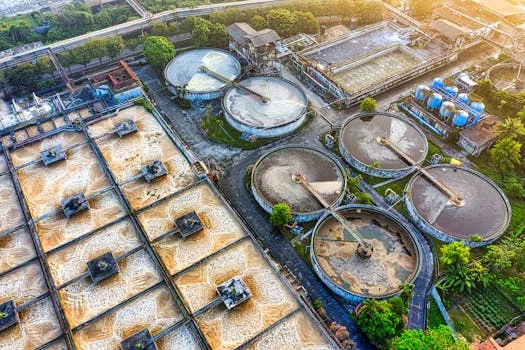
Selecting between Dissolved Air Flotation (DAF) and Membrane Bioreactor (MBR) systems depends on the specific discharge requirements and space constraints of the Rome project site. DAF systems are the standard for industrial pre-treatment, particularly in the food processing and textile industries common in the Lazio region. They excel at removing Fats, Oils, and Grease (FOG) and TSS through micro-bubble flotation. The DAF systems for Rome industrial projects provide a throughput of 4–300 m³/h with TSS removal efficiencies reaching 97%.
MBR systems represent the high-performance alternative, combining biological treatment with membrane filtration. These are increasingly utilized for municipal reuse projects and high-end residential developments in Rome where footprint is limited. MBR technology achieves effluent quality high enough for non-potable reuse, meeting the stringent requirements of Italian Ministerial Decree 185/2003. MBR systems for municipal reuse in Lazio offer filtration levels below 1 μm, effectively removing bacteria and suspended solids to near-zero levels.
| Technology Type | Capacity Range | Removal Efficiency (TSS) | Avg. Cost (€/m³) | Energy Use (kWh/m³) |
|---|---|---|---|---|
| DAF (Physical-Chemical) | 4–300 m³/h | 92–97% | €80–€200 | 0.2–0.5 |
| MBR (Biological-Membrane) | 10–2,000 m³/day | >99% | €120–€400 | 0.8–1.5 |
| SBR (Sequencing Batch) | 50–5,000 m³/day | 85–90% | €100–€180 | 0.4–0.7 |
| MBBR (Moving Bed) | 20–1,000 m³/day | 80–90% | €90–€160 | 0.3–0.6 |
Cost benchmarks in Rome are influenced by local energy prices and the complexity of installation. DAF systems generally have a lower CAPEX and energy demand, making them ideal for pre-treatment. However, if the project goal is to achieve "reuse-quality" water for irrigation or industrial processes, the higher investment in MBR is often justified by the elimination of secondary clarifiers and the superior quality of the permeate. In Lazio, the decision often hinges on whether the facility must comply with basic discharge limits (Decree 152/2006) or the more rigorous reuse standards (Decree 185/2003).
Sludge Dewatering Equipment in Rome: Screw Press vs. Filter Press Specs
Sludge management accounts for up to 50% of the operating costs in Rome’s wastewater treatment plants. Choosing the correct dewatering technology is vital for reducing the volume of waste transported to landfills or composting facilities. For 2025, the market in Lazio is shifting toward continuous-operation systems that minimize labor and energy consumption. This is a direct response to ACEA’s data showing that digestor fouling and solids accumulation are the primary drivers of maintenance costs.
The screw press is the preferred choice for municipal sludge and continuous industrial processes. It offers low energy consumption and requires minimal operator intervention. For projects requiring the highest possible cake dryness, the filter press for Rome sludge dewatering projects remains the industry standard. While filter presses operate in batches, they can achieve a dry solids content of up to 35%, significantly reducing disposal fees compared to the 18–25% typically achieved by screw presses or decanter centrifuges.
| Equipment Type | Throughput (m³/h) | Dry Solids (%) | Estimated Cost (€) | Maint. Interval |
|---|---|---|---|---|
| Multi-Disk Screw Press | 1–50 m³/h | 18–25% | €50k–€150k | Weekly (Visual) |
| Plate & Frame Filter Press | 5–100 m³/h | 25–35% | €80k–€250k | Monthly (Plates) |
| Decanter Centrifuge | 10–150 m³/h | 20–28% | €120k–€400k | Bi-Annual (Bearings) |
| Belt Filter Press | 5–80 m³/h | 15–22% | €40k–€120k | Weekly (Belts) |
According to Italy’s sludge dewatering equipment guide for 2025, the selection should be based on the final disposal route. If the sludge is destined for land application in the Lazio countryside, a screw press providing 20% dryness is often sufficient. However, if the sludge is being sent for incineration or long-distance transport, the additional dryness provided by a filter press offers a rapid ROI through reduced weight and volume. ACEA’s recent adoption of specialized screening technology pre-dewatering has highlighted the importance of removing grit and fibers early to protect high-value dewatering assets.
Municipal vs. Industrial Projects: Decision Framework for Rome Buyers
Procurement for sewage treatment in Rome requires a differentiated approach based on the project’s scale and influent characteristics. Municipal projects are characterized by high volumes and consistent, though complex, biological loads. Industrial projects, such as those found in the industrial parks of Pomezia or Frosinone, must deal with high chemical variability and strict discharge permits. Following a structured decision framework ensures that the selected technology meets both performance and compliance goals.
- Step 1: Define Influent Parameters: Municipal engineers must account for consistent TSS and COD loads with high seasonal variability in population (tourism impact). Industrial managers must define peak FOG, pH swings, and specific contaminants like heavy metals or synthetic dyes.
- Step 2: Match Technology to Compliance: If discharging to surface water in sensitive Lazio areas, MBR or advanced SBR is required to meet EU Directive 91/271/EEC. For industrial pre-treatment to sewer, a DAF system combined with an automatic chemical dosing system is typically the most cost-effective solution.
- Step 3: Evaluate Footprint and Installation: For residential redevelopments or boutique hotels in Rome’s center, the WSZ series underground integrated sewage treatment units provide a silent, zero-footprint solution. Industrial sites usually favor skid-mounted DAF units for ease of relocation or expansion.
- Step 4: Calculate ROI and OPEX: ACEA’s data demonstrates that a 30% reduction in maintenance is achievable by investing in superior pre-screening. Industrial buyers should calculate the payback period based on reduced "excessive load" fines from sewer authorities and lower chemical consumption.
Decision Tree: If the project is municipal with a focus on water reuse, select MBR + Sludge Dewatering. If the project is industrial (Food/Textile) with a focus on discharge compliance, select DAF + Chemical Dosing + Screw Press.
Compliance Checklist for Rome Sewage Treatment Projects
Ensuring that equipment meets both European and Italian standards is non-negotiable for project approval in the Lazio region. Failure to comply with discharge limits can lead to significant fines under Italian Legislative Decree 152/2006. Procurement teams should use the following checklist during the supplier evaluation phase:
- EU Urban Waste Water Directive 91/271/EEC: Ensure the system is capable of secondary treatment for loads >2,000 PE and includes nutrient (Nitrogen/Phosphorus) removal if located near sensitive water bodies.
- Italian Legislative Decree 152/2006 (Table 3): Verify that the equipment can consistently achieve discharge limits: TSS <35 mg/L, COD <125 mg/L, and BOD5 <25 mg/L.
- Italian Ministerial Decree 185/2003: For reuse projects, effluent must meet Turbidity <2 NTU and E. coli <10 CFU/100mL.
- ACEA Specific Requirements: All sludge line equipment must handle screenings effectively; digestor solids concentration should be maintained below 5% for optimal efficiency.
- Documentation: Suppliers must provide CE marking, ISO 9001 certification, and EN 12566-3 certification for small-scale package plants.
Frequently Asked Questions
What are the lead times for sewage treatment equipment in Rome?
Lead times vary by supplier origin and technology complexity. Tier 1 European manufacturers typically require 12–16 weeks. Local Italian engineering firms can often deliver within 8–10 weeks for standard stainless steel components. Global manufacturing partners generally have lead times of 16–20 weeks, accounting for international shipping and customs clearance at the Port of Civitavecchia.
How much does a DAF system cost for a 50 m³/h project in Lazio?
For a 50 m³/h capacity, the equipment cost for a DAF system typically ranges from €80 to €150 per m³ of capacity, totaling approximately €4,000 to €7,500 for the unit itself. Note that this 2025 benchmark excludes installation, civil works, and integrated chemical dosing systems, which can add 40–60% to the total project CAPEX.
What compliance standards apply to industrial wastewater in Rome?
Industrial discharges are primarily governed by Italian Legislative Decree 152/2006. Standard limits include TSS <35 mg/L and COD <125 mg/L. However, sector-specific limits apply to food processing, chemicals, and textiles, which may require stricter monitoring of heavy metals or specific organic compounds.
Can MBR systems be used for water reuse in Rome?
Yes, MBR systems are the preferred technology for water reuse in Lazio. To legally reuse effluent for irrigation or industrial cleaning, the system must meet Italian Ministerial Decree 185/2003 standards, which include a turbidity limit of <2 NTU and an E. coli count of <10 CFU/100mL.
What maintenance is required for sludge dewatering equipment?
Maintenance varies by technology. Screw presses require weekly visual inspections and brush cleaning to prevent clogging. Filter presses require monthly inspections of the filter cloths and hydraulic systems, with plate replacements typically occurring every 12–24 months depending on the abrasiveness of the sludge.