Tijuana industrial wastewater treatment costs and compliance in 2026 follow NOM-001-SEMARNAT-2021. That standard replaced NOM-001-SEMARNAT-1996 in 2023. According to SEMARNAT (11 March 2022), the 2021 rule was published in the Diario Oficial de la Federación and entered into force 365 calendar days later. Plants also face EPA cross-border rules under Minute 328, plus Baja California's 20% reuse rule for high-volume users.
Earlier NOM-001-SEMARNAT-1996 guidance used 75 mg/L BOD, 150 mg/L COD, and 75 mg/L TSS. The 2021 revision keeps COD at 150 mg/L monthly average for rivers and sets TSS at 60 mg/L. It also replaces BOD5 with COD as the organic-load metric. Most factories still hold pH 6.5–8.5 and FOG below 15 mg/L before discharge to CESPT sewer, the Tijuana River, or the South Bay Ocean Outfall.
Capex spans $250K for a package plant to $5M+ for a full-scale MBR. Daily fines for non-compliance can reach $10,000 per violation. According to SEMARNAT (11 March 2022), the standard binds anyone discharging to a national receiving body, with test methods, temperature, toxicity, and receiving-water class all updated.
Tijuana Industrial Wastewater Treatment Costs and Compliance
Factories discharging toward the Tijuana River must plan for 30 mg/L TSS and 30 mg/L BOD, not the older 75 mg/L TSS ceiling. Package plants for 1–50 m³/h land between $250,000 and $1.2 million. A full-scale MBR can pass $5M. Daily penalties can reach $10,000 per violation.
Pick the discharge path before you pick a tank. CESPT sewer, the river, and the South Bay Ocean Outfall do not share one limit set. Most plants we size for Otay Mesa still sit at the lower end of the package band when flow stays well under 50 m³/h.
Why Tijuana Factories Face Urgent Wastewater Treatment Upgrades in 2025
SEMARNAT's 2025 enforcement plan lifts Tijuana industrial discharges into "enforced" status. Unannounced inspections are rising 40% year-over-year. The shift ties directly to Minute 328 and the 2025 EPA Memorandum of Understanding (MOU). Both aim to cut untreated effluent entering the Tijuana River.
According to US EPA (page updated 8 July 2026), the United States and Mexico signed that MOU in Mexico City on 24 July 2025. EPA and SEMARNAT use it for quarterly public updates. Minute 328 remains the infrastructure minute underneath those updates.
Factories discharging into the CESPT system that drains to the river must meet U.S. EPA secondary standards of 30 mg/L TSS and 30 mg/L BOD. Per the EPA 2025 enforcement memo, a single violation can trigger fines of $10,000 per day. Most plants we audit in Otay Mesa and Valle de las Palmas still rely on grease traps or settling tanks sized for the older 75 mg/L TSS limit. Those units cannot hit 30 mg/L without biological or membrane stages.
Baja California's drought emergency (2023–2025) layers on a 20% reuse mandate for high-volume industrial users. That push favors Membrane Bioreactors (MBR) or Reverse Osmosis (RO) for cooling-tower or wash-down reclaim. The financial pain is already visible. In early 2024 an Otay Mesa electronics plant drew $850,000 in combined fines and legal fees.
Copper came back at 1.3 mg/L against the earlier 0.5 mg/L NOM-001 ceiling still cited in many permits. NOM-001-SEMARNAT-2021 now sets copper at 4 mg/L monthly average for river discharges. Manual precipitation was the prior control. The fix was a PLC-controlled automated chemical dosing system for pH adjustment and heavy metal precipitation, which holds copper below 0.1 mg/L and reclaims 25% of the effluent for onsite utility water.
NOM-001-SEMARNAT-2021 Discharge Limits for Factories
NOM-001-SEMARNAT-2021 discharge limits for factories still show up on permits as the monthly rows below, even after the 2021 text replaced BOD5 with COD. Read the permit cell and the river note as two separate numbers. Most permits we open in Tijuana still print the 75 mg/L TSS monthly cell, then add a tighter river note.
| Parameter | NOM-001 Limit (Monthly Avg) | Engineering Notes |
|---|---|---|
| Biochemical Oxygen Demand (BOD5) | 75 mg/L | Requires biological treatment (MBR or CAS) |
| Chemical Oxygen Demand (COD) | 150 mg/L | Critical for electronics/chemical waste |
| Total Suspended Solids (TSS) | 75 mg/L | EPA cross-border limit is stricter (30 mg/L) |
| pH Range | 6.5–8.5 | Requires automated acid/base dosing |
| Fats, Oils, and Grease (FOG) | 15 mg/L | Achievable via DAF systems |
| Copper (Cu) | 0.5 mg/L | Common in electronics manufacturing |
| Lead (Pb) | 0.2 mg/L | Requires precise pH precipitation (~pH 9.2) |
Treat the table as the older monthly set that many current permits still cite: 75 mg/L BOD5, 75 mg/L TSS, 0.5 mg/L copper, and 0.2 mg/L lead. The 2021 revision described above keeps COD at 150 mg/L monthly average for rivers, sets TSS at 60 mg/L, and sets copper at 4 mg/L monthly average for river discharges. Design to the stricter number written on your permit, not to the friendlier of the two rows.
SEMARNAT's 11 March 2022 comunicado confirms the update of NOM-001-SEMARNAT-1996 and the 365-day entry into force. It does not reprint these cells. Ask the lab to match the method list on the permit before you freeze a P&ID.
EPA Cross-Border Wastewater Standards Tijuana River
EPA cross-border wastewater standards Tijuana River dischargers face are 30 mg/L TSS and 30 mg/L BOD on any path that reaches the river. That pair is stricter than the 75 mg/L TSS monthly cell in the table above. A settling tank sized only to the older cell will miss it.
For plants whose effluent reaches the Tijuana River, EPA secondary rules cut TSS and BOD to 30 mg/L each. Engineers sizing equipment across Mexico can compare Queretaro's industrial wastewater regulations against Tijuana's NOM-001 standards to see how regional enforcement varies. Tijuana's border position is what makes it unusually strict.
| Discharge Pathway | Applicable Standards | Permit Required | Cost Implications |
|---|---|---|---|
| Municipal Sewer (CESPT) | NOM-001 + Local Norms | Factibilidad de Servicio | High volumetric discharge fees |
| Tijuana River | EPA + SEMARNAT | CNA Discharge Permit | Strict monitoring; potential EPA fines |
| South Bay Ocean Outfall | IBWC Standards | IBWC-2025 Permit | $0.50/m³ surcharge for high-load waste |
SEMARNAT Form SEM-01 typically runs a 90-day review. IBWC cross-border applications clear in about 30 days. Build those windows into procurement so commissioning lines up before permits lapse. Otherwise emergency hauling in Baja can climb past $200 per truckload.
Municipal plants on this river are moving, and that does not relax a factory permit. According to US EPA (21 November 2025), USIBWC completed a 10 million gallons per day (mgd) interim expansion of the South Bay International Wastewater Treatment Plant on 28 August 2025. The plant can now handle 35 mgd. EPA's 30 June 2026 update says early work continues toward 50 million gallons per day (MGD).
Minute 333, signed on 15 December 2025, adds monitoring, operations planning, and a review of the San Antonio de los Buenos ocean outfall (US EPA, 20 March 2026). US EPA's 20 March 2026 update prices Phase 1 of the Arturo Herrera and La Morita effluent relocation at $16M, with completion aimed at mid-2027. Phase 2 is aimed at December 2027. The completed move is meant to keep 10 MGD of effluent out of the Tijuana River.
The 2023 EPA and USIBWC Record of Decision states that Minute 328 replaced a 5-MGD conventional-sludge concept at San Antonio de los Buenos with an 18-MGD oxidation-ditch plant. Discharge is through a 656-foot ocean outfall, and Mexico funds that plant. The same decision plans expansion of the South Bay plant up to 50 MGD. Most cross-border files we support clear the 30-day IBWC window only when the holding tank is already on the drawing.
Equipment Selection for Tijuana Factories: DAF vs MBR vs Chemical Dosing for Industrial Wastewater
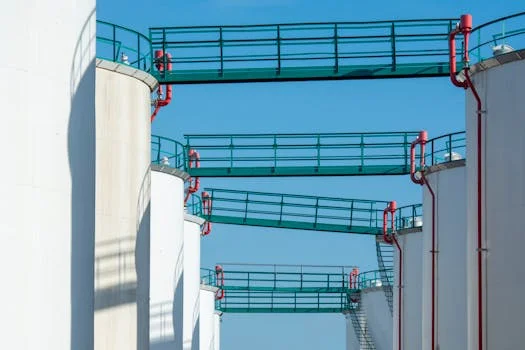
Equipment selection for Tijuana factories follows the influent, not a brochure. Food and automotive plants usually chase FOG and TSS. Electronics and medical device lines chase COD and dissolved metals. For high-flow (4–300 m³/h) oily streams, DAF systems for FOG-heavy industrial wastewater are the workhorse.
Micro-bubbles float solids for mechanical skimming, hitting up to 95% FOG removal and 85% TSS reduction (HydropureWater field data, 2025). Most plants we size for oily food lines run the DAF at the lower end of 4–300 m³/h. A useful cross-check is how a Malaysian food processing plant used DAF to cut FOG by 95% in a similar hot, high-throughput climate.
For plants chasing the 30 mg/L EPA ceiling or building a reuse loop, integrated MBR systems for high-strength wastewater in electronics and medical device factories deliver the cleanest effluent. MBR pairs biological digestion with 0.1 µm flat-sheet membranes. That train replaces the clarifier and sand filter of a conventional plant. The membrane train also breaks down complex organics that standard activated sludge leaves behind.
| Technology | Influent Suitability | Effluent Quality | Capex Range | Opex (per m³) |
|---|---|---|---|---|
| DAF | FOG, Oil, TSS | Moderate (meets NOM) | $120K – $800K | $0.15 – $0.30 |
| MBR (DF Series) | High BOD, COD, Bacteria | High (Reuse Quality) | $500K – $5M | $0.40 – $0.80 |
| Chemical Dosing | pH, Heavy Metals | Parameter Specific | $50K – $200K | $0.05 – $0.15 |
Most Tijuana lines we see end up hybrid. A DAF front-end keeps grease off the membranes. An automated dosing skid pins pH for metal precipitation, then biological treatment follows. For disinfection, chlorine dioxide usually beats UV on high-TSS streams. Residual turbidity shields UV dose, while ClO2 keeps penetrating.
MBR System Cost for Tijuana Electronics Manufacturing
MBR system cost for Tijuana electronics manufacturing at 50–200 m³/h is $1.5M–$3.5M when the train is built to the 30 mg/L EPA ceiling. The 30% premium over a CAS plant pays for the automated TOC and TSS sensors cross-border regulators demand. Opex on the MBR row is $0.40 – $0.80 per m³, against $0.15 – $0.30 for DAF alone.
A 50 m³/h electronics line that only has to hold metals and solids can stop short of that MBR band. A DAF unit (~$300K) plus an automated dosing skid (~$80K) lands near $380K combined, with Opex around $0.25/m³. That split keeps copper under the older 0.5 mg/L permit cell and under the 4 mg/L river monthly average. Most electronics lines we see at 50 m³/h do not buy the full MBR until the permit names reuse or the 30 mg/L BOD ceiling.
Use the wider MBR band of $500K – $5M when flow, reuse, or bacteria control pushes past a metals-only skid. Membrane replacement still belongs in the annual budget at $20,000 – $50,000 per 100 m³/h, on a 3-5 year lifespan.
Tijuana Wastewater Treatment Plant Costs: 2025 Engineering Breakdown with Local Data
Tijuana wastewater treatment plant costs track automation level and the discharge path. For small and mid-size plants (1–50 m³/h) on tight industrial-park footprints like Otay Mesa, an Underground Package Sewage Treatment Plant (WSZ Series) lands between $250,000 and $1.2 million. That figure includes $20,000–$50,000 in SEMARNAT permitting fees that scale with the wastewater characterization report.
Where the park pad is shallow, the same duty often moves below grade in an Underground Package Sewage Treatment Plant (WSZ Series). Most package jobs we price in Otay Mesa keep the $20,000–$50,000 permit line as its own check, not inside the tank price. Do not let a vendor fold that fee into a single lump that you cannot audit.
Mid-scale MBR trains (50–200 m³/h) built for EPA compliance run $1.5M–$3.5M. Large systems (200–500 m³/h) combining DAF, biological treatment, and ocean-outfall discharge budget $4M–$8M. The IBWC $0.50/m³ surcharge can add $150,000+ a year on high-volume lines.
| Cost Category | Annual Cost (per 100 m³/h) | Engineering Notes |
|---|---|---|
| Energy Consumption | $40,000 – $80,000 | MBR aeration is the primary driver |
| Chemical Reagents | $15,000 – $30,000 | Coagulants and pH adjusters |
| Membrane Replacement | $20,000 – $50,000 | Specific to MBR (3-5 year lifespan) |
| Labor & Maintenance | $60,000 – $100,000 | Based on 24/7 technical oversight |
Add those four annual lines before you compare a $250K package with a $5M+ MBR. Energy is the line that moves when aeration runs all night. Chemicals move when the metal load swings between shifts.
Baja California Industrial Water Reuse Mandate 2026
The Baja California industrial water reuse mandate 2026 buyers are budgeting for is the standing 20% reuse rule for high-volume users, carried forward from the 2023–2025 drought emergency. It is a factory water-balance rule, not a new river limit. Most factories we walk through the 20% rule hit it with cooling-tower makeup, not with a potable loop.
Water scarcity is doing the ROI math now. Tijuana industrial water is around $1.20/m³. A 30% reuse rate pays back the upgrade in 3.5–5 years on utility savings alone.
SEMARNAT layers on a 10% Capex rebate for verified 30% reuse. Baja California adds state tax credits for any factory cutting municipal draw by 20% or more.
A March 2026 diagnosis, Water Reuse in Mexico and Diagnosis for Baja California, finds that current standards regulate discharge and non-potable reuse. Potable reuse still has no clear permit path. State and municipal plans cited there include rehabilitation of the San Antonio de los Buenos and La Morita plants in Tijuana. The same review lists IBWC Act 328 funds and NADBank/BEIF beside factory reuse projects.
Step-by-Step Compliance Checklist for Tijuana Factories in 2025
A Tijuana factory compliance checklist runs about 12 months from characterization to commissioning. Membrane and high-capacity DAF lead times have stretched. Procurement should not push month 6–7 permitting into month 9–10 installation. Most delays we see start when that permitting slip hits the delivery window.
- Month 1–3: Wastewater Characterization. Hire a certified lab (e.g., Laboratorios ABC or a Tijuana technical institute) to test influent for BOD, COD, TSS, FOG, and heavy metals. Build the equipment sizing around a worst-case baseline, not a happy-path average.
- Month 4–6: Technology Selection & RFPs. Match your parameters to the technology matrix above. Issue RFPs to local integrators and international OEMs like HydropureWater to compare specs and service terms.
- Month 7–9: SEMARNAT Permitting. Submit Form SEM-01 with engineering drawings and the characterization data. Allow the full 90-day review window.
- Month 10–12: Installation & EPA/IBWC Approval. For cross-border discharge, file Form IBWC-2025 with effluent projections and the fail-safes (e.g., emergency holding tanks).
- Ongoing: Monitoring & Audits. Run monthly self-monitoring per SEMARNAT and quarterly third-party audits to keep sensors calibrated and stay inside heavy-metal ceilings.
Use this short gate list before you sign a purchase order:
- Name the path first: CESPT sewer, the Tijuana River, or the South Bay Ocean Outfall.
- Size biology to the stricter of the permit row and 30 mg/L TSS and 30 mg/L BOD when the river is downstream.
- Put DAF ahead of membranes when FOG is near the 15 mg/L cap.
- Add automated dosing when copper or lead shows up above the permit cell.
- Price the 20% reuse rule against the $1.20/m³ tariff before you add RO.
- Hold the 90-day SEMARNAT window and the 30-day IBWC window on one schedule.
Who This Guide Is For, and When to Look Elsewhere
Plant engineers, EPC contractors, and procurement leads at Tijuana industrial parks are the audience for this page. The page covers FOG, COD, or heavy-metal streams under NOM-001 and EPA cross-border rules. If your facility is a small commercial kitchen under 5 m³/h, a packaged residential unit will suffice. The MBR numbers here will over-spec that project.
For work outside the Mexico/U.S. border context, see the Adelaide industrial wastewater engineering guide for SA Water framing. Use the Industrial Wastewater Treatment in Sydney: 2026 Compliance Guide for Sydney Water baselines.
Teams planning Australia work should also review the Auckland industrial wastewater specs and equipment guide for an Oceania comparison. Those pages do not set Tijuana limits. Stay on this page for NOM-001, CESPT, and the river.
Next Step
The next step is to send influent characterization and target effluent numbers to engineering. You will get back a sized train, a Capex envelope, and a permitting timeline aligned with your commissioning date. Request a Tijuana wastewater treatment quote to start the sizing review.
Frequently Asked Questions
Penalty size, river discharge, a 50 m³/h electronics budget, SEMARNAT review time, and Baja California reuse money are covered below.
What are the penalties for exceeding NOM-001 limits in Tijuana?
SEMARNAT fines typically run $5,000 to $10,000 per violation. Repeat offenders, or plants that damage the Tijuana River watershed, can face temporary or permanent shutdowns under 2024 enforcement precedent. EPA can add $10,000/day on a cross-border violation. Stacking both penalties is the case we walk owners through before they skip monitoring, so budget the lab program as insurance, not as overhead.
Can I discharge treated wastewater directly to the Tijuana River?
Yes, but only with a CNA discharge permit and full EPA secondary treatment compliance at 30 mg/L TSS and 30 mg/L BOD. That bar usually means an MBR or a comparable advanced biological train, not a settling tank. The South Bay Ocean Outfall path can also carry an IBWC surcharge of $0.50/m³. Most river permits we file still take the stricter of the NOM row and the 30 mg/L ceiling.
What is the most cost-effective system for a 50 m³/h electronics factory?
A combined train is usually the cost-effective pick at 50 m³/h. Use a DAF unit (~$300K) for solids and oil, then an automated chemical dosing skid (~$80K) for metal precipitation. Combined Capex lands near $380K, and Opex sits around $0.25/m³. That holds copper under common permit ceilings and under the NOM-001-SEMARNAT-2021 river monthly average of 4 mg/L, so choose MBR only if the permit also demands reuse or 30 mg/L BOD.
How long does the SEMARNAT permitting process take?
New discharge permits take 90 days through Form SEM-01. Modifications or renewals of existing permits typically clear in 45 days. Incomplete characterization data or an underspecified treatment train is the usual cause of delay. Front-load the lab work so the review clock starts on a complete package, because IBWC cross-border files in this guide clear in about 30 days and a late Mexican file slips the date.
Are there financial incentives for water reuse in Baja California?
Yes: SEMARNAT offers a 10% Capex rebate for verified reuse systems that hit 30% reuse. Baja California adds state tax credits for any factory cutting municipal draw by 20% or more. A 30% reuse line typically pays back its incremental Capex in 3.5–5 years at $1.20/m³ industrial water. Run the rebate against your own meter data before you treat it as cash in the Capex model.