Why Galway’s Hospital Wastewater Treatment Needs Urgent Upgrades
Galway’s hospital wastewater treatment faces urgent upgrades due to antimicrobial resistance risks and Uisce Éireann’s 2025-2028 plant project. Current urban WWTPs are not designed to eliminate antibiotic residues (per PMC 2024), requiring hospitals to pre-treat effluent to meet Ireland’s Urban Waste Water Directive 91/271/EEC. Key compliance parameters include COD <125 mg/L, BOD <25 mg/L, and disinfection to 99.9% microbial kill. This guide details engineering specs, cost benchmarks (€50K–€1.2M for hospital-specific systems), and equipment options for Galway operators.
The public health risk in Galway is underscored by recent clinical research; approximately 68% of hospital effluent samples in the region contained carbapenemase-producing Enterobacterales (PMC 2024). These "superbugs" bypass standard municipal treatment processes, entering the local environment and the Corrib catchment area. This biological threat was a primary factor in the May 2026 refusal of planning permission for the Adams Green Provisions site wastewater plant, where local authorities cited an "unacceptable risk to public health" regarding effluent management (Independent.ie, 2026).
To address these systemic failures, Uisce Éireann has initiated a dedicated hospital wastewater plant project scheduled to commence in December 2025. With an investment exceeding €15M, the project is being delivered by Glanua Ireland Ltd. However, this centralized infrastructure does not absolve individual facilities of responsibility. Under Ireland’s Urban Waste Water Directive 91/271/EEC, hospitals are classified as industrial dischargers, meaning they must implement robust pre-treatment to prevent toxic pharmaceutical residues and high organic loads from destabilizing municipal biological stages. For facility managers, the transition from simple discharge to active on-site management is no longer optional; it is a regulatory requirement to avoid heavy non-compliance penalties.
Galway’s Hospital Wastewater Compliance Parameters: What You Must Meet in 2025
Engineering specifications for hospital effluent in Ireland are governed by the EPA’s 2024 standards, which align with the EU’s updated Urban Waste Water Treatment Directive. Hospital wastewater is characterized by high variability in Chemical Oxygen Demand (COD) and the presence of recalcitrant pollutants like contrast media and antibiotics.
The primary challenge for Galway hospitals is the removal of antimicrobial residues. While the Ireland AMR National Action Plan 2021-2025 does not yet set "hard" numerical limits for antibiotic concentrations, it mandates "monitoring and reduction strategies." Facilities that fail to demonstrate active reduction of microbial loads through validated disinfection protocols risk losing their discharge permits during the 2025-2028 infrastructure overhaul. The table below outlines the specific engineering parameters required for compliance.
| Parameter | Compliance Limit (Ireland EPA 2024) | Averaging Period | Hospital-Specific Requirement |
|---|---|---|---|
| Chemical Oxygen Demand (COD) | <125 mg/L | 24-hour flow proportional | Requires 90%+ removal efficiency |
| Biochemical Oxygen Demand (BOD₅) | <25 mg/L | 24-hour flow proportional | Secondary biological treatment required |
| Total Suspended Solids (TSS) | <35 mg/L | Standard sample | Filtration or flotation required |
| Microbial Kill (Disinfection) | 99.9% (3-log reduction) | Per batch/continuous | Mandatory for AMR mitigation |
| pH Value | 6.0 – 9.0 | Continuous monitoring | Neutralization for corrosive meds |
| Antimicrobial Residues | Monitoring Required | Quarterly reporting | Advanced Oxidation Process (AOP) suggested |
To ensure a smooth transition to the new compliance standards, facility managers should assess their current treatment systems and identify areas for improvement.
Hospital Wastewater Treatment Technologies: How They Work and Which Fits Galway’s Needs
Selecting the correct technology depends on the hospital's footprint, daily flow volume, and the specific contaminants present in the medical effluent. In Galway’s urban environment, where space is often at a premium, decentralized and modular systems are becoming the standard. Engineering teams must compare the operational efficiency of Membrane Bioreactors (MBR) against traditional Dissolved Air Flotation (DAF) and chemical disinfection methods.
Membrane Bioreactor (MBR): These systems combine biological degradation with membrane filtration (usually <0.1 μm). MBR systems for hospital wastewater treatment in Galway provide a footprint reduction of up to 60% compared to conventional activated sludge systems. They are particularly effective at removing 95-98% of COD and nearly 100% of suspended solids, producing effluent of near-reuse quality. This technology is the gold standard for hospitals needing to eliminate antibiotic-resistant bacteria, as the physical barrier of the membrane prevents the passage of most pathogens. You can find more detailed MBR system specs for Ireland’s compliance standards to assist in your evaluation.
Dissolved Air Flotation (DAF): DAF is highly effective for removing Fats, Oils, and Grease (FOG) and suspended solids common in hospital kitchen and laundry discharge. By injecting micro-bubbles into the wastewater, contaminants float to the surface for mechanical skimming. While DAF is excellent for primary treatment, it usually requires a secondary biological stage to meet BOD limits. When comparing MBR, DAF, and chemical dosing for hospital wastewater, DAF is often chosen for high-flow facilities with high solid loads.
Disinfection Systems: To achieve the 99.9% microbial kill required by the WHO and EPA, hospitals must implement tertiary disinfection. ClO₂ generators for hospital effluent disinfection are preferred over traditional chlorine because they do not produce harmful trihalomethanes (THMs) and remain effective over a wider pH range. For smaller facilities, compact hospital wastewater treatment systems for Galway clinics often integrate ozone or UV stages to neutralize pharmaceutical residues that biological processes alone cannot degrade.
| Technology | COD Removal | Space Requirement | Best For... |
|---|---|---|---|
| MBR | 95–98% | Very Low | Urban hospitals, AMR mitigation, high-purity needs |
| DAF | 70–85% | Medium | FOG removal, laundry/kitchen heavy effluent |
| Ozone/AOP | Variable | Low | Eliminating antibiotic residues and hormones |
| ClO₂ Generation | N/A | Very Low | Pathogen sterilization and biofilm control |
Cost Breakdown: Hospital Wastewater Treatment Systems in Galway (2025 Data)
Capital expenditure for hospital wastewater systems in Ireland is driven by flow capacity and the complexity of the treatment train required to meet AMR standards. Small clinics in Galway can expect to invest between €50K and €150K for basic chemical dosing and sedimentation packages. However, larger acute care facilities requiring full biological and membrane treatment will see costs scale significantly, often ranging from €700K to €1.2M for a fully integrated MBR and ozone system.
Operating expenses (OPEX) typically range from €0.50 to €2.00 per cubic meter of treated water. These costs include energy for aeration and pumping, chemical consumables (coagulants, polymers, ClO₂ precursors), and membrane maintenance. While the initial investment is high, the ROI is driven by the avoidance of Uisce Éireann non-compliance surcharges and the reduction in municipal volumetric discharge fees, which are often tiered based on the strength of the effluent.
| Facility Scale | Flow Rate (m³/day) | Estimated CAPEX | Typical Technology Mix |
|---|---|---|---|
| Small Clinic | 1 – 10 | €50K – €150K | Chemical Dosing + ClO₂ Disinfection |
| Medium Hospital | 10 – 50 | €200K – €600K | MBR or DAF + UV Sterilization |
| Large Acute Care | 50 – 200 | €700K – €1.2M | Integrated MBR + Ozone + Sludge Dewatering |
Uisce Éireann’s 2025-2028 Hospital Wastewater Plant: What Galway Hospitals Need to Know
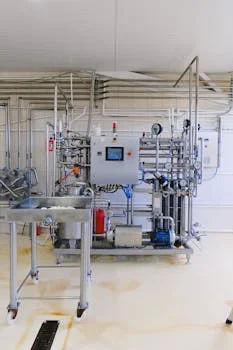
For Galway hospitals, this three-year timeline is a critical window for infrastructure planning. Once the centralized plant is operational, Uisce Éireann is expected to tighten the "Acceptance Criteria" for discharge into the public sewer. Hospitals that have not upgraded their on-site pre-treatment may face "tanker-away" mandates, where effluent must be hauled to the plant at a much higher cost than sewer discharge.
Supplier Checklist: How to Choose a Hospital Wastewater Treatment System for Galway
Procuring a treatment system for a medical facility requires a rigorous evaluation of the supplier’s technical capabilities and local support network. Because hospital effluent is highly regulated and biologically hazardous, the equipment must be reliable and the supplier must be able to provide rapid intervention in the event of a system fault.
- Compliance Verification: Does the system provide documented proof of meeting Ireland EPA 2024 standards? Request independent lab results for COD, BOD, and pathogen reduction.
- Local Support and Service: Ensure the supplier has Ireland-based technicians. For systems like MBR, downtime can lead to immediate compliance breaches and environmental risks.
- Modularity and Scalability: Can the system be expanded? Hospital bed capacity in Galway is subject to change; modular MBR systems allow for the addition of membrane cassettes without replacing the entire tankage.
- Automation and Remote Monitoring: Look for PLC-controlled systems with remote telemetry. This allows for real-time monitoring of pH, flow, and disinfection levels, reducing the need for constant manual oversight.
- Warranty and Lifespan: Demand a minimum 2-year warranty on mechanical components and a pro-rated 10-year warranty on membrane modules.
- AMR Mitigation: Does the supplier offer specific solutions for antimicrobial removal, such as ozone or high-concentration ClO₂?
Frequently Asked Questions
What is the Galway wastewater strategy?
The strategy involves a multi-million euro investment by Uisce Éireann (2025-2028) to build a dedicated treatment plant for hospital effluent. This is paired with stricter on-site pre-treatment requirements for all medical facilities to manage antimicrobial