Industrial ETP Plant Cost West Bengal India: 2026 Guide
Industrial ETP plant cost in West Bengal India spans ₹2.5 lakh for a 5 KLD MBBR package plant to ₹11 crore for a 10 MLD MBR facility. The West Bengal Pollution Control Board (WBPCB) caps most effluent at 100 mg/L BOD, 250 mg/L COD and 100 mg/L TSS. MBBR and SBR systems dominate because they absorb variable loads.
Kolkata alone hosts more than 1,200 factories, and most discharge into drains that feed the Hooghly. Treatment budgets therefore hinge on three variables: influent strength, target effluent quality and plant capacity. This 2026 guide sets out WBPCB discharge limits, four technology options, benchmark capital and operating costs, and a ten-step procurement checklist. It is written for plant engineers, EPC contractors and procurement managers who sign off on ETP investments.
Why WBPCB Enforcement Makes Compliance Non-Negotiable in 2026
The West Bengal Pollution Control Board ran an intensified enforcement drive between 2023 and 2025. It issued over 300 notices to factories in Kolkata alone for breaches of effluent discharge standards (WBPCB Annual Report 2023). Penalties are substantial: a ₹1 lakh fine plus ₹10,000 per day of continued violation, stipulated by the Environment Protection Act 1986 as amended in 2022. Non-compliance can end in operational shutdown, revocation of environmental clearance and compounding financial penalties.
The national context explains this pressure. According to the CPCB, Class I cities and Class II towns together generate an estimated 29129 MLD of sewage (2001 census basis) against an installed treatment capacity of 6190 MLD, a gap of 78.7%. The same inventory found only 13.5% of sewage actually treated and nearly 39% of plants not conforming to the general standards prescribed under the Environmental (Protection) Rules. Regulators therefore push factories to treat effluent on site rather than lean on overloaded municipal networks.
Industrial zones under heightened scrutiny include Haldia for petrochemicals, Kolkata and Howrah for pharmaceuticals and textiles, Asansol for steel and heavy manufacturing, and Siliguri for tea processing and food plants. A textile unit in Howrah shows what is at stake. Facing closure over consistently high BOD and COD in its 500 KLD effluent stream (influent COD 2500 mg/L, BOD 1000 mg/L), it upgraded to a 500 KLD Moving Bed Biofilm Reactor (MBBR). The upgraded plant holds effluent below WBPCB limits (COD <250 mg/L, BOD <100 mg/L, TSS <100 mg/L), keeping its environmental clearance and production schedule intact.
Consent conditions also bind where effluent may go. Factories inside the Ganga basin answer to added monitoring duties, and repeated exceedances escalate from notices toward closure directions. Treating compliance as a recurring operating cost, not a one-time approval, is the safer planning assumption.
WBPCB Effluent Limits for the Textile Industry and Other Sectors
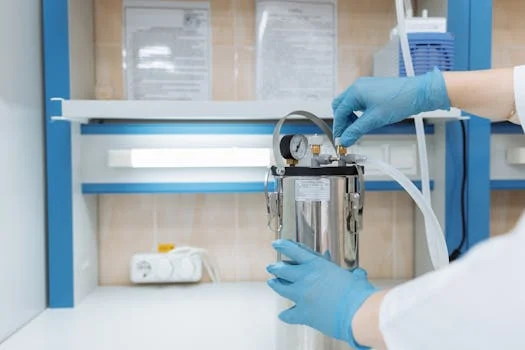
WBPCB effluent limits set maximum BOD at 100 mg/L for textile units and 30 mg/L for pharmaceutical, chemical and food-processing effluent. Meeting these sector-specific limits is the primary design objective for any effluent treatment plant in the state. The limits often run tighter than national CPCB guidance, especially in environmentally sensitive zones covered by the Ganga Action Plan. The Central Pollution Control Board publishes the underlying General Standards for Discharge of Environmental Pollutants on its standards portal, last updated 26 Mar 2019.
The following table outlines key WBPCB effluent limits for major industrial sectors in West Bengal, based on the WBPCB Notification 2023:
| Parameter | pH | BOD (mg/L) | COD (mg/L) | TSS (mg/L) | Oil & Grease (mg/L) | Heavy Metals (Total) (mg/L) |
|---|---|---|---|---|---|---|
| Pharmaceutical | 6.5-8.5 | 30 | 100 | 50 | 10 | 2.0 |
| Textile | 6.5-8.5 | 100 | 250 | 100 | 10 | 2.0 |
| Chemical | 6.5-8.5 | 30 | 100 | 50 | 10 | 2.0 |
| Food Processing | 6.5-8.5 | 30 | 100 | 50 | 10 | - |
| Tannery | 6.5-8.5 | 30 | 100 | 50 | 10 | 2.0 (Chromium 0.1) |
| General (for other industries) | 6.5-8.5 | 100 | 250 | 100 | 10 | 3.0 |
Note: All values are maximum permissible limits. Specific industries face additional parameters such as Colour, Phenol, Cyanide, Fluoride and Sulphide with tailored limits. Tanneries must hold chromium at 0.1 mg/L, chemical plants must meet 1.0 mg/L for phenol, and fluoride is capped at 2.0 mg/L for glass and ceramic units. These stricter local values differentiate WBPCB standards from general CPCB norms and justify advanced treatment stages.
Interpreting laboratory reports is mechanical: compare treated effluent results against these WBPCB standards parameter by parameter. A compliant result keeps every value within limit and allows continued discharge or reuse. A single exceedance requires immediate corrective action, from process optimisation to an ETP system upgrade, before penalties and production stoppages follow.
Sampling discipline matters as much as the numbers themselves. Compliance is judged on samples taken at the final effluent outlet, so sampling timing, sample preservation and NABL laboratory accreditation all affect how defensible a report is. Keep every report with chain-of-custody records, because consent renewals ask for them.
MBBR vs SBR Cost Comparison in India: Selecting the Right ETP Technology
An MBBR vs SBR cost comparison in India shows MBBR capital at ₹15,000–₹30,000 per KLD and SBR capital at ₹18,000–₹35,000 per KLD. Operating costs run ₹5–₹10 versus ₹6–₹12 per cubic metre respectively, before sludge disposal.
Technology selection for a West Bengal plant turns on four inputs: influent quality, available footprint, budget and the effluent quality needed for discharge or reuse. MBBR, SBR, DAF and MBR cover most industrial cases in the region. Each carries distinct trade-offs in energy, sludge production and footprint.
| Technology | Influent Quality Range (BOD/COD/TSS) | Footprint | Energy Consumption (kWh/m³) | Sludge Production (kg/m³) | Capital Cost (₹/KLD) | O&M Cost (₹/m³) | Best Use Cases |
|---|---|---|---|---|---|---|---|
| MBBR | BOD: 150-1000 mg/L, COD: 300-2500 mg/L, TSS: 100-500 mg/L | Medium | 0.3-0.6 | 0.3-0.6 | 15,000-30,000 | 5-10 | High BOD/COD, variable loads (textile, pharma, chemical) |
| SBR | BOD: 100-800 mg/L, COD: 200-2000 mg/L, TSS: 100-400 mg/L | Medium-Small | 0.4-0.7 | 0.4-0.7 | 18,000-35,000 | 6-12 | Space-constrained sites, batch processes, high nutrient removal |
| DAF | FOG: 50-500 mg/L, TSS: 100-1000 mg/L | Small | 0.1-0.3 | 0.1-0.2 | 10,000-25,000 | 3-7 | High FOG (food processing, dairy, metal finishing) |
| MBR | BOD: 50-500 mg/L, COD: 100-1500 mg/L, TSS: 50-300 mg/L | Smallest | 0.8-1.5 | 0.2-0.4 | 40,000-80,000 | 12-25 | High-quality effluent for reuse, space constraints |
A practical selection rule keeps four duties apart. Install DAF first when FOG exceeds 50 mg/L. Choose MBBR for variable organic loads, SBR where footprint and batch cycles dominate, and MBR only for reuse duty or very tight limits.
Plants we audit in West Bengal most often pair DAF pre-treatment with MBBR biology. That combination covers textile, food and pharmaceutical effluent at defensible installed cost.
Two commissioning notes apply. MBBR reactors need stable dissolved oxygen and intact carrier fill to keep the biofilm active through shock loads, so blower maintenance schedules belong in the O&M contract. SBR plants need disciplined decant weir settings, because a floating sludge blanket after the draw phase is the most common early fault we see.
MBBR for Variable Loads
Moving Bed Biofilm Reactors suit West Bengal’s variable influent, from seasonal textile dyeing peaks to fluctuating pharmaceutical batches. Thousands of small plastic carriers give biofilm a large protected surface area, so the biology survives shock loads that would wash out suspended-growth systems. Field data from textile and pharmaceutical installations shows BOD and COD removal exceeding 90% (HydropureWater field data, 2025). Most MBBR plants we size for dyeing houses in Howrah run at the lower end of the 0.3–0.6 kWh/m³ aeration range.
SBR for Space-Constrained Sites
Sequential Batch Reactors combine equalisation, aeration and clarification in a single tank, which saves footprint on Kolkata’s congested factory plots. Each cycle moves through fill, react, settle, draw and idle phases under timer control. That cycle logic suits batch production and delivers strong nutrient removal where flow or quality swings hard, at an energy draw of 0.4–0.7 kWh/m³. Continuous-flow activated sludge still wins where flow stays steady around the clock.
DAF for High-FOG Effluents
Dissolved Air Flotation strips fats, oils, grease and suspended solids before the biological stage sees them. Air dissolved under pressure is released at atmospheric pressure in the flotation tank, and microscopic bubbles lift FOG and flocculated matter to the surface for skimming. The step removes up to 95% of FOG and 80% of TSS, cutting load on downstream biology. It is standard front-end equipment for food processing, dairy and metal-finishing effluent.
Read more on DAF systems for oil/grease removal in food processing and compare DAF vs lamella clarifiers and tube settlers.
Industrial Wastewater Reuse with MBR Systems
Industrial wastewater reuse with MBR systems delivers the highest effluent quality of the four options. Membrane Bioreactors pair biological treatment with microfiltration or ultrafiltration, consistently achieving <10 mg/L BOD and <5 mg/L TSS. That quality suits cooling tower makeup, boiler feed pre-treatment and process water reuse, which matters where discharge limits are strict or water is scarce.
The trade-off is an energy consumption of 0.8–1.5 kWh/m³. Explore MBR membrane bioreactor systems for industrial reuse.
How Much Does an Industrial ETP Plant Cost in West Bengal?
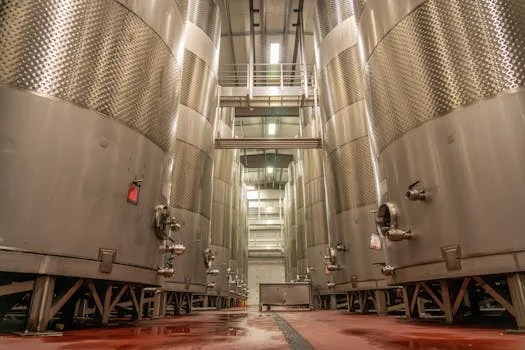
An industrial ETP budget in West Bengal covers four layers, namely capital equipment, civil work, WBPCB approvals and annual operations, and no layer can be quoted in isolation. Equipment pricing scales with capacity, technology choice and influent complexity. The benchmarks below put numbers on each layer for plants from 5 KLD to 10 MLD.
| Capacity (KLD) | Technology | Capital Cost (₹ Lakh) | Civil Work Cost (₹ Lakh) | Approvals Cost (₹ Lakh) | Annual O&M Cost (₹ Lakh) | Payback Period (Years) (for reuse) |
|---|---|---|---|---|---|---|
| 5 | MBBR | 2.5 - 4.0 | 1.0 - 2.0 | 0.5 - 1.0 | 0.5 - 1.0 | N/A (Discharge) |
| 50 | MBBR | 15 - 25 | 5 - 10 | 1.0 - 2.0 | 3.0 - 5.0 | 4.0 - 5.5 |
| 100 | SBR | 30 - 50 | 10 - 20 | 1.5 - 2.5 | 6.0 - 10.0 | 3.5 - 4.5 |
| 200 | MBBR | 60 - 90 | 20 - 35 | 2.0 - 3.0 | 12.0 - 18.0 | 3.0 - 4.0 |
| 500 | SBR/MBBR | 150 - 250 | 50 - 100 | 3.0 - 5.0 | 30.0 - 50.0 | 2.5 - 3.5 |
| 1000 (1 MLD) | MBBR/MBR | 300 - 500 | 100 - 200 | 4.0 - 7.0 | 60.0 - 100.0 | 2.0 - 3.0 |
| 10000 (10 MLD) | MBR | 800 - 1100 | 300 - 500 | 7.0 - 10.0 | 150.0 - 250.0 | 1.5 - 2.5 |
Note: Costs are indicative and vary based on specific site conditions, raw water quality, equipment supplier, and customization (industry benchmarks, 2025).
500 KLD ETP Installation Cost in Kolkata
A 500 KLD ETP installation in Kolkata typically lands at ₹150–₹250 lakh for capital equipment, ₹50–₹100 lakh for civil work and ₹30–₹50 lakh per year for operations. Approvals add ₹3–₹5 lakh, and reuse-linked payback runs 2.5–3.5 years at this scale. Buyers benchmarking against public-sector references often search the phrase "per kld production cost of a conventional wtp in west bengal phed ?" and that figure is dominated by civil work and technology choice. Textile installations of this size in Howrah mostly select SBR or MBBR, with oil and grease held at 10 mg/L and pH inside 6.5–8.5 before discharge consent holds.
Scale shifts the cost mix. Below 100 KLD, skid-mounted package plants shorten civil work and commissioning time. Above 1 MLD, energy and membrane or media replacement start to dominate the operating budget, so lifecycle costing matters more than the lowest quotation.
Hidden Costs: Approvals, EIA and Civil Work
Influent quality drives ETP cost more than any other variable: treating 5,000 mg/L COD demands larger biological reactors, more aeration and possibly tertiary treatment than treating 500 mg/L COD. Equipment sizing, chemical consumption and both capital and operating costs follow directly. Hidden costs then surprise many factory managers.
WBPCB approval fees for Consent to Establish (CTE) and Consent to Operate (CTO) run ₹50,000–₹2 lakh depending on project category and investment. A detailed Environmental Impact Assessment, where required, adds ₹1 lakh–₹3 lakh. Civil work, covering tanks, foundations and equipment housing, typically accounts for 30–50% of total project cost, the line most often underestimated at budgeting stage.
Water Reuse Payback on a 200 KLD MBBR Plant
Water reuse changes ETP economics faster than any equipment choice. A 200 KLD MBBR plant built to WBPCB discharge limits (BOD <100 mg/L, COD <250 mg/L) and polished for reuse illustrates the point. If the factory reuses 80% of output (160 KLD) in place of fresh water bought at ₹30/m³, annual water savings reach ₹17.52 lakh. Against ₹15 lakh annual O&M, net savings are ₹2.52 lakh.
Set against ₹75 lakh installed cost, that arithmetic alone gives 29.7 years, which is why reuse-only payback models mislead. Real projects add avoided discharge fees and capacity gains from water availability, pulling payback to 3–4 years in most cases we audit. For a state-wide CAPEX dataset, see our companion piece on Wastewater Treatment Plant Cost in West Bengal 2026. International readers can compare Durban’s industrial wastewater treatment benchmarks.
Step-by-Step Procurement Checklist for West Bengal Factories
Procuring an ETP or STP in West Bengal is a multi-stage process that rewards systematic management before money is committed. The ten steps below run from first sampling to commissioning. Skipping a stage usually resurfaces later as a consent delay or a performance shortfall.
Stage One: Assessment, Consents and Project Report (Steps 1–4)
- Conduct influent and effluent testing (₹20,000–₹50,000): Engage an NABL-accredited laboratory to analyse raw wastewater and any existing treated effluent. This data defines pollutant loads (BOD, COD, TSS, heavy metals, pH) and confirms current compliance status.
- Define treatment goals and effluent quality: Establish whether the target is discharge to WBPCB standards, partial reuse or full industrial reuse. This single decision dictates technology selection and system design.
- Obtain WBPCB Consent to Establish (60–90 days): Apply to the Board before any construction or installation begins. Submit site plans, project reports and process flow diagrams accurately, because incomplete submissions extend the timeline.
- Prepare a Detailed Project Report (DPR): Document the proposed technology, design parameters, civil work requirements, cost estimates and environmental impact. The DPR anchors both internal approvals and regulatory submissions.
Stage Two: Supplier Selection, Installation and Commissioning (Steps 5–10)
- Shortlist ETP suppliers with local support: Prioritise suppliers with a proven record in West Bengal and service coverage in Kolkata or surrounding hubs. Local presence shortens response times for maintenance and operational issues.
- Evaluate proposals and technology fit: Assess technical specifications, contractual effluent quality, energy consumption, O&M costs and references from similar industries. Ask each bidder: "What is your TSS removal efficiency at 500 mg/L influent?"
- Consider pilot testing for variable influent: A 3-month pilot plant study validates the technology under real load swings for industries such as textile dyeing or seasonal food processing. Scope includes continuous influent monitoring, daily effluent checks and optimisation of PLC-controlled chemical dosing for pH adjustment and coagulation.
- Secure funding and finalise contracts: Sign contracts that spell out scope, timelines, performance commitments and payment schedules. Ambiguity at this stage becomes a claim later.
- Execute civil work and equipment installation: Oversee construction against design specifications and safety standards. Hold weekly progress reviews against the DPR baseline.
- Commission and verify compliance: Complete startup, process stabilisation and performance testing. Engage a third-party NABL-accredited lab for final effluent analysis against WBPCB standards on day one, and lock in operator training.
Evaluating suppliers demands due diligence. Red flags include vendors who quote without your influent data, offer no local references, or refuse pilot testing for complex effluents. The same principles apply across states, as shown in our review of sewage treatment equipment suppliers in Telangana. Where plot area binds, an Underground Package Sewage Treatment Plant (WSZ Series) places treatment below grade and frees surface area.
Who This Guide Suits and the Next Step
This guide suits factories and EPC teams in Kolkata, Howrah, Haldia, Asansol and Siliguri that must reach or hold WBPCB consent. Operators treating domestic sewage only, or flows below 5 KLD, will find simpler packaged options elsewhere on this site. The practical next step is a costed process design: send your influent analysis, target effluent quality and plot dimensions for a budgetary offer via our ETP quotation page. Use the checklist stages above as the evaluation sheet when supplier proposals arrive.
Frequently Asked Questions
How many sewage treatment plants are there in Kolkata?
Kolkata has 12 major sewage treatment plants with a combined capacity of approximately 1,200 MLD, including the 187 MLD WABAG plant at Bally (KMDA 2023). Municipal capacity alone does not settle industrial compliance: only about 30% of industrial effluent in the region is adequately treated before discharge. Most factories therefore need on-site ETPs. The municipal network handles the rest, often below design intent.
How much does it cost to treat industrial wastewater in West Bengal?
Treatment cost spans ₹2.5 lakh for a small 5 KLD ETP to more than ₹11 crore for a 10 MLD MBR plant. Operational and maintenance costs average ₹5–₹15 per cubic metre, set by influent complexity and technology choice. DAF-based pre-treatment sits at the low end of that band. MBR reuse schemes sit at the top and offset cost through avoided water purchases.
What are the three types of industrial wastewater treatment?
The three types are primary, secondary and tertiary treatment. Primary treatment applies physical processes such as screening, sedimentation and equalisation to remove large solids and suspended particles. Secondary treatment uses biological processes such as MBBR, SBR or activated sludge to remove dissolved organic matter. Tertiary treatment adds filtration, activated carbon adsorption or reverse osmosis to reach reuse-grade effluent, which most West Bengal factories now need for WBPCB consent.
What is the largest wastewater treatment plant in the world?
The Stickney Water Reclamation Plant in Chicago, USA, is the largest wastewater treatment plant at up to 4,500 MLD capacity. Kolkata’s largest STP, at 187 MLD, is roughly 24 times smaller. Scale matters less than compliance here: a 5 KLD ETP holding WBPCB limits protects a factory as surely as a mega-plant protects a city. Both must keep effluent within consented parameters.
Do you need a pilot plant study before installing an ETP?
A three-month pilot study is advised wherever influent quality varies strongly, as with textile dyeing or seasonal food processing. The pilot validates the chosen technology under real load swings before capital is committed. Typical scope covers continuous influent monitoring, daily effluent checks, chemical dosing optimisation and sludge generation analysis. Plants with steady effluent can usually proceed on influent data and design calculations alone.