Dire Dawa’s Industrial Wastewater Crisis: Why Compliance Can’t Wait
Dire Dawa’s industrial wastewater treatment standards for 2025 require COD < 250 mg/L, BOD < 50 mg/L, and TSS < 50 mg/L (EEPA Industrial Effluent Guidelines, 2024). Textile and tannery facilities face fines up to 500,000 ETB for non-compliance, with enforcement deadlines starting June 2025. Dissolved Air Flotation (DAF) systems achieve 92-97% TSS removal for high-solids effluent, while MBR systems deliver reuse-quality water (<1 NTU) for food processing plants. Local suppliers report installation costs of $120,000–$450,000 for turnkey systems handling 50–200 m³/h.
Dire Dawa’s industrial output has grown 18% annually since 2020 (Ethiopian Investment Commission, 2023), with the textile and tannery sectors now contributing 62% of the local GDP. Rapid industrialization has outpaced the city's existing infrastructure, creating a critical bottleneck for facility managers. According to a UN-Habitat 2024 audit, only 34% of industrial facilities in Dire Dawa currently meet the Ethiopia industrial effluent standards required by the federal government. Procurement officers can no longer afford a "wait and see" approach as the Dire Dawa Environmental Protection Authority (DDEPA) ramps up site inspections.
A 2023 case study involving a local tannery highlighted the financial risks of non-compliance. A significant spill into the Dechatu River resulted in $1.2M in cumulative fines and a mandatory 3-month production halt (Dire Dawa Environmental Protection Authority, unpublished report). The facility suffered irreparable brand damage and lost export contracts due to failure to meet international environmental ESG audits.
The three most common non-compliance violations in Dire Dawa are:
- pH Imbalance: Textile dyeing operations frequently discharge effluent with pH levels outside the 6–9 range, leading to the corrosion of municipal sewage lines.
- Chromium VI Exceedance: Tanneries often fail to reduce hexavalent chromium to trivalent chromium, discharging levels 10x higher than the 0.1 mg/L limit.
- Oil and Grease Levels: Food processing plants in the industrial park often exceed the 15 mg/L limit, causing massive blockages in local drainage systems.
Ethiopia’s Industrial Wastewater Standards: EEPA Limits vs. Dire Dawa Local Requirements
National effluent standards in Ethiopia serve as a baseline, but local conditions in Dire Dawa have necessitated more stringent regional oversight. Engineers must design systems that satisfy the EEPA Directive 2024/03 while considering the seasonal vulnerability of the Dechatu River. While national limits allow for a COD of 250 mg/L, the DDEPA Local Order 2025/07 imposes stricter constraints on any facility located within 5 km of the river basin to prevent ecological collapse during the dry season.
| Parameter | EEPA National Limit (2024) | DDEPA Local Limit (Sensitive Zones) | Unit |
|---|---|---|---|
| Chemical Oxygen Demand (COD) | < 250 | < 150 | mg/L |
| Biological Oxygen Demand (BOD) | < 50 | < 30 | mg/L |
| Total Suspended Solids (TSS) | < 50 | < 30 | mg/L |
| Total Chromium (Tanneries) | < 2.0 | < 1.0 | mg/L |
| Chromium VI (Hexavalent) | < 0.1 | < 0.05 | mg/L |
| Oil and Grease | < 20 | < 10 | mg/L |
| pH Range | 6.0 – 9.0 | 6.5 – 8.5 | Standard Units |
The permitting process for new wastewater treatment plants (WWTP) in Dire Dawa typically spans 6–12 months. This timeline includes the Environmental Impact Assessment (EIA), a detailed water balance diagram, and a chemical usage log. To streamline this process, engineers should prepare a compliance checklist before the DDEPA audit. This includes 30 days of continuous effluent sampling data, verified equipment calibration records for flow meters and pH sensors, and a certified sludge management plan.
Facilities should also see how Durban’s industrial wastewater standards compare to Dire Dawa’s to understand global best practices for high-density industrial zones. Proactive compliance not only avoids the 500,000 ETB fines but also positions the facility for "Green Channel" status at the Ethiopian Investment Commission.
Industrial Wastewater Treatment Technologies for Dire Dawa: DAF vs. MBR vs. Chemical Precipitation
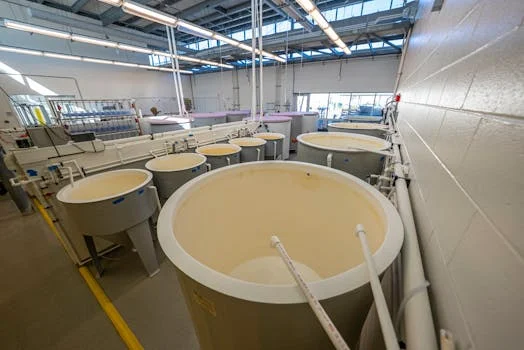
Selecting the correct technology depends heavily on the specific effluent profile of the facility. In Dire Dawa, where tanneries and textile plants dominate, the primary challenges are high TSS, heavy metals, and organic dyes. DAF systems for high-TSS industrial effluent in Dire Dawa are the industry standard for primary treatment. HydropureWater DAF units use micro-bubble technology to achieve 92–97% TSS removal and up to 90% oil and grease reduction, which is essential for tanneries where influent TSS often exceeds 1,000 mg/L.
For facilities aiming for process water recovery, MBR systems for water reuse in Dire Dawa’s textile industry offer a superior solution. The HydropureWater DF Series MBR combines biological degradation with membrane filtration (pore size 0.03–0.1 μm) to deliver effluent with turbidity < 1 NTU. While MBR systems have a 60% smaller footprint than conventional activated sludge systems, they do require roughly 20% higher energy consumption due to membrane scouring air requirements.
Chemical precipitation remains the most effective method for chromium VI removal in tanneries. By utilizing chemical dosing systems for chromium VI removal in tanneries, operators can reduce hexavalent chromium to trivalent chromium using sodium metabisulfite at a low pH, followed by precipitation with lime at a pH of 8.5–9.5. This process can reduce chromium levels to < 0.05 mg/L, though it generates 30–40% more sludge by volume compared to biological methods.
| Feature | Dissolved Air Flotation (DAF) | Membrane Bioreactor (MBR) | Chemical Precipitation |
|---|---|---|---|
| Primary Removal Target | TSS, Oil, Grease | BOD, COD, Pathogens | Heavy Metals (Cr VI) |
| TSS Removal Rate | 92 – 97% | > 99% | 80 – 90% |
| Effluent Quality | Pre-treatment grade | Reuse grade (<1 NTU) | Compliance grade |
| Energy Consumption | Moderate (0.2-0.5 kWh/m³) | High (0.8-1.2 kWh/m³) | Low (0.1-0.2 kWh/m³) |
| Operator Skill Level | Medium | High (SCADA required) | Medium |
Engineers can compare DAF systems to lamella clarifiers and other alternatives to determine the best fit for their site footprint. In the Dire Dawa Industrial Park, where land is at a premium, the footprint efficiency of MBR and DAF often outweighs the higher initial Capex.
Cost Breakdown for Industrial Wastewater Treatment in Dire Dawa: Capex, Opex, and ROI
Budgeting for industrial wastewater treatment in Dire Dawa requires a clear understanding of both initial capital expenditure (Capex) and long-term operational costs (Opex). A turnkey DAF system with a capacity of 50 m³/h typically costs between $120,000 and $180,000, depending on the material of construction (SS304 vs. SS316 for corrosive tannery effluent). An MBR system for the same flow rate can range from $280,000 to $450,000, largely due to the high cost of the membrane modules and advanced automation required.
Opex is driven by chemical consumption and energy. For a 50 m³/h system, annual chemical costs for polymer and coagulant dosing average $12,000–$20,000. Facilities using automatic chemical dosing systems can reduce chemical waste by 15% through precision metering. MBR systems also require membrane replacement every 5–7 years, which can cost between $30,000 and $50,000 per cycle.
| System Type (100 m³/h) | Estimated Capex (USD) | Annual Opex (USD) | ROI Period (Years) |
|---|---|---|---|
| DAF (Primary Treatment) | $180,000 - $250,000 | $25,000 - $35,000 | 2.5 - 3.5 |
| MBR (Full Biological) | $350,000 - $550,000 | $45,000 - $65,000 | 4.0 - 5.5 |
| Chemical Precipitation Skid | $40,000 - $70,000 | $15,000 - $25,000 | 1.5 - 2.0 |
The Return on Investment (ROI) for these systems is increasingly favorable. A textile plant reducing COD from 1,200 mg/L to 150 mg/L can save approximately $80,000 per year in municipal fines and surcharges, based on the Dire Dawa Water Utility 2025 tariff schedule. Integrating reverse osmosis systems for tertiary treatment allows for up to 80% water recovery, significantly lowering raw water procurement costs.
One often-overlooked "hidden cost" in Dire Dawa is sludge disposal. Per the DDEPA 2025 fee schedule, hazardous sludge disposal (tannery chromium sludge) costs between $50 and $80 per ton. Reducing sludge volume through advanced dewatering is critical for maintaining a low Opex.
Supplier Checklist: How to Evaluate Industrial Wastewater Treatment Vendors in Dire Dawa