Package Wastewater Treatment Plant Rio de Janeiro: Size, Cost and Permit Path
Buyers specifying a package wastewater treatment plant Rio de Janeiro get a factory-built unit from 1–80 m³/h on the WSZ series or 10–2,000 m³/day on MBR. Sanitary permits follow NOP-INEA-45 load bands. Design targets remain BOD ≤ 60 mg/L and TSS ≤ 40 mg/L on the stricter band. Equipment CAPEX spans BRL 120,000 to BRL 2.5M per 10 m³/h.
HydropureWater’s WSZ series covers that 1–80 m³/h domestic range, and MBR lines cover 10–2,000 m³/day where reuse is the goal. The 2024 equipment price set still runs from BRL 120,000 to BRL 2.5M per 10 m³/h. Automation level, not the city name, moves a project inside that band. Águas do Rio asks for the compliance file before a connection or a standalone discharge is accepted.
Most plants we size for beachfront hotels sit at the low end of the 1–80 m³/h band, because guest rooms, not a factory line, set the flow.
Why Rio Still Needs Compact Plants
Guanabara Bay still receives an estimated 18,000 L/s of untreated sewage in the 2023 State Environmental Institute figure used for planning. Águas do Rio reported in 2024 that only 65% of the city’s population was tied to a centralized sewer. Those two numbers, not a slogan, are why package units remain on bid lists. The West Zone, including Deodoro and Bangu, is where the gap shows up first.
IBGE’s 2022 Census put about 30% of households in rural and edge areas off centralized sewer. Large municipal plants stall on land title and on multi-year civil contracts. A package unit ships while that argument continues. In the West Zone the delay we see is the plot boundary, not the process calculation.
Foz Aguas 5’s Olympic WWTP, rated at 480,000 PE, showed that modular blocks can hit a hard deadline on a large works. Package plants use the same idea at a much smaller scale. A WSZ unit at 10 m³/h typically fits in 20 m². The Deodoro WWTP, by contrast, occupies 5 hectares.
compact wwtp for guanabara bay pollution control
A compact WWTP for Guanabara Bay pollution control is a factory unit of about 20 m² at 10 m³/h, used where a trunk will not arrive before 31 December 2033. Federal Law 14.026/2020, Article 11-B, requires contracts to reach 90% of the population with sewage collection and treatment, and 99% with drinking water, by that date. Where a collector is more than two rainy seasons away, we size the package unit as the permanent plant, not a temporary skid.
According to VEJA on 4 June 2025, citing the state government, the bay has stopped receiving 5 billion L/month of untreated sewage since collector trunks at Cidade Nova and Manguinhos came online. Cidade Nova, delivered in 2020, is 4.1 km of pipe with capacity up to 700 L/s, sent to ETE Alegria. Manguinhos, finished in 2023, is 4.45 km and can carry 1,293 L/s. The state counts nearly 800,000 residents benefited, while many favela clusters in those districts still discharge to open channels.
Those two trunks, at 700 L/s and 1,293 L/s, are a slice of the 18,000 L/s untreated-flow estimate from 2023, so the bay deficit is smaller and not closed. The trunks are part of PSAM, the sanitation program for municipalities around Guanabara Bay, coordinated by the state environment secretariat. Article 11-B also lets the regulator accept decentralized treatment in rural, remote, and consolidated informal urban areas. A deadline shift past 31 December 2033, and only as far as 1 January 2040, needs prior regulator consent and a tariff check.
Rio de Janeiro’s Wastewater Treatment Regulations: 2025 Compliance Checklist
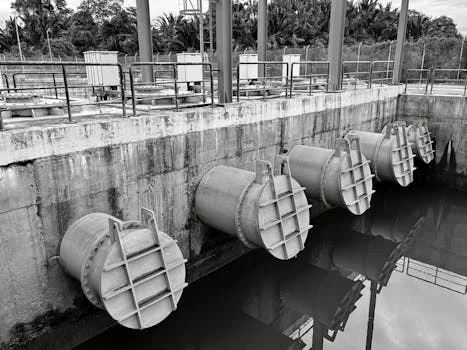
Every discharge in Rio de Janeiro has to meet federal and state effluent rules, and the spec sheet in this guide still quotes CONAMA Resolution 430/2011. That resolution is cited here for BOD ≤ 60 mg/L, TSS ≤ 40 mg/L, pH 5–9, and oil and grease ≤ 20 mg/L. Guanabara Bay points may be stricter than those four numbers. The state sanitary norm, described below, is what INEA now applies to domestic sewage.
Earlier notes tied a 90% sewage-treatment target by 2033, up from 44% in 2021, to State Decree 46.890/2019. CONEMA Resolution 90/2021 describes that decree as the SELCA licensing system, not as a coverage target. According to Federal Law 14.026/2020, the 90% sewage figure and the 99% drinking-water figure belong in the concession contract. A package plant either ties into the Águas do Rio network or shows it can meet the discharge limit alone.
SMAC Resolution 10/2020 requires an environmental impact assessment when capacity exceeds 50 m³/h. Smaller units follow a simplified INEA path. The practical sequence is a technical file to Águas do Rio or SMAC, an operating license from INEA, and annual audits after startup. Keep five years of lab records, because NOP-INEA-45 asks the station to hold them for inspection.
The checklist below is the permit snapshot procurement teams still paste into bid forms.
| Regulatory Body/Document | Key Requirement/Limit | Compliance Action for Package WWTPs |
|---|---|---|
| CONAMA 430/2011 (Federal) | BOD ≤ 60 mg/L, TSS ≤ 40 mg/L, pH 5–9, Oil/Grease ≤ 20 mg/L | Design plant to meet these effluent standards; conduct regular lab testing. |
| State Decree 46.890/2019 (State) | 90% sewage treatment coverage by 2033 | Ensure plant integrates with Águas do Rio network or demonstrates standalone compliance for permit. |
| SMAC Resolution 10/2020 (Municipal) | Environmental Impact Assessment (EIA) for plants >50 m³/h | Prepare and submit EIA for larger projects; simplified license for smaller plants. |
| INEA (State Environmental Institute) | Operating License and Annual Audits | Submit technical designs for approval; secure operating license; maintain operational logs for audits. |
| Águas do Rio | Network integration/Approval | Coordinate with Águas do Rio for connection permits or discharge approvals. |
For a permit worksheet built on the same steps, use the Rio WWTP Permit Application Checklist and adapt the load band before you file.
conama 430 effluent compliance package wwtp
CONAMA 430 effluent compliance for a package WWTP, as written in the checklist above, means BOD ≤ 60 mg/L, TSS ≤ 40 mg/L, pH 5–9, and oil and grease ≤ 20 mg/L. Those four values are design targets in this guide. The four checklist values are not a full copy of the Rio sanitary standard now used on permits. Sensitive bay outfalls can still demand BOD ≤ 30 mg/L.
According to NOP-INEA-45, approved by CONEMA Resolution 90 on 8 February 2021 and published in the state gazette on 25 February 2021, sanitary sewage limits scale with raw organic load. The norm fully replaces DZ-215.R-4 and NT-202.R-10 for sanitary sewage discharge standards. NOP-INEA-45 does not apply to industrial non-sanitary effluent or to landfill leachate plants. pH must stay between 5 and 9, temperature under 40°C, and the mixing zone may not warm by more than 3°C.
Settleable solids are capped at 1 mL/L in a 1-hour Imhoff cone, and they must be absent in lakes and lagoons with almost no circulation. Hexane-soluble oils and greases are capped at 50.0 mg/L for sanitary sewage, with no floating material and MBAS at or below 2.0 mg/L. Ammonia nitrogen is 20 mg N/L in flowing waters and 10 mg N/L in still waters. Total phosphorus is 4.0 mg P/L in flowing waters and 1 mg P/L in still waters.
DBO and SST caps step down as the raw load rises, using the bands in the table below. A 10 m³/h plant at 300 mg/L BOD carries 72 kg BOD/day, from 240 m³/day times 0.3 kg/m³. That load falls in the 60 to 80 kg/day band, so the sanitary caps are 60 mg/L DBO and 50 mg/L SST. The checklist TSS of ≤ 40 mg/L is stricter than the 50 mg/L cap in this band and matches the cap once load exceeds 80 kg/day.
| Raw organic load C (kg BOD/day) | Max DBO (mg/L) | Max SST (mg/L) |
|---|---|---|
| C < 20 | 120 | 110 |
| 20 < C < 60 | 90 | 80 |
| 60 < C < 80 | 60 | 50 |
| C > 80 | 40 | 40 |
Loads of exactly 20, 60, or 80 kg BOD/day are not placed by the published inequalities, so confirm that boundary with INEA. Submarine outfalls follow a different rule: at least 30% BOD removal and at least 40% TSS removal, plus pH 5–9. The norm took effect 180 days after the 25 February 2021 publication, and already-licensed plants could receive up to three years from that date to adapt. Do not plan a 2026 project on that transition window; use the load table, an INEA-accredited lab, and a named technical lead, with disinfection where the receiving water is still or used for primary contact.
Package Technologies for Rio: WSZ, MBR and DAF
The WSZ series uses A/O biological contact oxidation for 1–80 m³/h and, in 2024 lab data, removed 92% of BOD at a 300 mg/L influent. That result leaves 24 mg/L BOD, under the 40 mg/L and 60 mg/L sanitary caps. Hotels, clinics, and small residential blocks are the usual fit, and operation stays simple. Most plants we size for hospitals stay on this train unless the contract requires reuse water.
Reuse specs are where MBR systems for water reuse in Rio’s water-scarce areas belong, with TSS below 1 mg/L and a footprint about 60% smaller than conventional activated sludge. The same comparison table lists BOD under 5 mg/L for that reuse-quality effluent. Barra da Tijuca and textile mills that recycle process water are the jobs that justify the membrane. The membrane, not the blower, sets the maintenance plan.
Industrial pretreatment uses DAF systems for Rio’s industrial wastewater pretreatment, the DAF line, at 4–300 m³/h. Micro-bubbles take out over 95% of FOG and TSS before biology sees the water. Food plants and petrochemical lines are the usual duty. A biological package without this step foams when the influent is oily.
Seasonal rain can cut influent strength and double the hydraulic peak, so designs should hold 2× peak flow with an equalization tank. Coastal air calls for 316L stainless steel on wetted parts. Power cuts are common enough that a backup generator belongs in the compliance case. Buried sites in tight blocks use WSZ series package plants for Rio’s urban density, with the anoxic and aerobic stages in one shell.
Where the yard cannot spare 20 m² at grade, the Underground Package Sewage Treatment Plant (WSZ Series) puts that same 1–80 m³/h biological train below the slab. The process does not change, and only the civil cover does. Match the NOP load band either way.
| Technology | Ideal Application in Rio | Key Features & Benefits | Effluent Quality (Typical) | Footprint (Relative) |
|---|---|---|---|---|
| WSZ Series (A/O Biological) | Residential communities, hotels, small commercial, rural areas | High BOD/COD removal, low energy, simple operation, robust, underground option | BOD ≤ 60 mg/L, TSS ≤ 40 mg/L | Medium (20 m² for 10 m³/h) |
| MBR Systems | Water reuse, industrial applications, high-density urban areas, sensitive environments | Superior effluent quality, compact design, nutrient removal, direct reuse potential | BOD < 5 mg/L, TSS < 1 mg/L (reuse-quality) | Small (60% less than conventional) |
| DAF Systems | Industrial pretreatment (food & beverage, petrochemical, textile) | Effective FOG/TSS removal, fast separation, reduces load on downstream treatment | 95%+ FOG/TSS removal (pretreatment) | Medium (depends on flow) |
daf system industrial wastewater rio de janeiro
A DAF system for industrial wastewater in Rio de Janeiro removes over 95% of FOG and TSS in the DAF duty range of 4–300 m³/h, and it is pretreatment, not a sanitary discharge plant. NOP-INEA-45 explicitly leaves industrial non-sanitary effluent outside its tables. Food, petrochemical, and textile wastes therefore need the DAF mass balance written against the industrial permit, not against the domestic load bands. Most port-zone kitchens we review need this step or the aeration tank foams in the first week.
Broader industrial specs, costs, and the compliance path for factory effluent are in Industrial Wastewater Treatment in Rio de Janeiro: 2026 Engineering Specs. Use that page when the waste is not domestic sewage. Keep DAF chemical dose, sludge haulage, and the 95% removal claim in the same data sheet. Do not cite the sanitary SST table as the industrial limit.
containerized wastewater treatment plant cost brazil
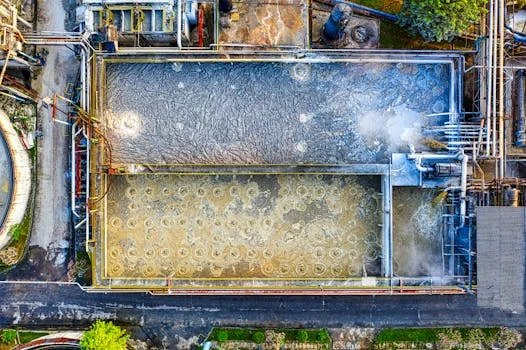
Containerized wastewater treatment plant cost in Brazil follows the Rio equipment bands in this guide. WSZ equipment is BRL 120,000 to BRL 180,000 per 10 m³/h, MBR is BRL 200,000 to BRL 300,000, and DAF is BRL 150,000 to BRL 250,000. Those 2024 prices cover core equipment, automation, and factory testing. A container uses the same equipment band as a skid.
OPEX per cubic meter treated is BRL 0.80–1.20/m³ on WSZ, BRL 1.50–2.50/m³ on MBR, and BRL 1.00–1.80/m³ on DAF. Energy usually sits at 0.3–0.6 kWh/m³. DAF adds coagulant, and MBR adds a membrane replacement every 5–7 years. The number that moves a buried-tank budget is the civil line, not the blower nameplate.
Permits and licenses run from BRL 5,000 to BRL 20,000. Installation adds 10–20% of CAPEX. Civil works, including concrete tanks for underground sets, add 15–30%. Operator training is BRL 2,000–5,000 per operator, and a container skips much of that 15–30% civil adder because the vessel arrives finished.
A 50 m³/h WSZ plant serving 1,000 PE is shown here at CAPEX of BRL 900,000 and OPEX of BRL 15,000/month. Avoided non-compliance fines of BRL 50,000/year plus water-reuse savings of BRL 30,000/year support a payback near 5 years. Financing named in this guide includes an IDB Invest pool of BRL 1,500M for Rio projects, BNDES green lines, and supplier leases of 3–5 years. Treat the payback as a screening figure, then replace the fine and reuse lines with the site’s own tariffs.
| Technology Type | Estimated CAPEX per 10 m³/h (BRL) | Estimated OPEX per m³ Treated (BRL) | Key OPEX Drivers |
|---|---|---|---|
| WSZ Series (A/O Biological) | 120,000 – 180,000 | 0.80 – 1.20 | Energy (aeration), sludge disposal, labor |
| MBR Systems | 200,000 – 300,000 | 1.50 – 2.50 | Energy (aeration & membrane scour), membrane replacement (5-7 yrs), chemicals |
| DAF Systems | 150,000 – 250,000 | 1.00 – 1.80 | Energy (pump), coagulants/flocculants, sludge disposal |
How to Select a Package WWTP Supplier for Rio de Janeiro Projects
A Rio supplier has to be reachable for Águas do Rio and INEA meetings, not only for a container handover. Ask for INEA-accepted designs and a record against CONAMA 430/2011 and the state sanitary norm. Standard modules in this guide are quoted at 6–12 weeks. Warranties run 2–5 years on equipment and 1 year on membranes.
Local partners of a concessionaire can move a permit faster and may offer a shorter technology list. International makers, HydropureWater included, bring the WSZ and MBR range and need tighter local coordination. The reference we ask vendors to match is the Duque de Caxias WSZ unit: 20 m³/h, 95% BOD removal, and INEA approval within 8 weeks, with on-site training. A scorecard should score support, compliance paperwork, and price transparency on one sheet.
Red flags are a missing Rio reference, a compliance promise that names no norm, and a fully manual plant. Manual operation rarely holds a stable effluent against the checklist limits of BOD ≤ 60 mg/L and TSS ≤ 40 mg/L. Automation is a compliance tool here, not a luxury. The table below is the minimum scorecard.
| Evaluation Criterion | Description | Importance for Rio Projects |
|---|---|---|
| Local Presence & Support | Office or service team in Rio de Janeiro for quick response | Critical for permit navigation, installation support, and emergency maintenance. |
| Compliance Documentation | INEA-approved designs, CONAMA 430/2011 track record | Essential to avoid fines and project delays; demonstrates regulatory expertise. |
| Lead Time & Logistics | Delivery schedule for equipment and components | Impacts project timelines, especially for urgent infrastructure needs. |
| Warranty & After-Sales | Equipment warranty, membrane life, spare parts availability | Ensures long-term reliability and minimizes unexpected repair costs. |
| Technical Expertise & Automation | Proven technology, level of automation, operator training | Guarantees consistent effluent quality and reduced operational burden. |
Who Should Specify a Package Plant
Engineers, EPC estimators, and buyers placing a compact unit where the public trunk is missing or late are the readers of this page. West Zone pockets such as Deodoro and Bangu, hotels, clinics, and factories that must pretreat are the match. A team building a 480,000 PE regional station should use a trunk-and-station contract instead. If a collector to ETE Alegria will be live inside the build window, do not buy a package plant for that flow.
Run this check before you request a price.
- Classify the waste as sanitary or industrial, because NOP-INEA-45 covers sanitary sewage only.
- Compute raw load in kg BOD/day and read the DBO and SST band.
- Size equalization for 2× peak flow in Rio storms.
- Specify 316L stainless steel if the site takes salt air.
- Budget permits at BRL 5,000 to BRL 20,000, installation at 10–20% of CAPEX, and civil works at 15–30% when the tank is buried.
- Require an INEA-accredited lab and a named technical lead.
- Ask for one INEA-accepted Rio reference, not a generic brochure line.
Tank counts, blower sizes, and pipe diameters are tracked separately, on the page for rio de janeiro water treatment plant components and their sizes and numbers. This article stops at process choice, cost bands, and the permit limit.
Specify a package wastewater treatment plant Rio de Janeiro file with flow, influent BOD in mg/L, and the receiving water before you request a price.
Send that file through the project inquiry form so the load band and the process can be matched before a number is issued.
Frequently Asked Questions
What effluent limits apply to package plants in Rio de Janeiro?
Design specs in this guide still use CONAMA 430/2011 figures: BOD ≤ 60 mg/L, TSS ≤ 40 mg/L, pH 5–9, and oil and grease ≤ 20 mg/L. Rio sanitary permits follow NOP-INEA-45, where the cap depends on raw load and can be 40 mg/L BOD above 80 kg/day. Guanabara Bay discharge points may be tighter, often BOD ≤ 30 mg/L. Confirm the band with INEA before you freeze the process.
How much does a 10 m³/h package plant cost in Rio?
A 10 m³/h WSZ plant costs BRL 120,000 to BRL 180,000 in equipment CAPEX, with OPEX of BRL 0.80–1.20/m³. MBR systems cost 50–100% more in CAPEX and produce reuse-quality water, with BOD below 5 mg/L in the comparison table. Add permits of BRL 5,000 to BRL 20,000, installation at 10–20% of CAPEX, and civil works at 15–30% if the tank is buried. The upper equipment band in this guide reaches BRL 2.5M per 10 m³/h when technology and automation rise.
Do package plants need an environmental impact assessment in Rio?
Yes, plants above 50 m³/h need an Environmental Impact Assessment under SMAC Resolution 10/2020. Smaller plants use a simplified INEA license, then an operating license and annual audits. The file still goes to Águas do Rio when you connect to the public network or need a discharge approval. A named technical lead must sign the station, and operators need periodic training records for inspection.
Can package plants handle Rio’s high rainfall?
Yes, if the design holds 2× peak flow. WSZ and MBR packages in this guide use equalization tanks so a storm does not wash out the biology. Coastal units should use 316L stainless steel, and unstable power needs a backup generator so the license limit is met during an outage. Dilute wet-season influent is easier on BOD and harder on hydraulics.
What financing options are available for package plants in Rio?
IDB Invest has a BRL 1,500M fund aimed at Rio sanitation projects, and BNDES offers green financing. Suppliers, including HydropureWater, also lease equipment on 3–5 year terms. A 50 m³/h WSZ example in this guide uses CAPEX of BRL 900,000 and OPEX of BRL 15,000/month. Payback sits near 5 years when avoided fines of BRL 50,000/year and reuse savings of BRL 30,000/year are counted.