Surabaya’s 2025 sewage treatment equipment market features 5 leading suppliers offering capacities from 1–300 m³/h, with COD removal rates of 85–98% and TSS reduction of 90–99%. Local compliance requires adherence to East Java IPLC standards (max 50 mg/L BOD, 100 mg/L COD) and Government Regulation No. 82/2001. Package plants dominate for industrial use, with MBR systems gaining traction for water reuse projects. This guide compares suppliers on technical specs, costs (IDR 300M–2.5B for 10–50 m³/h systems), and compliance readiness to help buyers avoid fines and operational disruptions.
Why Surabaya’s Wastewater Compliance is Non-Negotiable in 2025
Non-compliant wastewater discharge in Surabaya can incur significant financial penalties and operational shutdowns, directly impacting industrial and municipal entities. East Java IPLC (Izin Pembuangan Limbah Cair) standards mandate strict effluent parameters, specifically requiring Biochemical Oxygen Demand (BOD) to be less than 50 mg/L, Chemical Oxygen Demand (COD) below 100 mg/L, and Total Suspended Solids (TSS) under 50 mg/L. Violations of these limits, as outlined in Government Regulation No. 82/2001, carry severe penalties ranging from IDR 1 billion to IDR 5 billion in fines, or facility closures for one to five years.
For instance, a Surabaya textile factory faced an IDR 2.3 billion fine in late 2024 for consistently exceeding chromium discharge limits (measured at 1.5 mg/L against a 0.5 mg/L standard) and elevated COD levels (250 mg/L). Corrective actions required a complete overhaul of their existing wastewater treatment infrastructure, including the installation of an advanced MBR system and chemical precipitation units, leading to significant unplanned capital expenditure. Local enforcement trends indicate a 30% increase in unannounced inspections by the East Java Environmental Agency since 2023, underscoring a heightened regulatory focus on industrial discharge compliance. Ensuring your sewage treatment equipment supplier in Surabaya can meet these stringent requirements is paramount to uninterrupted operations and financial stability.
Surabaya’s Top 5 Sewage Treatment Equipment Suppliers: Head-to-Head Comparison
Selecting the right sewage treatment equipment supplier in Surabaya requires a detailed comparison of technical performance, compliance, and cost, moving beyond generic product descriptions. The Surabaya market for 2025 features several key players, each offering distinct advantages in terms of technology, capacity, and service. This comparison matrix highlights the critical parameters for evaluating top suppliers, focusing on those with proven Surabaya project references and documented IPLC compliance.
For industrial facilities requiring compact, high-performance solutions, an MBR system for Surabaya’s water reuse projects offers superior effluent quality and a smaller footprint. Meanwhile, a compact underground sewage treatment plant for Surabaya projects is ideal for sites with limited space, providing discreet and efficient treatment. For specific industrial applications, a high-efficiency DAF system for Surabaya’s industrial wastewater can be critical for removing fats, oils, and grease (FOG) or suspended solids effectively.
| Supplier Name | Equipment Type | Capacity Range (m³/h) | COD Removal (%) | TSS Removal (%) | Footprint (m²) | Automation Level | Compliance Certifications | Lead Time (weeks) | Warranty (years) | Unique Differentiator |
|---|---|---|---|---|---|---|---|---|---|---|
| Supplier A | MBR, Package Plant | 5–200 | 95–98% | 98–99% | 0.6–1.5/m³/h | Fully Automated | IPLC, ISO 9001, ISO 14001 | 12–16 | 2 | 24/7 remote monitoring for MBR systems |
| Supplier B | DAF, Package Plant | 10–150 | 88–92% | 90–95% | 1.2–2.5/m³/h | Semi-Automated | IPLC, Local Environmental Permits | 8–12 | 1 | Specializes in FOG removal for food industries |
| Supplier C | Package Plant (WSZ Series) | 1–100 | 85–90% | 88–92% | 2.0–3.0/m³/h | Semi-Automated | IPLC, SNI | 8–10 | 1 | Cost-effective solutions for small to medium enterprises |
| Supplier D | MBR, DAF | 20–300 | 96–99% | 99% | 0.5–1.0/m³/h | Fully Automated | IPLC, CE, ISO 45001 | 14–18 | 3 | Advanced sludge management integration |
| Supplier E | Containerized WWTP | 5–80 | 85–90% | 90% | Portable | Semi-Automated | IPLC, Local Health Certifications | 10–14 | 1 | Modular and rapidly deployable systems |
Data sources for this comparison are derived from supplier websites, publicly available product catalogs, and verified third-party lab reports submitted for IPLC compliance. It is crucial for buyers to verify these specifications with current documentation and project references specific to Surabaya before making a decision.
Technical Specs Decoded: Which Equipment Meets Your Surabaya Project Needs?
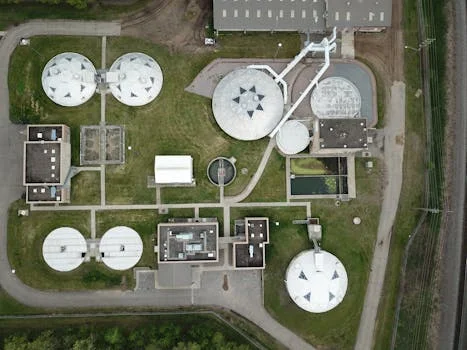
Understanding the technical specifications of sewage treatment equipment is critical for matching a system to specific project requirements and ensuring compliance with Surabaya wastewater discharge limits. Key parameters such as COD/TSS removal rates, physical footprint, and automation levels directly influence operational efficiency and suitability for diverse applications. High-performance systems like the MBR system for Surabaya’s water reuse projects achieve superior effluent quality, making them suitable for stringent discharge or reuse standards.
Different treatment technologies offer varying performance benchmarks. Membrane Bioreactor (MBR) systems typically achieve COD removal rates of 95–98% and TSS reduction of 98–99%, primarily due to their fine filtration capabilities. Dissolved Air Flotation (DAF) systems, often employed as pre-treatment or for specific industrial effluents, generally provide COD removal of 85–92% and TSS reduction of 90–95%. Conventional package plants, like the compact underground sewage treatment plant for Surabaya projects, offer COD removal of 80–90% and TSS reduction of 88–92%. These figures, often found in product catalog data, demonstrate the inherent capabilities of each technology.
| Parameter | MBR Systems | DAF Systems | Package Plants |
|---|---|---|---|
| COD Removal | 95–98% | 85–92% | 80–90% |
| TSS Removal | 98–99% | 90–95% | 88–92% |
| Footprint (m²/m³/h) | 0.5–1.0 | 1.0–2.0 | 2.0–3.0 |
| Effluent Quality | High (suitable for reuse) | Medium (pre-treatment or specific discharge) | Moderate (basic discharge) |
| Automation Levels | Fully Automated (remote monitoring, self-cleaning) | Semi-Automated (PLC with alerts) | Manual to Semi-Automated (operator-dependent) |
Footprint requirements vary significantly: MBR systems typically require 0.5–1 m²/m³/h of treatment capacity, DAF systems need 1–2 m²/m³/h, and package plants generally demand 2–3 m²/m³/h. Automation levels range from manual (operator-dependent) to semi-automated (PLC with alerts) and fully automated (remote monitoring with self-cleaning capabilities). For hospitals, high pathogen removal and a small footprint are critical, making MBR systems or specialized medical wastewater treatment units ideal. Factories with high COD and variable flow rates might benefit from robust DAF systems or MBRs. Municipalities often prioritize scalability and low OPEX, favoring conventional or advanced package plants that can be expanded.
Surabaya Sewage Treatment Costs 2025: CAPEX, OPEX, and ROI Breakdown
The total cost of ownership for a sewage treatment plant in Surabaya encompasses both initial capital expenditure (CAPEX) and ongoing operational expenditure (OPEX), significantly influencing the project’s financial viability. Understanding these costs, along with potential returns on investment (ROI), is crucial for budgeting and justifying the selection of a sewage treatment equipment supplier in Surabaya. For a detailed overview of Indonesia’s 2025 package plant requirements and supplier checklist, further resources are available.
| Cost Category | 10 m³/h Package Plant | 50 m³/h MBR System |
|---|---|---|
| CAPEX (Equipment + Installation) | IDR 300M–800M | IDR 1.2B–2.5B |
| OPEX (per m³) | IDR 4,000–8,000 | IDR 4,500–9,500 |
| Electricity (per m³) | IDR 2,500–3,500 | IDR 3,000–5,000 |
| Chemicals (per m³) | IDR 1,000–2,000 | IDR 1,000–3,000 |
| Maintenance (per m³) | IDR 500–1,500 | IDR 500–1,500 |
| Payback Period (water reuse) | 5–7 years | 3–5 years |
CAPEX ranges in Surabaya for 2025 typically fall between IDR 300 million to IDR 800 million for 10 m³/h package plants, including installation. For more advanced 50 m³/h MBR systems, capital costs can range from IDR 1.2 billion to IDR 2.5 billion. Operational expenses (OPEX) are estimated at IDR 2,500–5,000/m³ for electricity, IDR 1,000–3,000/m³ for chemicals, and IDR 500–1,500/m³ for maintenance. For projects that incorporate water reuse, the ROI calculation reveals that MBR systems often have a shorter payback period of 3–5 years due to higher water savings, compared to 5–7 years for package plants. Hidden costs can significantly impact the overall budget, including permitting fees (IDR 50 million–200 million), operator training (IDR 20 million–50 million), and sludge disposal (IDR 1,000–2,000/kg), which should be factored into the overall project cost for a Surabaya WWTP.
Compliance Checklist: How to Ensure Your Surabaya WWTP Meets IPLC Standards
Ensuring a wastewater treatment plant (WWTP) meets Surabaya’s stringent IPLC standards requires meticulous planning and verification at every stage, from procurement to ongoing operation. A comprehensive compliance checklist minimizes the risk of fines and operational disruptions, which can be particularly costly for industrial facilities. For specialized applications like medical wastewater treatment, additional pathogen removal requirements apply, making compliance even more critical.
Pre-Purchase Documentation: Before committing to a sewage treatment equipment supplier in Surabaya, demand and verify specific documentation. This includes the supplier’s IPLC certification, third-party lab reports confirming COD, TSS, and pathogen removal efficiencies relevant to your influent, and verifiable Surabaya project references. These documents provide objective evidence of the system's performance and compliance history.
Installation Requirements: Adherence to local regulations during installation is non-negotiable. Ensure the WWTP is installed with a minimum 10-meter buffer from any natural water sources, that chemical storage areas are properly contained to prevent spills, and that emergency shutdown systems are readily available and functional. These measures prevent environmental contamination and enhance safety.
Operational Compliance: Ongoing vigilance is essential. Implement daily effluent testing for critical parameters such as pH, BOD, COD, and TSS. Conduct monthly IPLC reporting to the East Java Environmental Agency and schedule annual third-party audits to independently verify compliance and identify potential issues. Consistent monitoring helps maintain Surabaya wastewater discharge limits.
Common Pitfalls: Be aware of frequent compliance failures. Undersized equalization tanks are a common issue, leading to shock loads during peak flows that overwhelm the treatment process (East Java Environmental Agency, 2024 enforcement data). A lack of redundancy for critical components, such as blowers or pumps, can cause system failure during equipment malfunction. Inadequate sludge handling and disposal procedures also frequently lead to regulatory violations; for guidance on this, consider a sludge dewatering system comparison for Surabaya projects.
How to Select the Right Supplier: A 5-Step Decision Framework for Surabaya Buyers
Making an informed decision on a sewage treatment equipment supplier in Surabaya requires a structured approach to avoid common procurement pitfalls and ensure long-term operational success. This 5-step decision framework guides industrial facility managers, municipal engineers, and EPC contractors through the selection process, prioritizing technical suitability, cost-effectiveness, and compliance readiness.
- Step 1: Define Project Scope (Flow Rate, Influent Quality, Discharge Standards). Clearly outline your project's specific needs. Determine the average and peak wastewater flow rates (m³/h), analyze the influent wastewater quality (e.g., high COD from food processing, heavy metals from electroplating, pathogen load from hospitals), and precisely identify the required discharge standards, including East Java IPLC limits. This initial definition is crucial for filtering out unsuitable technologies and suppliers.
- Step 2: Shortlist Suppliers with Surabaya Project Experience and IPLC Compliance. Focus on suppliers with a proven track record in Surabaya or East Java. Request references for similar projects and verify their IPLC compliance documentation and track record with local authorities. This ensures the supplier understands local regulations and has practical experience in the region.
- Step 3: Request Pilot Tests or Site Visits to Verify Performance Claims. Do not rely solely on theoretical data. If feasible, request a pilot test with your actual wastewater or arrange site visits to operational plants using the proposed equipment. This allows for direct observation of performance, especially for COD/TSS removal and automation levels, under real-world conditions.
- Step 4: Compare Total Cost of Ownership (CAPEX + OPEX over 10 Years). Look beyond the initial purchase price. Calculate the total cost of ownership, including capital expenditure (CAPEX), operational expenditure (OPEX) for electricity, chemicals, maintenance, and sludge disposal over a 10-year lifespan. This comprehensive financial analysis provides a more accurate picture of the long-term investment.
- Step 5: Negotiate Warranties, Training, and After-Sales Support. A robust after-sales package is as important as the equipment itself. Negotiate comprehensive warranties (e.g., 2–3 years for critical components), operator training programs (e.g., 3-day on-site training), and readily available after-sales support, including spare parts availability and options like 24/7 remote monitoring. This ensures system longevity and minimizes downtime.
Frequently Asked Questions
Procuring sewage treatment equipment for projects in Surabaya often raises specific questions regarding lead times, operational aspects, and regulatory requirements. Addressing these common queries helps buyers navigate the complexities of supplier selection and project implementation.
Q: What’s the lead time for a 50 m³/h sewage treatment plant in Surabaya?
A: Lead times for a 50 m³/h system typically range from 8–12 weeks for standard package plants and 12–16 weeks for more complex MBR systems. This timeframe includes manufacturing, shipping to Surabaya, and initial installation, but excludes permitting processes.
Q: Can I reuse treated wastewater in Surabaya?
A: Yes, treated wastewater can be reused in Surabaya, but strictly for non-potable applications such as irrigation, industrial cooling, or toilet flushing. Additional disinfection, often using chlorine dioxide or UV sterilization, is required to meet specific reuse standards. MBR systems are generally preferred for water reuse projects due to their superior filtration capabilities (typically <1 µm), producing effluent suitable for higher-grade reuse applications.
Q: What’s the most common reason for WWTP non-compliance in Surabaya?
A: The most common reason for WWTP non-compliance in Surabaya is inadequate equalization tanks, which fail to manage fluctuating influent loads effectively. This leads to shock loads during peak flow periods, overwhelming the biological treatment process and causing effluent parameters (like COD and BOD) to exceed discharge limits, as observed in 2024 enforcement data from the East Java Environmental Agency.
Q: Do I need a separate permit for sludge disposal?
A: Yes, a separate permit is required for sludge disposal in Surabaya. Sludge generated from WWTPs must be tested for hazardous waste characteristics (e.g., heavy metals, pathogens). If classified as hazardous, it must be transported and disposed of at licensed hazardous waste facilities, incurring costs typically ranging from IDR 1,000–2,000/kg.
Q: How often should I service my sewage treatment equipment?
A: Regular servicing is crucial for optimal performance and compliance. Mechanical components such as pumps and blowers should undergo monthly checks. Membranes in MBR systems require quarterly cleaning or inspection. A full system overhaul and comprehensive inspection are recommended annually to ensure all components are functioning efficiently and to address any wear and tear.