Why São Paulo’s Sewage Treatment Equipment Market Demands Local Expertise
CONAMA 430/2011 effluent limits in São Paulo, particularly within the state’s industrial clusters, mandate stricter discharge standards than federal averages, requiring BOD levels below 60 mg/L, COD under 180 mg/L, and TSS under 20 mg/L. In the ABC Paulista industrial zone, where wastewater often presents high Total Suspended Solids (TSS) ranging from 500 to 2,000 mg/L, standard municipal solutions often fail to prevent regulatory fines. For instance, a food processing plant in São Bernardo do Campo recently faced environmental fines exceeding R$ 50,000 per month due to inconsistent TSS removal before switching to a localized Dissolved Air Flotation (DAF) strategy.
The regulatory landscape in São Paulo is further complicated by State Decree 8.468/76, which remains the cornerstone of CETESB’s enforcement strategy. Unlike other Brazilian states where federal laws might be the only benchmark, São Paulo’s environmental agency (CETESB) has the authority to impose site-specific limits based on the "Class" of the receiving water body. For industries discharging into the Tietê or Pinheiros river basins, the pressure to maintain ultra-low nutrient levels is immense. Local expertise is required to navigate these nuances, as a system designed for a plant in Minas Gerais may be legally non-compliant if installed in the Guarapiranga catchment area.
São Paulo’s industrial density necessitates equipment that can handle high-strength influent within limited footprints. Local expertise is critical because São Paulo’s water utility (SABESP) and environmental agency (CETESB) enforce rigorous monitoring. Procurement managers must prioritize suppliers that offer more than just hardware; they require 24-hour response times and local spare parts availability. While international vendors may offer sophisticated designs, the lead time for critical components can extend to two weeks, whereas local suppliers like Solme do Brasil or Ecosan typically provide on-site support within one business day. This operational continuity is the difference between a compliant facility and a shut-down order.
Furthermore, the physical logistics of São Paulo—notorious for its traffic congestion and complex metropolitan distribution—mean that "local expertise" also translates to "logistical reliability." A broken aerator or a failed membrane module in an industrial park in Cajamar requires a supplier who understands the local transport restrictions (such as the Rodízio de Veículos Pesados) to ensure that replacement parts arrive before the balancing tank overflows. Engineering teams must also account for the high humidity and temperature fluctuations of the Southeast, which can affect the biological activity in activated sludge systems and the oxidation rates in chemical dosing units.
Water scarcity in the Southeast region has shifted the focus from simple discharge to water reuse. Implementing a MBR system for reuse-quality effluent in São Paulo allows facilities to bypass rising municipal water tariffs, which can reach R$ 10/m³ for industrial users. Matching equipment to these specific local economic and regulatory pressures requires a data-driven approach to technology selection. Beyond the technology itself, local experts provide the essential "Environmental Licensing" support, ensuring that the equipment's technical specifications align perfectly with the documentation submitted to the Secretaria do Meio Ambiente.
Critical Local Factors for Equipment Selection
- Space Constraints: Most industrial sites in the Metropolitan Region of São Paulo (RMSP) have zero room for expansion, favoring vertical or underground integrated systems.
- Energy Costs: With electricity prices in Brazil among the highest in Latin America, equipment with Variable Frequency Drives (VFDs) and high-efficiency motors is non-negotiable for long-term ROI.
- Chemical Availability: Local expertise ensures that the DAF or chemical precipitation systems are calibrated for the specific polymers and coagulants readily available in the Brazilian market, avoiding reliance on expensive imported consumables.
- Sludge Disposal: CETESB regulations regarding "Resíduos Sólidos" (Policy 12.305/2010) make sludge transport and landfilling expensive; local experts prioritize dewatering equipment to reduce volume by up to 80%.
Sewage Treatment Technologies for São Paulo: How to Match Equipment to Your Wastewater
Selecting the right technology depends on the influent characteristics and the desired end-use of the treated water. In São Paulo’s industrial sectors—such as textiles, food and beverage, and chemicals—the primary challenge is often high oil, grease, and suspended solids. A high-efficiency DAF system for São Paulo’s industrial wastewater is typically the most cost-effective first step for influent with TSS levels between 500 and 3,000 mg/L. These systems achieve 92–97% removal efficiency (per EPA 2024 benchmarks) with a relatively low energy footprint of 0.5–1.2 kWh/m³.
In the textile industry of the Americana and Santa Bárbara d'Oeste region, for example, the wastewater contains complex dyes and surfactants. A standard aerobic system would be overwhelmed by the chemical oxygen demand (COD). Here, local engineering firms often recommend a hybrid approach: a DAF system for primary solids and oil removal, followed by an Advanced Oxidation Process (AOP) or an MBR. This multi-stage approach ensures that the "Color" parameter—strictly monitored by CETESB—is met before the water enters public sewers or natural streams.
For projects requiring near-potable quality for cooling towers or irrigation, Membrane Bioreactor (MBR) systems are the benchmark. MBRs utilize <1 μm filtration, ensuring compliance with the strictest CETESB reuse standards. However, engineers must account for the 30% higher capital cost and increased energy demands (1.5–2.5 kWh/m³). For decentralized municipal projects or smaller industrial sites (1–80 m³/h), a compact integrated sewage treatment plant for decentralized projects offers a "plug-and-play" solution that minimizes civil engineering costs and operator intervention.
Integrated plants, particularly the WSZ series, have gained massive popularity in São Paulo’s "Condomínios Logísticos" (logistics parks) along the Castelo Branco and Anhanguera highways. These facilities often lack access to municipal sewage lines and require a system that can be buried underground to preserve surface space for truck maneuvering. These systems use a combination of anaerobic digestion (UASB logic) and aerobic polishing, providing a robust solution that handles the "shock loads" typical of facilities with fluctuating worker populations.
| Technology | Influent TSS Range | Effluent Quality (TSS) | Footprint | Energy Use (kWh/m³) | Relative CAPEX |
|---|---|---|---|---|---|
| DAF | 500–3,000 mg/L | < 50 mg/L | Medium | 0.5–1.2 | Moderate |
| MBR (DF Series) | 200–1,000 mg/L | < 1 mg/L | Small | 1.5–2.5 | High |
| Integrated Plant (WSZ) | 150–500 mg/L | < 20 mg/L | Very Small | 0.8–1.5 | Low-Moderate |
| MBBR (Moving Bed) | 200–600 mg/L | < 30 mg/L | Medium | 1.0–1.8 | Moderate |
When evaluating these technologies, engineers should also consider the downstream management of solids. Selecting the sludge dewatering options for São Paulo’s industrial projects is essential to minimize disposal costs, which are rising due to stricter landfill regulations in the state. In many cases, the cost of transporting "wet" sludge (95% water) to a licensed landfill in Paulínia or Tremembé can exceed the monthly energy bill of the entire treatment plant. Implementing a screw press or a filter press can reduce the sludge volume significantly, paying for itself within 18 to 24 months through reduced logistics fees.
Pre-treatment: The Overlooked Necessity
In São Paulo’s older industrial districts, wastewater often contains unexpected debris—plastic scraps, metal shavings, or large organic matter. Without robust pre-treatment, even the most expensive MBR or DAF system will fail. Local experts recommend:
- Automatic Fine Screens: To protect downstream pumps and membranes from clogging.
- Oil and Grease Traps: Essential for the food sector in the ABC region to prevent "fatbergs" in the internal piping.
- Equalization Tanks: São Paulo’s industrial plants often operate in shifts; an equalization tank ensures the treatment system receives a steady flow, preventing biological "shocks."
Top 8 Sewage Treatment Equipment Suppliers in São Paulo: 2025 Comparison Matrix
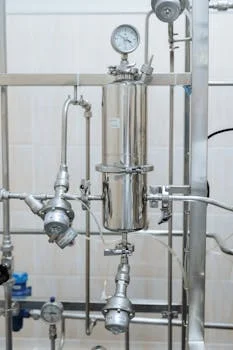
The São Paulo market is served by a mix of established local manufacturers and international firms with Brazilian subsidiaries. The following matrix compares these suppliers based on their technical capacity to meet CONAMA 430 standards and their local service infrastructure. A key factor for many buyers in 2025 is the FINAME certification, which allows companies to finance equipment through BNDES (The Brazilian Development Bank) at subsidized interest rates—a benefit typically only available for equipment with a high percentage of local Brazilian content.
| Supplier Name | Primary Tech | Capacity (m³/h) | TSS Removal % | CONAMA 430 Cert. | Est. CAPEX (USD/m³) | Lead Time |
|---|---|---|---|---|---|---|
| Solme do Brasil | DAF / Integrated | 5–200 | 95% | Yes | $800–$1,200 | 8–12 Weeks |
| AquaTech Solutions | MBR / Modular | 10–500 | 99% | Yes | $1,500–$2,200 | 14–18 Weeks |
| Ecosan | DAF / Biological | 20–1,000 | 94% | Yes | $900–$1,400 | 10–14 Weeks |
| WIKA do Brasil | Instrumentation | N/A | N/A | Yes | Variable | 2–4 Weeks |
| EcoRecycle | Integrated | 1–50 | 90% | Yes | $700–$1,100 | 6–10 Weeks |
| Goodwin Bombas | Slurry/Sludge Pumps | Up to 500 | N/A | Yes | Variable | 4–8 Weeks |
| Suez Water (Local Div) | Advanced MBR | 100+ | 99.9% | Yes | $2,000+ | 20+ Weeks |
| Mizumo | Decentralized | 1–30 | 88% | Yes | $600–$950 | 4–6 Weeks |
For procurement managers, the choice often hinges on the balance between advanced filtration and lead time. While Suez or AquaTech provide industry-leading membrane technologies, local firms like Solme do Brasil often offer a more agile response for standard DAF and integrated package plants. When evaluating these suppliers, it is vital to request their ART (Anotação de Responsabilidade Técnica). In São Paulo, every engineering project must be signed off by a professional registered with CREA-SP (Conselho Regional de Engenharia e Agronomia). A supplier that cannot provide a CREA-certified engineer for the installation and commissioning phase is a major liability during a CETESB audit.
Another emerging trend in the 2025 market is the "As-a-Service" model. Some suppliers in the Campinas and Sorocaba regions are beginning to offer BOT (Build-Operate-Transfer) contracts. Under this model, the industrial client does not pay the upfront CAPEX for the equipment. Instead, the supplier installs the equipment and charges a monthly fee based on the volume of treated water. This is particularly attractive for multinational companies in São Paulo that want to keep wastewater treatment off their balance sheets while ensuring 100% compliance with local laws.
Operational Support and Training
The sophistication of modern sewage treatment equipment—especially MBR and automated DAF systems—requires skilled operators. The best suppliers in São Paulo provide more than just a manual; they offer:
- On-site Training: Specific to the local workforce, often conducted in Portuguese with simplified digital interfaces.
- Remote Monitoring: IoT-enabled sensors that allow the supplier's engineers to troubleshoot the system from their headquarters in São Paulo or São José dos Campos.
- Preventative Maintenance Contracts: Scheduled visits to replace filter media, calibrate sensors, and check pump seals, which is critical given the aggressive nature of industrial effluents in the chemical corridor.
Ultimately, the "Total Cost of Ownership" (TCO) is the most important metric. A cheaper system with a 20-week lead time for spare parts from Europe or China can cost a São Paulo factory millions in lost production if CETESB orders a temporary shutdown due to a discharge violation. Prioritizing local stock, local engineering signatures, and proven performance in the specific climate of the Brazilian Southeast is the only way to ensure long-term operational stability.
Further Reading
- Detailed guide to package wastewater treatment plants in São Paulo: A comprehensive look at modular solutions for the Brazilian market.
- Global benchmarks for DAF system performance and costs: Compare how São Paulo's standards stack up against European industrial requirements.
- CETESB Compliance Handbook: Understanding the specific testing protocols for industrial discharge in the Tietê basin.
- BNDES Financing Guide: How to utilize the FINAME program to fund your wastewater infrastructure upgrades in 2025.