In Jerusalem, wastewater treatment plant costs range from €5M for a 500 m³/day decentralized MBR system to €100M+ for a 50,000 m³/day municipal plant with tertiary treatment. Key cost drivers include technology choice (MBR vs. conventional activated sludge adds 20-30% to capex), land acquisition (€1,200–€2,500/m² in Jerusalem’s industrial zones), and compliance with the stringent effluent standards currently applied to plants in the city (≤10 FC/100 mL for agricultural reuse). This guide provides Jerusalem-specific cost benchmarks, engineering specs, and an ROI calculator to compare centralized vs. decentralized solutions.
Why Jerusalem’s Wastewater Treatment Costs Are Unique: 5 Local Factors That Inflate Budgets
Land acquisition in Jerusalem’s industrial zones costs between €1,200 and €2,500 per square meter, representing one of the highest site-specific budget drivers in the region (Israel Land Authority, 2024). Unlike peripheral districts where land might range from €300 to €800 per square meter, Jerusalem’s topographical constraints and high density force engineers to prioritize technologies with the smallest possible footprint, often leading to higher equipment costs to offset land expenditure.
Permit timelines and regulatory oversight significantly impact project financing. According to a 2023 Environmental Protection Ministry (EPM) report, municipal plants in Jerusalem face a 12–18 month permitting window, while industrial facilities typically navigate a 6–9 month process. These delays carry carry-over costs in the form of inflationary pressure on materials. Construction material costs, specifically steel and concrete, rose 18% year-over-year in 2023 (Israel Central Bureau of Statistics), and since these materials account for roughly 40% of total Capex, early procurement strategies are vital.
Labor and energy further differentiate the Jerusalem market. Skilled WWTP operators in the Jerusalem area earn €45–€65 per hour, a 20% premium over the regional average due to the high cost of living and specialized certification requirements (Israel Builders Association, 2024). Energy costs for industrial facilities range from €0.12 to €0.18 per kWh. While integrating solar arrays can add 15–25% to the initial Capex, it typically reduces long-term Opex by 30–40%. For instance, the Hebron plant recently integrated a €1.2M solar array to stabilize its energy budget against volatile grid prices.
| Cost Factor | Jerusalem Benchmark (2024/25) | Impact on Total Budget |
|---|---|---|
| Land (Industrial Zones) | €1,200 – €2,500 / m² | High (Drives tech choice toward MBR) |
| Skilled Labor | €45 – €65 / hour | Moderate (Increases Opex by 20%) |
| Electricity (Industrial) | €0.12 – €0.18 / kWh | High (40-50% of annual Opex) |
| Permit Timeline | 12 – 18 Months (Municipal) | Indirect (Inflation risk on materials) |
| Material Inflation | 18% YoY (Steel/Concrete) | High (Affects structural Capex) |
Wastewater Treatment Plant Cost Breakdown: Jerusalem-Specific Ranges by Capacity and Technology
A 5,000 m³/day MBR-based wastewater treatment plant in Jerusalem requires a capital expenditure (Capex) of €18M to €25M, reflecting a 15–25% premium over typical regional averages due to local logistics and labor constraints. When evaluating technology, Jerusalem-ready MBR systems for high-efficiency effluent reuse provide the highest effluent quality but require a higher initial investment compared to Conventional Activated Sludge (CAS). However, the CAS footprint requirement in Jerusalem often makes it cost-prohibitive due to land prices.
Operating expenditures (Opex) in Jerusalem are dominated by energy and labor. Drawing from data at the Shafdan plant, which reports an operating cost of approximately €0.45/m³, smaller plants in Jerusalem often see costs closer to €0.60–€0.85/m³ due to the lack of economies of scale. Energy typically accounts for 40–50% of these costs, followed by labor at 20–30%, and chemicals/maintenance at 10–15% each. For industrial pretreatment, DAF systems for Jerusalem’s industrial pretreatment needs are frequently employed to reduce organic loading before biological stages, effectively lowering the overall energy demand of the secondary treatment phase.
| Plant Capacity (m³/day) | Technology Type | Estimated Capex (Jerusalem) | Estimated Opex (€/m³) |
|---|---|---|---|
| 500 (Decentralized) | MBR Package Plant | €4.5M – €6.5M | €0.85 – €1.10 |
| 5,000 (Industrial/Mid) | MBR Integrated | €18M – €25M | €0.60 – €0.85 |
| 5,000 (Industrial/Mid) | CAS + Tertiary | €14M – €19M | €0.55 – €0.75 |
| 50,000 (Municipal) | MBR / Advanced CAS | €90M – €120M | €0.45 – €0.55 |
For those comparing regional benchmarks, a detailed look at how Muscat’s WWTP costs compare to Jerusalem’s reveals that while labor is cheaper in Oman, Jerusalem's focus on high-quality reuse for agriculture drives a more intensive Capex in tertiary filtration and disinfection modules.
Engineering Specs That Drive Costs: How Jerusalem’s Effluent Standards Shape Your Plant Design
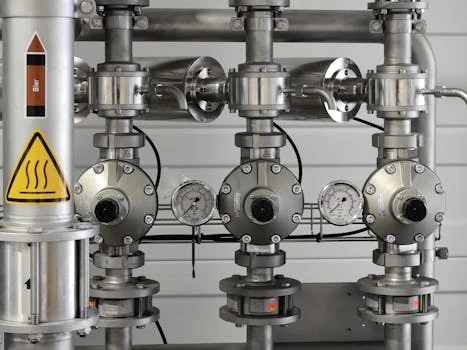
The 2024 effluent standards currently applied to plants in Jerusalem mandate a fecal coliform count of ≤10 FC/100 mL for unrestricted agricultural reuse, a threshold that necessitates tertiary treatment or advanced membrane bioreactor (MBR) technology. These "Inbar" standards are among the strictest in the world, often exceeding the requirements of the EU Urban Waste Water Directive 91/271/EEC. Meeting these targets requires precise engineering of biological oxygen demand (BOD) removal (≤20 mg/L), total suspended solids (TSS) (≤30 mg/L), and total nitrogen (TN) (≤10 mg/L).
The choice between MBR and CAS is a primary cost driver. MBR systems achieve ≤1 FC/100 mL without additional sand filtration or UV disinfection in many cases, but they cost 20–30% more in Capex. However, MBR reduces the required land footprint by up to 60%. In Jerusalem, where land is priced at a premium, this footprint reduction can save millions in site acquisition costs, effectively making MBR the more economical choice for urban-adjacent projects. A detailed MBR vs. conventional activated sludge comparison for Jerusalem projects shows that the energy penalty of MBR (15–20% higher than CAS) is often offset by the ability to sell high-quality effluent to the agricultural sector.
| Parameter | Israel Standard (2024) | MBR Performance | CAS + Tertiary Performance |
|---|---|---|---|
| Fecal Coliforms | ≤10 FC / 100 mL | <1 FC / 100 mL | 5 – 10 FC / 100 mL |
| BOD₅ | ≤10 mg/L (unrestricted) | <2 mg/L | 5 – 8 mg/L |
| TSS | ≤10 mg/L (unrestricted) | <1 mg/L | 2 – 5 mg/L |
| Total Nitrogen | ≤10 mg/L | <8 mg/L | <10 mg/L |
| Footprint (m²/m³) | N/A | 0.2 – 0.4 | 0.8 – 1.2 |
specialized facilities such as hospitals or pharmaceutical labs must account for specific pathogen and micropollutant removal. Utilizing a specialized medical wastewater treatment system ensures compliance with the Ministry of Health's additional protocols for hazardous effluent, which can add 10-15% to the treatment module cost.
Centralized vs. Decentralized WWTPs in Jerusalem: Cost Comparison and Decision Framework
Decentralized wastewater treatment plants in Jerusalem offer 50% faster permit approval timelines compared to centralized municipal facilities, often reaching operational status within 6 to 9 months. For industrial zones like Atarot or Har Hotzvim, decentralized systems allow for rapid scaling without waiting for municipal pipe expansions. While centralized plants benefit from lower Opex (€0.45/m³ at Shafdan), the massive Capex required for a 50,000 m³/day facility (€80M–€100M) and the 2-3 hectares of land needed (€2.4M–€7.5M) create significant barriers to entry.
Decentralized solutions, such as compact WSZ plants for Jerusalem’s decentralized projects, require only 0.2 to 0.5 hectares and can be deployed for €12M–€15M for a 5,000 m³/day capacity. These systems are particularly effective for "islanded" developments or industrial parks where the cost of laying deep-trench sewerage to a central plant exceeds the cost of on-site treatment. Additionally, decentralized plants allow for localized water reuse, keeping the "water value" within the facility for landscaping or cooling tower makeup.
| Metric | Centralized (50k m³/day) | Decentralized (5k m³/day) |
|---|---|---|
| Capex per m³ | €1,800 – €2,200 | €2,400 – €3,000 |
| Opex per m³ | €0.45 – €0.55 | €0.70 – €0.90 |
| Land Requirement | 2.0 – 3.0 Hectares | 0.2 – 0.5 Hectares |
| Permit Timeline | 12 – 18 Months | 6 – 9 Months |
| Best Use Case | Dense urban residential | Industrial parks, remote zones |
To further optimize the cost-efficiency of these plants, engineers should evaluate sludge dewatering options to reduce Jerusalem’s WWTP opex. Reducing sludge volume by 75% through high-efficiency screw presses or belt presses can lower hauling and disposal fees, which are significant in the Jerusalem municipality due to landfill distance.
ROI Calculator: How to Justify Your WWTP Budget to Stakeholders
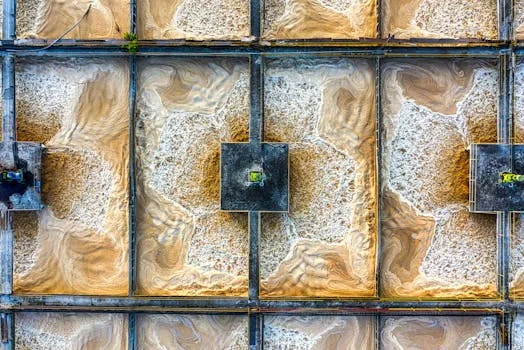
The return on investment (ROI) for a Jerusalem-based industrial WWTP is primarily driven by the €0.50 to €0.70 per cubic meter price differential between fresh municipal water and treated effluent reuse. In Israel, the Water Authority has historically subsidized fresh water for agriculture, but recent policy shifts (2024/2025) are increasing fresh water tariffs to €0.80–€1.20/m³, while treated effluent prices remain stable at €0.30–€0.50/m³. This creates a compelling business case for on-site treatment and reuse.
To calculate ROI, use the following framework:
ROI = (Annual Water Savings + Revenue from Effluent Sales) / (Total Capex + Annual Opex)
Consider a 5,000 m³/day MBR plant in a Jerusalem industrial park:
- Capex: €20,000,000
- Annual Opex: €1,100,000 (including energy, labor, and chemicals)
- Annual Savings (Water Reuse): 1.8M m³/year * €0.90/m³ (fresh water cost) = €1,620,000
- Annual Revenue (Effluent Sales to nearby agriculture): 1.8M m³/year * €0.35/m³ = €630,000
- Total Annual Benefit: €2,250,000
- Simple Payback Period: ~8.8 years (without carbon credits or solar offsets)
Integrating carbon credits (€15–€30/ton CO₂ avoided) and solar energy can further reduce the payback period to approximately 5.2 years. Sensitivity analysis shows that if energy prices rise by 20%, the ROI decreases by only 5% if solar integration is present, highlighting the importance of energy-resilient design.
| ROI Component | Value Range (Jerusalem) | Notes |
|---|---|---|
| Fresh Water Tariff | €0.80 – €1.20 / m³ | Avoided cost via reuse |
| Effluent Sale Price | €0.20 – €0.40 / m³ | Revenue from agricultural buyers |
| Carbon Credit Value | €15 – €30 / ton CO₂ | Requires certified M&V |
| Typical Payback | 5 – 9 Years | Technology-dependent |
Frequently Asked Questions
How much does a 1,000 m³/day wastewater treatment plant cost in Jerusalem?
For a 1,000 m³/day plant in Jerusalem, Capex typically ranges from €7M to €10M for MBR technology and €5.5M to €8M for conventional systems. Opex is generally higher for smaller plants, ranging from €0.80 to €1.05 per cubic meter due to labor and energy overheads.
What are the effluent standards for wastewater treatment in Jerusalem?
Plants in Jerusalem are currently permitted against the Israel Water Authority 2024 "Inbar" standards. For unrestricted agricultural reuse, the plant must achieve ≤10 FC/100 mL, ≤10 mg/L BOD, and ≤10 mg/L TSS. Industrial discharge to sewers must meet different, less stringent pre-treatment standards (MoEP regulations).
How long does it take to get a WWTP permit in Jerusalem?
Municipal plants typically require 12 to 18 months for full Environmental Protection Ministry (EPM) and local planning approval. Industrial pretreatment plants can often secure permits in 6 to 9 months, provided they meet the specific requirements of the local water utility (Hagihon).
Can I sell treated wastewater in Jerusalem?
Yes, treated effluent can be sold to agricultural cooperatives in the Jerusalem corridor or the Jordan Valley. Prices range from €0.20 to €0.40 per cubic meter. However, you must obtain a "Water Supply License" from the Water Authority and ensure the effluent meets unrestricted reuse standards.
What’s the cheapest wastewater treatment option for a Jerusalem factory?
The most cost-effective solution for industrial pretreatment is often a combination of a DAF system and a biological package plant. While Capex is lower, ensure the design accounts for Jerusalem’s high land costs; a compact, underground WSZ series plant may offer the lowest total cost of ownership by minimizing land use.