Isfahan’s 2025 Industrial Wastewater Standards: What Changed and Why It Matters
Iran’s Environmental Protection Organization (EPO) has mandated that by 2025, all industrial facilities in Isfahan Province must achieve secondary discharge standards or face escalating daily fines reaching up to IRR 5 billion ($12,000) per violation. For a refinery manager in Isfahan, the frustration of a failed effluent test is no longer just a technical hurdle; it is a significant financial and legal liability. The 2025 deadline approaches, and the shift from "monitoring" to "strict enforcement" under the 2024 Environmental Crimes Law means that facilities exceeding a Chemical Oxygen Demand (COD) of 100 mg/L or Total Suspended Solids (TSS) of 30 mg/L face potential plant shutdowns. These regulations are particularly stringent in the Zayandeh Rud basin, where the scarcity of water has pushed the EPO to prioritize agricultural reuse standards, requiring a Sodium Adsorption Ratio (SAR) below 6 and Electrical Conductivity (EC) below 3 dS/m.
The following table outlines the 2025 compliance benchmarks that engineers and procurement managers must meet for safe discharge or agricultural irrigation in the Isfahan region:
| Parameter | Standard (Discharge to Surface Water) | Standard (Agricultural Reuse) | Sector-Specific Limit (Isfahan) |
|---|---|---|---|
| COD (mg/L) | <100 | <200 | Refineries: <60 (Internal target) |
| BOD5 (mg/L) | <30 | <100 | Petrochemical: <50 |
| TSS (mg/L) | <40 | <100 | Metals: <30 |
| Oil & Grease (mg/L) | <10 | N/A | Refineries: <5 |
| Heavy Metals (Cu, Cr, Cd) | <0.1 mg/L | <0.01 mg/L | Metals: Cr <0.05 mg/L |
| Phenol (mg/L) | <1 | N/A | Petrochemical: <0.5 |
Enforcement trends in Isfahan have sharpened significantly. A 2023 case study of the Isfahan Refinery highlighted the risks of aging infrastructure, where the plant faced repeated fines for exceeding TSS limits during seasonal peak flows. This trend is driving a transition toward high-efficiency systems capable of handling influent variability while maintaining consistent effluent quality.
Influent Profiles in Isfahan: How Local Industries Compare
Refinery and metallurgical influent in Isfahan typically exhibits high total dissolved solids (TDS) and variable organic loads, with refinery COD often peaking at 2,000 mg/L during process upsets. Understanding these local influent profiles is critical for engineers who must size equipment to handle "worst-case" scenarios rather than average flows. In the metals sector, plants like Zob-Ahan and Folad-Mobarekeh deal with extreme pH fluctuations (ranging from 2 to 12) and massive TSS loads reaching 3,000 mg/L, which can quickly foul standard filtration systems if not properly pre-treated.
The table below provides a technical comparison of typical influent characteristics across Isfahan’s primary industrial sectors, based on field data and local environmental reports:
| Industry Sector | COD (mg/L) | TSS (mg/L) | Oil/Grease (mg/L) | Key Pollutants |
|---|---|---|---|---|
| Isfahan Refinery | 500–2,000 | 200–800 | 50–300 | Sulfides, Ammonia, Phenols |
| Metals (Folad-Mobarekeh) | <200 | 1,000–3,000 | <50 | Cr, Zn, Cu, Acidic/Alkaline waste |
| Petrochemical (Polyacril) | 1,000–4,000 | 100–500 | 20–100 | Phenol (5–50 mg/L), Acrylic acid |
| Textile (Zohreh) | 800–3,000 | 200–1,000 | <20 | Reactive Dyes, High Color (>500 Pt-Co) |
Influent variability is the primary cause of system failure in Isfahan’s older treatment plants. For instance, ultrafiltration (UF) processes in the region have shown a 25-50% reduction in efficiency when influent TSS exceeds 500 mg/L without adequate primary clarification. This data underscores the necessity of robust primary treatment, such as DAF systems for Isfahan’s petrochemical and refinery wastewater, to protect downstream biological or membrane units.
Treatment Technologies for Isfahan’s Industrial Wastewater: Performance, Costs, and Trade-offs
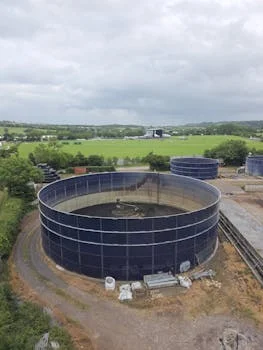
Dissolved Air Flotation (DAF) and Membrane Bioreactors (MBR) have emerged as the primary technologies for meeting 2025 standards due to their ability to handle high-strength industrial streams within compact footprints. Conventional Activated Sludge (CAS) remains a viable option for plants with unlimited land and lower discharge requirements, but it often fails to meet the <0.1 mg/L heavy metal and <30 mg/L TSS limits required for 2025 compliance without extensive tertiary polishing. DAF systems are particularly effective for Isfahan's refineries, achieving up to 98% TSS removal and 95% Fats, Oils, and Grease (FOG) removal with capacities ranging from 4 to 300 m³/h.
For facilities targeting high-grade reuse, MBR systems for Isfahan’s metals and textile plants offer a superior solution. These systems utilize 0.1 μm pore size membranes to ensure 99% pathogen reduction and 95% COD reduction. However, the higher CAPEX of MBR (IRR 15–30 billion) compared to CAS (IRR 5–10 billion) requires a careful ROI analysis. To optimize these systems, chemical dosing for pH adjustment and coagulation in Isfahan’s industrial plants is essential, utilizing PAC or ferric chloride to destabilize colloids before filtration.
| Technology | COD Removal | TSS Removal | CAPEX (IRR Billion) | OPEX (IRR/m³) |
|---|---|---|---|---|
| DAF | 40–60% | 90–98% | 3–15 | 8,000–12,000 |
| MBR (DF Series) | 90–98% | 99%+ | 15–40 | 15,000–25,000 |
| Conventional (CAS) | 80–90% | 70–85% | 5–20 | 5,000–10,000 |
| Chemical Dosing | N/A | Variable | 1–3 | 3,000–7,000 |
Engineers should consult a detailed comparison of MBR and conventional systems for industrial wastewater to determine which footprint-to-performance ratio fits their site constraints. While MBR offers the best effluent quality, its energy consumption (0.8–1.2 kWh/m³) is significantly higher than CAS (0.3–0.6 kWh/m³), making it a strategic choice primarily for water-scarce zones where reuse value offsets the power cost.
Step-by-Step Equipment Selection for Isfahan’s Industrial Plants
Effective equipment selection for Isfahan's industrial sector requires a five-step engineering audit that prioritizes influent characterization over initial capital expenditure. Procurement managers often make the mistake of selecting systems based on average flow rates, leading to system bypass during peak production hours. To avoid this, capacity should always be calculated using the formula: Required Capacity = Peak Hourly Flow × 1.2 (Safety Factor). This ensures the system can handle hydraulic surges without washing out the biological mass or overwhelming the DAF clarifier.
- Step 1: Characterize Influent: Use the tables in section two to establish your baseline for COD, TSS, and heavy metals. If your pH fluctuates more than 2 points per hour, an equalization tank with automated dosing is mandatory.
- Step 2: Match Technology to Pollutants: Select DAF for high FOG/TSS (refineries) or MBR for high COD and reuse requirements (petrochemicals).
- Step 3: Calculate Design Flow: Determine your m³/h based on 24-hour production cycles. Ensure the system is modular to allow for future expansion.
- Step 4: Financial Vetting: Compare the CAPEX and OPEX using local IRR benchmarks. Include the cost of sludge management, as Isfahan’s disposal fees are rising.
- Step 5: Supplier Service Evaluation: Verify the supplier’s service network in Isfahan. Lead times for membrane replacements or DAF scrapers can exceed 12 weeks if not locally stocked.
A notable success story in the region is Folad-Mobarekeh’s 2024 MBR upgrade. By replacing their aging clarifiers with an integrated MBR system, they reduced effluent COD from 1,200 mg/L to consistently below 50 mg/L. Despite a CAPEX of IRR 22 billion, the plant achieved a return on investment within 3.5 years by eliminating environmental fines and reusing 80% of the treated water in their cooling towers.
Cost Breakdown for Industrial Wastewater Treatment in Isfahan: CAPEX, OPEX, and ROI
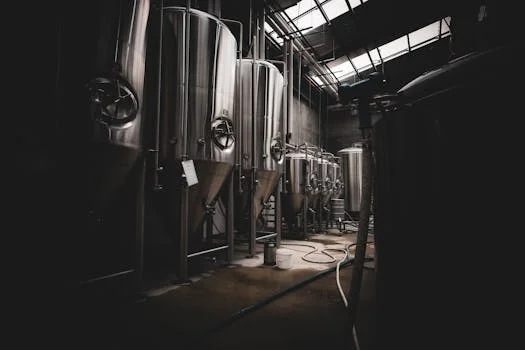
Capital expenditure (CAPEX) for industrial wastewater systems in Isfahan ranges from IRR 3 billion for basic DAF units to over IRR 40 billion for high-capacity MBR plants. These figures include equipment procurement, civil works, and installation labor. However, engineers must also account for "hidden" costs, such as EPO permit fees (IRR 500 million–1 billion) and the increasing cost of industrial sludge disposal, which currently ranges from IRR 2,000 to 5,000 per ton depending on toxicity. To manage these residuals, evaluating sludge dewatering options for Isfahan’s industrial plants like a